All Intelligent Process Automation: Use Cases, Benefits, and Best Practices for Modern Businesses
March 27, 202615 min read


Today’s global economy has forced businesses into a corner. With labor shortages and rising costs on one side, and an infinite demand for speed on the other, the traditional "linear" growth model has collapsed. You can't just work harder – you have to automate intelligently.
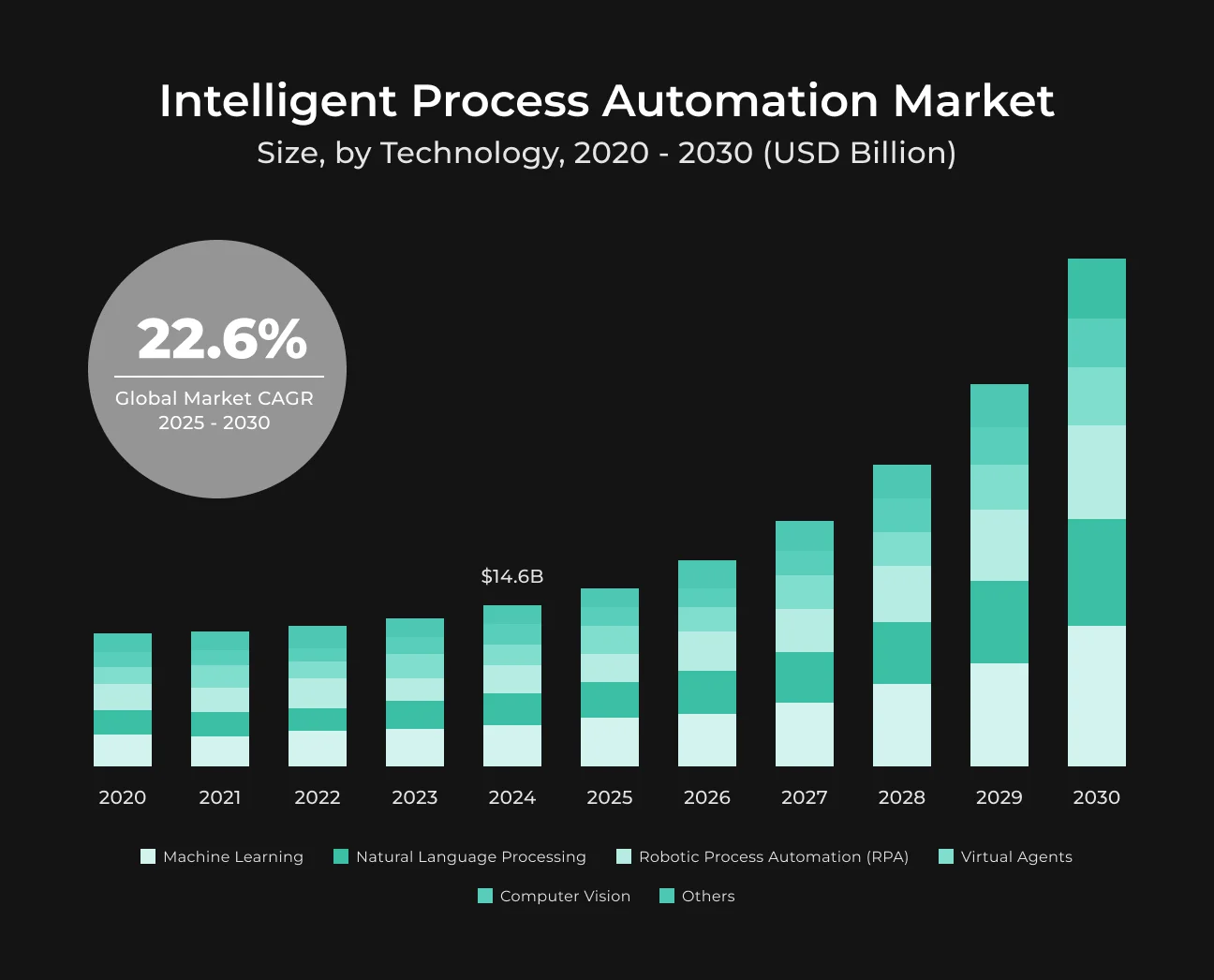
SapientPro’s engineers explain what are the benefits of intelligent process automation and share intelligent process automation best practices for the future of business.
What is Intelligent Process Automation?
The last decade was dominated by robotic process automation (RPA). Software robots configured to mimic human keystrokes and mouse clicks. They excelled at high-volume, repetitive tasks involving structured data. We mean transferring figures from an Excel spreadsheet to an ERP system.
However, RPA was brittle.
A minor change in a user interface or an unexpected data format would cause the bot to fail.
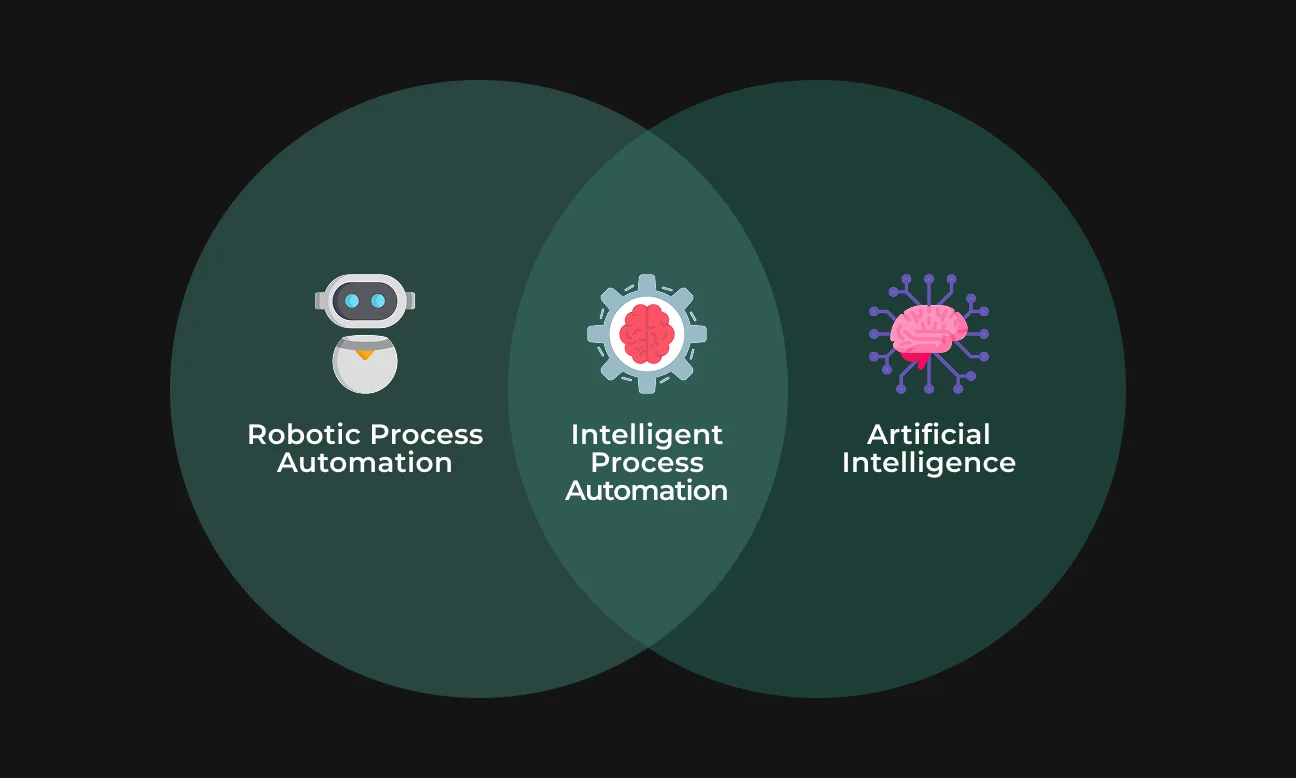
Intelligent process automation (IPA) represents the maturation of this capability. It provides the "digital brain". By integrating AI technologies, IPA transcends the limitations of RPA.
Operational Dimension | Traditional RPA | Intelligent Process Automation (IPA) |
| Primary Driver | Rule-based logic (If/Then) | Probabilistic reasoning & ML models |
| Data Capability | Structured Data (Databases, CSVs) | Unstructured Data (Emails, PDFs, Voice, Video) |
| Resilience | Brittle; breaks on UI changes | Adaptive; "Self-healing" capabilities |
| Scope | Task-centric (e.g., "Copy Paste") | Process-centric (e.g., "End-to-End Mortgage Origination") |
| Human Interaction | Minimal; back-office only | Conversational; supports front-office & advisory |
Intelligent Process Automation Purpose and Importance
The urgency for IPA adoption in 2026 is driven by 3 macroeconomic factors:
- Productivity plateau. Advanced economies are facing a demographic cliff. With shrinking working-age populations in key markets, labor shortages are structural. Intelligent process automation solutions offer the only viable path to maintaining output without exploding labor costs.
- The velocity of capital. In high-interest-rate environments, working capital efficiency is paramount. IPA dramatically shortens cycle times, accelerating cash flow and improving liquidity. Under shortened cycle times, we mean order-to-cash, procure-to-pay, claims processing, etc.
- Regulatory density. Global regulations regarding data privacy (GDPR and CCPA), AI governance (EU AI Act), and ESG reporting are tightening. Manual compliance is no longer feasible. IPA ensures 100% auditability and adherence to complex rule sets without human fatigue or error.
For leadership, IPA is a corporate strategy:
- CEOs view IPA as a lever for non-linear growth, decoupling revenue from headcount;
- CFOs see it as a mechanism to variabilize fixed costs, shifting from heavy CapEx in physical infrastructure to flexible OpEx in digital workforces;
- CTOs use IPA to extend the life of legacy systems, using automation as a non-invasive integration layer that avoids risky "rip-and-replace" modernization projects;
- COOs rely on IPA for operational resilience, ensuring that critical services continue uninterrupted 24/7/365, regardless of external disruptions.
Now that you understand intelligent process automation purpose in 2026, we can move further.
Key Technologies Behind IPA
The efficacy of intelligent process automation solutions relies on a converged stack of technologies.
Let’s examine it.
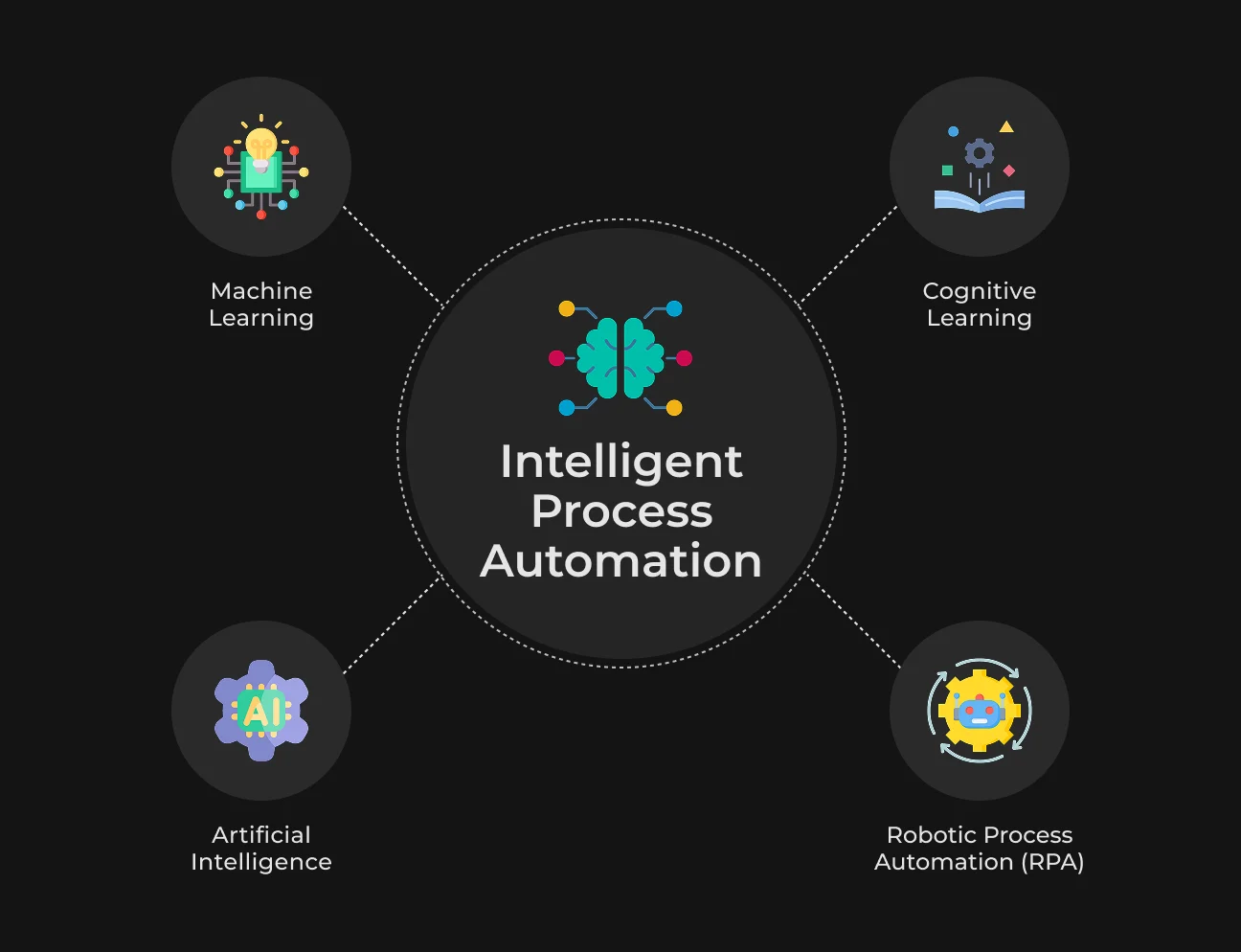
Generative AI and Large Language Models (LLMs)
The integration of generative AI has been the singular most disruptive force in automation.
Prior to GenAI, automating a process involving unstructured text (e.g., extracting clauses from legal contracts) required training specific models on thousands of labeled documents.
Today, LLMs enable "zero-shot" or "few-shot" capabilities.
An IPA system can now:
- Ingest a complex, never-before-seen document;
- Understand the context;
- Summarize the content;
- Extract specific entities with near-human accuracy.
This capability is pivotal for business process automation in knowledge-intensive sectors like legal, advisory, and research. Furthermore, GenAI powers "Agentic Workflows".
Unlike linear scripts, AI Agents can:
- Break down a high-level goal, for example, "Resolve this customer complaint", into sub-tasks;
- Select the appropriate tools, for example, look up customer history, generate a refund, draft an email, etc.
- Execute tasks autonomously.
Organizations that successfully deploy intelligent process automation solutions are realizing 25-35% reductions in operational processing costs. They achieve ROI 2-3 times faster than peers relying on legacy automation.
Intelligent Document Processing (IDP)
80% of enterprise data remains unstructured. We see it is locked in PDFs, images, emails, handwritten notes, etc. Intelligent Document Processing (IDP) helps here.
Modern IDP combines optical character recognition (OCR) with Deep Learning. It understands layout and topology. For instance, it can distinguish between a "Billing Address" and a "Shipping Address" on an invoice regardless of where they appear on the page.
In 2026, IDP solutions are multimodal, capable of processing video feeds and audio recordings alongside text. They are broadening the scope of automatable tasks in insurance and security.
Process Mining and Discovery
One of the primary causes of automation failure is a lack of visibility into existing processes. Organizations often automate what they think happens, rather than what actually happens.
Process mining technologies ingest event logs from enterprise systems (SAP, Salesforce, Oracle) to reconstruct a "Digital Twin" of the organization's workflows.
This visualization reveals:
- Hidden bottlenecks;
- Unauthorized "shadow processes";
- Rework loops.
Process mining has become a prerequisite for any major business process automation initiative. It ensures that investments are targeted at the areas of highest friction and return.
Computer Vision
Computer vision gives the digital workforce sight. In manufacturing, this enables quality control bots to visually inspect products on an assembly line. It allows bots to interact with virtual desktop environments (VDI) like Citrix, "seeing" the screen elements just as a human user would. This capability is essential for automating legacy applications that lack modern APIs.
Low-Code/No-Code Platforms
To scale automation, the ability to build bots must extend beyond the IT department. Low-code/No-code platforms like Creatio provide drag-and-drop interfaces that allow business analysts ("citizen developers") to construct automated workflows.
However, the current trend is the infusion of AI into these platforms. "Text-to-Workflow" capabilities allow a user to describe a process in natural language ("When an email arrives with an invoice, extract the total and add it to SAP"), and the platform generates the code structure automatically.
This accelerates the deployment of intelligent automation solutions across the enterprise.
Use Cases of Intelligent Process Automation Solutions
The theoretical capabilities of IPA translate into measurable value across verticals.
Let`s analyze the specific intelligent process automation examples in 5 key sectors.
Banking and financial services
The banking sector is characterized by massive transaction volumes and stringent compliance requirement. It is the vanguard of intelligent process automation examples.
Use Case 1: Know Your Customer (KYC) and Anti-Money Laundering (AML)
KYC involves manual verification of identity documents against global watchlists. This process is slow, expensive, and prone to "false positives" that frustrate customers.
IPA systems automatically ingest customer documents (passports, utility bills) using IDP. They cross-reference data against hundreds of sanctions lists and adverse media databases in real-time. NLP models analyze news articles for negative sentiment related to the entity.
JP Morgan Chase invests nearly $2 billion annually in AI and automation. It reports equivalent annual savings. Their systems handle complex compliance checks that would otherwise require armies of analysts.
What is the strategic benefit?
You get a reduction in regulatory risk and onboarding time from days to minutes.
Use Case 2: Mortgage Origination
A mortgage application contains hundreds of pages of unstructured data that must be verified and analyzed. We mean tax returns, pay stubs, bank statements, etc.
An end-to-end IPA pipeline classifies every document in the loan packet. It extracts income data, calculates debt-to-income ratios, flags discrepancies, etc. It then interfaces with credit bureaus to pull reports and populate the underwriting decision engine.
Bank of America's virtual assistant, Erica, has surpassed 3 billion interactions. It automated routine inquiries and significantly reduced the load on human agents.
What is the strategic benefit? Faster time-to-close increases conversion rates.
Insurance
The insurance industry is burdened by legacy mainframe systems and paper-heavy workflows. Let`s discuss Intelligent process automation examples in insurance.
Use Case 1: Claims Processing (First Notice of Loss)
Slow claims processing results in poor customer satisfaction (churn). Insurers now deploy AI-driven mobile apps. A customer photographs accident damage.
Computer vision algorithms assess the severity (e.g., "bumper replacement needed"), estimate repair costs, and validate the policy coverage. For simple claims, the system authorizes payment instantly.
What is the strategic benefit? Drastic reduction in "Claims Cycle Time", directly correlating with higher Net Promoter Scores (NPS). Automation can reduce manual labor in claims by 60% and improve data extraction accuracy to 99.99%.
Use Case 2: Underwriting Risk Modeling
Underwriters spent around 70% of their time gathering data rather than analyzing risk.
How does intelligent business process automation help here? Intelligent bots scrape data from diverse sources to build a comprehensive risk profile. These sources include social media, IoT sensor data, geospatial databases, etc. This allows underwriters to price risk more accurately.
What is the strategic benefit? Underwriting capacity is increased, and loss ratios are improved through better risk selection.
Healthcare
In healthcare, administrative efficiency directly impacts patient outcomes. We see numerous intelligent process automation examples here.
Use Case 1: Revenue Cycle Management (RCM)
The U.S. healthcare system loses billions annually to denied claims. In 2025, 41% of providers reported denial rates of 10% or higher. Primarily due to data errors.
Predictive IPA tools analyze claims before submission. They check CPT codes against payer rules, verify patient eligibility, and predict the likelihood of denial. If a high probability of denial is detected, the system flags the specific error for correction.
What is the strategic benefit? Financial stability for providers facing tight margins. Hospitals deploying intelligent process automation services see immediate improvements in cash flow and reductions in administrative overhead.
Use Case 2: Interoperability and Patient Data
Patient data is fragmented across disparate Electronic Medical Records (EMR) systems. They do not communicate. RPA bots act as the bridge, transferring data between systems without complex API integration. For example, transferring lab results from a pathology system directly into the patient's EMR.
What is the strategic benefit? At Seoul National University Bundang Hospital, RPA bots monitored system performance and data integrity. They were identifying issues that traditional IT monitoring missed.
Manufacturing
Industry 4.0 relies on the convergence of physical and digital automation.
Use Case 1: Predictive Maintenance
Unplanned downtime costs manufacturers billions. How does IPA help? IPA algorithms analyze streams of data from IoT sensors on factory equipment (vibration, temperature, acoustics). They detect subtle anomalies that precede failure.
Moreover, they can automatically schedule maintenance windows and order spare parts.
What is the strategic benefit? Maximized Asset Utilization and production uptime. Predictive maintenance delivers cost savings of 8-12% over preventive maintenance and up to 40% over reactive maintenance. The global economic impact is estimated at $280 billion annually.
Use Case 2: Supply Chain Resilience
Supply chains are vulnerable to disruption. Intelligent process automation solutions create a "control tower" view. They monitor supplier signals, weather patterns, and shipping data. If a delay is predicted, the system suggests alternative suppliers or logistics routes.
Customer support and service operations
Traditional chatbots are frustrating and limited to FAQs. GenAI-powered agents can perform transactions. A customer asks, "Where is my order?" The agent checks the ERP, sees a delay, checks the refund policy, processes a partial credit, and emails the customer. All without human intervention.
What is the strategic benefit? Scalable, 24/7 support that improves brand loyalty while reducing cost-per-contact. We recommend you read our AI customer service automation guide for more insights.
Automate Your Business Processes
SapientPro can help you save time & resources on key operations.
3 Benefits of Intelligent Business Process Automation
What are the benefits of intelligent process automation?
Implementing intelligent automation solutions creates value across multiple dimensions.
Financial Valuation
The ROI of IPA is measurable and significant:
- Hard savings. Direct reduction in Full-Time Equivalent (FTE) hours required for processes. In shared services, this is often the primary driver.
- Soft savings. Avoidance of costs related to errors (rework), compliance fines, and customer churn.
- Revenue uplift. Faster processes lead to faster revenue recognition. For example, reducing the "Order-to-Cash" cycle improves working capital position.
Metric | Traditional Calculation | IPA Strategic Calculation |
| Labor | Hours Saved x Hourly Rate | Hours Repurposed x Revenue per Employee Uplift |
| Error Rate | Cost of Rework | Cost of Reputation Loss + Regulatory Risk Avoided |
| Speed | Efficiency Gain | Competitive Market Share Gain (Velocity) |
SapientPro helps clients to calculate the approximate ROI of IPA before implementing intelligent business process automation.
Strategic Agility
In a volatile market, agility is a survival skill. IPA allows organizations to scale operations up or down instantly. During peak seasons (e.g., Black Friday, Tax Season), digital workers can be replicated infinitely in the cloud to handle volume spikes, without the costs and delays of hiring and training temporary staff.
This elasticity is a core component of the modern services infrastructure.
Employee Experience (EX)
Contrary to the fear of job displacement, IPA is a tool for retention. Mundane, repetitive data entry is the leading cause of employee burnout in back-office roles.
By automating these tasks, organizations elevate their workforce to higher-value activities—exception handling, customer relationship management, and creative problem solving. 74% of employees using automation say it helps them work faster and with less stress.
4 Best Practices in Intelligent Process Automation
From our experience, success with business process automation is 20% technology and 80% change management. Here are 4 intelligent process automation best practices you must be aware of.
The Center of Excellence (CoE)
To scale beyond pilot projects, organizations must establish an Automation Center of Excellence (CoE). There are 2 options:
- Centralized CoE. It sets standards, selects vendors, and manages governance. It is best for maintaining strict compliance.
- Federated CoE. It is centralized governance with decentralized execution. Business units build their own bots using approved tools. It is best for agility and speed.
Regardless of your organization's size, a CoE helps you achieve greater agility, faster innovation, and greater engagement with your automation strategy.
Governance and Security
As bots gain access to sensitive systems, "Robotic Identity Management" becomes critical. Bots must have managed identities, restricted permissions, and audit trails just like human employees.
Your governance frameworks must ensure that IPA solutions process personal identifiable information (PII) in compliance with GDPR and HIPAA. This includes configuring bots to "forget" data after processing.
Change Management
The "AI Pilot Trap" is a common failure mode where companies run successful pilots but fail to scale. This is often due to cultural resistance.
We recommend you involve IT and business stakeholders early. It is very important to communicate the vision of "augmentation", not "replacement".
It is also awesome to invest in training programs. Bank of America's widespread internal adoption of "Erica for Employees" (90% adoption) demonstrates the power of familiarizing staff with AI tools.
Data Readiness
This is one of the highest importance intelligent process automation best practices. The "Garbage in, Garbage out" model applies exponentially to AI.
Before deploying intelligent process automation solutions, businesses must invest in data governance. This ensures that the data feeding the models is accurate, unbiased, and structured.
Future Trends in IPA for 2026
The horizon for intelligent automation solutions points toward autonomy and rigorous regulation.
Here are the trends our SapientPro team sees ahead.
Hyperautomation and the Autonomous Enterprise
Hyperautomation is the disciplined approach to rapidly identifying, vetting, and automating as many business and IT processes as possible. In 2026, this evolves into the "Autonomous Enterprise", where self-optimizing systems manage core operations.
These systems monitor their own performance and adjust parameters (for example, inventory reordering points) without human intervention.
Agentic AI
We are transitioning from chatbots to agents.
The difference is that agents possess agency. They can plan, reason, and execute complex sequences of actions.
Need an example? Imagine a supply chain agent that detects a port strike. It autonomously identifies alternative shipping routes, calculates the cost differential, negotiates with logistics providers within pre-set limits, and re-routes shipments. Awesome!
However, a big challenge here is orchestrating these agents to prevent conflicts. For example, when two agents are bidding against each other.
The EU AI Act and Global Regulation
The regulatory domain is tightening. The EU AI Act, fully enforceable by 2026, categorizes AI systems by risk. High-risk systems (credit scoring, hiring) face strict requirements for transparency, data governance, and human oversight.
Enterprises must adopt a "Compliance-by-Design" approach. Intelligent automation solutions must be auditable and explainable. Black-box models will be a liability.
The Rise of IPA Services
As complexity grows, the "Buy vs. Build" equation shifts. Companies will increasingly rely on specialized intelligent process automation services partners for "Automation-as-a-Service".
This allows enterprises to access cutting-edge capabilities without maintaining a massive in-house AI engineering team. SapientPro’s team can help you develop any automation solutions.
How SapientPro Automated Document Processing
A client operating in Switzerland faced a significant operational hurdle regarding Safety Data Sheets (SDS). These documents are mandatory for every chemical product, containing critical safety and hazard information. Here’s what we worked with:
- Problem. The client managed thousands of documents in inconsistent formats (PDFs, scans), across multiple languages (German, English, French), and subject to varying regulatory standards (GHS, OSHA, REACH).
- Pain point. Manual processing was error-prone and slow. Matching a German SDS to its French counterpart for the same product required human linguists. Furthermore, legacy labeling systems lacked barcodes, making warehouse retrieval a nightmare.
SapientPro engineered a bespoke SDS Automation Solution that exemplifies modern IPA architecture:
- Tech stack. The solution uses PHP, MySQL, React, and NextJS, integrated with advanced AI models (OpenAI, Mistral).
- AI-powered structuring. The system ingests unstructured SDS files. Using LLMs, it extracts and structures key entities (chemical composition, hazard pictograms, H-phrases). It effectively converts "documents" into "databases".
- Multilingual semantic matching. Advanced NLP algorithms analyze the semantic content of documents to automatically pair files across different languages, eliminating redundancy.
- Barcode-free search. Using metadata and product descriptions, the system enables precise product lookups without relying on physical barcodes.
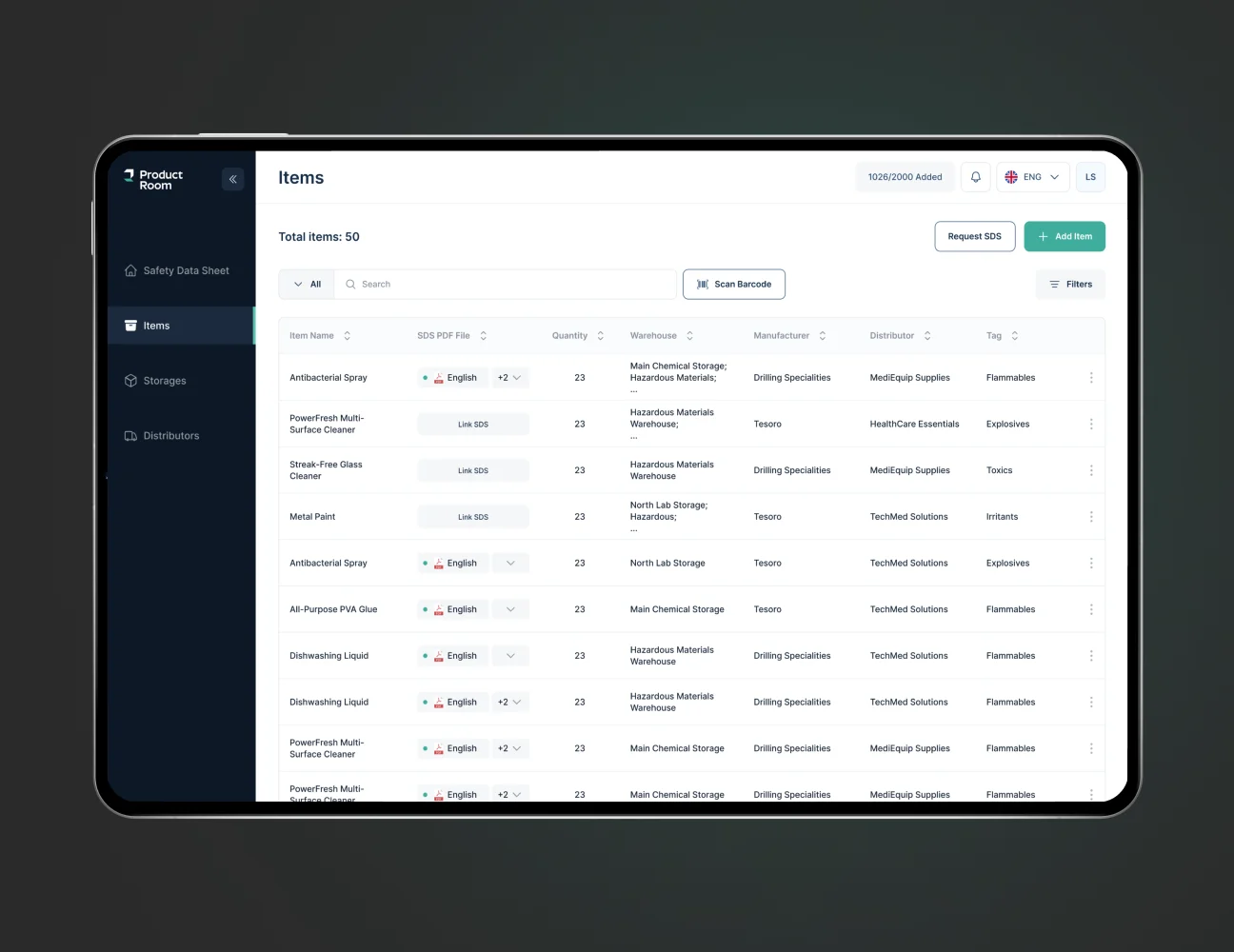
The implementation delivered immediate strategic value:
- Velocity. The solution was delivered in weeks, not months, showcasing the agility of SapientPro's intelligent process automation services.
- Compliance. The platform ensures strict adherence to Swiss and GHS regulations, mitigating legal risk.
- Efficiency. By automating the data extraction and matching process, the client repurposed staff from data entry to safety management.
Intelligent process automation solutions are not just for Fortune 500 banks. They are accessible and transformative for specialized industries facing complex regulatory burdens.
Partner with SapientPro to Build Your IPA Solution
Full-scale automation requires a partner who understands both the tech and the ROI.
SapientPro delivers high-impact intelligent process automation services through:
- AI document automation: turn unstructured data into actionable insights, slashing processing time by up to 80%;
- AI image automation: enhance quality control and visual data analysis with precision-driven machine vision;
- End-to-end workflow orchestration: seamlessly bridge legacy systems to eliminate bottlenecks;
- … and more!
Partnering with SapientPro means getting deep technical expertise combined with a business-first approach, providing your company with multiple benefits. You’ll get all the solutions you need with an outlook for future scalability and growth.
Let’s team up and discuss your project today!
Improve Your Business Efficiency
SapientPro's engineers can implement automation into your core business operations.