
All AI in Manufacturing: Technologies, Use Cases Benefits, and Examples for Businesses
May 16, 202510 min read


Artificial intelligence has been in manufacturing since the 1970s and has become vital in the 21st century. It's now a key part of Industry 4.0, which helps make manufacturing processes more efficient, smart, and connected.
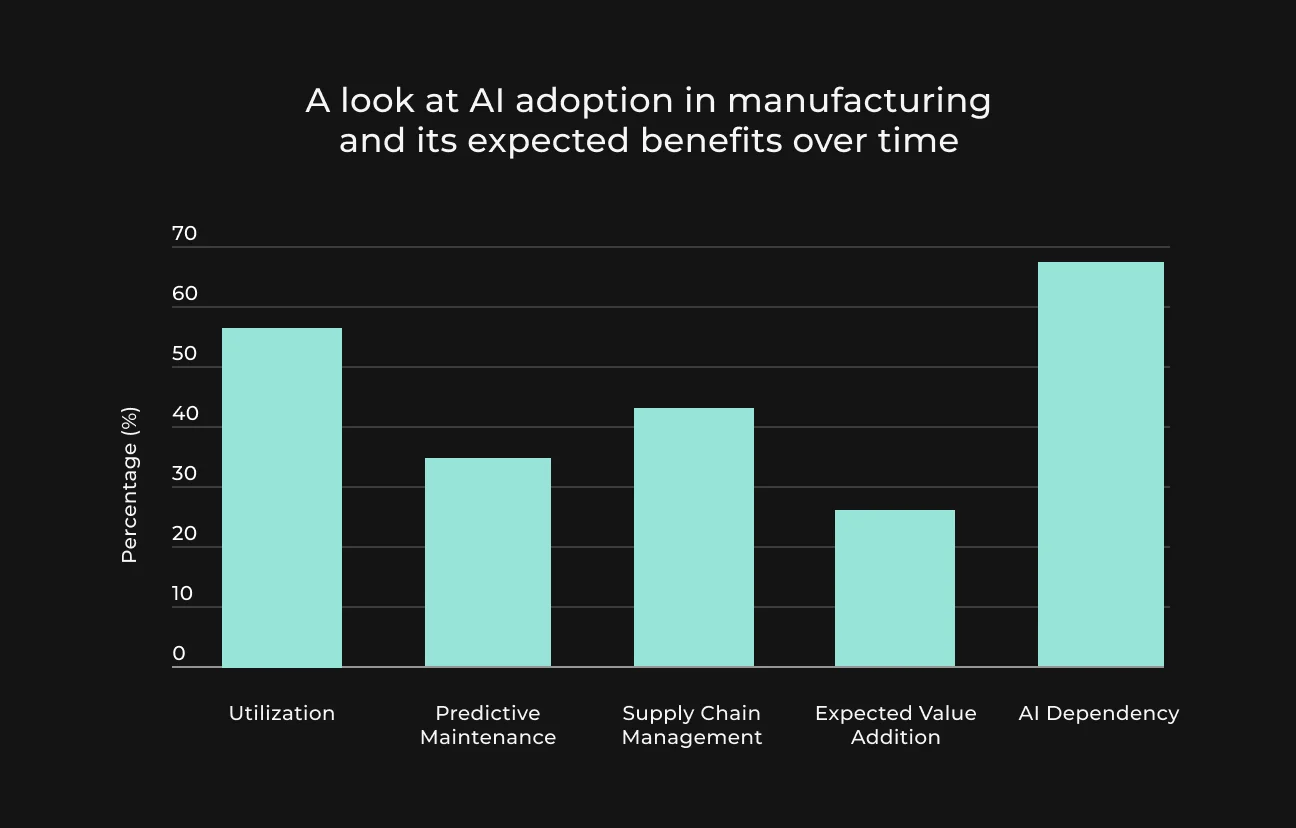
AI can detect defects with 90% accuracy and boost product quality by 35%, ensuring products meet consistent standards. It boosts manufacturing by improving data analysis, filling in knowledge gaps, and increasing team efficiency.
SapientPro’s team has been working with AI projects for 8+ years, supporting manufacturing companies and providing powerful tech solutions. This guide will help you learn about the key use cases, benefits, and real life examples. Read on for more!
What is AI in Manufacturing?
Artificial intelligence is changing the manufacturing industry by making it more efficient, precise, and flexible. This is especially prominent in Industry 4.0. AI uses various technologies to enhance production:
- Machine learning;
- Computer vision;
- Natural language processing, and others.
It can analyze data from IoT sensors & equipment to improve quality and reduce downtime. Also, AI uses smart algorithms to find patterns, predict potential issues, and suggest improvements. These algorithms can automatically adjust processes in real time.
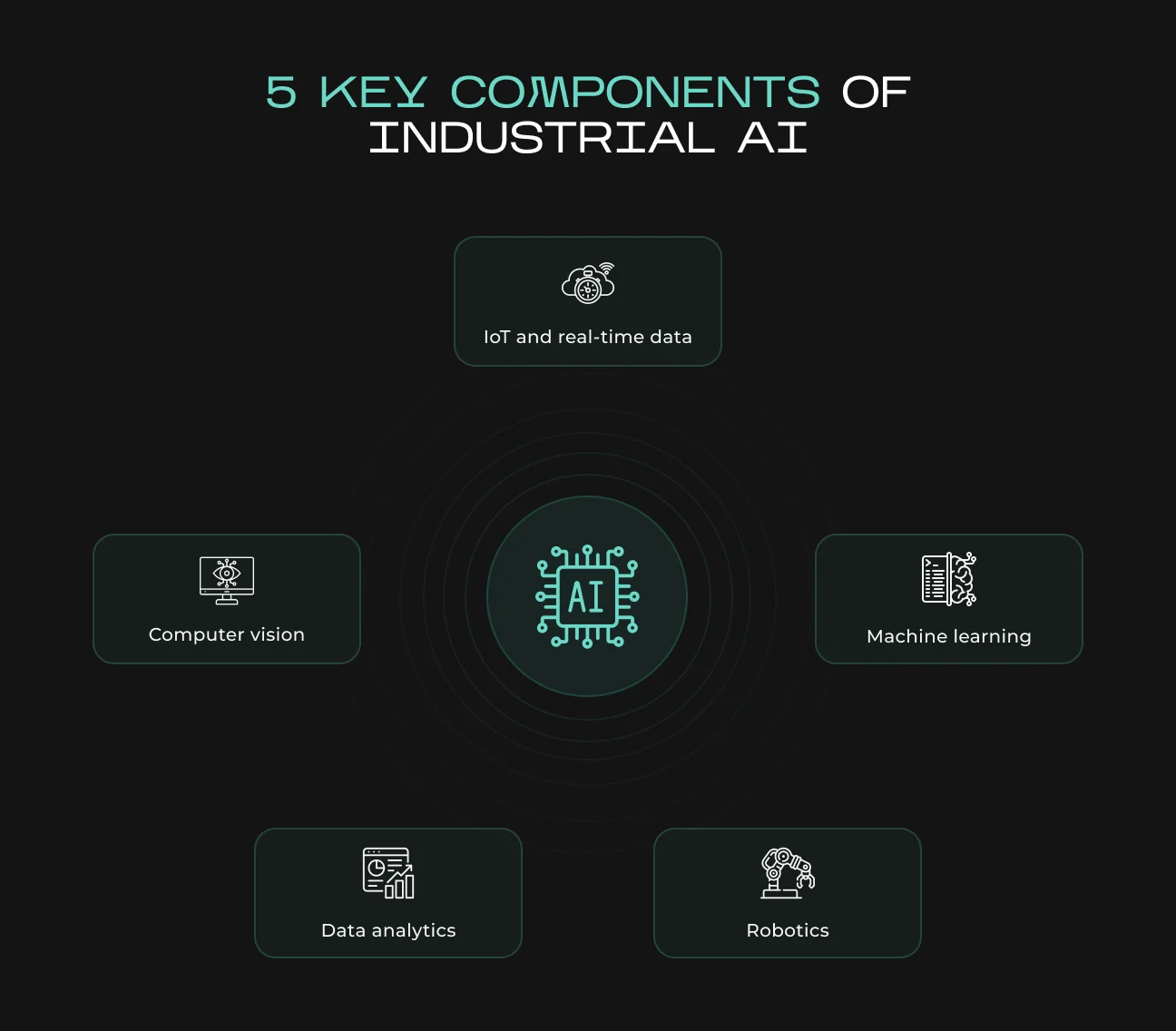
Key Components of Industrial AI
Knowing the main parts of AI is important if you want to get the most out of using it in manufacturing. Look at these four crucial elements.
Machine Learning in Production
Machine learning uses algorithms to learn from data and make accurate decisions.
Some of the use cases include:
- Predictive maintenance that minimizes unplanned downtime and service costs;
- Automated visual quality inspection that detects defects in real time;
- Demand forecasting to optimize production schedules and inventory levels;
- Process anomaly detection enabling rapid process adjustments;
- Energy consumption forecasting to cut power usage and emissions;
- Supply chain optimization that strengthens logistics and warehouse control;
- Digital twins to simulate equipment or entire plants for safer testing;
- Generative design for exploring thousands of product variants quickly.
All these applications lead to one thing – increased revenue and optimized production.
Data Analytics
AI in manufacturing uses data analysis to find insights. Algorithms collect and process data to spot inefficiencies and identify areas that need improvement. With advanced analytics, businesses can make better decisions and boost their performance.
Robotics in Manufacturing
AI is being used in collaborative automation with robots called cobots. Instead of replacing humans, these cobots work alongside them. They adapt in real time, improving productivity and teamwork. Their advantages include:
- Shares tasks with operators, improving productivity and safety;
- Adjusts roles dynamically to balance lines and reduce bottlenecks;
- Optimizes resource use for more sustainable operations.
Computer Vision
Computer vision enables factories to “see” like humans, automating visual checks that once required manual labor.
Core techniques deliver:
- Image classification, object detection, and segmentation for routine inspections;
- Real-time defect detection that elevates product quality;
- Fewer human errors and safer work environments.
SapientPro’s team applied computer vision in an application that was used for fruit & vegetable quality inspection. The process was accelerated by 87.5%, automatically categorizing products and creating reports.
IoT and Real-Time Data
High-quality and real-time sensor data is essential for reliable AI predictions in manufacturing.
With a robust IoT infrastructure, manufacturers can:
- Continuously monitor equipment health through networked sensors;
- Feed machine-learning models for accurate predictive maintenance;
- Extend asset lifespan while cutting unplanned downtime.
All these applications lead to one outcome – increased efficiency and optimized production.
Use Cases of AI in Manufacturing
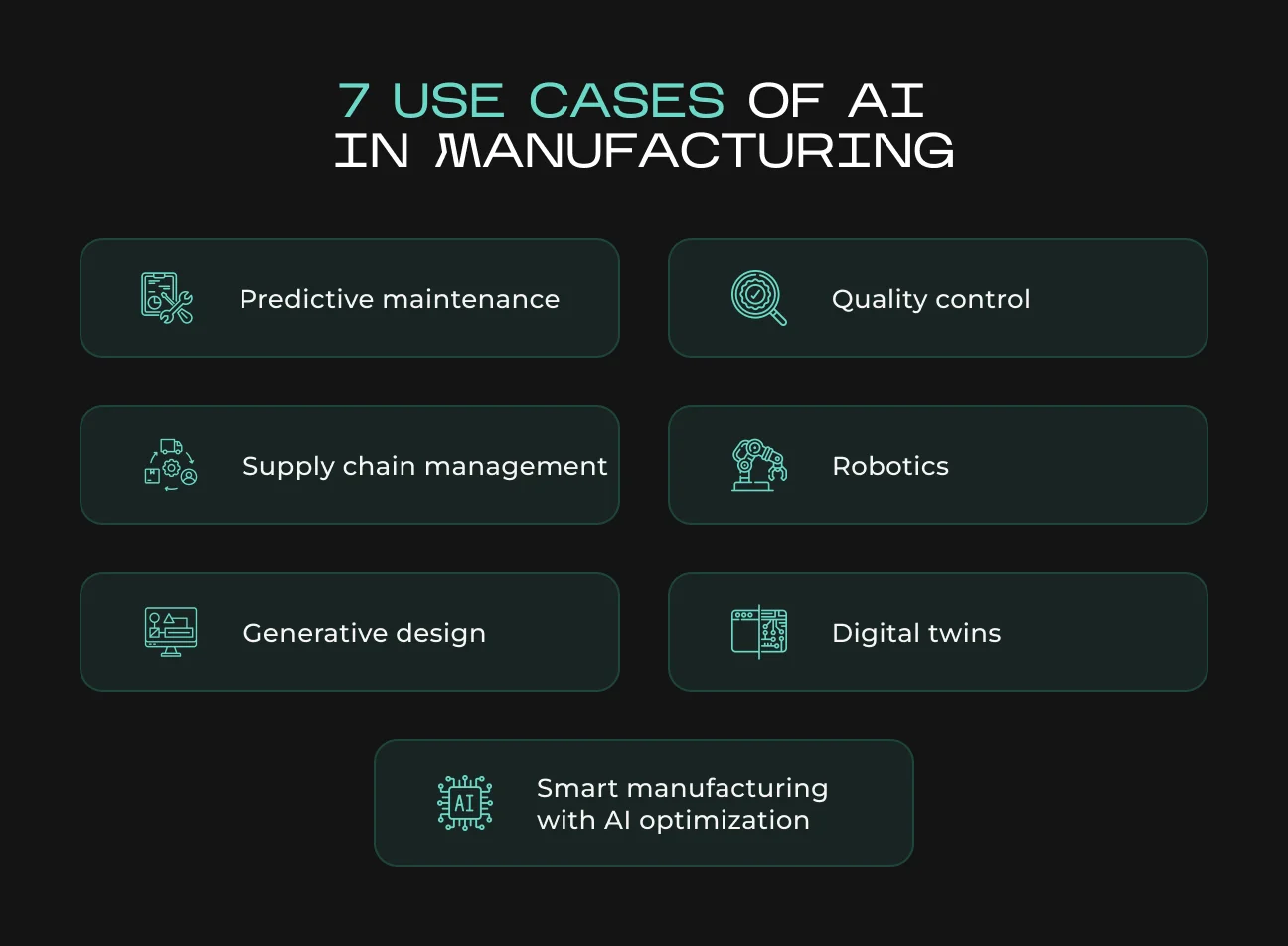
AI is changing manufacturing by improving decision-making and reducing costs. Its impact is even more significant when combined with machine learning and generative AI. These technologies speed up workflows, improve quality control, and accelerate prototyping. Let’s check out some of the top industrial AI applications in manufacturing.
Predictive Maintenance with AI
AI in manufacturing is great for predicting machine breakdowns. Predictive maintenance uses past data and sensor readings to identify issues before they happen. Here are a few reasons why this proactive approach is so popular:
- It lets you schedule maintenance, reducing unexpected disruptions;
- It cuts emergency repair costs and saves on replacing machinery;
- It helps focus resources on equipment that actually needs attention;
- It extends the life of machines, keeping them running longer.
Manufacturers that use predictive maintenance systems have experienced a 30-50% drop in machine downtime and a 10-40% cut in maintenance costs.
AI for Quality Control
Artificial intelligence uses machine learning and computer vision to quickly spot defects and improve quality control. These AI systems examine product images during production and detect flaws more accurately than human inspectors.
More than 50% of industrial product manufacturers already use these generative AI tools, and over 40% intend to boost their AI spending in the next three years.
For example, electronics manufacturers use AI to ensure components meet high standards. This results in improved product quality, less waste, and greater customer satisfaction.
AI in Supply Chain Management
AI uses past sales, stock data, and market trends to predict demand, which helps warehouses manage inventory more efficiently. This reduces costs and keeps products in stock. Actually, 75% of supply chain professionals have already used AI-based analytics.
In manufacturing, AI improves warehouse order fulfillment by studying orders to optimize picking routes and resource use. This leads to faster processing, fewer errors, and more satisfied customers.
Robotics in Manufacturing
Industry 4.0 focuses on smart manufacturing with AI, where everything is connected. Here, machines and systems collaborate, with robots automating complex tasks and sharing real-time data. This improves monitoring, reduces downtime, enhances quality, and increases efficiency.
AI and machine learning have advanced these manufacturing robots. Worldwide, there is one robot for every 71 manufacturing workers. These technologies help robots learn, adapt, and get better over time. For example, machine learning uses sensor data to spot patterns and predict maintenance needs before issues arise. This helps reduce downtime and increase productivity.
Smart Manufacturing with AI & Process Optimization
Optimizing the manufacturing process is key to better performance, precision, and new development strategies. Manufacturers need to constantly improve quality, cut waste, and increase production. AI offers a simple and effective way to meet these demands.
AI improves quality control by identifying defects early, cuts waste by efficiently using resources and predicting equipment problems, and supports scalability by allowing quick adaptation to demand changes. As a result, AI increases productivity and profitability through more efficient, data-driven operations.
Generative Design
Generative AI powers design systems by creating complex product shapes and blueprints. It takes into account factors like materials, size, weight, and manufacturing methods to design lightweight and efficient structures. The global market for generative AI in design is expected to reach about $13.95 billion by 2034.
Design engineers use this approach to try out different design options, speeding up product development, especially with methods like 3D printing. This results in lighter, stronger shapes than traditional designs.
Applying generative design in manufacturing can cut costs because of quicker development times and better material use.
Digital Twins
AI-powered digital twins in the manufacturing field use real-time and historical data to imitate and predict how operations will go. Through machine learning, they identify issues, allowing companies to trial improvements virtually before implementing them. In advanced industries, about 75% of companies are already using these technologies with moderate to high complexity.
Manufacturers use digital twins to monitor production and make improvements without disrupting actual operations. For example, they can find out if speeding up a conveyor will boost output or lead to errors before altering the production line.
Benefits of AI in Manufacturing
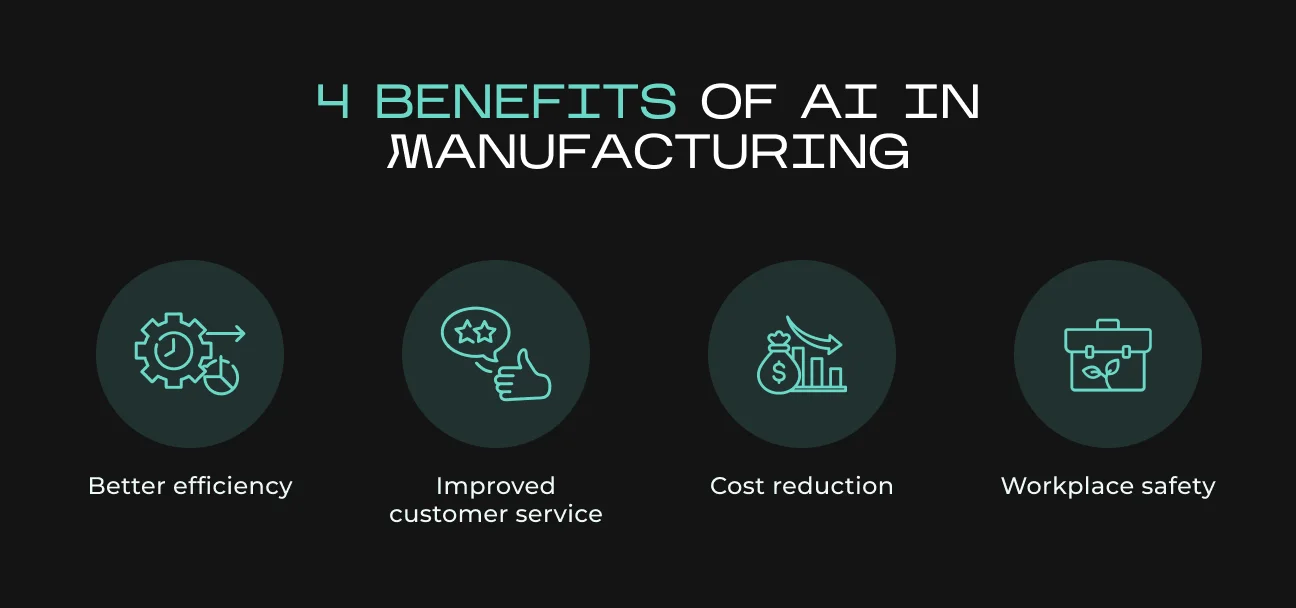
With AI widely used in manufacturing, it's not surprising that 78% of manufacturers plan to increase their AI investments over the next two years. Let's explore the specific benefits to help manufacturing leaders evaluate AI's impact.
Better Efficiency
AI helps manufacturers work more efficiently by automating repetitive tasks, so employees can concentrate on more important projects. AI automation in factories can boost productivity by up to 30% and cut manual errors by 25%. This boost in efficiency speeds up operations by reducing time and resources spent on minor tasks.
Also, machine learning and predictive analytics allow manufacturers to anticipate equipment failures and solve issues before they get worse. This makes manufacturing more adaptable, reduces downtime, and decreases reliance on certain processes.
Cost Reduction
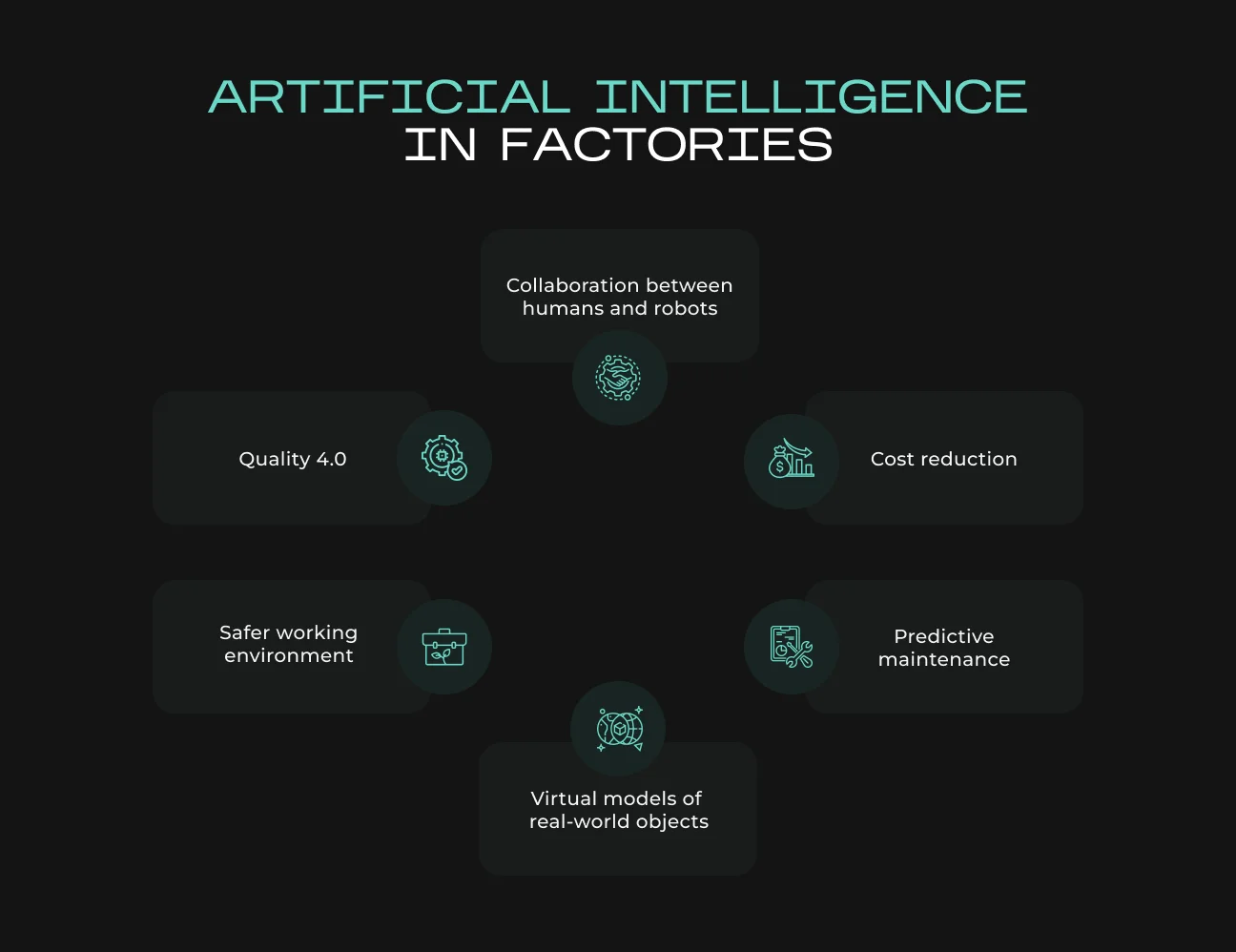
AI in industrial automation, predictive analytics, and improved quality control can help manufacturing businesses reduce costs by up to 30%. AI plays a role by lowering labor and maintenance costs, minimizing waste, and improving energy efficiency, all of which make production more cost-effective.
Improved Customer Service
AI is vital for improving customer experience in many fields, especially manufacturing. By analyzing data from manufacturing and market trends, AI helps businesses understand customer needs and fine-tune products to fit individual preferences. Basically, 42% of customers like product recommendations from AI.
AI also analyzes feedback from emails, chats, and social media to help manufacturers enhance customer service and solve issues early on.
Workplace Safety
A 10% rise in robot use leads to a 0.066% drop in workplace deaths and a 1.96% reduction in injuries. In dangerous jobs like manufacturing, AI-powered robots boost safety thanks to advanced sensors. These sensors early detect hazards and harmful substances, preventing accidents and protecting health. Some robots can respond to emergencies faster than humans by setting alarms and leading workers to safety.
Moreover, these robots help enforce safety rules. For example, AI systems check if workers have the proper protective gear and follow safety guidelines. If someone forgets a helmet or enters a no-go zone, the robot can give a warning.
Challenges of AI in Manufacturing
Before you invest in using AI in production lines, it's crucial to understand its limitations. Here are five challenges you should consider when adopting AI in manufacturing.
Data Privacy
AI systems rely on big data, so it's important to keep this information safe and private. It's practical to use strong encryption to secure data when it’s stored or transmitted. Also, applying access controls ensures that only authorized people can access the sensitive data.
Technical Complexity and Integration
To improve AI-driven manufacturing processes, it's essential to combine AI with other technologies. Many manufacturers still rely on older systems because upgrading can be costly and complex, and it's uncertain if the investment will pay off. However, these legacy systems might not be compatible with AI. So, if you want to integrate AI with other systems, you should:
- Find out which areas need AI integration.
- Consult AI vendors to understand integration methods.
- Check if any system upgrades are necessary for AI integration.
Change Management
AI technologies have the potential to change existing workflows, which may lead to resistance from workers and impact their efficiency. In this scenario, try to:
- Offer thorough training to help employees get used to new AI systems and see their benefits.
- Keep communication open with everyone involved and show how AI can benefit them.
- Implement AI in stages, giving employees time to adjust and accept the changes.
Lack of Standardization
AI in manufacturing can be risky because it's uncertain if it can meet the industry's high standards. Take, for example, a company promising fully self-driving cars for over a decade, but still hasn't delivered. Although progress has been made, it hasn't met the expectations.
To ensure consistency, work with industry groups and standardization organizations to create and follow best practices. Also, set and stick to your own AI standards for consistent and high-quality applications.
Regulatory Compliance
Manufacturers need to comply with various rules for data use, worker safety, and the environment, which can be influenced by AI. To make sure AI follows all the necessary regulations and standards, it's helpful to hire legal experts. Plus, AI tools that automatically check and report compliance can help manufacturers stay up-to-date with regulations.
How Much Does it Cost to Integrate AI in Manufacturing
Adding AI to manufacturing can cost anywhere from $200,000 to $800,000 upfront, depending on how complex and large the project is. Apart from that, yearly maintenance and other costs could run between $50,000 and $150,000.
Here's a rough estimate of the costs for implementing AI in a manufacturing based on the industry’s average and our team’s experience:
Type of service | Estimated cost |
| Initial assessment and strategy planning: | $10,000 — $50,000 |
| Data collection and management | $20,000 — $100,000 |
| Software development and licensing | $50,000 — $250,000 |
| Hardware infrastructure | $30,000 — $200,000 |
| Integration and implementation | $50,000 — $200,000 |
| Training and change management | $10,000 — $50,000 |
| Ongoing maintenance and support (annual) | $20,000 — $100,000 |
| Compliance and security measures | $10,000 — $50,000 |
These numbers are general and based on industry trends and typical expenses, but actual costs can vary by project. It's always the right idea to talk to an experienced tech partner for a detailed analysis of your project and potential costs. Contact SapientPro’s experts to get a quote!
Learn How SapientPro Improves Manufacturing Processes
Blockchain technology is rapidly transforming industries like manufacturing, healthcare, finance, and e-commerce. We've supported this change by using blockchain in our SteelTrace project to improve smart contract processes.
SteelTrace is a digital platform that makes the steel supply chain more transparent, traceable, and efficient for the chemical and petrochemical industries. The project aimed to modernize steel tracking to work with today's automated production technologies.
We've created a system to quickly gather official signatures and certificate data, which usually slows down the supply chain. Our developers modernized quality management and inspection with digital tools like blockchain, mobile devices, standardization, and platform technologies.
SapientPro created a platform with these main features:
- Digital collection of product-related data that can be cross-checked with specific rules;
- Unique and secure digital identity for each product;
- Cryptographic signing of certificates to prevent forgery;
- Digital storage of certificates;
- Immediate access to certificate information.
Our AI development services can help your business get a similar solution that will increase efficiency, comply with regulatory requirements, and help you grow revenue. We work with organizations of all sizes: startups, companies, enterprises, and more. Let’s team up!
Partner with SapientPro to Build Your AI Manufacturing Solution
SapientPro is a reliable software development company with 8+ years of expertise in the industry and a 5/5 rating on Clutch. Our engineers, developers, and business analysts can help you improve your production lines and quality inspection processes with modern technologies.
Interested in supporting your manufacturing company? Contact us for a free consultation!
FAQ
What is the average cost of AI implementation in manufacturing?
Industry surveys put the cost of AI implementation in manufacturing between $200,000 and $800, 000 for a mid-size plant, depending on data readiness, model complexity, and hardware. Budget another $50,000–$150,000 per year for upkeep to secure long-term ROI.
How does predictive maintenance with AI reduce downtime on factory floors?
Predictive maintenance with AI analyzes live sensor streams to flag anomalies days before failure. McKinsey data shows it can cut unplanned downtime 30-50% and extend asset life 20-40%, saving millions in lost throughput and emergency repairs.
How does AI improve quality control in manufacturing?
AI quality control in manufacturing deploys computer-vision models that inspect every unit in real time. Studies report up to 99% defect-detection accuracy, far exceeding human inspectors, which shrinks scrap, rework, and warranty claims while keeping lines running 24/7.
What are the key benefits of digital twins for manufacturers?
A digital twin for manufacturers fuses real-time IoT data with simulation to mirror a production line. McKinsey finds plants using digital twins accelerate decisions, raise throughput 10-15%, and test process changes virtually, avoiding costly physical trials and downtime.
What obstacles do manufacturers face when integrating AI with legacy systems?
Legacy PLCs and MES use proprietary protocols and siloed data, making integrating AI with legacy systems complex. Gartner notes 70% of enterprises still depend on legacy infrastructure and 50% of AI projects stall at this stage without middleware, data mapping, and phased rollouts.

