Custom Software Development Services
We build software around the way your business works, helping you launch new products, modernize existing systems, and apply AI to everyday operations.
DEVELOPMENT SERVICES WE OFFER
Custom software development
We plan the architecture, write the code, and connect the new system to your existing tools. You get software that matches your processes and can be extended as needs change.
MVP Development
The first release includes only the features your users need most. We build a working MVP on clean code, you put it in front of real users, and we refine the product based on their feedback.
Software Integration Services
We connect your payment gateways, ERPs, partner APIs, and legacy systems into one working environment, keeping data transfers accurate and releases gated. Every transaction is logged and traceable.
Legacy Software Modernization
We modernize legacy systems through redesign and phased migration, keeping production live throughout. Each phase is tested against the existing system to preserve the behavior your users depend on.
AI Integration & Automation
AI integration automates the manual, repetitive tasks that currently run on your team's time. Voice agents and document parsers pull answers from your own records and deploy to cloud or on-device.
Software Maintenance and Support
Post-launch SLAs cover monitoring, backup schedules, planned releases, and codebase health audits across the whole system. Tech debt findings are ranked by risk priority and resolved in that order.
CUSTOM SOFTWARE SOLUTIONS
Our engineers add AI, data processing, and cloud capabilities to the software we build, so your team spends less time on manual operations and can handle more work with the same people.
Our team builds custom CRM systems or extends existing CRM platforms to match how your sales, support, and account teams work, with the pipelines, automations, and reports they need.
Read moreThis Case Study is Under NDA
Interested in the specifics? Book an individual consultation with our experts to discuss your project.
Book a callFinance, HR, inventory, and procurement run in one unified platform. Teams stop reentering data across tools and get real-time visibility across the whole operation.
Read moreMulti-tenant architecture means all customers run on one secure system. Data isolation and role access are built into the base model, ready to scale as you grow.
We deliver two-sided marketplaces handling vendor onboarding, search, billing, and matchmaking. Payment routing and dispute flows are pre-configured before launch.
Magento, Shopify, WooCommerce, and custom-stack builds each get omnichannel logic and POS sync. Inventory stays accurate across every sales channel in real time.
This Case Study is Under NDA
Interested in the specifics? Book an individual consultation with our experts to discuss your project.
Book a callWe build payroll and HR systems around your jurisdiction's compliance rules. Payroll accuracy and workforce records stay in one platform, reducing manual processing.
This Case Study is Under NDA
Interested in the specifics? Book an individual consultation with our experts to discuss your project.
Book a callTrading platforms we build cover manual and automated flows, backtested on real data before deployment. Each handles the latency and load of live asset markets.
BI dashboards we build surface ERP and CRM data alongside accounting feeds. Decision-makers get interactive reports and embeddable widgets they can act on directly.
We engineer offline-first POS systems that sync inventory on signal return. A single license covers the whole floor, and our Magento 2 terminal is on the Marketplace.
This Case Study is Under NDA
Interested in the specifics? Book an individual consultation with our experts to discuss your project.
Book a callWe build project planning platforms that connect to your task tracker and bring timelines, milestones, approvals, and version history into one place, so managers see status without switching tools.
This Case Study is Under NDA
Interested in the specifics? Book an individual consultation with our experts to discuss your project.
Book a callWe build LMS platforms for multilingual curricula and certification workflows. Attendance tracking and course delivery work offline in low-connectivity settings.
Our engineers build systems that collect data from websites at scale, remove duplicates, and bring it into one format your team can use. Monitoring alerts us when a source changes its layout.
Our engineers build fleet and logistics systems that connect GPS data, orders, and driver schedules. Your team plans routes, tracks deliveries in real time, and spots delays before customers do.
This Case Study is Under NDA
Interested in the specifics? Book an individual consultation with our experts to discuss your project.
Book a callINDUSTRIES SERVED
Regulatory rules and data models differ by industry. The architecture in each sector follows those specifics. The compliance layer and data model are the design input, and the framework fits them.

E-commerce & Retail

FinTech & Insurance

EdTech & Training

Content & Design Platforms

AgriTech

Logistics & Warehousing

Manufacturing & Quality

Healthcare & MedTech
WHEN OFF-THE-SHELF SOFTWARE ISN'T ENOUGH
01
Your workflow doesn't fit a ready-made template
Ready-made platforms are built around the workflow most businesses share. Your approval chains and edge cases fall outside every default feature set. We build the software around your actual process, defined in discovery before coding begins.
02
You need integration depth ready-made tools don't allow
Prebuilt integrations reach the documented API surface and stop there. Below that, your legacy systems and proprietary data schemas are invisible to any prebuilt connector. We wire directly into those layers and write the sync logic for each.
03
Your team won't actually use the off-the-shelf UX
Interface quality determines adoption rates. A UI built around your team's actual task patterns removes the friction before it appears. Custom UI design maps those patterns screen by screen and adoption reflects the difference the first week.
WHAT WILL YOUR SOFTWARE COST?
Tell us about your project, and our team will prepare a rough estimate based on the scope, features, and integrations you need.
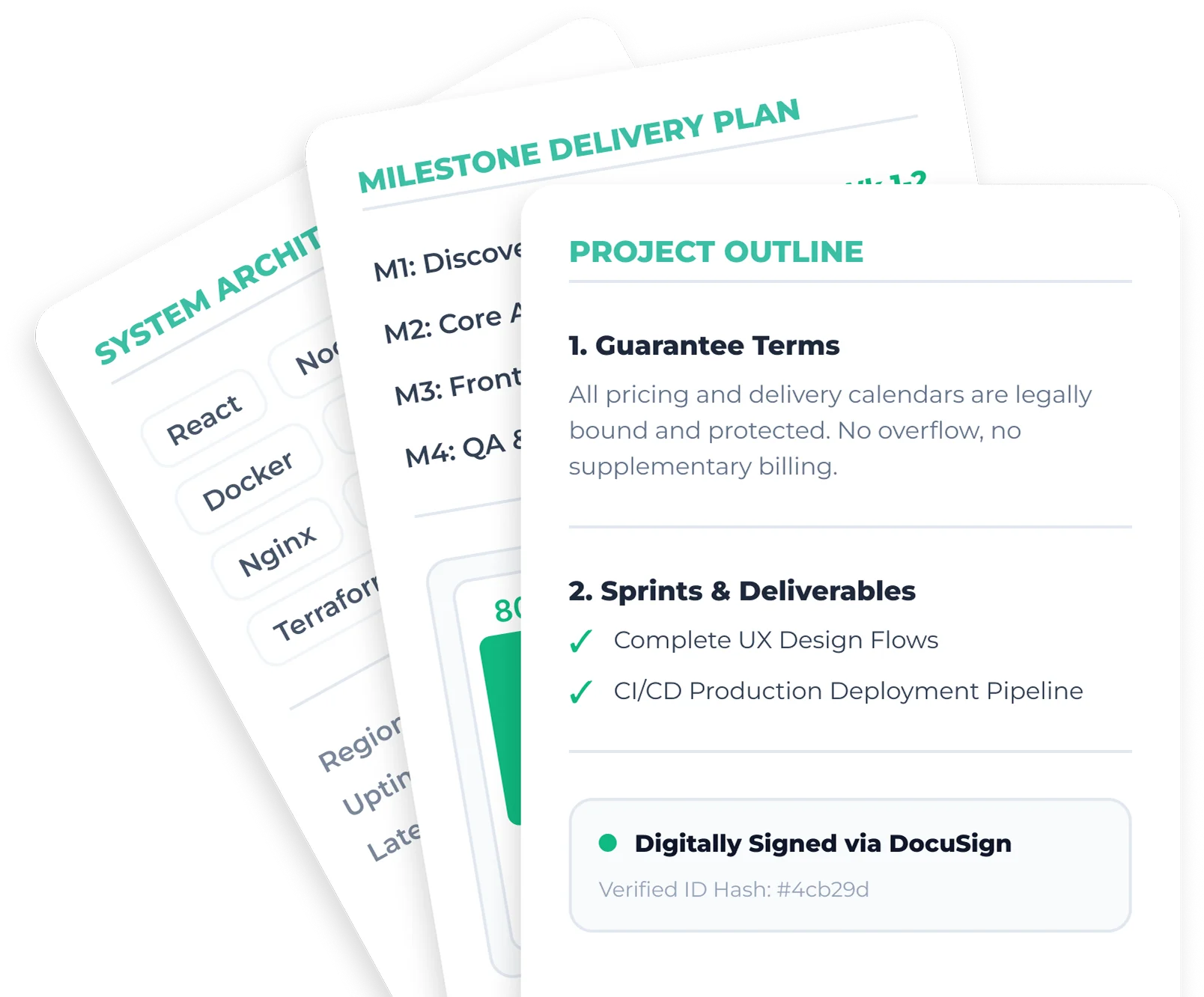
HOW DO WE BUILD YOUR CUSTOM SOFTWARE?
Each project moves through clear stages, from discovery to launch and support. You know what happens at every step, what you receive, and when you need to make a decision.
CUSTOM SOFTWARE DEVELOPMENT CASES
view all cases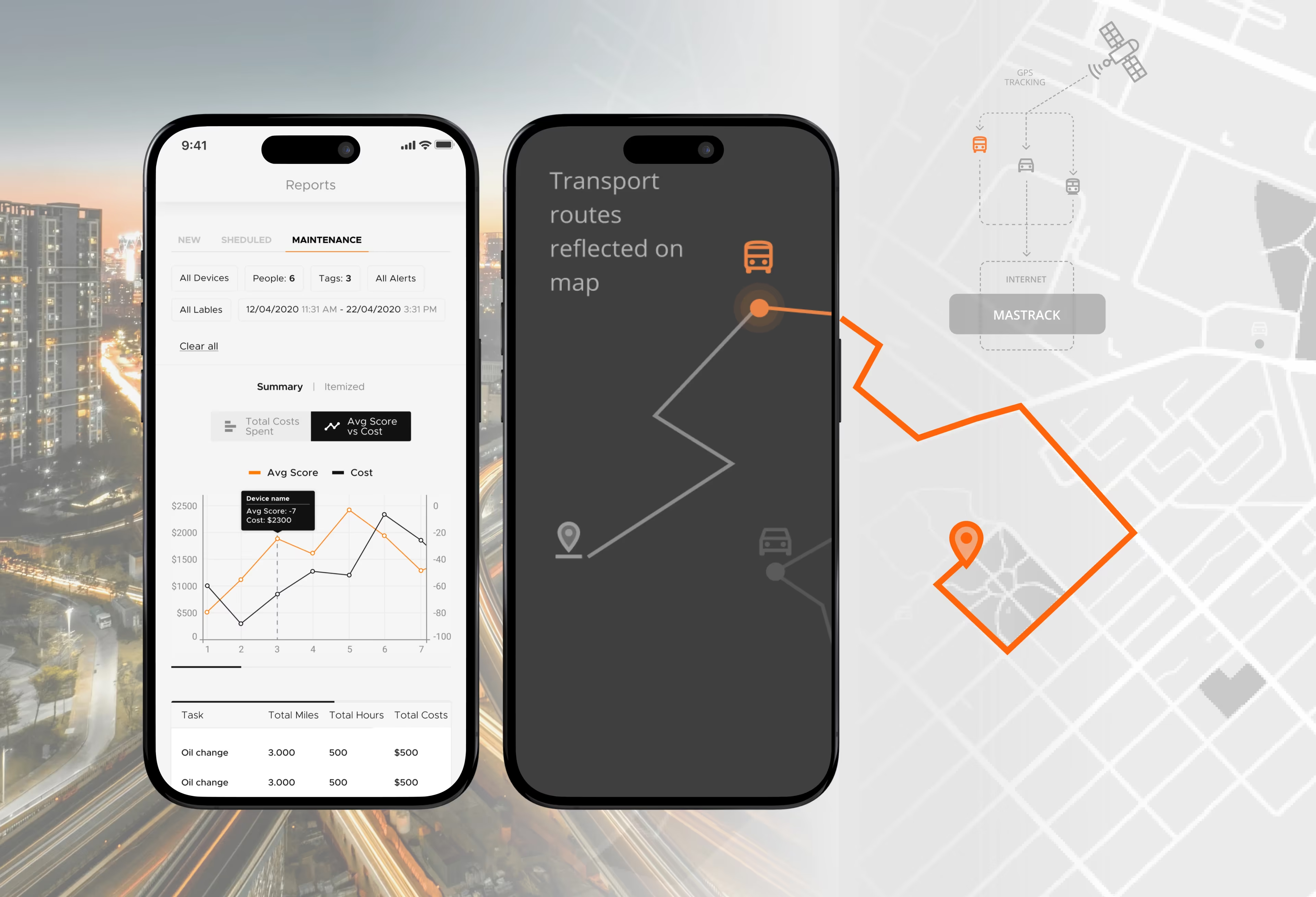
From MVP to Powerful GPS Tracking Platform
GPS Platform Upgrade with 30% Subscription Growth
We helped MasTrack rebuild its tracking platform, added real-time features, and automated billing, leading to faster user handling and 30% subscription growth.
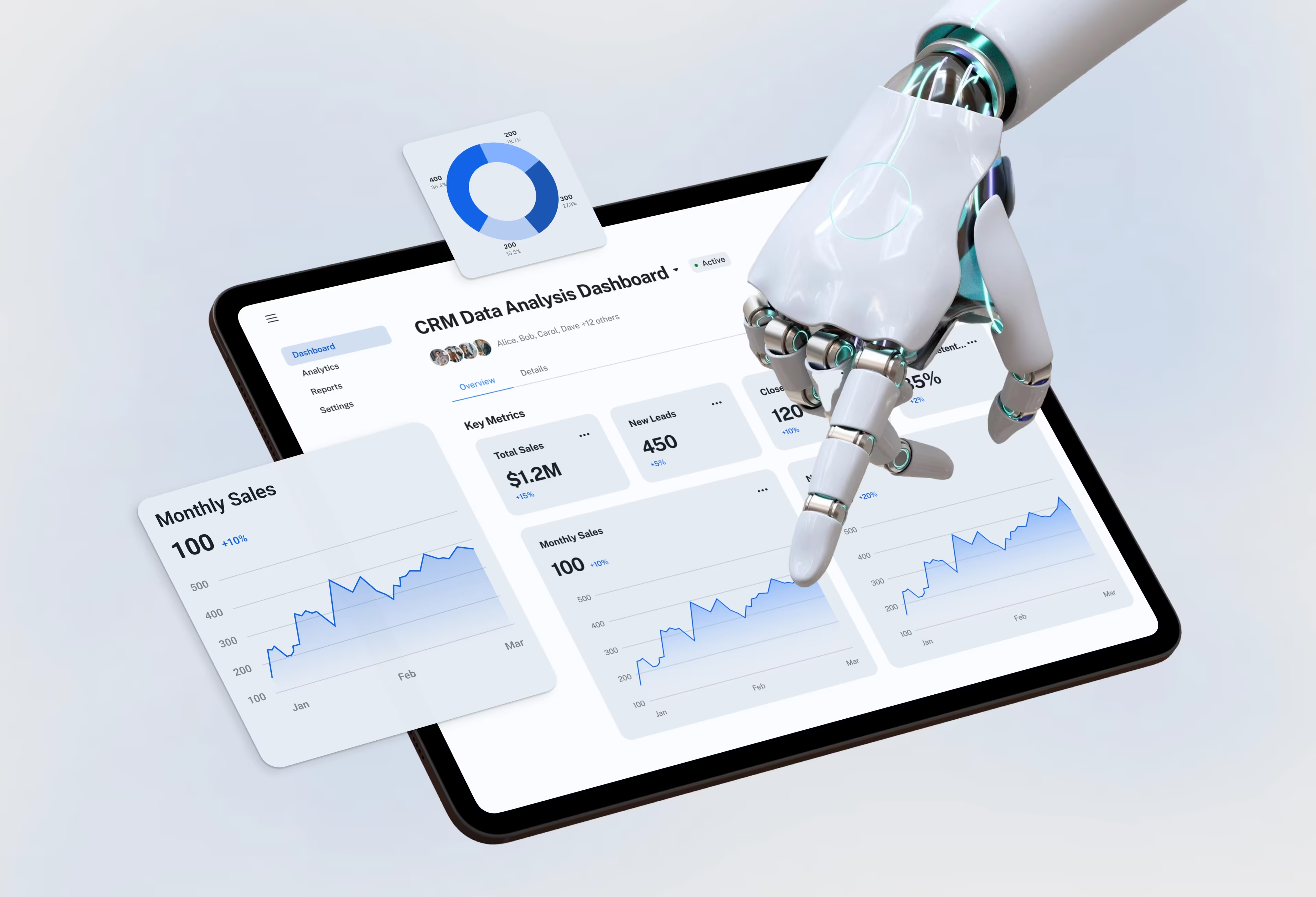
The Big Data Chef
Frontend for Power BI–Driven Data Insights Platform
We built the frontend for Big Data Chef, integrating Power BI reports and responsive dashboards that help businesses visualize insights from multiple data sources.

Sprinkle
How Sprinkle Cut Costs by 50% and Expanded User Base by 75,000 Through Strategic Optimization
We migrated Thailand's largest water delivery CRM to a custom solution, automating the call center and optimizing order management.

NDA
Crypto Marketplace for Steam Item Trading
We built a Steam-integrated platform for buying and selling CS2 skins with USDT, featuring smart contracts, bots, mobile-ready UI, and custom checkout flow.
WHAT’S ON OUR TECH STACK?
Each project runs on a stack chosen for its architecture and deployment constraints. What you see below is the full range of technologies those decisions draw from across different build types.
ChatGPT
A conversational AI developed by OpenAI that specializes in generating human-like responses, facilitating engaging and contextually relevant dialogues.
Llama
A modern language model known for its ability to understand and generate human-like text, enhancing natural language processing applications.
GPT4All
A flexible AI model aimed at democratizing access to generative pre-trained transformer technologies, making cutting-edge language models accessible to all developers.
LangChain
An open-source framework designed for building and deploying language-centric applications, leveraging AI to simplify complex linguistic processes.
Rasa
An open-source machine learning framework for automated text and voice-based conversational agents, enabling developers to build sophisticated AI assistants.
OpenAI
An industry-standard foundation model provider offering GPT, vision, and embedding APIs for intelligent assistants, content generation, and more.
Node.js
A runtime environment that allows for the execution of JavaScript code server-side, known for its event-driven, non-blocking I/O model that makes it lightweight and efficient.
PHP
A widely used open source scripting language especially suited for web development, embedded into HTML, making it simple to add functionality to web pages without external files.
Python
A high-level, interpreted language known for its clear syntax and readability, extensively used in web development, scientific computing, and data analysis.
Java
A robust, object-oriented programming language widely used for building enterprise-scale web applications, known for its portability across platforms from mainframe data centers to smartphones.
OpenZeppelin
Provides security products to build, automate, and operate decentralized applications, offering standard & audited smart contracts and tools for the Ethereum network.
Ethers.js
A universal library aimed at interacting with the Ethereum Blockchain and its ecosystem, simplifying the integration of client-side applications with blockchain features.
Web3
Represents a new paradigm for applications that operate on decentralized networks, enhancing user sovereignty and security.
Solidity
A programming language specifically designed for developing smart contracts that run on the Ethereum blockchain, enabling automated and secure transactions.
OpenSea
The largest marketplace for buying, selling, and discovering rare digital items and non-fungible tokens (NFTs) using blockchain technology.
Pinata
A cloud-based service that simplifies managing and deploying files across the decentralized web using IPFS technology, ensuring secure and persistent file storage.
DigitalOcean
A cloud infrastructure provider offering scalable compute platforms with virtual servers (Droplets), designed for developers to build, test, and scale applications easily.
AWS
The world's most multifaceted and broadly adopted cloud platform, offering over 200 fully featured services from data centers globally.
Hetzner
A German data center operator providing dedicated servers, colocation, and cloud solutions that emphasize performance, security, and reliability.
Docker
A platform for developing, shipping, and running applications inside lightweight and portable containers which use shared operating systems.
Ansible
An open-source automation tool for software provisioning, configuration management, and application deployment that facilitates complex workflows and automates cloud provisioning.
MySql
A popular open-source relational database management system known for its reliability and ease of use, ideal for both small and large applications.
MongoDB
A NoSQL database known for its high performance, high availability, and easy scalability, using a document-oriented data model that supports varied data types and dynamic schemas.
PostgreSQL
An advanced, open-source relational database system known for its reliability, technical standards compliance, and powerful features like flexible query mechanisms.
Redis
An in-memory data structure store, used as a database, cache, and message broker, known for its speed and supporting varied data structures such as strings, hashes, lists, and sets.
Elasticsearch
A search engine based on the Lucene library, providing a distributed, multitenant-capable full-text search engine with an HTTP web interface and schema-free JSON documents.
Miro
An online collaborative whiteboarding platform to bring teams together, anytime, anywhere. Ideal for brainstorming, planning projects, and managing workflows.
Adobe Photoshop
A top-tier software for image editing, graphic design, and digital art, offering powerful tools for photo retouching and creating stunning visuals.
Adobe Illustrator
Essential software for vector graphic design, used to create logos, icons, drawings, typography, and complex illustrations for any medium.
Procreate
A digital painting app for iPads, known for its intuitive interface and rich suite of brushes and tools ideal for artists on the go.
Jitter
A powerful motion design tool that lets you animate your designs easily without complex timelines, making it perfect for designers new to animation.
Angular
A platform and framework for building single-page client applications using HTML and TypeScript, known for its ability to empower developers to build applications that live on the web, mobile, or desktop.
SCSS
An extension of CSS that enables using variables, nested rules, inline imports, and more, keeping things organized and helping us create style sheets faster.
TypeScript
A strongly typed programming language that builds on JavaScript, providing better tooling at any scale, with the capability to catch errors early through its type system.
NextJS
A framework for server-rendered or statically exported React applications, simplifying tasks like routing and tooling, and improving performance with techniques like automatic code splitting.
React
A JavaScript library for building user interfaces, particularly for single-page applications where fast interaction between the user and the application are required.
React Native
A Meta-backed framework that renders genuine native UI from a JavaScript/TypeScript codebase. Uses the Fabric architecture for high-speed bridging and offers a massive ecosystem for rapid, cross-platform feature delivery.
Swift
Apple’s type-safe, high-speed language for iOS, macOS, and visionOS. Features modern syntax (SwiftUI), ARC memory safety, and direct hardware access. Now a powerful open-source server-side option (Vapor), enabling full-stack Swift development.
Kotlin
Concise, null-safe JVM language from JetBrains that powers Android apps and Kotlin Multiplatform projects, with coroutines, seamless Java interoperability, and high-performance collections.
Flutter
Google’s Dart-based UI toolkit for mobile, web, and desktop. Uses the Impeller rendering engine to ensure stutter-free 120 FPS performance. Its "everything is a widget" approach provides total pixel-level control from a single codebase.
Ionic
A web-first SDK built on Web Components, enabling mobile development with HTML, CSS, and JavaScript. Framework-agnostic (React, Vue, Angular) and powered by Capacitor, it’s a strong choice for enterprise teams leveraging existing web expertise.
Expo
An advanced ecosystem for React Native that reduces the complexity of native configurations. It manages builds, submissions, and over-the-air updates via EAS, enabling teams to ship updates without direct work in Xcode or Android Studio.
Capacitor
A modern web-to-native runtime that bridges web applications to native device APIs. Compared to legacy hybrid approaches, it generates standard native projects, giving developers full access to the underlying iOS and Android source code.
IN REVIEWS WE TRUST

 Based
BasedI’m most impressed with SapientPro’s development skills. They’ve developed our entire platform, and we didn’t have any in-house specialists to instruct them on how to build it.


WHY CHOOSE SAPIENTPRO FOR SOFTWARE DEVELOPMENT?
01
Fixed-Price Scoping with Cost Overrun Absorption
Every engagement begins with a signed SoW that sets a clear scope and estimate. If the build runs over, SapientPro absorbs the difference. The figure you sign is the figure you pay. Changes and new scope are priced openly before work begins.
02
US and EU Business Hours
With offices in New York, Tallinn, and Lucerne, our team works during both US and EU business hours. You can reach an engineer during your working day, and demos fit your calendar.
03
Direct Tech Communication
You talk to the engineers writing the code, across Slack, Teams, Jira, Linear, or Notion. Ask a question and get an answer from whoever actually made that decision. Weekly demos and live sprint boards keep you visible to every build decision.
04
Security and Compliance Practices
We sign an NDA before the first technical discussion, limit access to your data by role, and follow the security and compliance requirements of your industry, such as GDPR or HIPAA.
05
Regular Demos and Reporting
You talk directly to the engineers and project manager working on your product, with no extra layers in between. We share progress at regular demos and stay reachable between them.
BLOG
view all

FAQs
Got a Question We Missed?