
All How to Implement Computer Vision for AI Quality Control Automation in Manufacturing
March 9, 202620 min read


We all know that the manufacturing industry always focused on maximum production efficiency. However, as technology advances, so do the capabilities for improvement. This made artificial intelligence and computer vision a modern must-have for the niche.
A typical manufacturing environment involves multiple high-mix production lines where product variants change frequently. A human inspector may struggle to adapt to new defect criteria instantly, leading to inconsistent judgment – a phenomenon known as inspector subjectivity.
One operator’s "pass" may be another’s "fail", rendering statistical process control ineffective.
The solution to these challenges lies in the digitization of sight itself.
By implementing computer vision in manufacturing, businesses can transition from subjective & sampling-based inspection to objective, 100% inline verification. In this guide, SapientPro’s leading engineers explain what is quality control in manufacturing and how to implement computer vision for AI quality control automation.
What is Quality Control in Manufacturing and Why Automation Matters
To understand the transformative potential of AI, it is important to first define what is quality control in manufacturing. Fundamentally, quality control (QC) is the operational process of verifying that a product meets a defined set of technical specifications and quality criteria before it reaches the customer. It involves the inspection, testing, and grading of goods to identify non-conformities.
Traditionally, QC has been treated as a final checkpoint at the end of the production line. In this model, inspectors examine finished products and remove defective items before shipment. Modern manufacturing, however, increasingly shifts quality control upstream in the production process, allowing defects to be detected and corrected closer to their source.
Automation matters because it decouples inspection capacity from human labor constraints. An automated quality control system operates with deterministic consistency. It does not suffer from decision fatigue, nor does its visual acuity degrade over time. While human inspection efficiency typically tops out at 80-85%, automated systems using deep learning can achieve defect detection rates exceeding 95% to 99%.
Production speed is another major factor. Many manufacturing lines operate at hundreds or even thousands of units per minute, making full manual inspection impractical.
As a result, traditional QC often relies on statistical sampling—only a portion of products are inspected. Computer vision systems, however, enable 100% inspection of every unit at full production speed, shifting manufacturers from a sampling-based model of quality to a total quality approach.
Automation also turns inspection into a powerful source of operational data. Each inspected product generates a digital record, such as a timestamped image and classification result. This creates detailed traceability across the production process—something manual logs cannot provide at scale.
Computer Vision vs. Machine Vision
Machine vision typically refers to rule-based inspection systems. These systems rely on predefined algorithms and explicit logic created by engineers. For example, a rule might state: “If a dark cluster of pixels larger than 5 mm appears in this specific area, reject the part.”
Machine vision works extremely well for precise, quantitative tasks, such as measuring the diameter of a bore, verifying component alignment, or reading high-contrast barcodes. Because the rules are deterministic, these systems can perform inspections very quickly and with high measurement accuracy.
However, rule-based systems are often rigid and sensitive to environmental changes. Small variations (such as slight lighting shifts or defects appearing in unexpected shapes) can cause the rules to fail. As a result, traditional machine vision struggles with qualitative judgments and highly variable production environments.
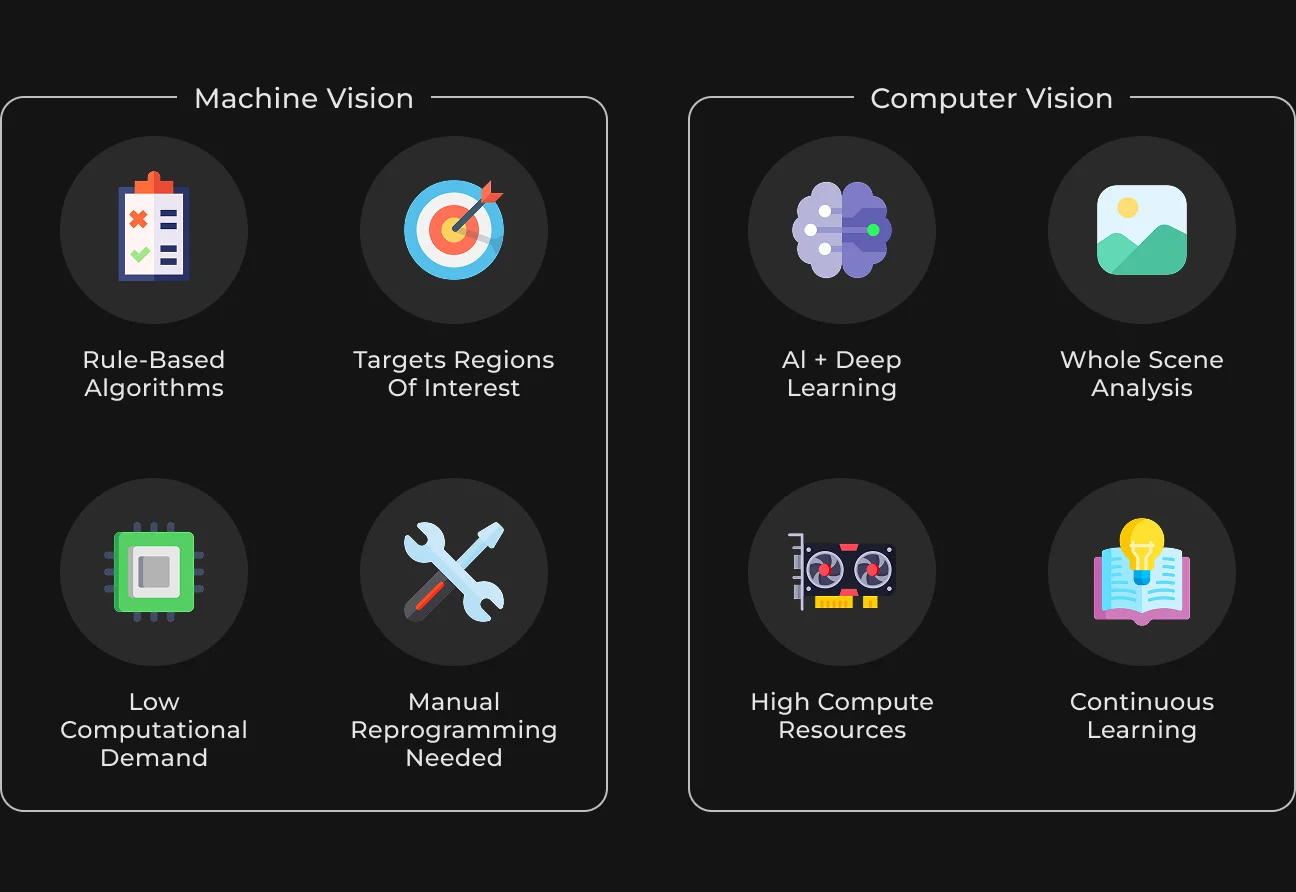
Computer vision for quality control, by contrast, uses a probabilistic approach similar to human perception. Instead of relying on fixed rules, these systems are trained on thousands of labeled images.
During training, neural networks learn to identify patterns and features—such as the texture of a scratch, a dent in a surface, or irregularities in a weld.
This learning-based approach allows computer vision in manufacturing to handle far greater complexity. It can adapt to variable lighting, diverse product appearances, and defects that are difficult to define with strict rules.
As a result, computer vision systems are better suited for detecting subtle, irregular, or “subjective” defects that traditional rule-based machine vision systems cannot reliably capture.
Feature | Machine Vision (Rule-Based) | Computer Vision (AI/Deep Learning) |
| Logic Mechanism | Deductive: Explicit "If-Then" programming. | Inductive: Learns patterns from training data. |
| Flexibility | Low: Requires reprogramming for variations. | High: Adaptable via retraining with new data. |
| Environmental Sensitivity | High: Requires strictly controlled lighting. | Moderate: More robust to lighting/position changes. |
| Primary Application | Gauging, Barcode Reading, Presence/Absence. | Classification, Segmentation, Anomaly Detection. |
| Setup Complexity | High engineering effort for complex logic. | High data collection effort; lower logic coding. |
| Defect Detection | Limited to known, definable defects. | Capable of detecting variable and unforeseen defects. |
Quality Control vs. Quality Assurance vs. Quality Management
To implement AI for manufacturing quality control effectively, you need to understand the difference between the following concepts:
- Quality Management (QM). This is the overarching system that dictates the company's quality philosophy, policies, and objectives. It is the strategic layer that coordinates all activities to direct and control an organization concerning quality.
- Quality Assurance (QA). QA is a proactive process focused on preventing defects. It involves designing processes, creating Standard Operating Procedures (SOPs), and auditing workflows.
- Quality Control (QC). QC is the reactive execution of inspection. It is the tactical layer that tests the output against the specifications defined by QA to ensure the customer receives a defect-free product.
Computer vision in manufacturing primarily serves the quality control function by performing inspections.
Element | Quality Management (QM) | Quality Assurance (QA) | Quality Control (QC) |
| Primary Focus | The entire system and organizational culture. | The manufacturing process and prevention. | The final product and defect detection. |
| Orientation | Strategic and Planning. | Proactive and Process-oriented. | Reactive and Product-oriented. |
| Goal | Sustainable business success. | Defect prevention. | Defect identification. |
| Activity Example | Defining quality policy. | Process audits, training. | Inspection, testing, sampling. |
| AI Application | Predictive analytics for strategy. | Drift detection in process data. | Computer vision quality inspection. |
Benefits in Computer Vision for Quality Control
The benefits extend beyond simple error reduction to encompass operational efficiency, cost optimization, and brand protection.
Unmatched Defect Detection Accuracy
The primary advantage of AI for quality control is its ability to surpass human visual capabilities. Human inspectors are susceptible to "change blindness" and fatigue-induced errors. Human inspectors can miss 20-30% of defects in repetitive tasks.
In contrast, AI systems, particularly those using Convolutional Neural Networks (CNNs), can detect microscopic defects (such as hairline cracks in aerospace composites or sub-millimeter scratches on electronics) with consistency that human eyes cannot match.
In the automotive sector, AI-driven weld inspection has demonstrated detection rates of 99.8%.
High-Speed Throughput and Real-Time Action
A human cannot reliably inspect 963 blister packs per minute. However, a computer vision system can.
Automated quality control enables 100% inline inspection. This means every single product is verified without slowing down production. It can instantly signal a PLC to reject a defective part or stop a machine that has drifted out of tolerance.
This immediacy is critical for maintaining high OEE (Overall Equipment Effectiveness).
Significant Cost Reduction and ROI
While the initial capital expenditure for how to improve quality control in manufacturing via AI can be significant, the Return on Investment (ROI) is compelling. The most obvious saving is in labor costs, as automated systems reduce the need for large inspection teams.
However, the hidden costs of quality (scrap, rework, and warranty claims) are where the true value lies. Catching a defect at the component stage costs significantly less than catching it at final assembly or, worse, after it reaches the customer.
For instance, Renault uses Google Cloud’s Visual Inspection AI to implement more accurate quality controls with a significantly reduced time to market at a lower cost.
Objective Consistency and Standardization
Human inspection is inherently subjective. Decisions can vary between shifts, individuals, and even the time of day. Computer vision in manufacturing eliminates this variability. An AI model applies the exact same threshold for a "scratch" or "dent" every time.
It ensures a standardized quality metric across all production lines and facilities.
Improved Traceability and Compliance
Quality control automation systems digitize the inspection process. They are storing images and classification results for every unit produced. This creates an immutable digital audit trail. If a product failure occurs in the field, the manufacturer retrieves the specific inspection record to prove that the product met standards when it left the factory.
For efficient handling of these records, integration with an AI document processing system ensures that visual data is correlated with batch records and shipping manifests.
See how we accelerated inspection by 87.5%
SapientPro implemented AI into fruit inspection for better speed and quality.
Use Cases for Computer Vision Quality Inspection
The versatility of computer vision in manufacturing industry settings allows it to address a diverse array of quality challenges.
1. Surface Defects
Surface inspection is perhaps the most ubiquitous application of computer vision quality inspection. It involves the detection of cosmetic and structural anomalies on the surface of a product. This includes:
- Scratches;
- Dents;
- Pits;
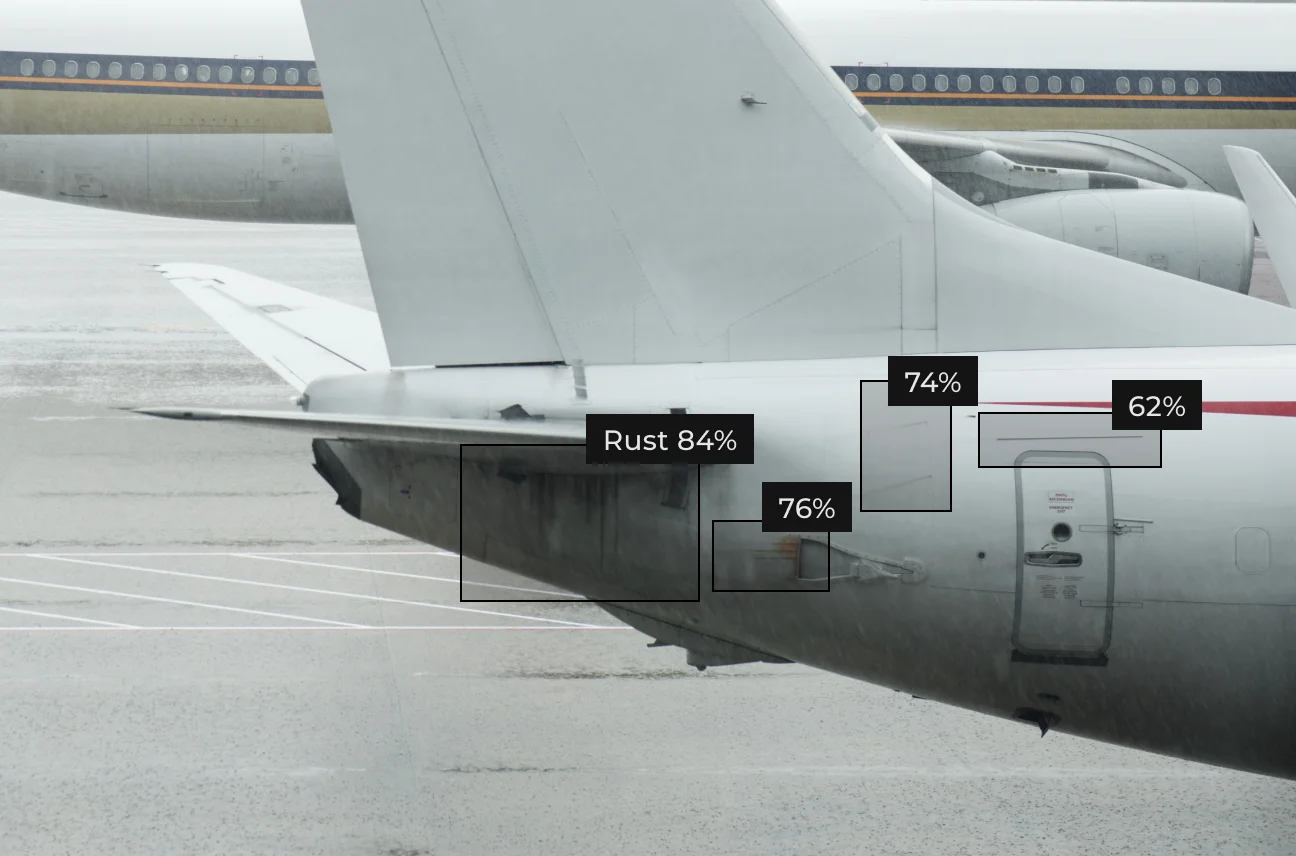
- Rust;
- Discoloration;
- Texture irregularities.
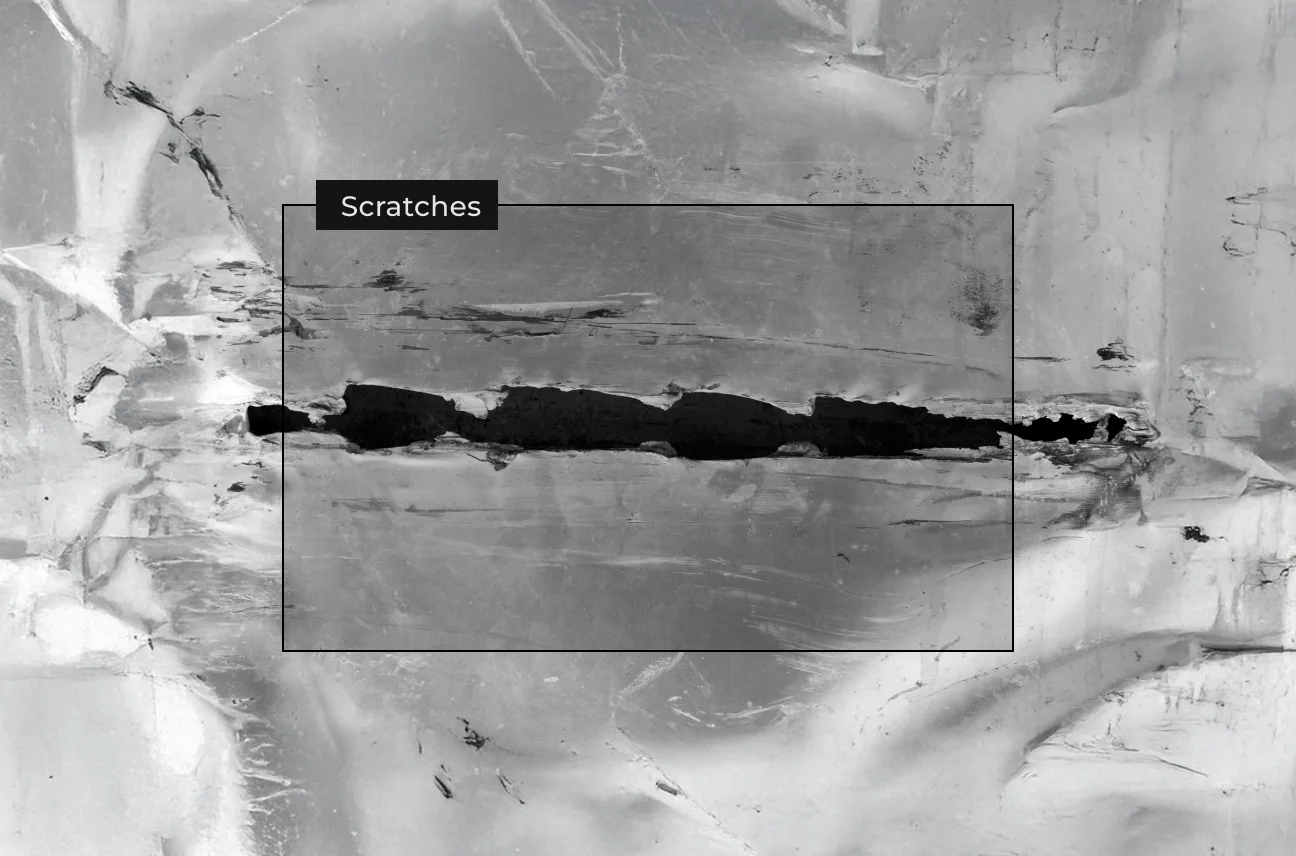
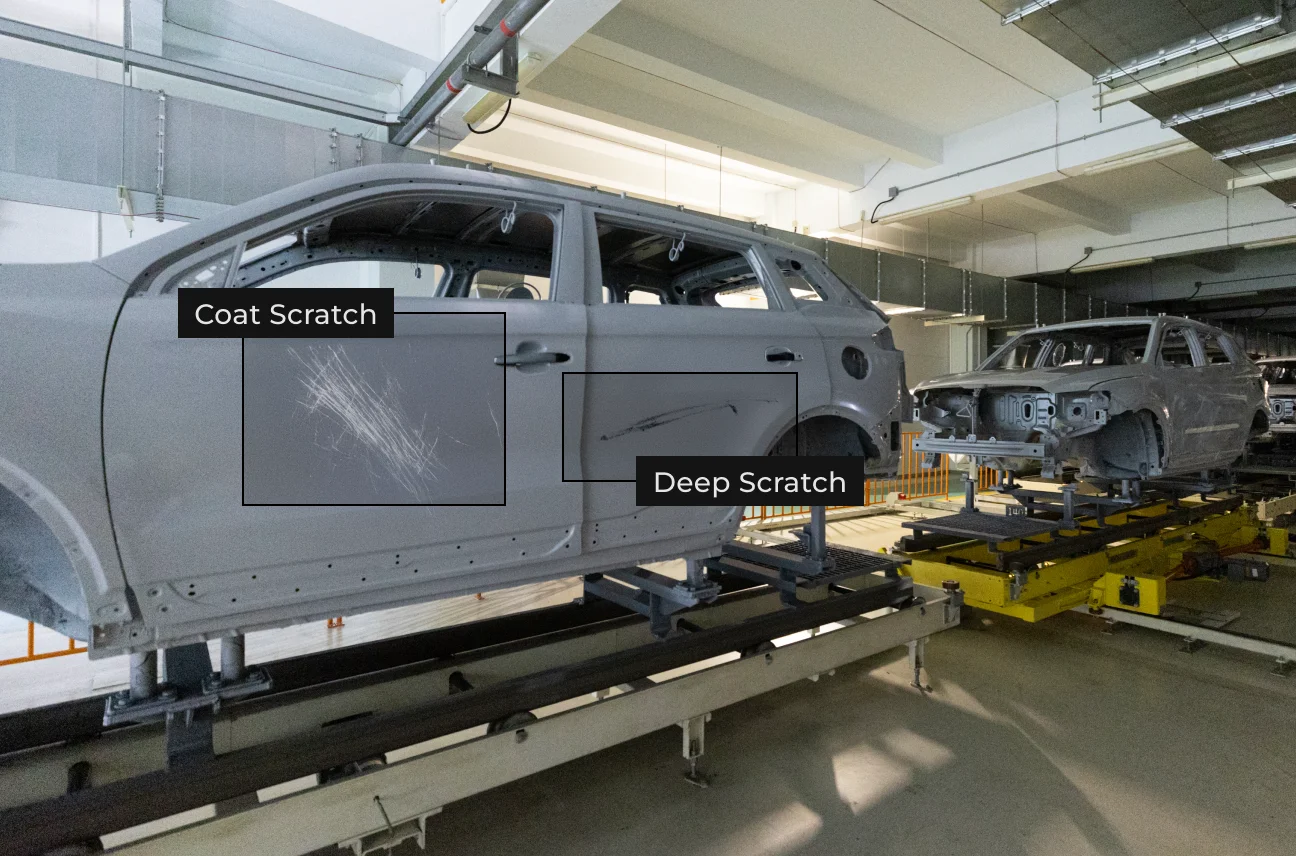
In the automotive industry, automated deflectometry systems are used to scan painted car bodies for "orange peel" effects or dust inclusions. In the steel industry, line-scan cameras detect surface cracks in sheet metal moving at high speeds. Deep learning models, particularly segmentation networks, excel here by distinguishing between acceptable surface variations (like grain in leather) and actual defects.
2. Dimensional Checks
While AI is renowned for pattern recognition, it is also a powerful tool for non-contact metrology. To ensure parts adhere to geometric tolerance, automated quality control systems measure physical dimensions:
- Length;
- Width;
- Diameter;
- Curvature.
This is critical in precision engineering, such as verifying the gap between spark plug electrodes. Or the diameter of a machined cylinder.
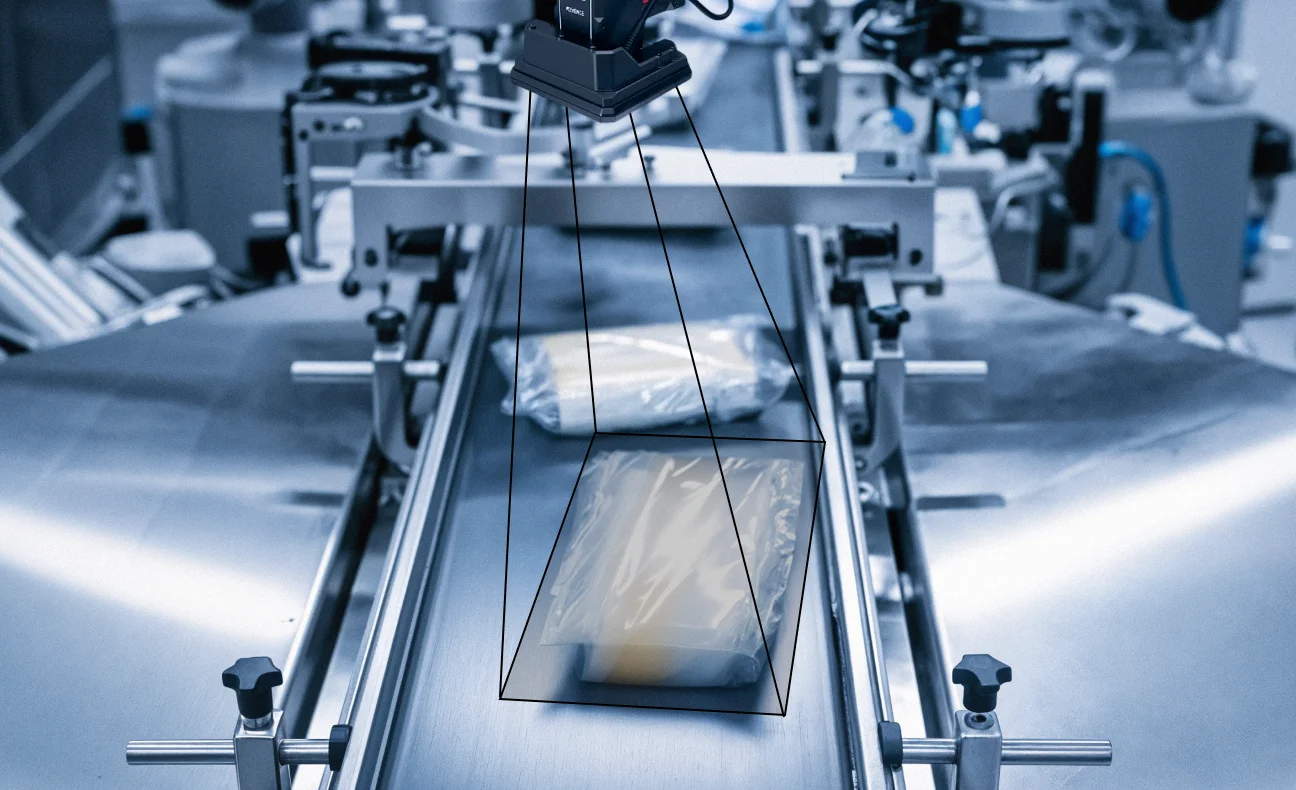
Unlike mechanical gauges, computer vision does not touch the part. This eliminates the risk of deformation or contamination. In semiconductor manufacturing, these systems verify feature sizes at the nanometer scale.
3. Packaging and Labeling Verification
Packaging errors are a leading cause of product recalls. Particularly in the food and pharmaceutical sectors.
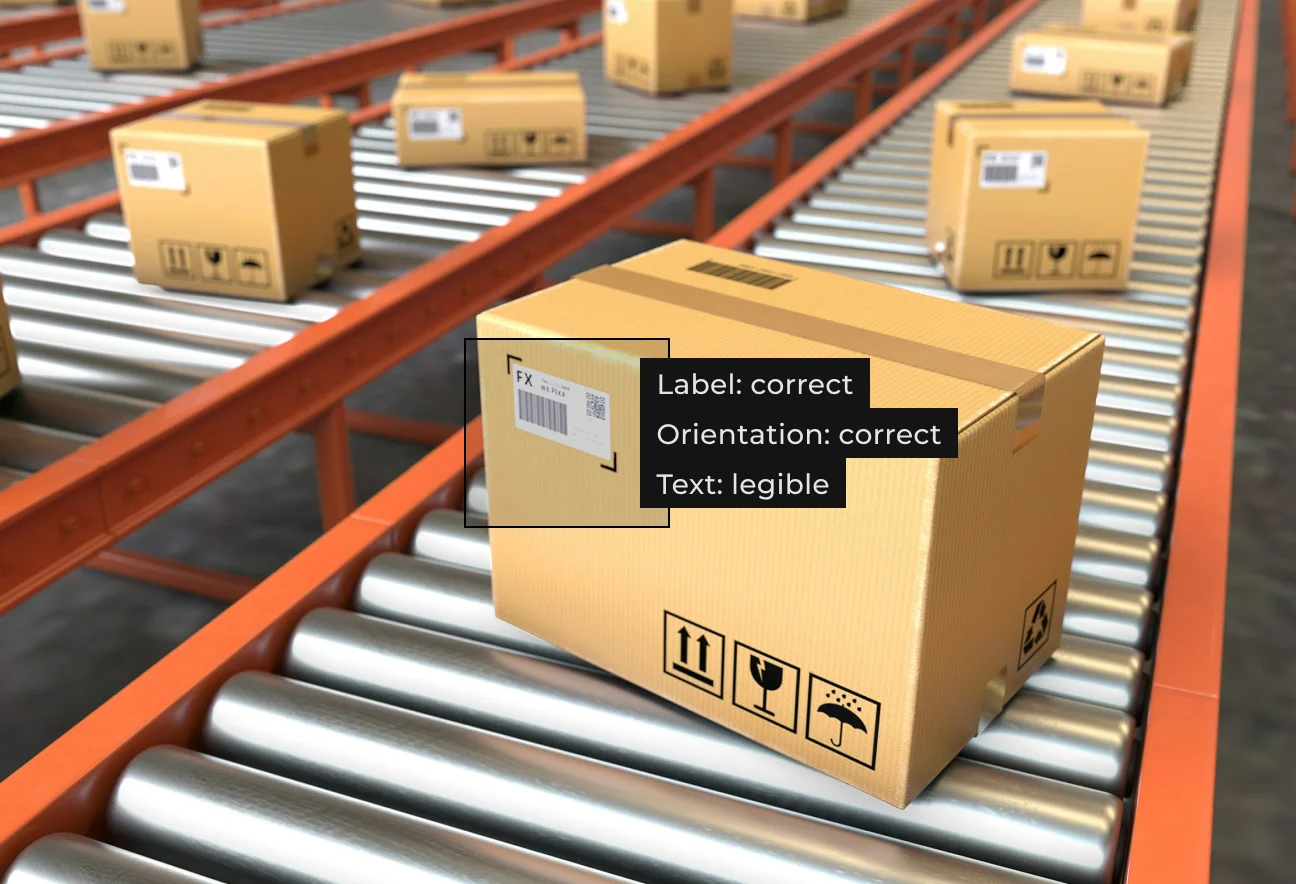
Computer vision for quality control verifies that:
- The correct label is applied;
- The label is oriented correctly;
- All text is legible.
OCR and OCV technologies read lot codes, expiration dates, and allergen warnings. This helps ensure they match the production order. A misprinted expiry date or a missing allergen label has severe legal and health consequences. This use case is vital for risk mitigation.
Integrating AI in supply chain management further improves this by tracking verified packages through logistics networks.
4. Fill-Level and Seal Integrity
Computer vision systems use high-speed imaging to check the fill levels of bottles and containers. Under-filling violates weights and measures regulations. Over-filling results in product giveaway and waste.
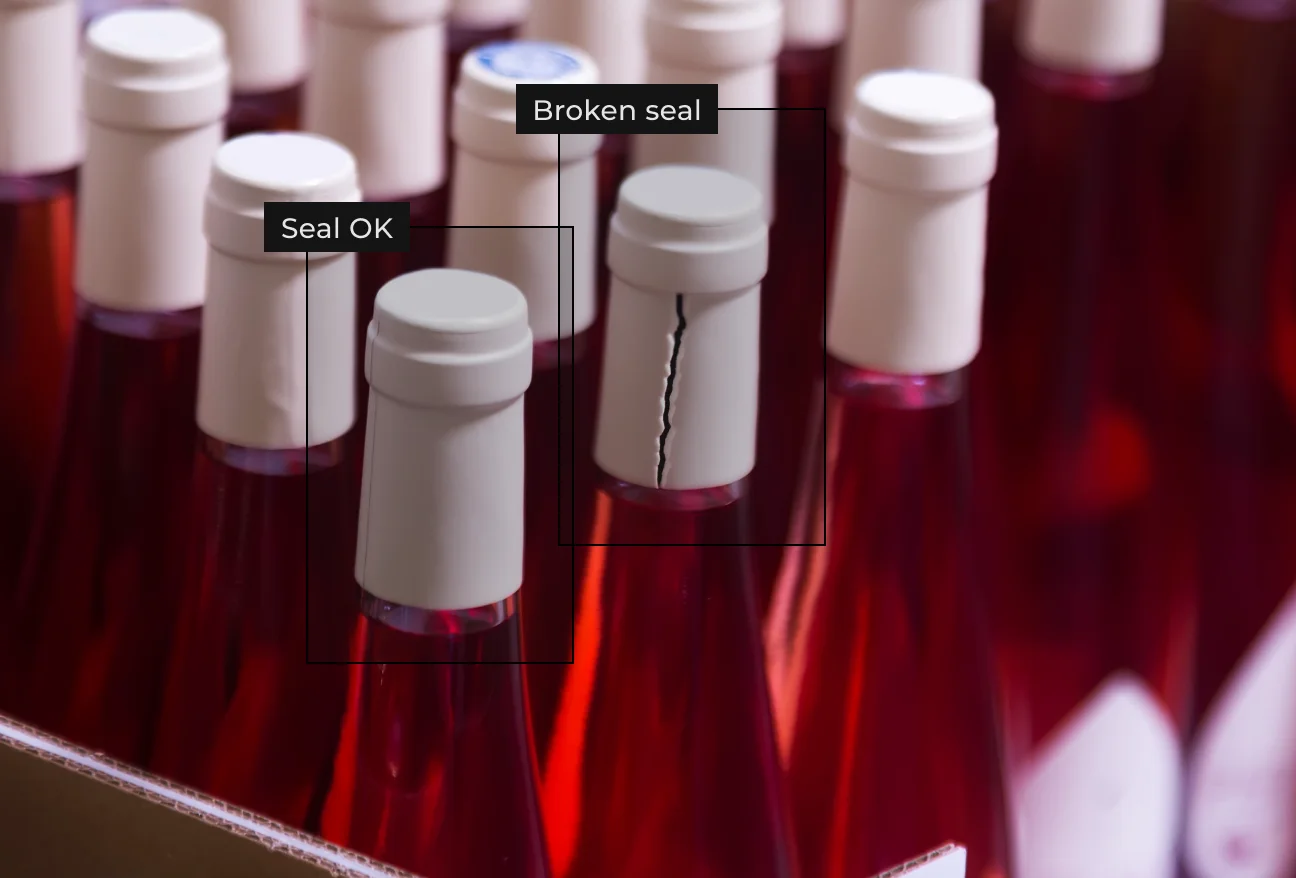
Furthermore, these systems inspect the integrity of the closure, checking for:
- Skewed caps;
- Missing tamper-evident bands;
- Incomplete heat seals on blister packs.
A hermetic seal is critical for preventing spoilage and contamination.
5. PPE and Safety Compliance Checks
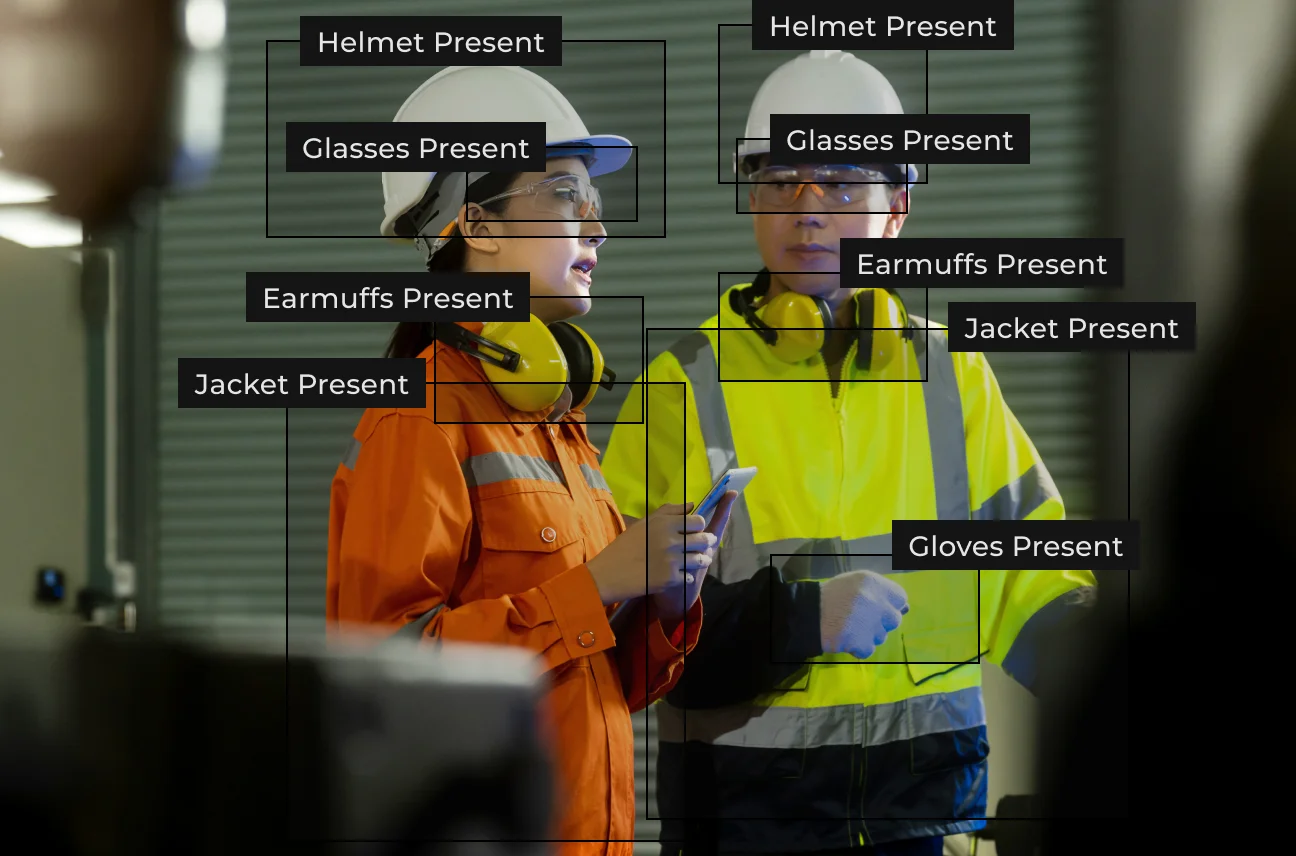
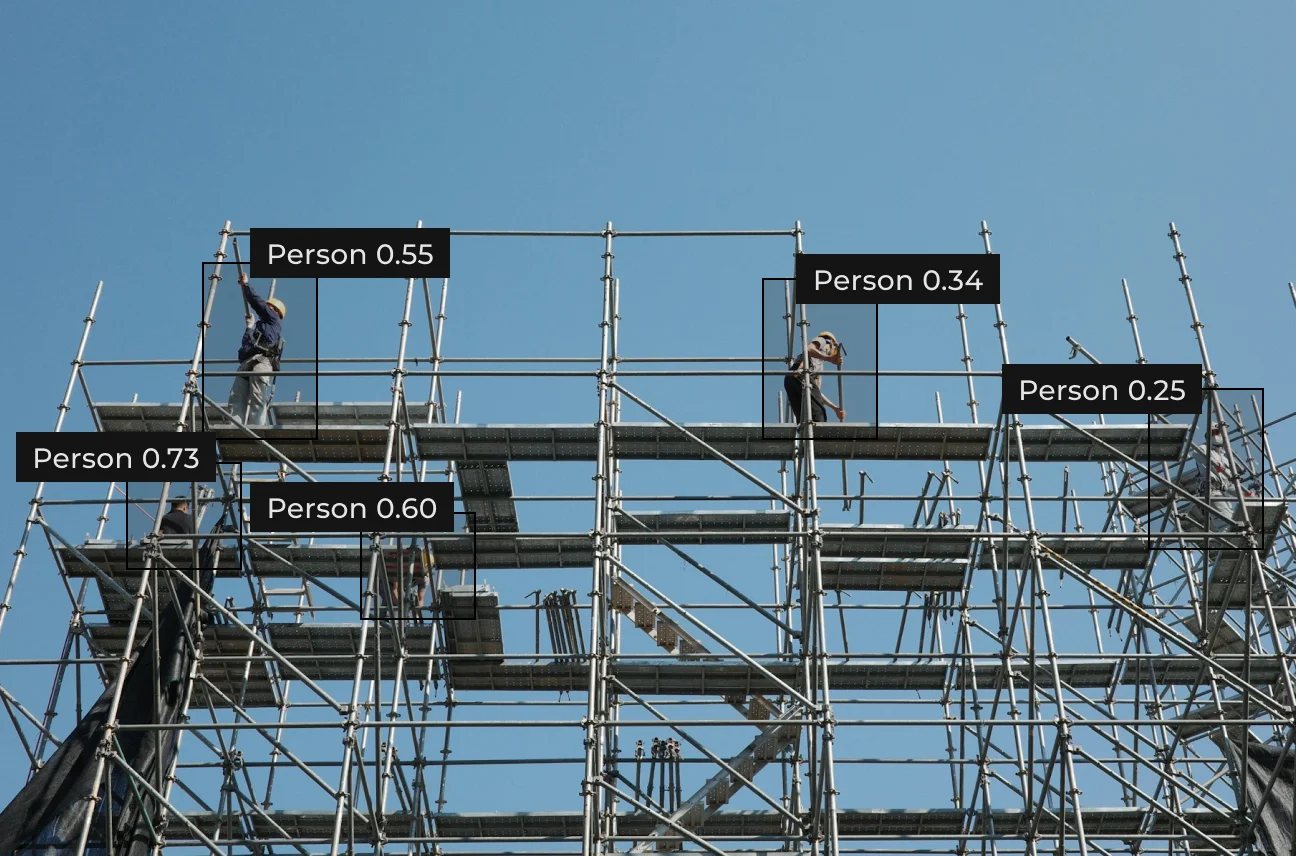
Quality control in manufacturing is not limited to the product. It extends to the environment and the personnel. Cameras equipped with object detection models verify that workers are wearing appropriate Personal Protective Equipment (PPE), such as:
- Hard hats;
- Safety glasses;
- High-visibility vests;
- Gloves.
Pharmaceutical cleanrooms or semiconductor fabs require detecting a gowning violation (exposed hair or improper glove usage).
Industries That Use AI for Quality Control
The penetration of AI for manufacturing quality control is evident across virtually all manufacturing verticals.
Automotive
The automotive sector is a pioneer in automated quality control:
- Weld inspection. Modern vehicles contain thousands of resistance spot welds. AI systems analyze weld surface characteristics in real-time to detect defects like expulsion, porosity, or undersized nuggets.
- Paint and trim. Automated inspection cells scan vehicle bodies to detect paint defects. Interior inspection systems verify the correct installation of trim, seats, and dashboards.
- Connector placement. In the assembly of wire harnesses, CV systems verify that electrical connectors are fully seated and locked. This prevents electrical faults that could lead to warranty claims.
Automated systems are currently used in "Body-in-White" assembly to inspect resistance spot welds. For example, AI vision systems have been deployed to inspect 3,000–5,000 spot welds per vehicle in real-time.
Pharmaceuticals
In the pharmaceutical industry, quality control automation is a regulatory mandate (FDA 21 CFR Part 11):
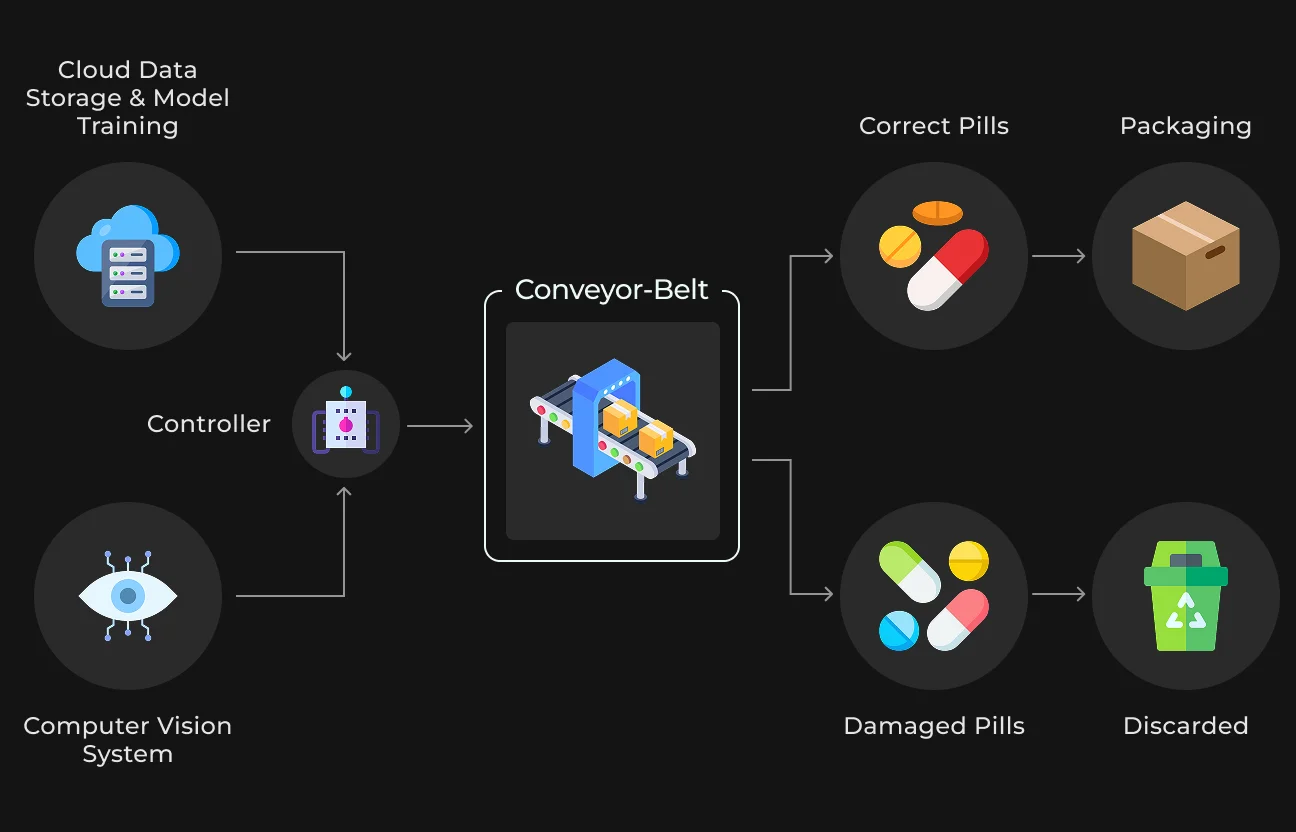
- Blister pack integrity. Vision systems inspect blister packs to ensure every pocket contains a tablet. It also ensures that the tablet is unbroken and of the correct color.
- Label verification. OCR systems verify batch numbers and expiration dates on vials and cartons to prevent medication mix-ups.
- Contamination detection. Automated inspection machines examine liquid injectables for particulate matter.
DeepInspect is used to inspect blister packs at high speeds. These systems can detect defects such as empty pockets, broken tablets, or color mismatches with 99.5% accuracy, ensuring compliance with FDA 21 CFR Part 11 regulations. HERMA GmbH integrated vision technology to verify lot codes and expiration dates on every single unit, preventing medication mix-ups and ensuring full traceability.
Construction (Material Manufacturing)
The production of construction materials uses CV to ensure structural safety:
- Crack detection. AI systems inspect pre-cast concrete and steel components for structural cracks or surface defects.
- Dimensional accuracy. Verifying that fabricated components match the precise dimensions of Building Information Models (BIM) before they are shipped to the construction site.
Aerospace
Aerospace manufacturing is characterized by high-value, low-volume components where failure is catastrophic:
- Composite defects. AI analyzes images of carbon fiber layups during manufacturing to detect wrinkles, foreign object debris (FOD), or fiber misalignment before the material is cured.
- Fastener presence. With thousands of rivets on an aircraft fuselage, automated systems verify that every fastener is present, flush, and correctly installed.
- Traceability. Visual data provides a "digital birth certificate" for critical parts. It ensures full traceability throughout the aircraft's lifecycle.
Research and pilots with Airbus components have demonstrated the use of CNNs to classify surface defects such as flaking, scratches, and folds on composite panels. These systems achieved perfect recall (1.0) for targeted defect types during testing, ensuring no critical defects were missed.
Electronics (PCB & Semiconductor)
The electronics industry operates at microscopic scales. Here, manual inspection is impossible. So, the computer vision quality inspection system helps with the following tasks:
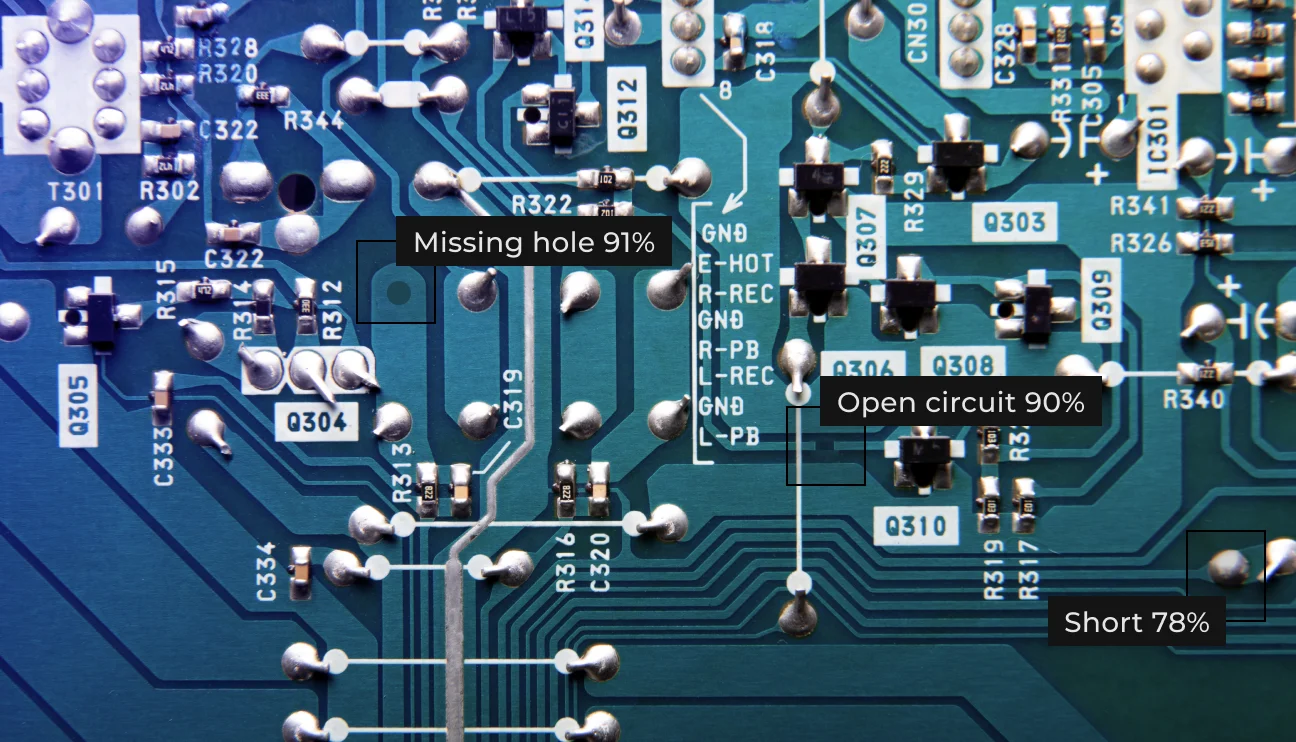
- PCB inspection (AOI). Automated Optical Inspection systems detect defects on Printed Circuit Boards (PCBs), such as solder bridges, tombstoning, missing components, and skewed placements.
- Wafer inspection. In semiconductor fabrication, CV systems scan silicon wafers for defects at the nanometer scale. It identifies crystal defects or lithography errors.
- Assembly verification. Systems ensure that components like heat sinks, fans, and connectors are correctly assembled in the final product.
In semiconductor manufacturing, vision systems are used for sub-5nm defect detection and precise wafer alignment.
Food and Beverage
In this sector, speed and hygiene are paramount:
- Foreign object detection. Vision and X-ray systems detect contaminants like metal, glass, or plastic in food products.
- Packaging quality. Ensuring that seals are intact and labels are correct to prevent food spoilage and recalls.
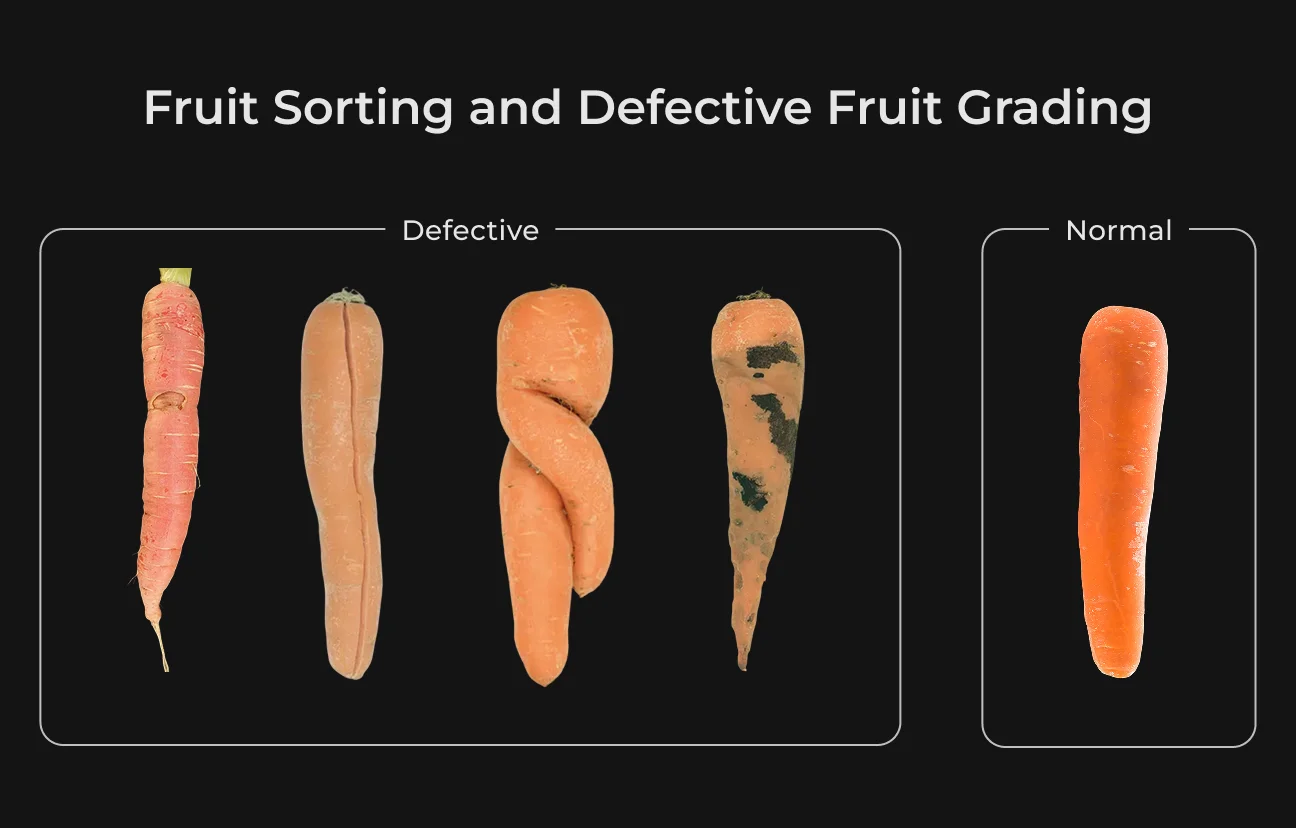
- Grading and sorting. AI systems grade fruits, vegetables, and meats based on size, color, marbling, and surface blemishes. It can automate the sorting process.
With label errors causing 45.5% of U.S. food recalls in 2024, AI systems now verify allergen warnings and expiration dates at line speeds. Another example is the "Bone Hunter" system. It uses dual-energy X-ray and deep learning to detect bone fragments in meat and poultry. This way, the system adapts to variations in product density to reduce false rejects.
Textiles
The textile industry uses computer vision in manufacturing to ensure the quality of fabric:
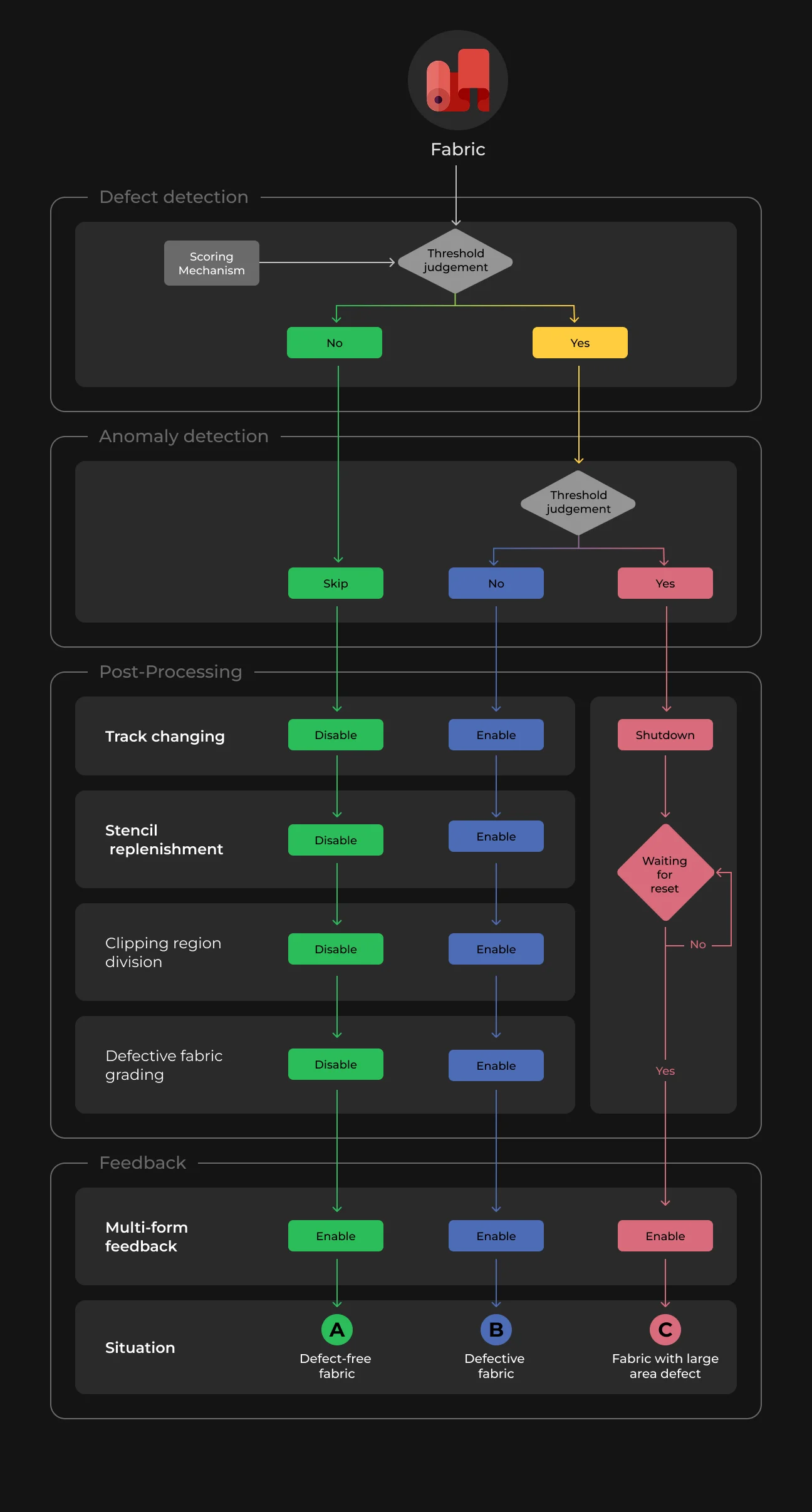
- Weaving defects. Line-scan cameras detect defects in fabric rolls moving at high speeds, such as holes, oil spots, missing threads, or weaving irregularities.
- Pattern matching. AI verifies that printed patterns are aligned and consistent across the fabric.
- Color consistency. Systems monitor dye quality to ensure color uniformity across different batches.
Computer Vision Architecture for Quality Inspection
Implementing a robust computer vision quality inspection system requires a well-architected pipeline that spans hardware, software, and integration layers.
How to Choose the Right Approach
Selecting the appropriate algorithmic strategy is the first step in architectural design:
- Rule-based vision. Ideal for simple, high-contrast tasks with fixed variables (checking if a cap is present). It is computationally cheap and fully explainable, but lacks flexibility.
- Classical ML + features. It involves extracting specific features (edges, blobs, textures) and using statistical classifiers (SVM, Random Forest). Good for mid-complexity tasks where deep learning resources are unavailable.
- Deep Learning (DL). The standard for AI for quality control. It uses Convolutional Neural Networks (CNNs) to automatically learn feature representations. It is best suited for complex, unstructured environments, high visual variability, and classifying subjective defects.
SapientPro can consult you regarding how to build a computer vision architecture for quality inspection. Just contact our team for a detailed estimate..
Model Types Based on Inspection Tasks
Different quality objectives necessitate different AI model architectures:
Model Type | Function | Use Case Example | Output |
| Image Classification | Assigns a single label to an entire image. | Is this PCB defective or good? | "Defect" / "No Defect" |
| Object Detection | Locates and classifies objects within an image. | Find and count all scratches on this panel. | Bounding Boxes + Labels |
| Semantic Segmentation | Classifies every pixel in an image. | Outline the exact shape of a rust patch. | Pixel Mask |
| Anomaly Detection | Identifies deviations from a "normal" baseline. | Flag this part because it looks "weird" (unknown defect). | Anomaly Score / Heatmap |
| OCR/OCV | Reads and verifies text strings. | Verify the serial number against the database. | Text String |
Architecture Approach for Computer Vision in Quality Inspection
A standard computer vision in manufacturing industry pipeline follows a linear data flow:
- Image capture station. It consists of industrial cameras (Global shutter, Line scan) and specialized lighting (Dome, Coaxial, Ring). Lighting is critical to highlight defects.
- Preprocessing. Raw images are processed (cropping, filtering, normalization) to improve the signal-to-noise ratio.
- Inference. The AI model processes the image on an edge device or server to generate a prediction.
- Decision rules. Post-processing logic interprets the AI output ("Reject only if defect confidence > 90% and size > 2mm").
- PLC/MES integration. The system communicates with the Programmable Logic Controller (PLC) to actuate physical reject mechanisms and sends data to the Manufacturing Execution System (MES).
- Traceability storage. Images and metadata are archived for audit trails and future model retraining.
Successful automated quality control depends on integration. The vision system must "speak" the language of the factory (protocols like OPC UA, MQTT, or Modbus) to synchronize with PLCs, robots, and conveyor systems.
The computing site is also important here. Edge computing vs. cloud computing vs. hybrid computing:
- Edge computing. Processing data locally on the device (NVIDIA Jetson). Offers low latency (real-time), high security, and reliability (works offline). Best for real-time inspection.
- Cloud computing. Processing on remote servers. Offers infinite scalability and storage. High latency makes it unsuitable for real-time line control but ideal for aggregating data and training models.
- Hybrid architecture. The optimal approach. Model training and long-term analytics occur in the cloud, while inference (execution) happens at the edge.
How to Implement Computer Vision Quality Inspection
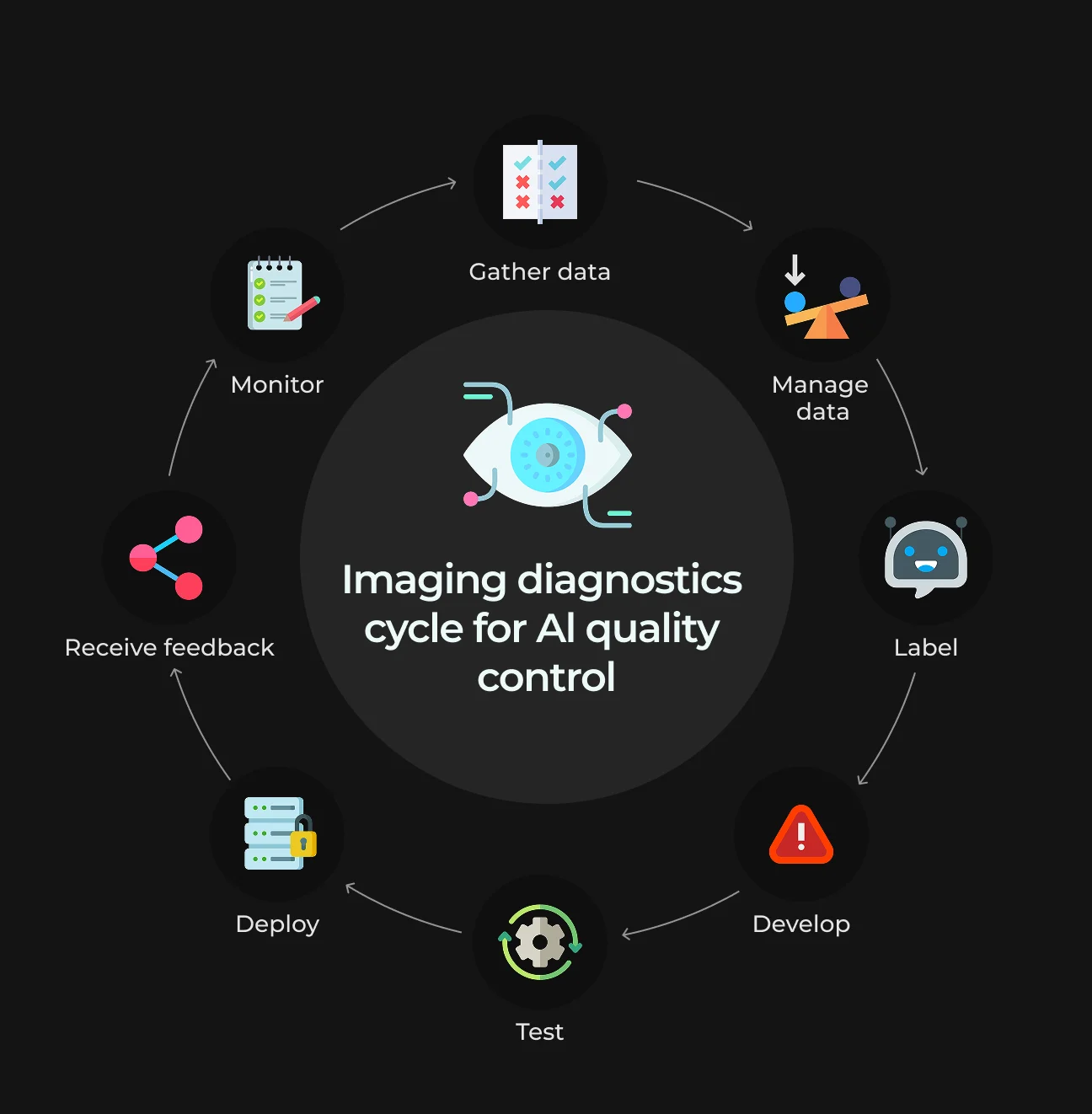
Transitioning to computer vision for quality control is a complex engineering project. A structured implementation roadmap is essential for success.
1. Problem Definition and Scope
Start by identifying specific pain points. Is the goal to reduce false positives? To inspect a new defect type?
Define the "Kill List" of defects that must be detected and establish clear success metrics. For example, False Acceptance Rate < 0.1%.
2. Data Collection and Annotation
AI models require data to learn. Collect a diverse dataset of images representing both "good" parts (OK) and "bad" parts (NG). The dataset must capture the full range of production variability, including lighting changes and part positioning. Accurate labeling (annotation) of this data is crucial.
3. Proof of Concept (PoC)
Before scaling, validate the technology. Build a small-scale prototype on a single line or offline station. Train an initial model and test it against a validation set. This phase proves whether the chosen camera/lighting setup and AI architecture can actually detect the defects in question.
4. Hardware Selection and Installation
Based on the PoC, select the production-grade hardware. Resolution, frame rate, and sensor type must match line speed and defect size. Lighting is paramount. The goal is to create contrast that makes the defect "pop".
5. Shadow Mode Deployment
This is a best practice for risk mitigation. Deploy the system on the production line, but do not give it control over the reject mechanism. Let it run in "Shadow Mode", analyzing parts silently. You must compare its decisions with those of human inspectors.
6. Integration, Go-Live, and Continuous Monitoring
Once the model achieves the target accuracy in Shadow Mode, integrate it with the PLC to enable automated rejection. Connect the data stream to the MES for reporting.
Then implement AI observability to monitor for model drift. Regularly retrain the model with new data to handle new defect types or product variations.
Challenges of Implementing AI Quality Control Automation with CV
Despite the clear benefits, how to improve quality control in manufacturing with AI involves overcoming significant hurdles.
Data Drift and Environmental Variability
Factory environments are dynamic. Lighting conditions can change as bulbs age, or skylights admit different amounts of sunlight. Raw materials from different suppliers may have slight color variations. These changes cause data drift, where the live data no longer matches the training data. The result? A drop in accuracy.
This is why it is important to understand how to detect data drift. Manufacturers must monitor their systems for data drift. We also recommend that you use techniques like data augmentation to make models more reliable.
Handling Rare Defects (Data Scarcity)
In a high-quality manufacturing process, defects are, by definition, rare. Collecting thousands of images of a specific "black swan" defect is difficult. This data imbalance hinders model training.
To address this, engineers use Few-Shot Learning (training on very few examples) and Synthetic Data Generation (using generative AI to create fake defect images) to train the system without waiting for defects to occur naturally.
Integration with Legacy Infrastructure
Many factories operate on legacy equipment that predates modern IT standards. Interfacing a cutting-edge AI system with a 20-year-old PLC is challenging. It often requires:
- Middleware;
- Retrofitting sensors;
- Custom engineering to bridge the OT-IT gap.
Ensuring that the new system works seamlessly with the existing one is critical for data continuity.
How SapientPro Implemented AI for Produce Quality Automation
An exemplary case of how to improve quality control in manufacturing is SapientPro's collaboration with a Canadian AgTech company. The client faced significant challenges in inspecting fresh produce.
The process was manual, subjective, and disconnected. Inspectors relied on handwritten notes and disparate photos. This led to slow reporting and inconsistent quality grading.
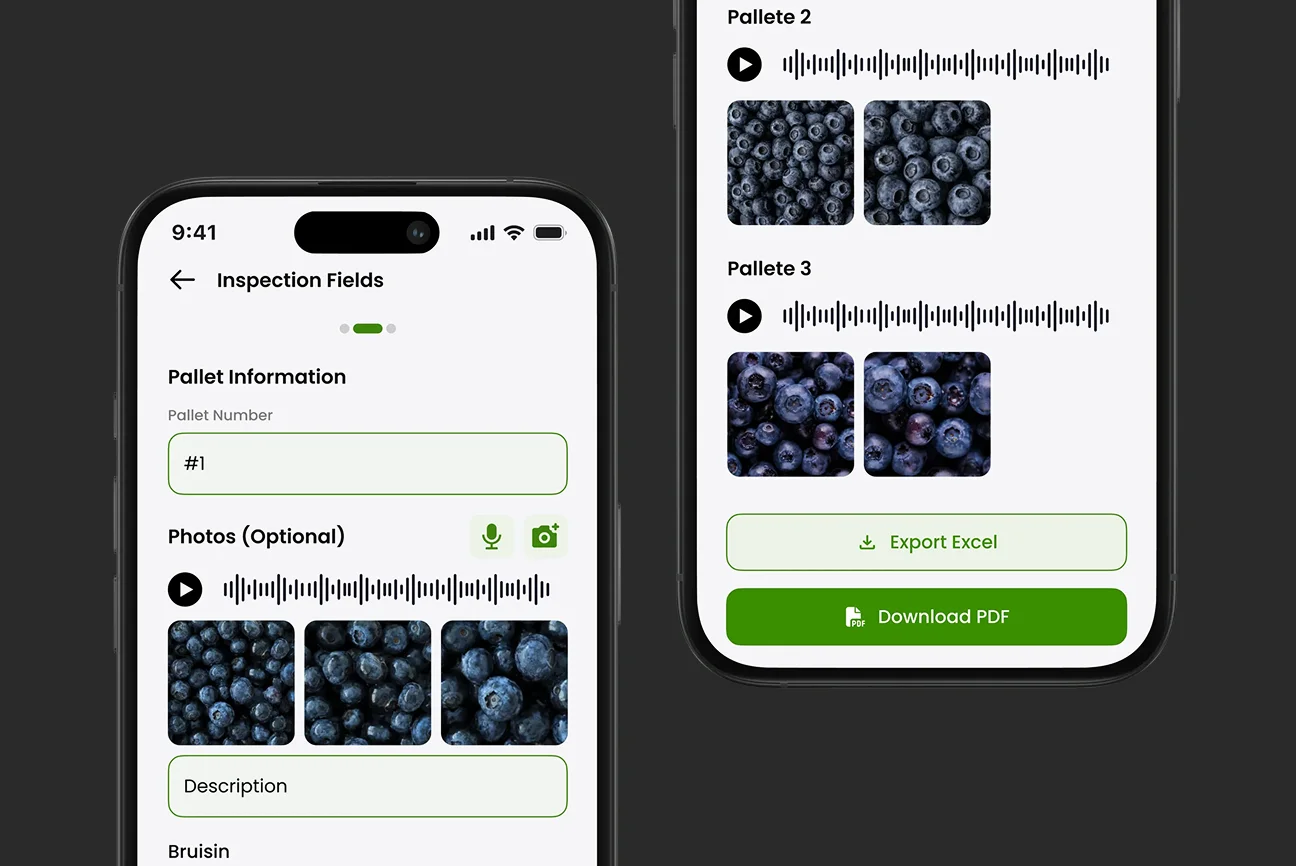
SapientPro engineered an AI-driven inspection automation solution that transformed the workflow:
- Computer vision integration.
The mobile app uses CV to instantly analyze photos of produce. It automatically identifies the produce type, assesses ripeness, and detects defects (bruising, cuts). All without manual input.
- Voice-to-data automation.
Recognizing that inspectors need to be hands-free, the system includes voice recognition that transcribes spoken observations and structures them into the digital report. This way, it filters out background noise.
- Offline functionality.
The system was architected to function fully offline. It syncs data when connectivity is restored.
The deployment resulted in an 87.5% reduction in processing time. Reports that took hours are now generated in minutes. The subjectivity of human grading was replaced by consistent AI analysis, and the data is now centralized for immediate access.
Partner with SapientPro to Build Your AI Quality Control Solution
Implementing computer vision quality inspection is a high-stakes initiative that demands specialized expertise. It requires a partner who understands the algorithms and the harsh realities of the factory floor.
SapientPro offers development of automated quality control solutions. Our team ensures your transition to AI for quality control is seamless and profitable, including mitigating data drift and architecting secure edge-cloud hybrids.
Partner with SapientPro today to engineer the future of your quality.
Implement AI into Your Manufacturing Business
We'll help you improve the quality of your production with top-tier technology.
Conclusion
Computer vision in manufacturing offers the only scalable path forward. By implementing AI for manufacturing quality control, organizations do more than just catch defects. They gain a digital lens into their operations. So the faster your business implements AI, the more profits you’ll gain.
FAQ
How many images do we need to start computer vision quality inspection?
Typically, a robust deep learning model requires a few hundred images per defect class. However, by using Transfer Learning, where we start with a pre-trained model, you can often achieve initial viability with as few as 20-50 images per class.
We are refining the model as more data becomes available during the Shadow Mode phase.
Can we implement this without stopping production?
Yes. We use a Shadow Mode deployment strategy. The hardware is installed on the line, and the system processes images in the background without triggering any reject mechanisms. This allows us to validate and tune the model's accuracy on real production data. We don't risk disrupting your live operations.
What’s the best approach for rare defects?
For defects that occur very infrequently, we employ Anomaly Detection (unsupervised learning). Instead of training the AI on what a defect looks like, we train it on what a "perfect" product looks like.
The system then flags anything that deviates from this "golden standard" as an anomaly. We can also use Synthetic Data to generate artificial images of rare defects to train the model.
How do we handle new product variants and high-mix manufacturing?
We design our architectures for flexibility. Using cloud-based management systems, new product models can be pushed to the edge devices remotely.
We also use Few-Shot Learning, which allows the system to learn a new product variant from just a handful of reference images. This enables rapid changeovers without extensive retraining.
Edge vs cloud: what’s safer and faster for factories
Edge computing is both safer and faster for the factory floor. Processing data locally on the device ensures ultra-low latency (milliseconds), which is critical for high-speed rejection.
It also improves security by keeping sensitive production data within the local network, rather than transmitting it to the cloud. The cloud is best reserved for long-term storage and model training.

