
All AI Customer Service Automation Guide: How to Make Your Contact Centers More Effective
January 1, 202615 min read


Customer support continues to shift. Now that we all have digital-first experiences as the rule, just high-quality care is no longer sufficient. Despite how much effort brands put into customer support, delivering good service is hard work.
So, what should companies do in the face of consumers’ swift-moving demands?
AI automation is the answer, and many companies are already turning to AI customer service software as their best solution.
AI customer service automation can provide instant help without human involvement. Generative AI, digital customer service, and conversational UIs will reform customer support service by 2028. Around 80% of customer service and support organizations now use generative AI technology.
Curious about the role that AI automation plays in customer service?
Check out this new guide from SapientPro's professional AI developers.
Key Takeaways
- AI software in customer service augments human agents’ abilities;
- AI in customer service allows businesses to solve problems faster, improve ROI and automation, and personalize interactions;
- About 90% of consumers want to get an immediate answer to their question.
How is AI Changing Customer Service Right Now
AI in customer service is the technology that supports and augments human abilities. It's not about replacing people, but more about changing the role of service agents to focus on core details.
- Customers want fast and constant service — especially when more services become available online. Roughly 90% of consumers say getting an immediate response is very important when they have a service-related question.
Instead of replacing human workers, AI aids them by doing the boring, repetitive work. It allows agents to concentrate on intricate issues, think outside the box, and have a real connection with customers.
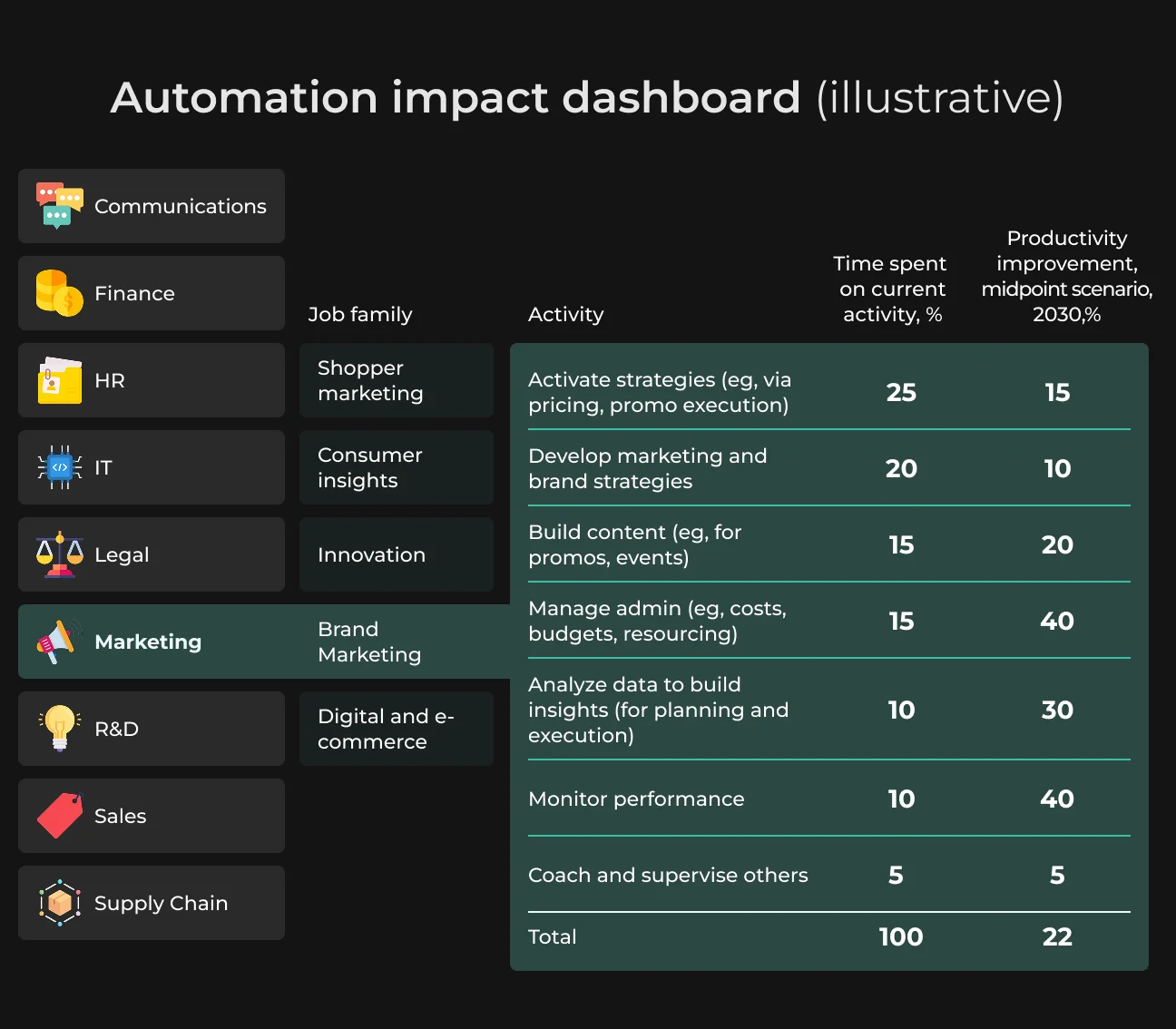
- Businesses want better quality service at a lower cost and more satisfied customers. Automation will make more than 50% of a marketer’s activities faster by 2035.
In sales, for example, only about 25% of activities might be automated in the next five years. But sales teams can become more efficient by using digital ordering platforms. These simplify the process for customers and reduce manual work.
- To compete, companies need to establish more personalized relationships with their customers — and generative AI can help that happen. Gen AI, like large language models, helps improve customer service via more human-like interactions.
The majority (75%) of consumers are eager to find better options faster and easier. AI-based advisers, for example, could be an excellent means of delivering the kind of personalized guidance consumers seek.
These advisers could highlight what's most important to the customer by comparing options like product benefits, environmental sustainability, or nutritional values.
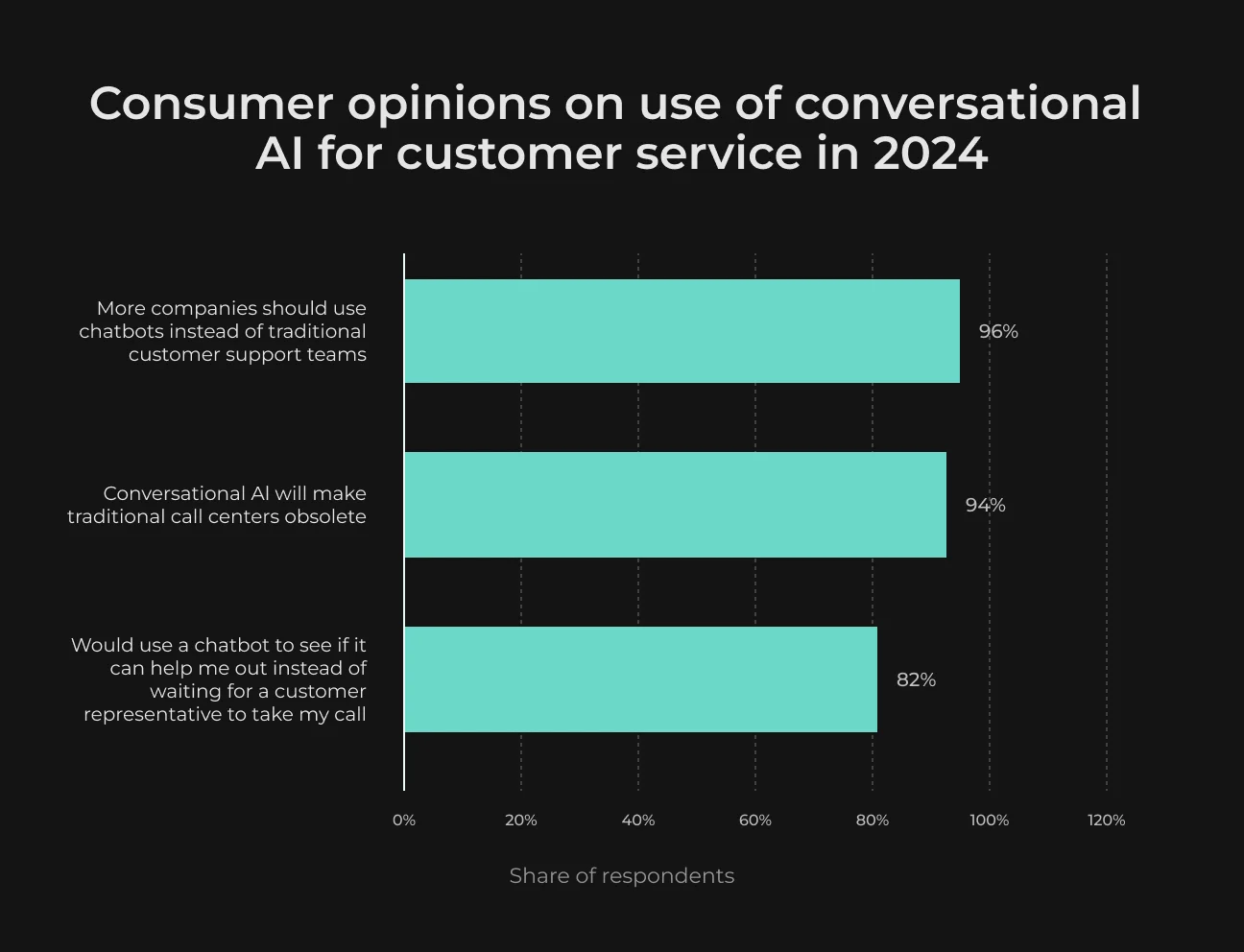
Artificial intelligence can help businesses exceed customer expectations and keep costs in check. All of these just reinvent the role of the customer service agent.
Case Study: How an AI-Based Call Center Cut Agent Costs to $1/Hour
SapientPro's team developed an AI-based call center for the client that reduced agent costs to as low as $1 per hour. The solution handles routine and cold calls with a human-like touch, ensuring effective, scalable, and accurate customer interactions. It also efficiently manages tasks like paraphrasing.
Several key points about the AI consultant:
- It allows for launching a new campaign in just 5-10 minutes;
- Makes thousands of calls, with detailed interaction reports;
- Versatile in booking meetings, integrating with CRMs, sending SMS, and conducting web searches;
- Smoothly integrates with human agents.
These resulted in:
- Shortening campaign onboarding time from 2 weeks to just 1 day;
- Decreasing call campaign onboarding costs from $5,000 to $100;
- Eliminating training (as a human agent needs).
Build Your AI Solution with SapientPro

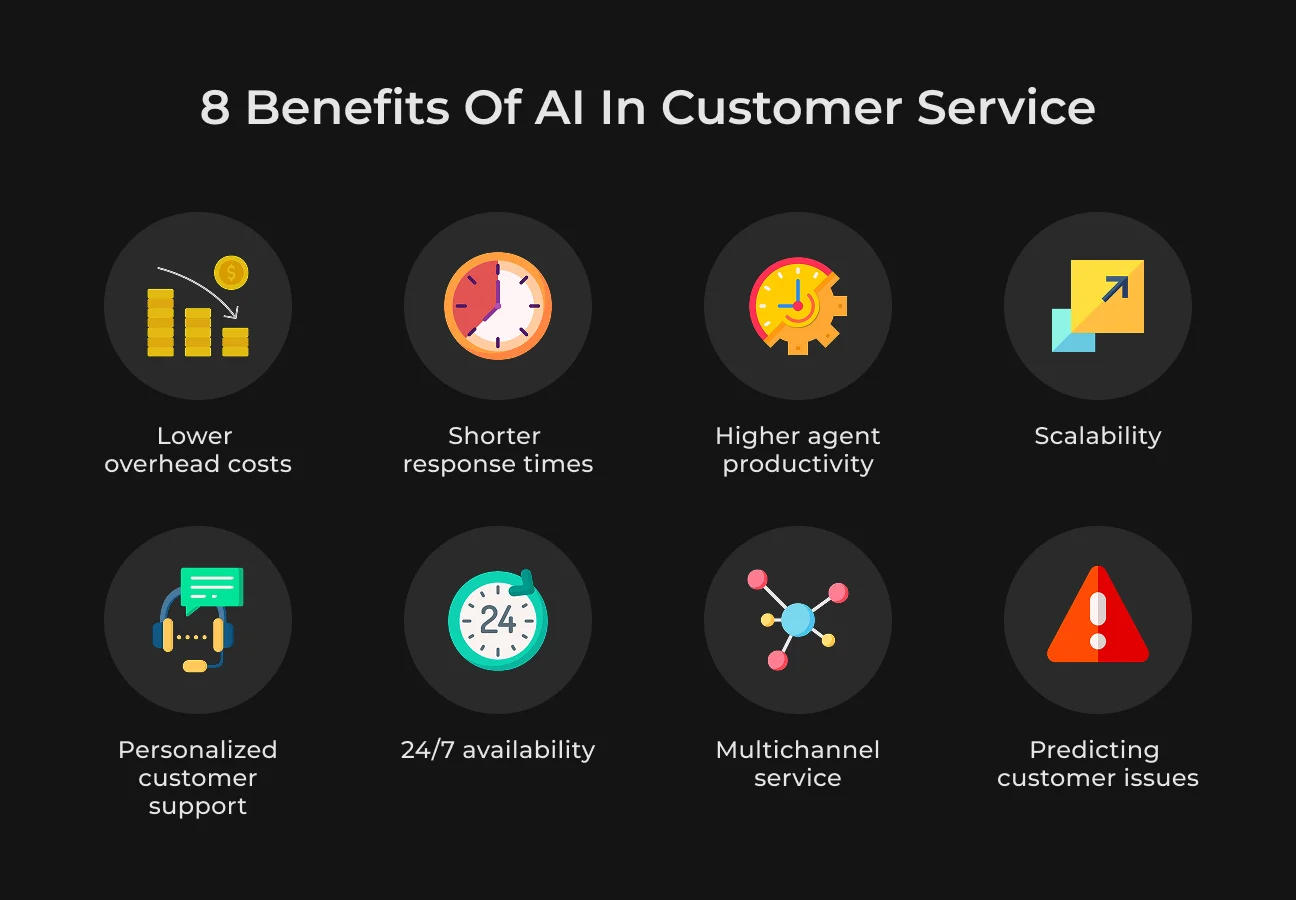
Main Benefits of AI in Customer Service
Just a few of the benefits your business can experience using AI in customer service are quicker issue resolution, personalized interactions, and better ROI. Here are more advantages of leveraging AI in customer service.
1. Lower Overhead Costs
AI helps save money by handling routine customer interactions automatically. For example, AI chatbot customer service can field thousands of inquiries simultaneously without higher wages or extra pay.
About 25% of businesses using generative AI have AI customer service agents that can automate tasks with minimal human help.
2. Personalized Customer Support
AI is what helps keep customers satisfied, even when demand is high. The global AI in customer service market is estimated to reach $83,854.9 million by 2033.
But AI is more than just using a customer’s name or pitching standard products. It makes experiences more personal. AI can customize content and recommendations to each customer’s previous engagements, location, or situation at that moment.
3. Shorter Response Times
AI helps agents reply to chats 20% faster, especially when assisting new agents. Customers don’t have to wait and can get what they want in seconds.
4. 24/7 Availability
AI tools never clock out. You can receive consistent service on whatever day of the week. This enables businesses to improve customer support by answering questions in real time with no need for dedicated staff.
5. Higher Agent Productivity
Using AI assistance increases agents’ productivity by 15%, as gauged by the number of issues they solve per hour from when a customer first contacts them.
AI takes care of monotonous tasks, allowing agents to focus on harder issues that need a human's reasoning. And for the agents in the moment, AI can arm them with suggested answers and direction to knowledge articles or even overviews of the conversations.
6. Multichannel Service
All popular customer service platforms, like email, social media, and live chat, are compatible with AI, so communication remains consistent. After your client has input their details via any channel, say email or social media, you won’t have to request it from them any longer.
In a study, 36% of organizations agreed that AI-augmented customer experience is the differentiator in their industry. The capacity for AI to work across channels gives you a complete and cohesive vision of the customer journey.
7. Scalability in Customer Support
AI easily scales up with your business. Customer support AI can point out urgent issues, prioritize tickets, or provide scalable self-help solutions for users.
8. Customer Issues Prediction
Machine learning predictive analytics enables AI to process tons of data. It can identify patterns that could suggest future problems with solutions.
For example, customer service can predict churn ahead of time by using AI-powered predictive support. Algorithms analyze product usage information, customer feedback, and support interaction history.
From that data-powered information, agents can then proactively make every effort to stop the customer churn rate from increasing.
Types of Customer Service Automation
Customer service automation options provide a unique way to change how businesses communicate with customers. Let's take a closer look.
Rule-Based Automation
This automation uses if-this-then-that logic to manage different customer service tasks. It's designed to take on repetitive and predictable inquiries.
They are good at something like order confirmations or querying an account balance, where the questions are relatively clear and predictable. The results are always consistent each time you reach a specific outcome because it follows a logical flow.
Conversational AI and NLP
This is a sophisticated AI technology with machine learning algorithms incorporated into a natural language processing system. It can understand and analyze or even respond in the language people talk. Conversational AI doesn't just answer simple Q&A. It makes conversations feel like rich dialogues.
Popular devices like Amazon’s Alexa and Apple’s Siri demonstrate the widespread use of conversational AI in our lives.
AI Omnichannel Automation
Omnichannel is not just about being everywhere. That’s actually a mistake when thinking so of it. Instead, it’s like the glue that connects those touchpoints into meaningful connections and makes context trail customers effortlessly.
Those who have a good experience are 3.6 times more likely to buy additional products and services from a company.
AI Tools & Software Used in Customer Service Automation
Below are the main types of artificial intelligence technology used in automating customer service.

AI-Powered Chatbots
AI chatbots can respond to routine queries, diagnose problems, and sometimes offer personal guidance. Working 24/7, they provide real-time help whenever the customer needs it.
AI-Driven Voice Assistants
AI voice assistants interact with customers through speech. Ideal for phone-oriented services, they allow customers to talk their way through solving problems or accomplishing tasks.
They take over inquiries and are directly available to help with more difficult tasks like payments or bookings.
Virtual Customer Assistants
Virtual customer assistants are complex AI solutions that can handle customer interactions through a variety of channels like voice, email, or chat.
They leverage NLP and ML to understand user-customer text and automate personalized responses. These assistants are getting better and doing so every time they interact with each other.
AI-Driven Help Desks
An AI help desk is not a typical human-led helpdesk. This system is mainly based on chatbots, virtual assistants, and machine learning to address customer issues. It can quickly search big data sets, learn from previous interactions, and offer more relevant information next time.
AI-Driven Self-Service Portals
AI self-service portals let customers resolve problems themselves by suggesting helpful content and personalized guidance.
They can guide you through a process and give you an answer or multiple answers based on previous interactions. This minimizes human interaction and allows users to control their requests.
How to Implement AI Tools for Customer Service in Your Workflow
If you're ready to start, here's a simple guide to implementing AI in your customer service workflow.
1. Determine the Best Practices
To add AI to your customer service, first identify where it will be useful. Examine what you do now to find patterns or repetitive tasks and questions from your customers. You can do this:
- Follow the questions from customers. So you can spot repetitive requests to automate, like order status checks or FAQs;
- Evaluate how your contact center team is spending their time. Find out if they are serving mainly repetitive tasks or those that are more challenging;
- Analyze the frequency and complexity of customer interactions using analytics. This will help decide where AI can create the most value.
For example, you might decide to use AI to deal with routine, high-volume inquiries in order to free up your agents from mundane activities.
2. Prepare Your Database
To make AI systems work properly, you need to have a neat database. Proper data preparation is essential for the AI to function correctly.
Begin preparing your database by:
- Removing duplicates and cleaning up text data. This helps the AI learn better and predict more accurately;
- Organizing customer data by categories like query type or history of interaction. So that AI can give refined responses.
Ensure to protect your customers’ information with robust data rules and regulations like GDPR.
3. Choose the Tech Stack for Automation
Decide what tech stack you'll be using. This is essential if you’d like to ensure the AI fits into your existing workflow.
AI tools you can use:
- All-in-one platforms. They are holistic platforms that package the different AI components for customer service together into a single system.
Examples of AI in customer service include Salesforce Einstein and Microsoft Dynamics 365 AI. Both of which are well-suited for companies that need AI capabilities without the hassle of external systems;
- No-code chatbots. These platforms enable companies to build a chatbot without requiring coding skills.
If you run a small to medium-sized business, without many tech resources, check out apps like ManyChat or Tars for customer service;
- Agent copilots. Agent copilots are AI assistants that provide customer support agents with real-time suggestions. They can also retrieve information and perform tasks for each interaction.
Tools like Cogito or Gong.io might help live agents reduce their workload and enhance response accuracy;
- Workflow automators. They automate the processing of repetitive tasks, integrate separate systems, and automate one-way communication.
Note that the best tech stack for you will be influenced by the work process of your current customer service.
4. Design a Workflow Using the Human-in-the-Loop Model
AI operates only under human supervision when quality control and complex decisions are required. To achieve this balance:
- Develop workflows in which AI tackles initial or quantitative tasks or analysis of large data sets. And human agents run issues requiring emotional intelligence or judgment;
- Create mechanisms for customer service agents to provide feedback in agentic AI interactions. That will help them better adjust and improve AI performance over time;
- Train customer service agents to work effectively alongside AI. So they know when and how they need to step in to assist.
5. Launch, Audit, and Update
Once your systems are all in place, you need to decide how to launch and regularly evaluate. Launch phases typically include:
- Soft launch. Initially deploy AI tools to a limited part of operations to determine how effectively they’re working. Plus, make any necessary adjustments;
- Performance audits. Monitor your AI performance on a regular basis, like customer satisfaction, resolution times, and error rates;
- Iterative updates. By doing so, you’ll ensure your AI customer service solutions continue to represent the most up-to-date customer and tech requirements.
This is an approach where AI doesn't just work to achieve business goals, but also improves customer satisfaction and service efficiencies.
Will AI Replace Human Agents?
Although AI has a lot to offer in improving efficiency and handling standardized queries, it still needs human agents when dealing with more nuanced customer service. Why are people still crucial for customer care?
- Humans can empathize, provide reassurance, and show emotion toward the emotions of customers in ways that AI (as of now) cannot.
- A lot of customer problems can only be solved using creative thinking, abstract thought, or context-driven decision-making;
- Human interaction is the foundation of trust and rapport. Many customers appreciate human interaction that AI can’t give.
AI vs. Human Agents
Check out this table to see the differences between these two types of care agents.
Capability | AI Does Best | Humans Do Best |
| Efficiency | Processes high volumes of simple queries quickly | Manage tasks in prioritization |
| 24/7 availability | Provides instant responses anytime | Take inquiries during standard working hours |
| Data analysis | Rapidly analyzes large datasets | Interpret analysis results for strategic decision-making |
| Consistency | Maintains consistent service level | Tailor responses based on individual customer needs |
| Multichannel service | Easily integrates across digital platforms | Offer personalized support in face-to-face scenarios |
| Cost efficiency | Reduces costs with automated, repetitive task execution | Costs are managed with strategic human oversight |
| Emotional engagement | Provides mostly neutral, unbiased responses | Engage with empathy and understanding |
After all, AI doesn’t replace humans. It augments them and applies a human touch when needed.
Challenges in AI Customer Service Automation
We won’t say there are no challenges for businesses about implementing AI. Knowing and overcoming them is crucial if we want to unlock the true potential of AI.
Data Security Breaches
AI becomes a lot about customer data. For example, a breach of Discord’s third-party support tools provider, Zendesk, exposed the real names, selfies, ID documents, and other sensitive data shared with customer service.
Some billing details were also compromised, including payment types, the last four digits of credit card numbers, and purchase stories.
Limited Understanding of Natural Language
AI has come a long way in learning how to read language, yet it still struggles to grasp nuances. That can lead to translation errors when trying to answer your questions.
Research suggests that 35% of customers are worried that AI might lead to a drop in the quality of service they receive, and say they don’t completely trust it.
High Initial Implementation Costs
For 54% of leaders in infrastructure and operations (I&O), the primary reason for adopting AI is cost optimization.
However, the initial expanses to consider when introducing AI into customer service can be significantly high. They cover the cost of software, data infrastructure, and staff training.
Future of AI in Customer Service
Customers and businesses both will increasingly depend on AI agents/bots to facilitate smoother interactions. These bots will alter the way in which service teams and customers connect.
By 2029, 80% of customer service questions will be answered without human help. While costs for support will drop to 30%, thanks to algorithms that can function around the clock.
AI will also augment personalized customer service. With AI-informed alerts, service departments can predict customer needs and personalize interactions, which will result in proactive service.
Many consumers are ready for this. Basically, 57% would share their personal information for custom recommendations or discounts. And 62% are comfortable with businesses providing them with offers related to previous purchases.
Use Cases of AI in Customer Service Automation
We'd like to show you a couple of practical cases the SapientPro team has worked on.
Dialect-Sensitive AI Voice Assistant
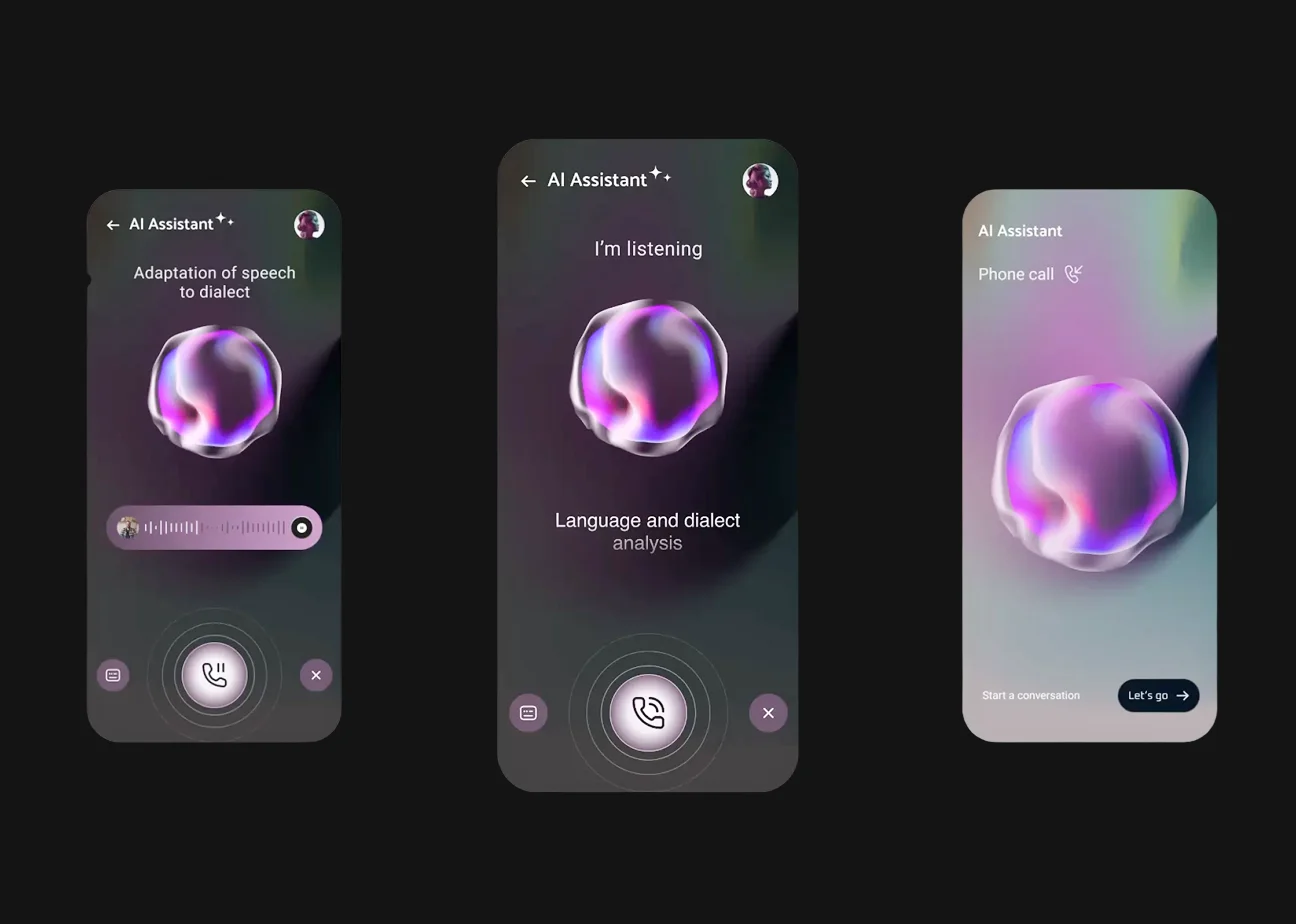
SapientPro created an Arabic voice assistant for a Fintech provider. It enhances user experiences through its ability to identify dialects and interpret cultural subtleties, enabling authentic, localized interactions.
This is what we did:
- The team developed a model that automatically tracks dialect, gender, and tone to keep responses regionally and culturally relevant;
- We included a text-to-speech engine to replicate human sounds like culturally appropriate pace of speech, accents, and emphasis;
- The assistant was linked with VoIP systems for optimal real-time performance, minimizing audio session delays.
SapientPro's solution combines various existing models, allowing the system to identify dialects and engage in natural conversations.
AI Assistant for Easier Online Shopping
SapientPro developed an AI e-commerce assistant that lets users find the right products quickly. Acting like an in-store consultant, it's available anytime on any device.
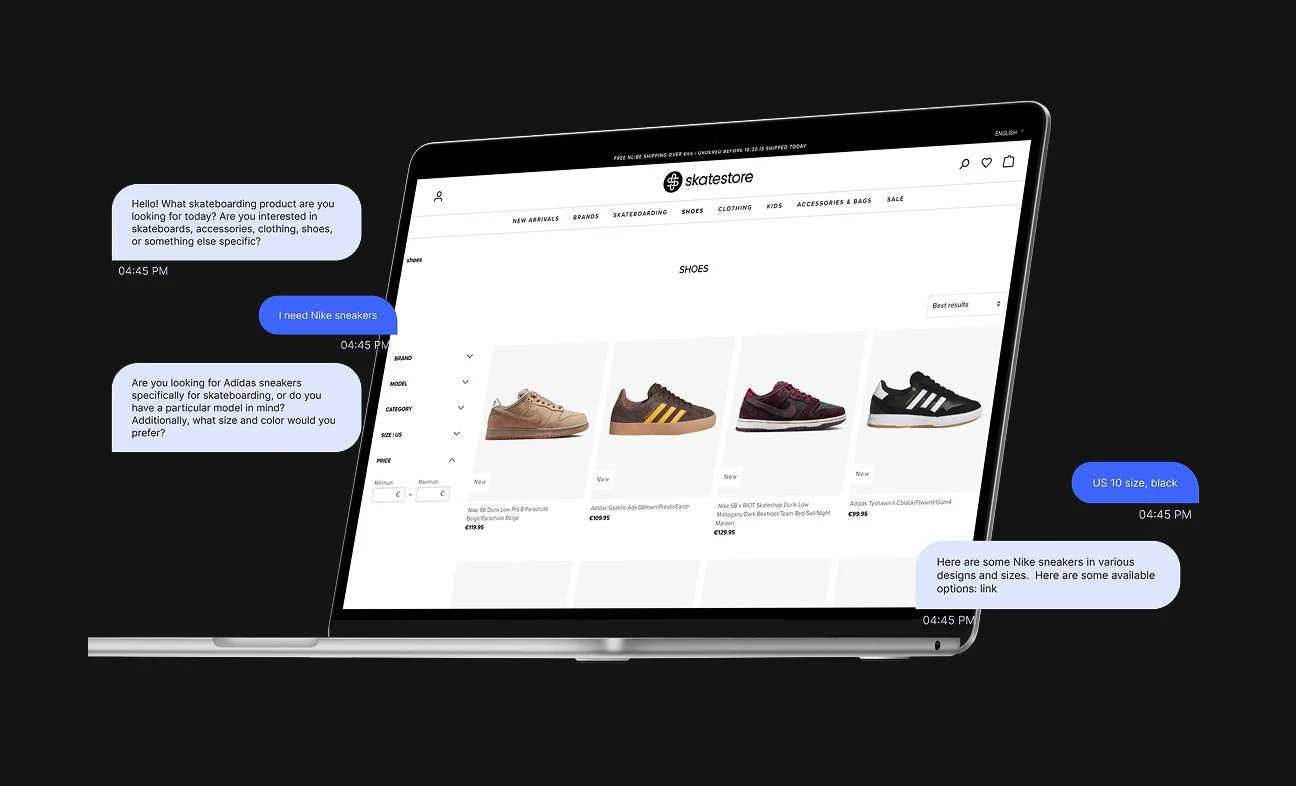
Some more details about this software:
- This assistant combines a large language model with hybrid search features. It uses both traditional keyword and advanced vector-based search methods;
- We've set up a custom search server that blends classical and semantic searches, using the store's product database;
- The assistant can also apply filters like color, size, category, price range, and sort order to help narrow down searches.
SapientPro's e-commerce assistant is powered by a deep language model to deliver a chat experience that feels more natural and less like talking to a scripted bot. It's more like conversing with an informed store associate. The assistant can help with questions, offer product recommendations, and follow a conversation.

Ion Hrytsku
Partner with SapientPro to Implement AI in Your Workflow
SapientPro’s mission is to seamlessly incorporate AI into what you already have. Leveraging our expertise, we deliver custom AI solutions that serve your business purpose, be it improving customer service, automating internal tasks, or analyzing data.
Our team has been working with AI technologies like NLP, machine learning, computer vision, generative AI, and others for over nine years.
We build scalable software to solve your company’s challenges, focusing on language processing, image recognition, chatbots, and call center improvements.
Call us now and see how we can revolutionize your industry with AI.
Implement AI into Your Business Today

FAQ
What is the best AI customer service software?
There’s not a single best AI customer service tool. It all depends on what you need for your business. You might consider some popular options like Zendesk, Intercom, or Drift.
What are the advantages and disadvantages of AI in customer service?
AI tools can assist at any hour, process multiple requests, and learn patterns about customer behavior. But where AI may struggle is in understanding and responding to customer emotions.
What are the KPIs of AI in customer service?
Some useful KPIs in measuring your AI’s effectiveness in CX include first response time, resolution rate, net promoter score, and cost per interaction.

