All AI Agents in Healthcare: Use Cases and Benefits
Updated:April 29, 202615 min read


Time is precious in healthcare, and AI saves it by cutting down on errors and improving patient care. Each AI tool has a specific role, but together they work as one system. For example, one AI might transcribe doctor-patient conversations, another could review lab results, and a third handles coding for billing.
When combined, they give doctors a full picture of the patient and support better decision-making.Many clinics and health tech companies are already using AI in healthcare. The Mayo Clinic, for instance, uses VoiceCare AI to simplify communication between providers and insurers, easing the administrative workload. That’s crucial since clinicians spend about 28 hours a week on paperwork, while office and claims staff spend 34 and 36 hours.
In this article, SapientPro’s engineers will explain what AI agents are, how they improve patient experiences and optimize operations, and what they could mean for the future of healthcare.
Key Takeaways
- Many doctors are stressed and spend around 28 hours each week on paperwork. AI agents can help by serving as digital assistants and working with the organization's electronic health record (EHR) system;
- AI tools for healthcare can schedule appointments, handle medication refills, and manage referrals;
- AI systems usually involve multiple agents working together. They can manage prescriptions, analyze lab results, and provide personalized health recommendations for patients.
What are AI Agents for Healthcare?
AI agents in healthcare are designed to improve communication between patients and healthcare professionals through voice, chat, and text. They aren’t separate apps but integrated tools that support both clinical and administrative tasks.
For example, doctors can use AI agents to review a patient’s medical history and test results before an appointment. A primary agent then gathers this data into a clear and detailed report. With the patient’s consent, AI agents can also listen to doctor visits and generate a summary of the conversation and medical decisions.
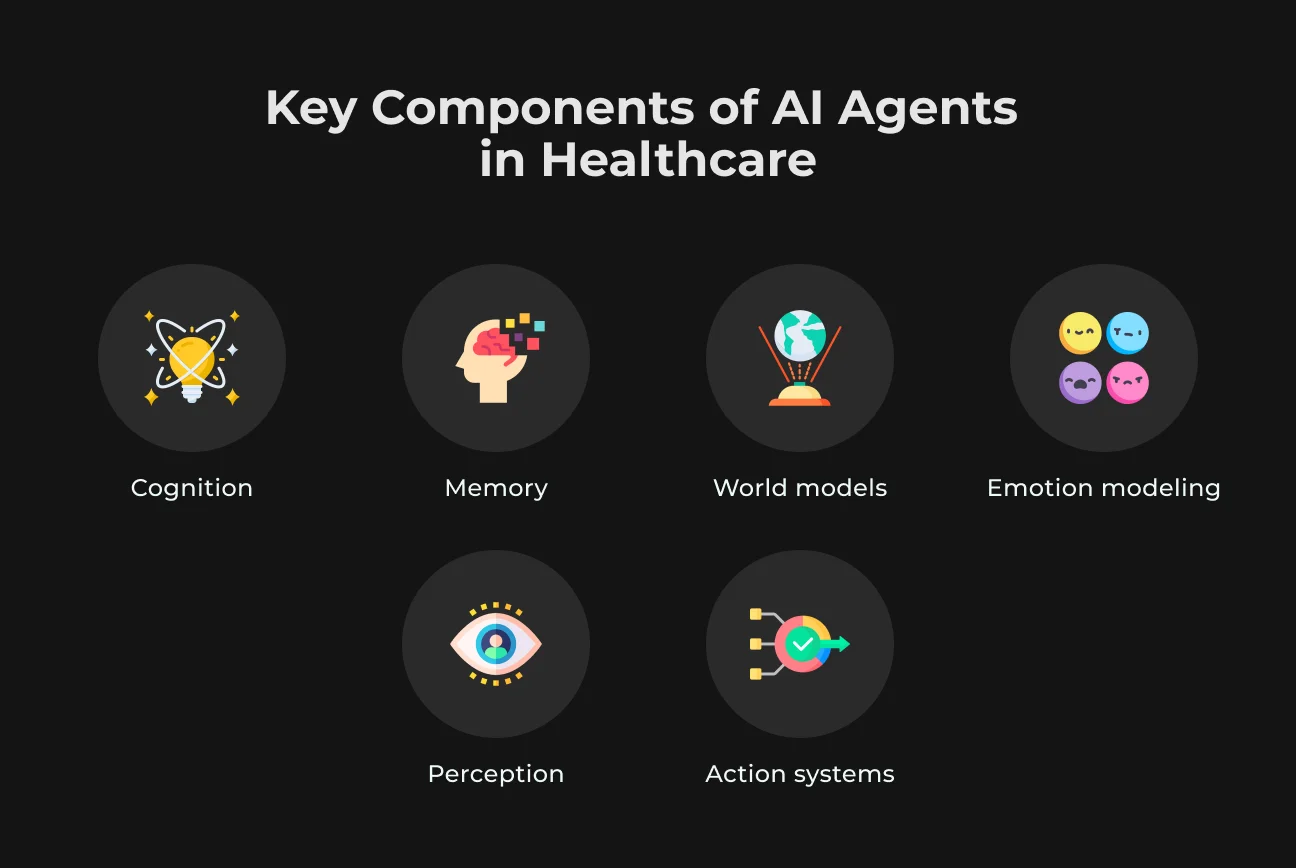
Healthcare AI agents work through a network of subsystems similar to how the human brain functions. Here’s a look at these components:
- Cognition. AI uses structured methods like rule trees and adaptable reasoning from large language models to manage complex tasks, model care pathways, and adjust decisions with new information.
- Memory. AI’s memory supports personalized care over time. Short-term memory manages current interactions, while long-term memory keeps medical histories.
- World models. These let AI simulate patient responses, predict issues, and evaluate treatment options.
- Emotion modeling. While AI doesn’t feel emotions, it can imitate understanding emotions to communicate sensitively with patients.
- Perception. AI combines and then interprets data from various sources, like text and visuals.
- Action systems. These allow AI to perform tasks like taking notes or placing orders, using APIs and digital processes to manage various healthcare applications.
Over 80% of healthcare providers report staying late weekly to complete paperwork. AI agents help reduce this paperwork, allowing doctors to spend more time on patient care. Actually, 70% of healthcare workers plan to use these AI tools for tasks like coordinating care, identifying care gaps, and scheduling follow-ups.
Importance of AI Agents in Healthcare
The healthcare industry is just beginning to use AI agents because they're complex and regulated. But when this technology is used properly, it can play a vital role in healthcare. For example, AI agents can:
- Help analyze medical data for faster and more accurate diagnoses;
- Create personalized treatment plans for each patient;
- Spot trends to predict disease outbreaks or changes in patient numbers;
- Improve patient interaction with virtual assistants for medication reminders and health advice.
How Do AI Agents in Healthcare Work?
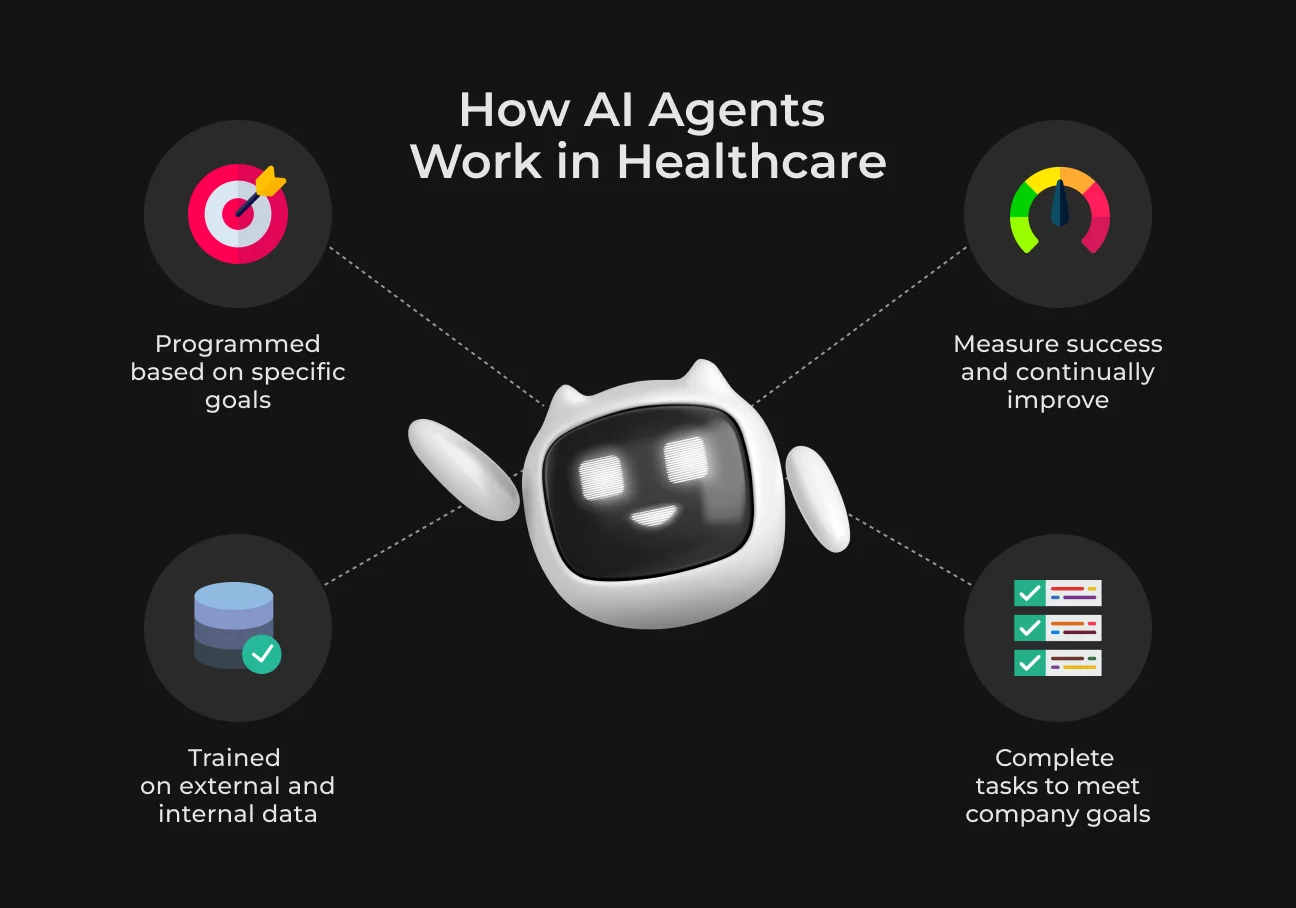
Healthcare organizations have options to use various agents instead of relying on just one. Each agent specializes in its own tasks like scheduling appointments, preregistering patients, or managing follow-ups. Here are four steps that explain their work.
Programming Based on Specific Goals
To effectively use AI agents in healthcare, the first step should be to program the AI based on the organization's goals. This could be improving patient care, boosting efficiency, or managing resources.
Training on Internal and External Data
Once objectives are set, AI agents are trained using healthcare data like patient records and diagnostic images. This data is then transformed into structured, usable information. During training, the AI learns to identify patterns, make predictions, and offer insights to support decision-making.
Completing Tasks to Meet Company Goals
After training, AI agents begin their work on tasks that match set goals. They split up tasks among themselves. For example, some manage appointment scheduling, while others analyze patient data or inventory. They regularly review their work for accuracy and adjust based on feedback from healthcare professionals or changes (like an increase in patient admissions).
Measuring Success and Ongoing Improvement
The final step is to evaluate how successfully the AI agents achieve the original goals. Success can be measured by patient satisfaction, reduced wait times, or improved diagnostic accuracy. AI agents find areas for improvement and update themselves using new data and feedback.
Benefits of AI Agents in Healthcare
AI agents can help healthcare organizations make clinical decisions and treatments, significantly reducing the cost and workload of administrative tasks. There are actually many other ways AI can help healthcare professionals. Read on to find more.
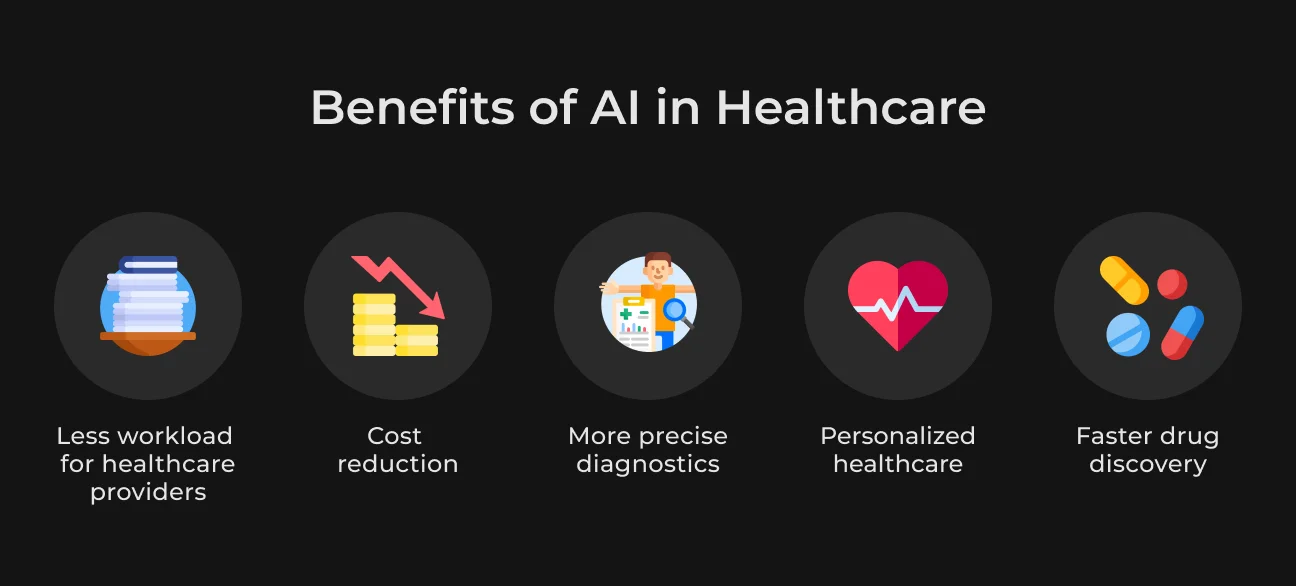
Less Workload for Healthcare Providers
AI agents simplify life for healthcare providers by automating tasks. They summarize patient histories before appointments and offer access to tools for specific clinical data.
For example, a neurologist working with a patient who has a severe headache can use AI to gather details from research, lab reports, CT scans, and information about the patient’s lifestyle, diet, and sleep patterns. AI can also suggest the best treatment approach by analyzing this data.
More Precise Diagnostics
AI agents can help doctors by providing clear overviews of patient histories, including genetic information. They can provide insights from research & data from devices like heart monitors and analyze CT scans, X-rays, and MRIs for more accurate diagnoses.
For example, machine learning algorithms can analyze ECGs, medical images, and patient data to predict heart diseases early. Studies show it accurately identifies heart disease 93% of the time, offering noninvasive ways to evaluate heart health risks and save lives.
Cost Reduction
By automating billing, coding, and payment processes with AI, organizations can cut administrative costs without compromising care quality. Over the next five years, private insurers might save $80 billion to $110 billion each year. Meanwhile, physician groups could reduce their expenses by 3% to 8%, potentially saving $20 billion to $60 billion.
Personalized Healthcare
AI's real strength in diagnostics is in its ability to tailor care to individuals. It can assess personal risk factors to adjust screening schedules. This means high-risk patients get more frequent screenings, while those at low risk can skip unnecessary tests.
For example, MIT's Computer Science & Artificial Intelligence Laboratory has created a new model to evaluate pancreatic cancer risk. The model could boost the number of people eligible for early screening from 10% to 35%. This example shows the importance of catching risk factors early to create personalized management plans, reduce the effects of chronic diseases, and improve overall health.
Faster Drug Discovery
In the drug industry, about 90% of drug candidates fail, and testing their effectiveness can take over ten years. There aren't enough graduate students to test every potential drug for all medical conditions. Typically, only 40% to 65% of drugs pass phase one trials. However, drugs developed with AI have a much higher success rate, with 80% to 90% passing this critical phase.
AI technology makes this complex process of drug development easier and faster. It can also monitor clinical trials and notify doctors about suitable trials for patients based on their conditions and medical history.
Use Cases of Agentic AI in Healthcare
AI agents in healthcare have evolved from simple tools into valuable partners for medical professionals. They help monitor patients remotely, optimize resources, and allow providers to deliver quality services to every patient. These are several examples of AI in healthcare.
1. Diagnostic Support & Medical Imaging Review
AI in medical imaging improves the accuracy of diagnosing conditions. With algorithms trained on large datasets, AI can accurately detect disease markers and anomalies. This precision helps catch subtle signs early, which allows for timely intervention and significantly better patient outcomes.
AI speeds up the imaging process by ensuring they are analyzed and interpreted much faster. This speed reduces diagnosis wait times, so treatments can start as soon as possible.
Beyond just detecting issues, AI also predicts how diseases might progress by using imaging data and patient histories. This ability changes personalized medicine and helps healthcare providers create treatment plans that fit each patient's needs.
2. Personalized Treatment Plans
AI healthcare agents can tailor personalized plans for patients. By studying genetics and lifestyle data, they create treatments that suit and work ideally with few or no side effects. These agents analyze patient data to predict how someone will react to various treatments, which enables them to provide personalized guidance and recommendations. This method ensures patients get the right care at the right time, instead of relying on traditional trial-and-error approaches.
For example, Watson for Oncology helps doctors choose personalized cancer treatments by analyzing genetic mutations in tumors. This tool has increased the speed and accuracy of treatments for breast and lung cancer, tailoring options to each patient's specific genetic profile.
3. Drug Discovery and Development
New drugs typically go through a long and tough approval process that starts with animal testing and moves on to include human trials. These clinical trials can take over ten years and cost billions. During this time, patients might experience unpredictable side effects. Even if a drug trial succeeds, it still needs regulatory approval.
Agentic AI can transform drug discovery by quickly managing the vast information needed for clinical trials. It helps understand diseases, find biomarkers, generate data and models, create and redesign drugs, conduct preclinical tests, plan clinical trials, and analyze real-world data.
4. Virtual Health Assistants
Virtual assistants use text and voice to help patients, physicians, and admin staff. They can answer questions, check symptoms, book appointments, and offer support by providing decisions. This means patients can get immediate help without long waits. In 2023, the market for these assistants was worth $1.03 billion and is projected to grow to $12.99 billion by 2032.
You've likely used similar AI assistants on clinic websites or tablets in waiting rooms. For example, if a patient has a cough, they can enter their symptoms, and the assistant will check for other symptoms and suggest whether they should stay home or visit a clinic.
5. Administrative Processes Automation
Patient experience largely depends on how healthcare providers feel and behave. If a healthcare professional is overwhelmed with paperwork, they may feel burnt out and stressed. This could lead to longer wait times for appointments, slow or irritated responses to questions, or errors in patient records. AI tools can help by automating many of these tasks, providing timely and accurate services, and reducing mistakes.
Agentic AI tools help staff but do not replace them, allowing more focus on patient care. For example, AI voice assistants can answer basic questions and collect simple health information through conversations.
6. Generative AI in Healthcare
Self-service is really booming in healthcare, giving patients more control over tasks like booking appointments, checking lab results, or accessing health information whenever they want. With conversational AI, they can quickly get answers through voice or digital channels, and better manage their own healthcare.
For example, a customer service chatbot can guide patients through a symptom evaluation by asking questions and suggesting next steps, like self-care, contacting a doctor, or visiting a clinic. This helps reduce the strain on emergency services by directing patients to the right care.
Conversational AI in healthcare can also send personalized medication reminders, track adherence, and provide information on drugs, which is particularly helpful for those with chronic illnesses.
7. Asset & Inventory Management
Healthcare supply chains are too complex. Facilities have to manage everything from daily supplies to life-saving medicines and special equipment. It's important to find a balance: too little stock can delay treatments and affect patient care, but having too much leads to wasted resources.
AI with machine learning can analyze big data like past usage, patient numbers, seasonal patterns, local outbreaks, etc. This helps organizations predict demand spikes (like during flu season or emergencies), which reduces the risk of running out of supplies.
By matching inventory with expected needs, they can avoid both shortages and excess stock.
AI also simplifies tasks like reordering supplies. When supplies run low, the system automatically orders more, keeping essential items always available without manual input. This helps reduce delays and administrative work.
8. Fraud Detection and Billing Accuracy
AI helps with healthcare fraud detection by analyzing data from electronic health records and insurance claims. It processes large amounts of information much faster than manually, saving time and resources. For example, in claims analysis, AI detects unusual patterns like duplicate claims or unnecessary treatments.
In billing verification, AI compares charges with standard treatment rules. It can find issues like upcoding (billing for more expensive services), overbilling, or breaking services into multiple bills with no need.
AI also helps eliminate medical identity theft by recognizing unusual patterns in patient records, like mismatched info or unexpected treatments. Such early detection ensures correct billing, stops fraud, and protects patient identities.
9. Mental Health Support
Over 264 million people globally experience depression. Traditional in-person therapy can't meet the rising need for mental health services that are easy to access and affordable.
AI in therapy can improve support for therapists and provide more help to patients. AI chatbots can consult patients for the first time, track their progress, and apply techniques from cognitive behavioral therapy. In one study, a therapy chatbot helped reduce depression over 16 weeks and eased anxiety within the first four weeks.
For example, an AI mental health app might look at a user's social media activity and find signs of early depression or anxiety, allowing for help before things get worse.
NLP also helps diagnose mental health conditions by analyzing conversations and written or spoken materials to find symptoms. This gives clinicians extra diagnostic insights for more accurate and faster evaluations.
Interested in building your AI solution?
SapientPro's engineers will help you get a detailed development roadmap.
Risks of AI Integration in Healthcare
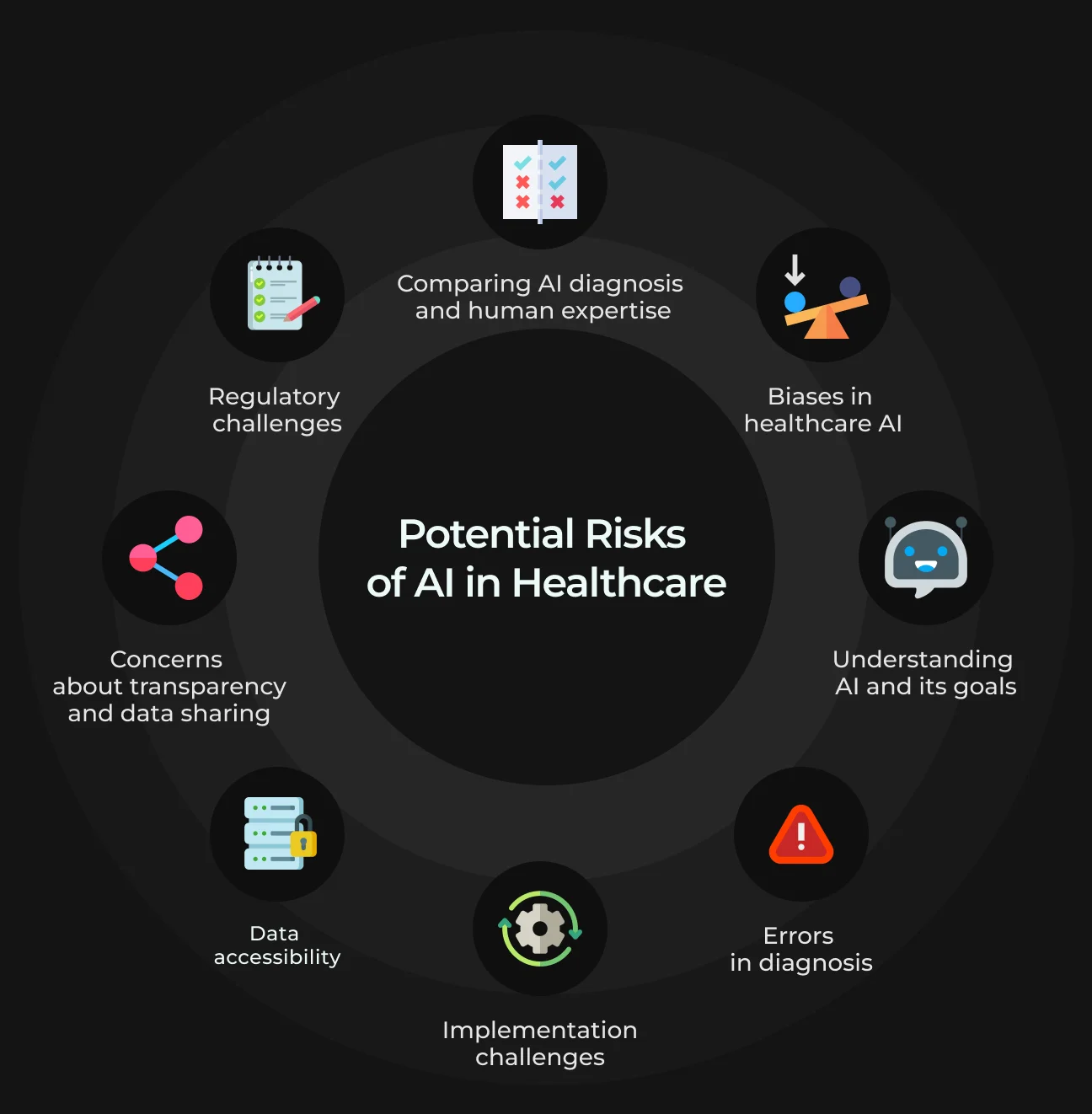
Artificial intelligence has the potential to change healthcare in many ways, but it also raises ethical, regulatory, and safety risks. Let's look at some of the major concerns AI poses in medicine.
Comparing AI Diagnosis and Human Expertise
AI improves diagnostic accuracy, but it doesn't necessarily do better than human doctors. For AI to be indeed effective, it needs better integration with clinical workflows and patient records. Moreover, AI models occasionally make mistakes by forming irrelevant connections, which can lead to incorrect predictions for new patients.
Understanding AI and Its Goals
Doctors often don’t completely understand AI, particularly in complex areas like diagnosing and treating cancer. Although many AI programs try to manage intricate cancer treatments, their achievements often fall short of these ambitious goals.
Implementation Challenges
A big challenge is that there's not enough solid evidence from clinical trials proving that AI-driven treatments actually work. Many studies on AI in healthcare industry are in preliminary phases and haven't been validated in real-world settings. Successful integration of AI requires full compatibility with doctors' workflows, which doesn't often happen in clinical environments.
Concerns About Transparency and Data Sharing
New healthcare technologies are quickly developing, which often makes people skeptical, especially about sharing data. We need clear rules for managing and being transparent with data, and it's crucial to help patients know how their data is used.
Biases in Healthcare AI
Machine learning in healthcare can sometimes be biased, so predictions could be influenced by factors like gender or ethnicity. When the training data for AI systems is biased and lacks proper representation of all races or genders, the results can be inaccurate.
Errors in Diagnosis
AI errors in diagnosing diseases or suggesting treatments can have serious consequences. It's sometimes tricky to figure out who’s responsible for mistakes. The complexity of deep learning algorithms makes things more confusing and can undermine patient trust. It's still unclear whether doctors or developers should be responsible when AI systems don’t work as expected.
Data Accessibility
AI algorithms in healthcare need diverse data, but gathering this data is challenging. Information is spread across various platforms and isn't always available. Hospitals often hesitate to share their data, which complicates the process of providing the essential information to improve machine learning systems.
Regulatory Challenges
The development of AI solutions in healthcare presents regulatory challenges that require new policies to protect patient safety. However, many countries haven't set formal guidelines yet, which can delay AI adoption and create risks.
Future Trends of AI Agents in Healthcare
Healthcare technologies were once too complicated and time-consuming, which frustrated clinicians who must manage large amounts of data. This increased their workload and often led to burnout, with some even leaving the profession.
However, with the introduction of modern tech like AI, the healthcare sector has transformed its approach to operations and patient care. AI tools help reduce workloads, minimize diagnostic errors, give doctors more quality time with patients, improve health outcomes, and accelerate payment processes.
AI use in healthcare is only rising, with two-thirds of doctors now using it, an increase of 78% since 2023. Many doctors recognize the potential of AI to reduce paperwork, and over half (57%) believe its best application is in automating these administrative tasks.
Predictive analytics are employed by nearly 60% of U.S. hospitals to anticipate patient risks and improve clinical care. AI also automates administrative tasks, with 57% of doctors identifying paperwork automation as its best use, freeing clinicians for more patient-focused care.
Moreover, AI reduces cognitive biases such as premature closure by 30% and anchoring bias by 25% among clinicians. It also accelerates healthcare payment processes, with some hospitals reducing payment cycles by up to 40% through AI-driven automation.
For AI to achieve positive and lasting effects in healthcare, it requires support from policymakers, alignment with strategic goals in technological decisions, and the establishment of regulations that build public trust.
Partner with SapientPro to Build Your Agentic AI Solution
SapientPro’s engineers will help you get a compliant agentic AI solution that provides trusted core solutions for documents, images, and voice. You’ll get 8+ years of experience combined with the industry’s best practices in your project.
Check out how we helped other companies with artificial intelligence:
- Safety data sheet automation tool for better compliance & structuring;
- AI-powered language tutor with voice-enabled avatars;
- Dialect-aware AI voice assistant with 80% accuracy in Arabic dialects.
Want to build the next market-winning solution?
Contact us now to discuss your project!
Improve your workflows with agentic AI
SapientPro's engineers will help you bring any vision to life.