All The Transformative Power of AI in HR: Use Cases & Key Benefits for Human Resources
January 27, 202615 min read


In the world of HR, professionals often drown in tedious tasks. Artificial intelligence can significantly lighten and reduce their workload. Still, it won't replace them, steal their jobs, or do everything by itself. Companies need human professionals to recruit, keep, and train talents to achieve major business goals.
AI can be responsible for tasks that are mostly tedious and routine. So, human resource specialists can do more creative and meaningful activities, like:
- Hiring new team members;
- Teaching new skills;
- Training managers to provide valuable feedback.
AI can do both — save managers time and seamlessly integrate into daily HR routines.
On the financial side, the global AI in the HR market was worth $7.01 billion in 2024 and is predicted to jump to around $30.77 billion by 2034, with a steady annual growth of nearly 16%.

Check out this guide to discover more about how to use AI in HR along with its potential perks and pitfalls.
Key Takeaways
- Actually, 94% of executives and 88% of employees believe that a positive work culture is crucial to business success.;
- AI systems can manage tasks like data analysis or even pretend to be humans in routine interactions;
- About 88% of companies already use AI to screen candidates at the start;
- The goal is to combine AI technology in HR with the equally important human touch for a perfect combo.
What is AI in HR?
AI in HR is a whole new way of saying robots are taking over the monotonous parts of HR jobs. AI systems can run tasks like data analysis or even pretend to be humans in routine, basic interactions. This leaves HR managers free for more creative parts of their jobs, like organizing events or solving conflicts.
These tech tools also help HR managers focus on big-picture planning. And this is essential now because they’re taking in high employee expectations and a lack of skilled workers.
AI basically transforms HR in two key ways. It streamlines tasks and uses data to boost talent management. Workplaces will need to welcome these changes and foster a future of AI in HR.
Many CEOs actually focus on changing company culture more than technical issues during transformations. In fact, 94% of executives and 88% of employees think that a positive work culture is key to business success.
Also, employees who feel their leader inspires them about the future are 69 times more likely to be engaged at work.
By letting AI manage routine tasks, using workforce data, and adopting AI for managing skills, HR departments can successfully drive these innovative changes. The goal is to blend automated technology in HR with the equally important human touch for a perfect combo.
Types of AI used in HR
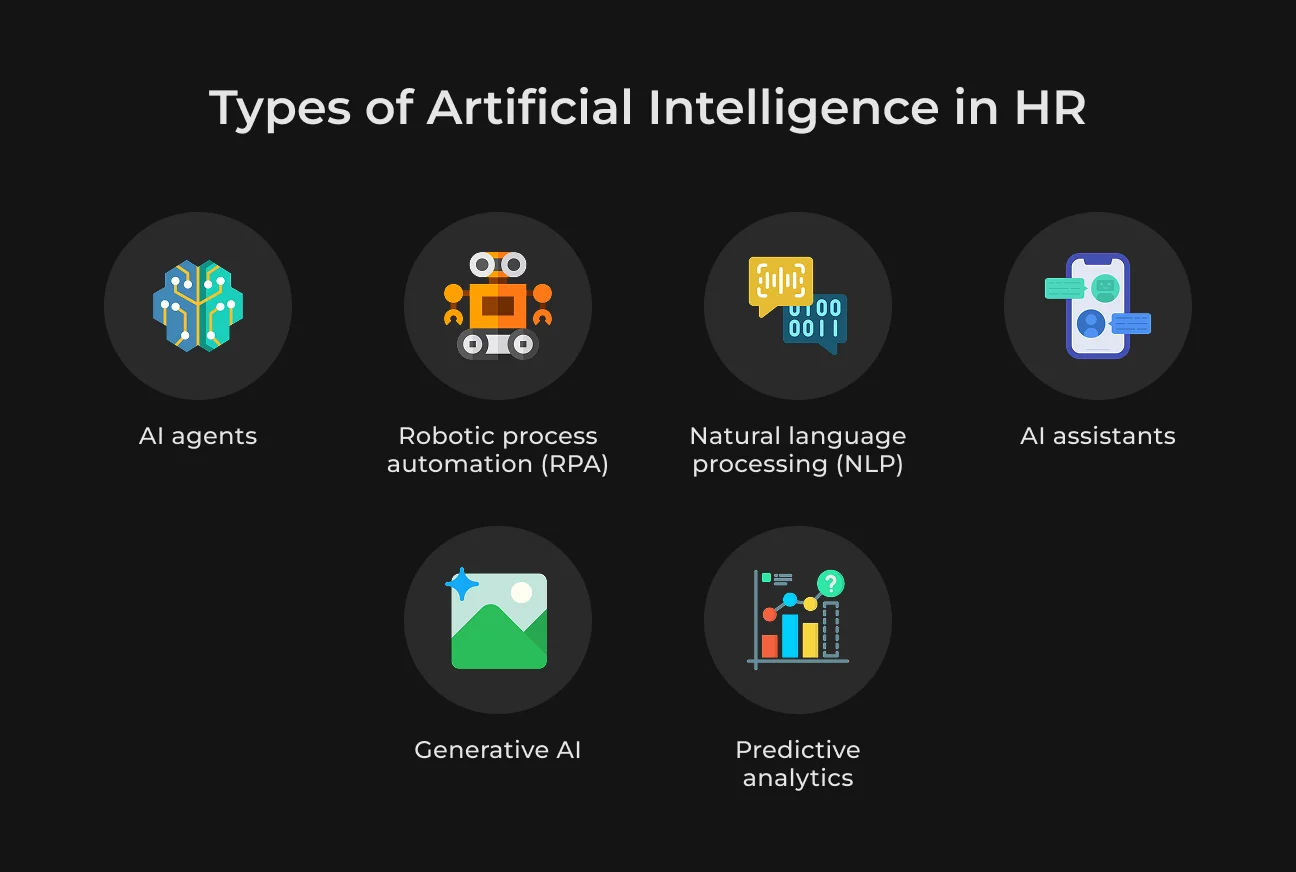
HR departments use a variety of AI tools in their work. Every tool has its own role. But they can also work together like a well-coordinated team. For example, a self-help AI assistant might use natural language processing, Gen AI, and machine learning to work on user requests.
Check out some common AI tech in HR.
AI agents
AI agents are independent systems created to perform tasks or meet goals with little input from humans. These agents have memory and learn over time, which affects their performance.
They help find job candidates by searching job boards and networks, manage employee benefit enrollments, answer questions about workplace policies, and keep track of regulatory changes to keep company policies current.
AI Assistants
AI assistants provide interactive help using natural language processing, going beyond simple chatbots. They can address more complex issues because AI agents remember user preferences and previous interactions.
AI assistants can deal with routine questions and help with basic HR stuff. They’re a big help during onboarding, or guiding new hires through orientation and paperwork.
Automation and Robotic Process Automation
Automation and RPA handle repetitive tasks like data entry or payroll. They're not actually AI, but they make a great team in HR. These tools, for example, can efficiently sort job applicants by certain criteria or keep employee records up to date.
Generative AI
Generative AI creates new content by spotting patterns in the data it learned from. In the world of human resources, it speeds up activities HR teams used to spend much time on.
It can quickly create detailed job descriptions or custom interview questions. For training and onboarding, GenAI delivers personalized learning materials for employees.
Plus, generative AI helps write and edit company messages, create policies, and design specific messages for different employee groups.
Natural Language Processing (NLP)
NLP helps machines get what humans mean when they talk. It's a practical approach to analyzing survey answers, sorting resumes, finding trends in performance reviews, or checking internal chats.
Predictive analytics
Predictive analytics breaks down past data to forecast the future. It can suppose how many staff you'll need, help with salary reviews, or mark trends in employee performance.
It also warns HR managers about possible workforce challenges, which helps them identify issues or training needs.
AI-Based HR Calculators and Policy Makers
See how SapientPro created a powerful tool for the human resources industry.
Use Cases Examples of AI in HR
We've already talked about how AI can lighten the load for HR managers. Let's take a closer look at real examples of how AI is used in different areas of HR workflow.
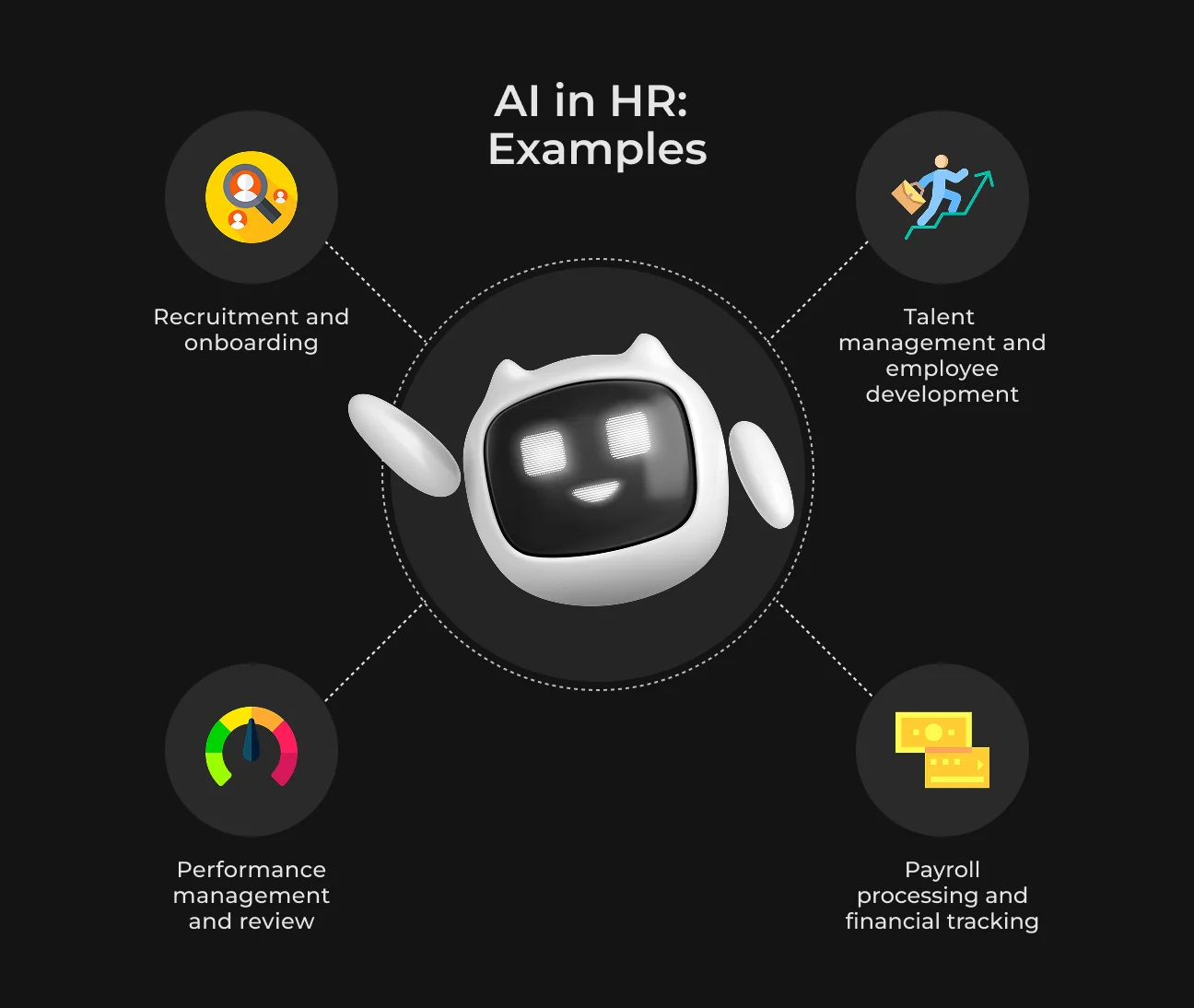
Recruitment and Onboarding
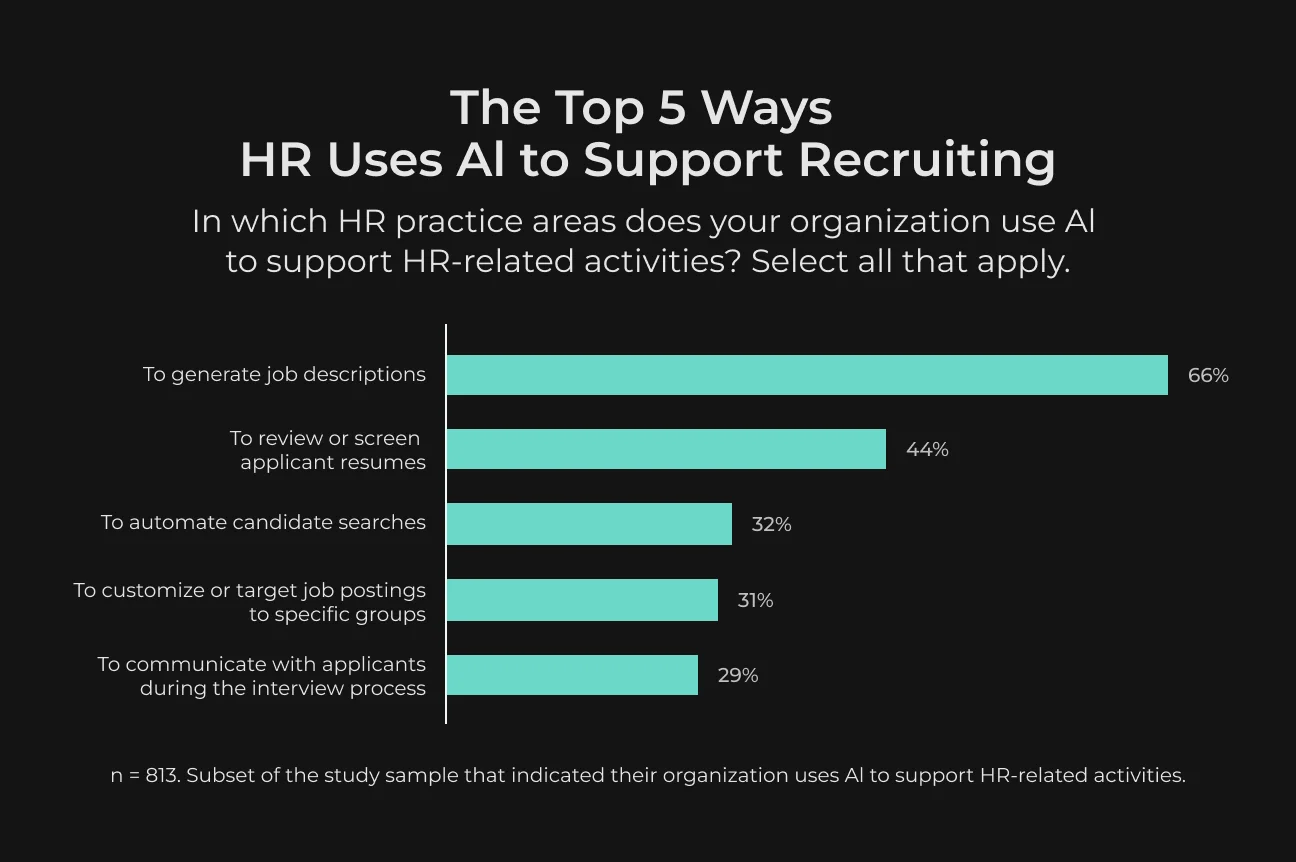
AI is a great assistant in hiring. It speeds through job applications, arranges interviews, and pairs candidates with the most suitable jobs. About 88% of companies already use AI to screen candidates at the start. Here's what exactly it does during recruitment:
- Create interview questions and job descriptions;
- Rank who’s relevant and who’s not (based on experience);
- Chat with candidates like an experts through chatbots;
- Search through applicants and invite the best to apply.
Once hired, AI keeps working by making onboarding easy and crafting tailor-made training materials for new employees. It also offers ongoing support through chatbots. So, new candidates no longer get lost on their first day.
Performance Management and Review
AI analyzes data to see how employees really perform. This results in fair evaluation and objective feedback. It hunts through data like internal chats or emails, and chooses details humans might overlook, to paint a clear picture of employee performance.
This real-time feedback keeps employees focused and involved, preventing mistakes like focusing only on recent events or getting fixated on just one area.
AI Talent Acquisition and Employee Development
A study shows that using artificial intelligence for tasks like resume screening boosts the talent acquisition process by 95%.
To keep employees developing in their profession, many companies are also using adaptive learning. This approach tailors training to fit what each employee needs and likes.
Thanks to AI, the system can assess skills and create unique learning plans and tasks for everyone. It can also suggest where employees can gain new skills for their current jobs and identify career paths within the company. This helps keep talents by offering them new challenges and roles.
Payroll Processing and Financial Tracking
AI simplifies payroll for HR by reducing their workload. It minimizes errors, manages complex legal tasks, and maintains a clear record of payments, like who gets paid what and when.
Plus, AI keeps track of the company's spending and budget. It helps leaders decide where to invest their money, and shows what's effective and what needs improvement.
Over 45% of multinational companies will use AI-driven cloud payroll systems that manage tricky international taxes without much human help.
Pros & Cons of AI in Human Resources
Let's look into the pros and cons of using AI in HR to help you decide if it's a wise investment.
Benefits of Artificial Intelligence in Human Resources
Check out some definite advantages of using AI in HR.
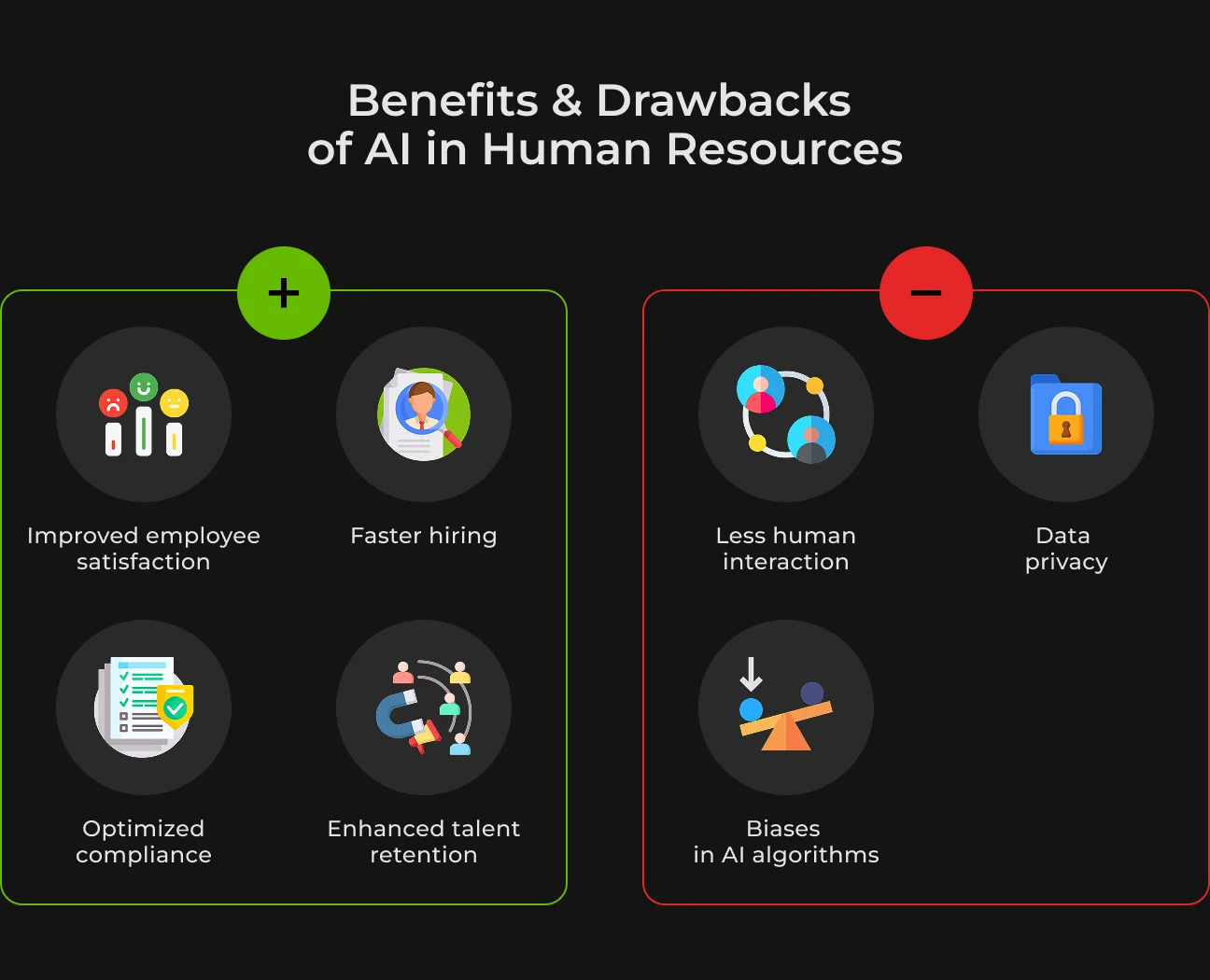
Improved Employee Satisfaction
AI improves existing employees' work life by running most routine tasks. HR specialists can instead center on creating personal experiences for employees, like mapping out career paths tailored specifically for them.
AI chatbots can quickly answer questions about company policies or training. Employees just don't have to wait for the HR manager's reply.
Faster Hiring
Nobody loves a slow hiring process. In today's fast-paced job market, companies with a quick and easy hiring process have the advantage.
AI skips those boring parts by running resume screening, setting up interviews, and sending out initial assessments, giving HR a break from mountains of paperwork.
Enhanced Talent Retention
AI uses work habits and surveys to find out which employees might be thinking about quitting. With this information, HR managers can support, adjust roles, or offer fair compensation to keep employees.
Moreover, AI can tailor those incentives or career paths to align with each employee's interests.
Optimized Compliance
AI helps ensure that all regulations are followed and prevent expensive mistakes. It also identifies potential issues before they become bigger ones.
Generally, AI tools help companies comply with laws about equal opportunity employment. This reduces the need for constant human oversight.
Drawbacks of Artificial Intelligence in Human Resources
Here are some potential downsides to help you understand the flip side of using AI in HR.
Less Human Interaction
AI just lacks the emotional intelligence that people have. Applying for a job can feel like you're being judged by robots instead of humans. This is especially nerve-wracking for high-stress jobs where empathy is crucial, like in healthcare.
Data Privacy
Basically, 63% of HR professionals say data privacy and security are their main worries about AI. AI requires loads of personal information, like performance stats or health details. If not properly protected, there's a high risk of privacy breaches or identity theft.
AI, of course, makes handling employee information much easier. Though, it also throws in some new dangers. HR needs to step up and tackle these safety issues to keep that sensitive data locked up tight.
Biases in Algorithms
Many might think computers are always impartial. Still, AI can come into biases from the data it’s trained on. If the training data has biases related to gender, race, or social status, the AI might accidentally use those biases in hiring.
For example, Amazon's AI hiring tool was biased against women because it was trained using mostly male resumes. It chose the perfect employee based on this partial historical data.
Challenges in AI Recruiting Software
AI software accelerates recruiting, but it also comes with its pitfalls. Here's what HR leaders should know before adding AI to their hiring process.
1. Identifying Bias in AI Algorithms
AI recruiting software can become biased by mistake and treat some groups unfairly. This occurs because the data used to train it might already have some prejudices.
Try to keep your data renewed and fair by updating it regularly. Test your AI for fairness and bring in a diverse team to help locate and quickly address any biases in the development process.
2. Protecting Data Privacy and Security
Any security mistake or data breach could cause trust or legal issues.
Companies must protect candidate data with strong encryption and strict access controls. And remember to follow data protection laws like GDPR or CCPA.
3. Achieving High Accuracy and Relevance
AI recruiting software often faces difficulties to find the right candidates for jobs. Particularly, when the roles require unique skills or a good cultural fit.
We should train the algorithms with detailed data about jobs and candidates. Plus, getting feedback from hiring managers can help us adjust the system as the process goes.
How SapientPro Implemented AI into CV Processing
A big company's HR department needed a tool to format CVs to match their unique style. Their old software was slower and couldn't even open its own files, which disrupted their daily operations and caused chaos.
So, they asked SapientPro's team for an AI-powered HR solution to make things easier and minimize manual effort.
SapientPro’s engineers developed a CV management system that processes resumes in different formats and extracts important details like education, work experience, and projects. This tool saves more than 320 hours a month by reducing manual tasks and speeding up recruitment.
What used to take two hours per CV can now be done in five minutes for review, approval, and exporting in the company's format.
The system is easy to use. Just upload a CV in DOC, PDF, or image form, and it’ll extract key details like name, university, or work history. These are then sorted into a neat, searchable, and exportable format for your team.
Will HR be Replaced by AI? Key Considerations
Anytime soon, companies will stop playing around with AI and start making it a big part of their business strategy. This transition will revolutionize every area from customer service to human resources. McKinsey research says this AI boost could add $4.4 trillion to productivity through various corporate uses.
Basically, 25% of companies that are using generative AI now also have AI agents. By 2027, that number is predicted to be 50%. These agents vary in their capabilities. Certain agents can handle repetitive tasks, like answering questions, others brainstorm with you, and some instruct other agents.
Besides, high-level AI, like OpenAI's o1 or Google's Gemini 2.0, can think like humans, going beyond just providing facts to actually reasoning. People will still need to hire employees, but AI agents will handle most of the tedious work in recruiting.
The World Economic Forum's study states that in the next five years, about 44% of worker skills will be altered, thanks to generative AI tools that affect 40% of tasks.
Over half of workers know their jobs are going to change and are happy to learn new skills to keep working. By reskilling, customer service agents gain new abilities, and companies get a new way to make money.
Almost 75% of recruiters believe AI will change hiring by emphasizing skills. Companies that focus on quality skills hire more effectively, leading to higher profits and trust.
By the end of this year, it's predicted that 60% of companies will fully use AI in recruitment. These tools are set to halve recruitment bias, automate 40% of repetitive tasks, and keep 75% of job seekers happy with quicker AI feedback.
Partner with SapientPro to Integrate AI into Your HR Tools
Partner with SapientPro to improve the work of your HR department with AI. Our engineers can create an AI-powered platform that fits your needs, adding any custom integrations. Your HR team can reduce tedious tasks, get more processes done, and focus on what really matters.
Check out some examples of our past work:
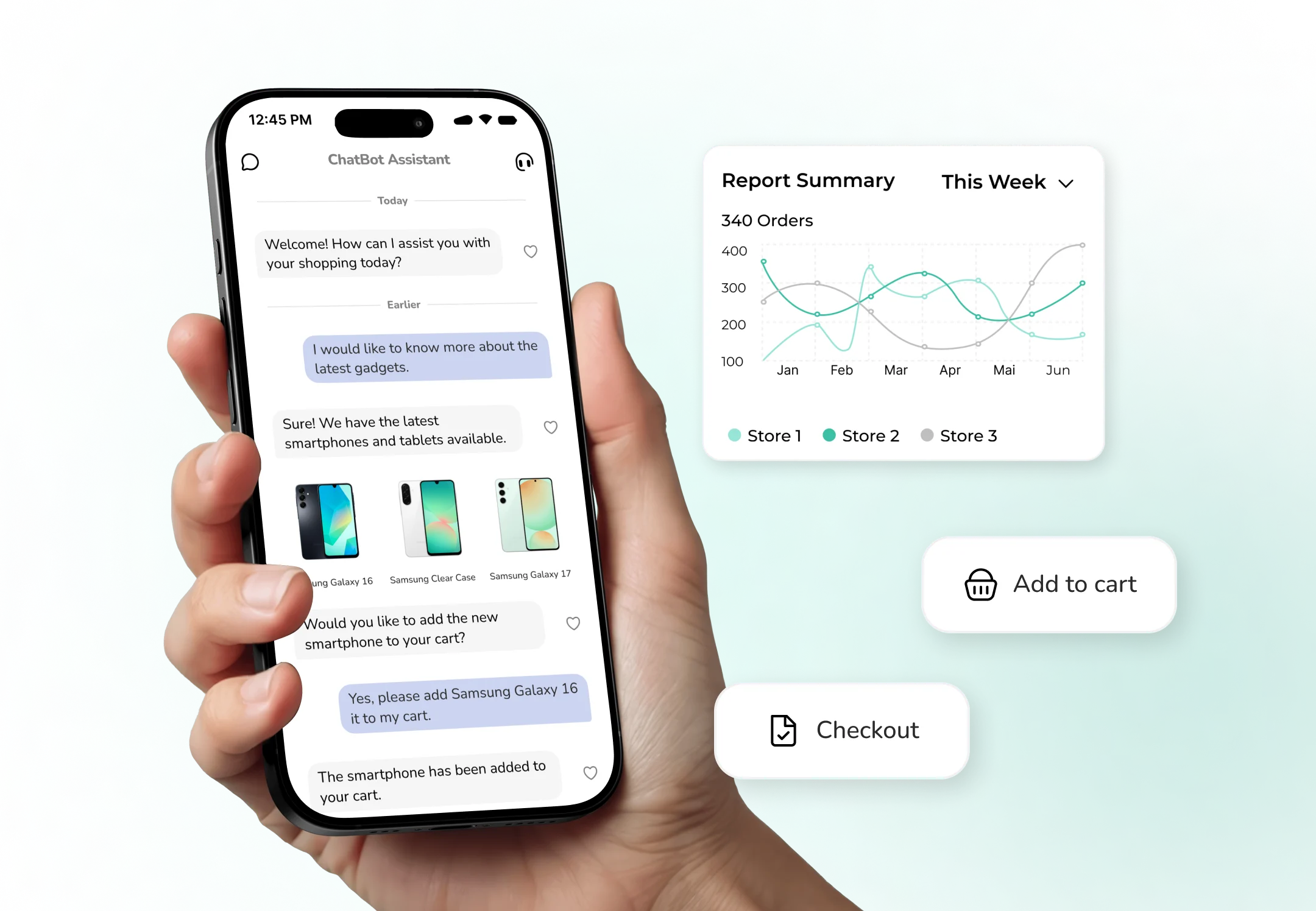
- AI Assistant for Easier Online Shopping
- AI Solution for Efficient CV Processing at Scale
- AI-Powered Sales Expansion Tool
With us, you'll have professional support from a team dedicated to your success
Reach out to us and let’s get started.
Build Your AI Solution with SapientPro