
All AI in Finance: Use Cases, Benefits, Challenges, and Ways to Transform Financial Management
December 26, 202515 min read


Finance needs a lot of data to accurately forecast returns and risks. But with today’s massive data volumes, manual analysis just can’t keep up as it has its limits. That's where AI steps in, modernizing finance by automating tasks and uncovering complex patterns.
By 2025, AI is expected to save banks $200 to $340 billion and impact $450 billion in revenue. It’s believed that 75% of banks with assets over $100 billion will probably have fully integrated AI strategies by that time.
AI in finance offers lots of benefits but also presents new challenges. SapientPro’s experts share their 8+ years of experience to explain the use of artificial intelligence in financial services and how modern technologies affect the industry.
What is AI in Finance?
AI in finance uses advanced tech like algorithms and machine learning to analyze data, make better decisions, and automate tasks. This increases efficiency and accuracy in areas like data analysis, forecasting, risk assessment, investment management, customer service, and fraud detection.
AI offers deeper market insights and takes customer interactions to the next level, making them more human-like by automating traditional banking processes. It predicts customer behavior and preferences, which results in more personalized experiences, improved client support, better credit scoring, and new innovative products.
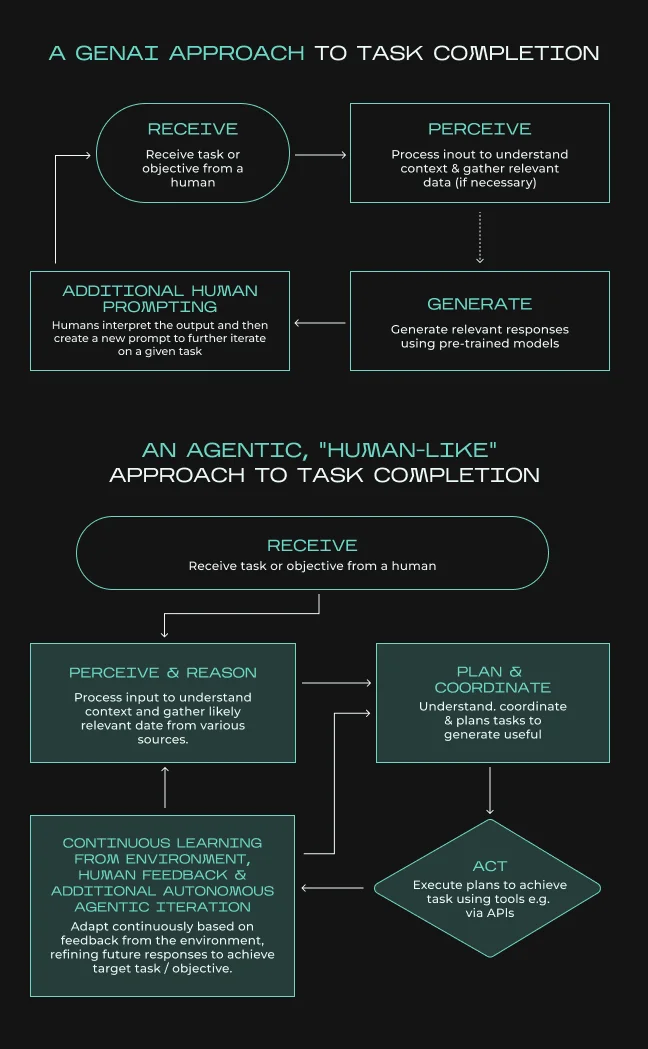
Financial companies are increasingly using AI for more tasks. It's helping the fintech industry improve operations and improve customer service.
Key Trends & Stats of Artificial Intelligence in Financial Sector
Keeping up with the latest AI trends in financial services can give your business an advantage over others. Here are some key AI trends changing the industry.
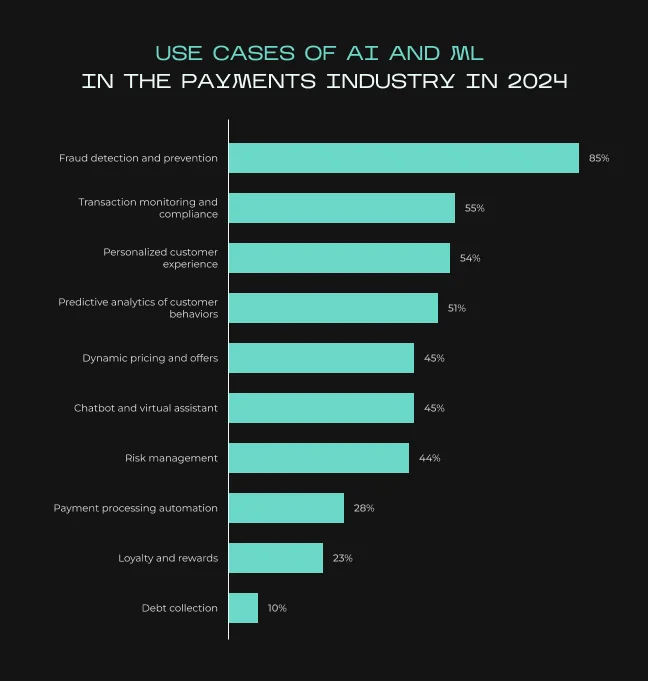
1. AI-Powered Chatbots for 24/7 Customer Service
AI chatbots have become a key part of quality customer service in the finance sector. They offer 24/7 support by answering frequently asked questions, helping with transactions, and taking over simple account requests. Machine learning keeps getting better, making them faster, more pleasant, and less expensive to deal with.
Fintech companies have saved $7.3 billion in operational costs by using chatbots. These smart assistants have also saved about 826 million hours in customer interactions. SapientPro’s chatbot development services can help you leverage this technology in your project.
2. Using Predictive Analytics for Better Investment Opportunities
Predictive analytics turns data into useful insights. In 2024, the banking market for predictive analytics was valued at $3.63 billion and is projected to grow to $4.38 billion in 2025, reaching $19.61 billion by 2033.
Predictive analytics uses statistics and machine learning to find patterns and trends in big data. This allows investors to foresee future outcomes using past data. That’s how they can make better decisions about stock performance or real estate opportunities.
3. Fraud Detection
Banks can use AI to improve how they detect fraud. In 2023, for example, credit card fraud topped the list of identity theft types with 416,582 cases.
Letting banks and customers know about possible fraud immediately helps cut financial losses and other damages. AI can detect unusual credit card activities in real time.
If it finds anything suspicious, the system sends a text notification to customers, who can then confirm with their bank whether the transaction is real. If it turns out to be fraud, the bank can quickly cancel the card or start investigating.
4. Using Generative AI to Personalize Customer Interactions
In 2023, Natural Language Processing (NLP) led the banking sector's AI market with more than 36% share. NLP helps machines understand and use human language, which is now essential for improving customer interactions in banking.
Banks use generative AI to personalize services for each client. By looking at their spending habits and financial goals, AI can give personalized product suggestions and financial advice. SapientPro’s NLP development services will help you leverage this technology.
5. Automating Payment Processing
Artificial intelligence in payments automates tasks like processing payment documents, routing transactions, managing collections and reconciliation workflows.
Using AI in payment operations allows businesses to:
- have more accurate cash flow forecasts;
- speed up accounts payable by more than 80%;
- cut down the time to collect payments by up to 50%.
AI can monitor payment details and quickly identify any failed or pending transactions. It also alerts everyone involved about necessary actions.
Moreover, technologies like natural language processing help automate the processing of invoices and check formats like CSV, PDF, images, or handwritten text.
AI Applications in Finance: Top Use Cases
There are many various AI applications in finance that help companies improve the way they work and the quality of their services. Let's take a closer look at these use cases.
Interpreting People’s Emotions From Text
Advanced natural language AI can detect the main emotion in a text, which is especially helpful for investment research and analyzing chat data.
Detecting Unusual Patterns
AI can detect unusual activities in financial data. By examining past and current transactions, AI can find patterns that aren't normal. This helps financial institutions quickly mitigate fraud and cyberattack risks.
Risk Management
AI algorithms analyze market trends, financial reports, global events, etc., which allows risk managers to make the right decisions and avoid potential losses.
Predictive Forecasting
Financial organizations use AI to predict market trends and consumer behavior by analyzing data. These accurate forecasts help with investment decisions, resource management, and business planning.
Algorithmic Trading
AI improves trading by creating precise and consistent strategies. It finds profitable opportunities with real-time analytics, eliminating emotional decisions.
Scoring Creditworthiness
AI can look at social media and other online activities to better understand customers. This approach gives a detailed view of an applicant's creditworthiness and helps lenders make more accurate decisions.
Processing Loans
AI makes loan processing easier by automating eligibility checks and document verification. It speeds up loan approvals, improves the customer experience, and shortens processing times.
Other AI Use Cases in Finance
Here are some other uses to mention:
- Customer service via chatbots;
- Personalized financial recommendations;
- Anti-money laundering;
- Investment portfolios optimization;
- Regulatory compliance;
- Streamlined transaction and payment processing;
These examples demonstrate how artificial intelligence can improve efficiency, accuracy, and security in financial services.
Benefits of Artificial Intelligence in Finance
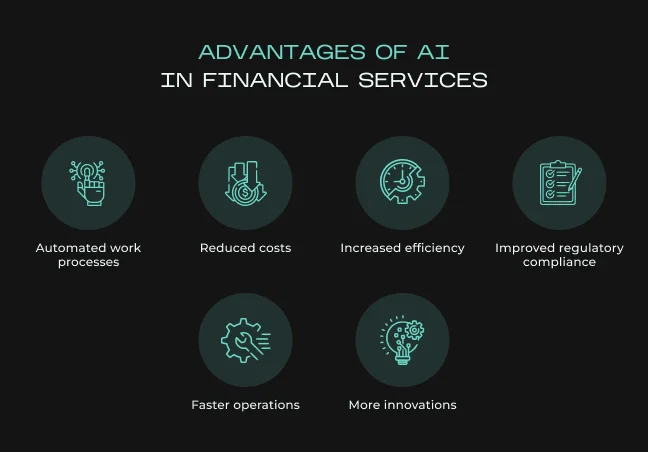
AI brings many advantages to finance: it lowers costs, speeds up fraud detection, automates compliance, and minimizes risks. Let's focus on the main benefits and explore them further.
- Automated work processes: AI can automate document processes. It makes data entry easier and reduces errors and processing time. AI also improves the work of customer service by using chatbots and virtual assistants to provide fast and personalized responses.
- Reduced costs: AI can help financial institutions save money by automating manual tasks and reducing human errors. It’s obvious that fewer human interactions lead to fewer errors and more cost savings for the company.
- Increased efficiency: AI can take care of repetitive tasks, letting people focus on more important work. It can automate activities like checking documents, transcribing calls, and answering basic customer questions.
- Improved regulatory compliance: in finance, following regulations and laws is a must. AI can greatly help by automating compliance processes. It makes it easier to meet complex requirements and lowers the risk of breaking rules.
- Faster operations: AI can quickly analyze a lot of information and identify patterns that people might miss. This ability helps make faster decisions and improves areas like trading communications, risk modeling, and compliance.
More innovations: quickly analyzing large amounts of data can lead to the creation of unique and innovative products and services. This helps your company stand out, attract more clients, and offer excellent customer service.
Challenges of Using AI and ML in Financial Software Development
AI brings a many benefits to the financial sector with improved customer service, risk management, and fraud detection. However, it also comes with challenges, such as managing data and a higher risk of cyberattacks. Staying informed is important to managing these risks, so we'll help you understand and prepare for any potential issues.
Protecting Personal Information and Ensuring Safety
One significant ethical and regulatory issue with AI is how to ensure data privacy. AI can personalize experiences too much, to a point where users might feel their privacy is compromised or their data is used without permission.
AI developers, cybersecurity experts, and lawmakers need to work together to make sure AI helps financial organizations while protecting individual rights.
Fairness and Bias
Algorithms and models can be biased if fairness isn't considered during their development. If an AI algorithm relies only on historical data to make decisions, it might continue existing biases and inequalities.
For example, biased AI systems might deny loans to certain groups. To prevent this, it's important to carefully choose training data and continually check and improve models to keep them fair.
Incomplete Data
Another challenge is collecting enough data to train AI and machine learning models. For example, a new fintech startup might lack the historical transaction data needed to develop a reliable fraud detection system. Without sufficient data, the models may not learn well, which can result in poor accuracy and potentially risky financial predictions.
Concerns About Adding Extra Data
Gathering and cleaning financial data is just the first step. It's also important to set up an efficient process for receiving and updating this data regularly. For example, if you collect a large dataset and build a model but don't update it when new data comes in, you might have to start over later.
There should be regular updates in areas like fraud detection, real-time risk assessment, and stock market prediction as outdated information can lead to poor results. Using APIs can help you automate the collection and integration of fresh data from various sources.
Lack of Data Standardization
Financial data can be tricky because it comes in different formats and structures from different sources. This makes it tough for AI to gather and analyze this data. For example, a bank might struggle to integrate customer data from multiple branches if each branch uses its own accounting methods.
To use AI and ML algorithms effectively, it's essential to tackle a few issues first:
- Differences in data formats, like varying currencies or date styles;
- Timing of financial data, like stock prices or interest rates;
- Missing data because of system glitches.
Training AI and ML Models
Building efficient AI models requires a lot of computing power and expertise, which can be tough for financial institutions. For example, using AI in investment portfolio management helps improve data analysis, generate useful insights, and support decision-making by integrating large language models.
Because of this, companies might find it hard to adapt these complex machine learning models. Doing so requires specialized skills in both machine learning and the financial market. If the models aren't properly trained, they might only perform well with the training data and not in real-world situations.
These cases show us the complexities of using AI and machine learning in financial software. The best way to address challenges in finance is to use a more varied and representative set of training data. This helps models learn from many various situations, which makes them better at generalizing and less likely to overfit.
Examples of AI Tools in Finance
AI finance tools are special software that use artificial intelligence to help with financial tasks. Here are three top AI financial apps you might want to check out.
ChainGPT
ChainGPT is probably the most popular AI tool in finance today, known for its natural language processing that generates human-like text. ChainGPT helps finance professionals create blogs and website content and brainstorm ideas.
Here are a few examples of how ChainGPT can help in the financial sector:
- Assist in investment decisions: analysts can use it to review financial statements and data, which helps make the right decisions;
- Automate data entry: ChainGPT can automate data entry into Excel, which saves time and minimizes errors;
- Improve predictions: by analyzing historical data, ChainGPT helps predict future patterns and make more accurate financial forecasts.

Planful
Planful is a cloud-based software designed for finance, accounting, and business clients. It simplifies financial operations by offering tools for modeling, planning, reporting, and analytics.
Here are some benefits of using Planful for financial companies:
- Avoid data overload: it automates the planning process, saving time on repetitive tasks;
- Enhance one’s role: the program lets you focus on strategic advising instead of doing manual work;
- Reduce the risk of mistakes: Planful improves data accuracy by reducing costly risks and identifying unusual patterns.

Macroaxis
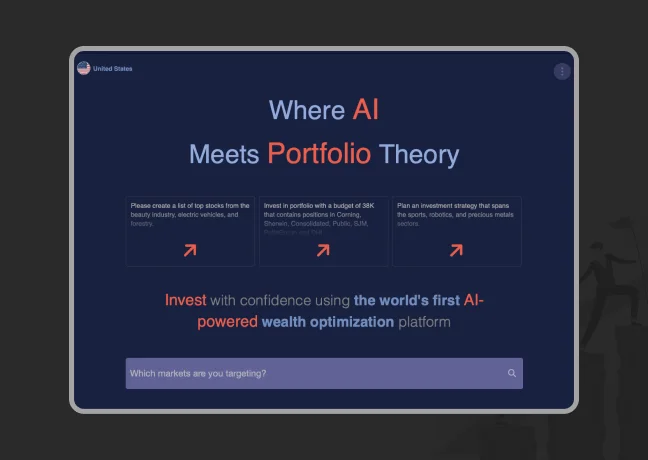
Macroaxis is an investment tool designed to help investors build efficient portfolios. It includes features like portfolio testing, technical analysis, and correlation analysis, which allows for creating portfolios that fit the specific level of risk and budget.
For financial professionals, Macroaxis offers several advantages:
- Portfolio management: Macroaxis automates portfolio optimization. It makes it easy to manage different investments while targeting specific risk and return goals;
- Better decision-making: the platform provides advanced tools for financial modeling and forecasting;
- Risk reduction: Macroaxis finds risks in investment portfolios, which helps reduce market volatility and improve financial performance.
How Much Does it Cost to Create an AI Fintech Solution?
The cost of creating a fintech app can vary based on the following factors:
- The type of app;
- Its features;
- The operating system;
- The location of the development partner;
- The developers' expertise.
For example, creating a basic app with a simple user interface and secure transaction features might cost between $25,000 and $55,000 and take about 4 months to complete.
Also, the cost of implementing AI involves more than just development. It includes infrastructure, creating algorithms, hiring skilled professionals, preparing data, meeting regulations, and ongoing maintenance. That’s a whole lot of expenses.
Here's a look at common services and their estimated costs:
| Type of Service | Estimated Approximate Cost ($) |
| Market research | $5,000 — $15,000 |
| UI/UX design | $10,000 — $30,000 |
| Backend and frontend development | $40,000 — $80,000 |
| AI/ML model development | $25,000 — $80,000 |
| Data integration and management | $10,000 — $40,000 |
| Security | $10,000 — $30,000 |
| Third-party API integration | $5,000 — $20,000 |
| Testing | $5,000 — $25,000 |
| Deployment services | $5,000 — $15,000 |
| Project management | $5,000 — $20,000 |
| Ongoing support (annually) | $10,000 — $50,000 |
| Total cost | $125,000 — $450,000+ |
These are only general estimates and can be adjusted for your project. SapientPro’s experts can provide a detailed estimate for your project based on features, technologies, and other factors that must be considered. Book a free consultation now!
Partner with SapientPro to Integrate AI in Your Fintech Solutions
SapientPro is a software development company that goes beyond just managing the technical side of your AI-based projects. Our experts create customized AI solutions to help your business grow, improve decision-making, and automate tasks. We can easily integrate AI into your fintech solution, so you can better serve your clients.
Get in touch with our experts for a consultation and detailed estimate on your fintech project.

