
All Best Predictive Analytics Models and Algorithms in 2026
January 11, 202615 min read


Predictive analytics is becoming popular in all kinds of industries. Data science, once a discipline for only mathematicians or statisticians, is now used by various businesses for sales, marketing, customer service, and other tasks.
The global predictive analytics market is anticipated to value around $61.9 billion by 2032. Businesses are relying on predictive analytics to make money and remain competitive.
But being competitive requires more than new ideas and algorithms. It’s about choosing just the right model for your business. To discover more about predictive analytics and its best solutions, check out this guide written by SapientPro’s engineers.
Key Takeaways
- Predictive analytics makes predictions about future outcomes based on historical data;
- Advanced modeling can predict which customers are likely to leave. It's based on data about interactions, purchase history, and demographics;
- With predictive analytics techniques, healthcare professionals can identify early health risks and address them before they become major.
What is Predictive Analytics?
Predictive analytics is a category of advanced analytics that makes forecasts about future outcomes based on historical data. It depends on statistical techniques, including machine learning and advanced modeling, to analyze current and past data.
Such modelling helps predict all kinds of events — even those businesses don’t necessarily think about.
This analytics technique can be advantageous across numerous industries like real estate, marketing, and retail. It provides benefits like:
- Enhancing sales predictions with analytics;
- Determining the suitable price points;
- Employee and customer retention support;
- Identifying customers who might not pay on time;
- Forecasting when machines might break and how likely they are to need maintenance or replacement.
Types of Predictive Models
Predictive models are intended to support processing for diverse data and purposes. The main benefit is that they offer businesses greater freedom with their approach. Let’s take a look at what predictive modeling is and its common types.
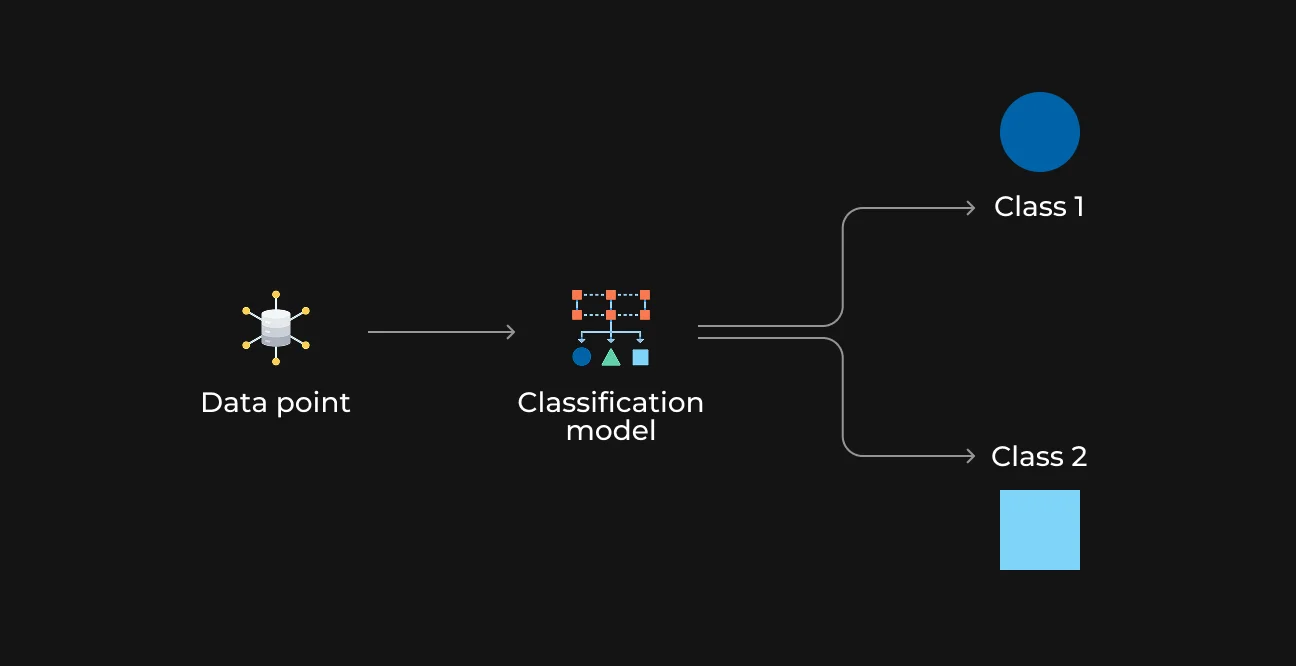
Classification Models
These are models intended to separate data into groups. This is helpful when determining what category a new piece of data should fall into. It's based on patterns learned from already existing data. Common classification models include:
- Decision trees. These organize the data into a flowchart of yes/no questions;
- Random forest. This model improves prediction accuracy by averaging many decision trees;
- Support Vector Machines (SVM). SVMs search for the best line that splits the data into two different groups;
- Neural networks. These categorize data using layers of interconnected nodes.
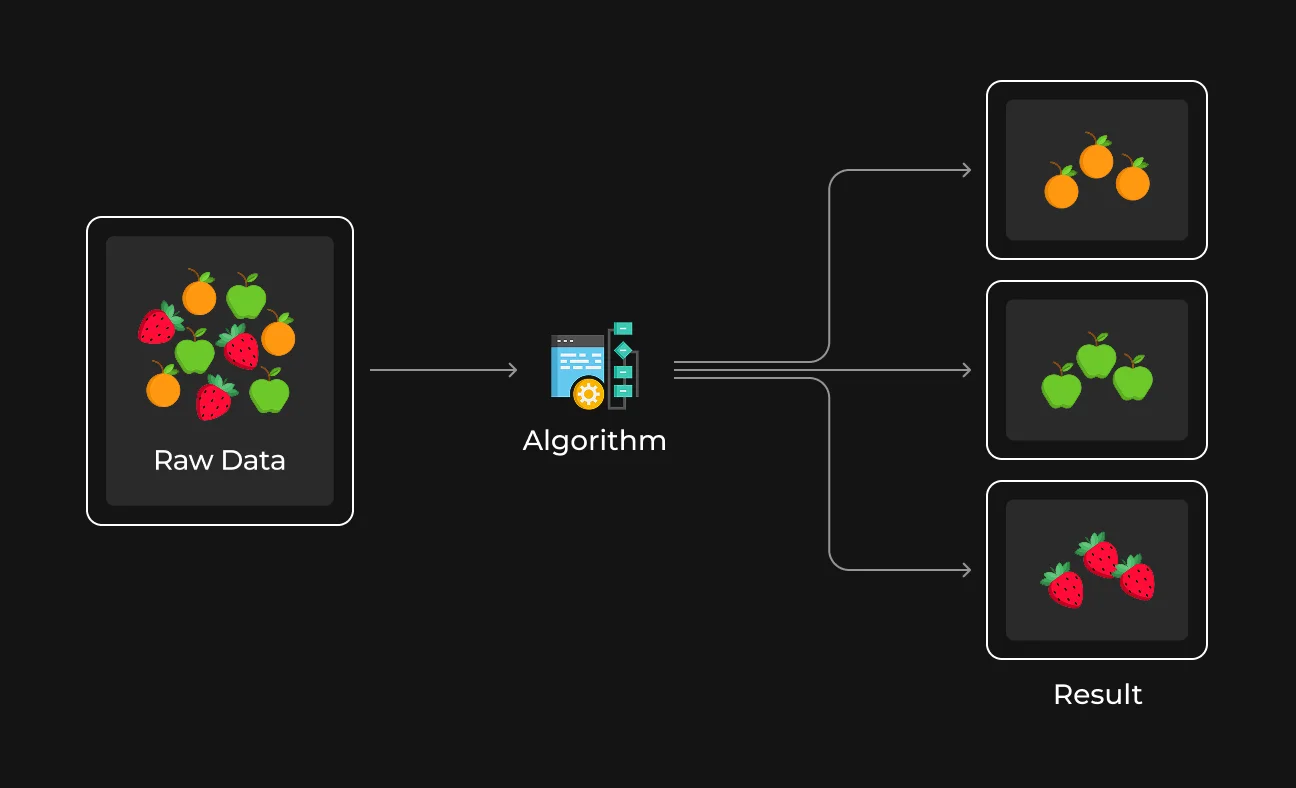
Clustering Models
These models cluster together similar data points. It's a type of algorithm widely used by companies to divide customers into categories based on behaviors or preferences. Some popular methods include:
- K-Means clustering. Splits values into a fixed number of clusters according to similarity;
- DBSCAN (density-based spatial clustering of applications with noise). Clusters the data with density. It's quite useful for discovering clusters of arbitrary shape;
- Agglomerative clustering. Builds a tree showing how each cluster is related to the other.
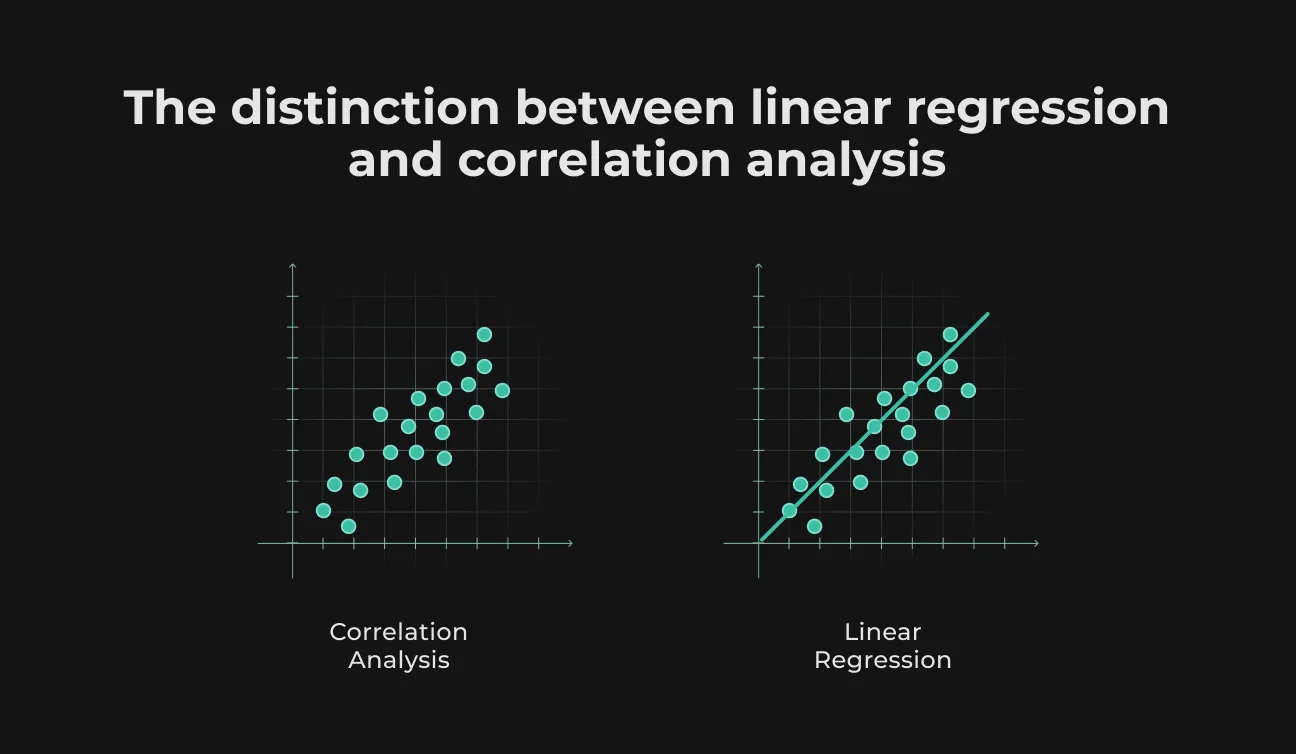
Regression Models
These are models where the output we desire doesn’t take on specific labels. Regression models predict actual numbers like:
- Logistic regression. Classifies data into two groups, like yes/no, and can also show the likelihood of an event occurring;
- Linear regression. Makes predictions based on the relationship between two variables, like car model and engine capacity;
- Ridge regression. It works similarly to linear regression, but with a method to reduce overfitting.
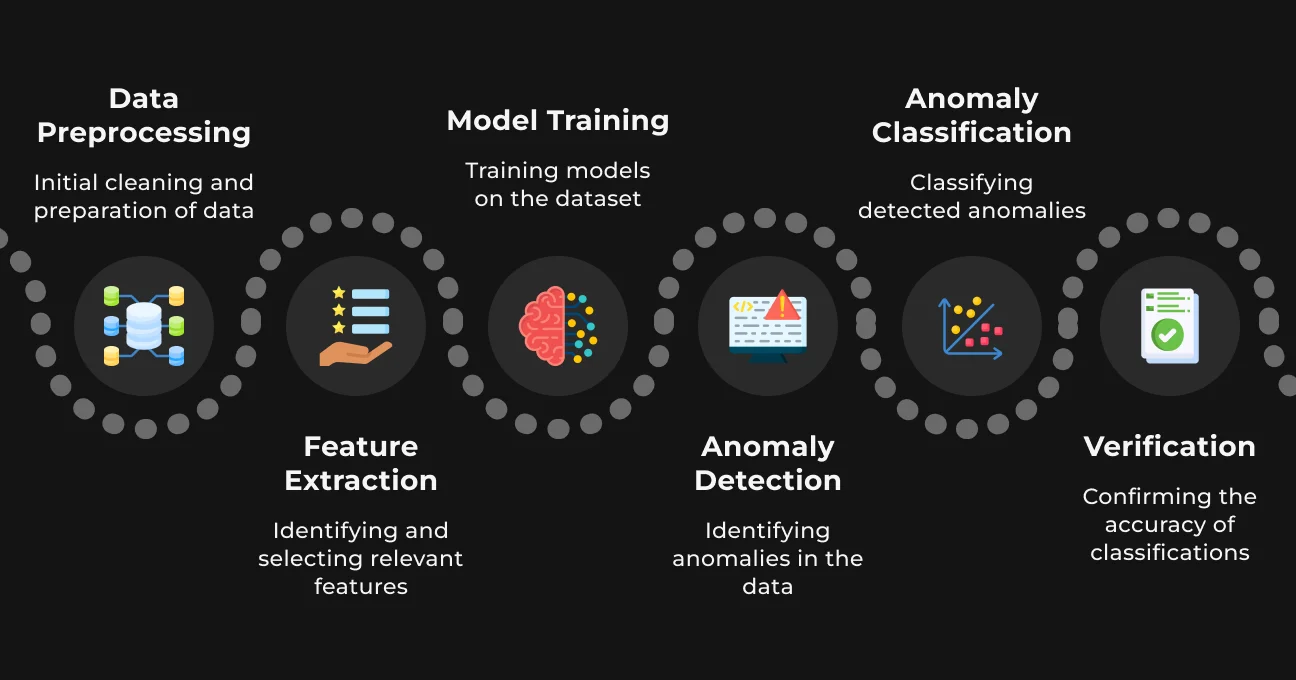
Anomaly Detection Models
Anomaly detection models find patterns in the data that are outliers. They can be used to detect fraud or security threats. What they’re looking to do is find data points that are abnormal. Several predictive modeling examples include:
- One-class SVM. An anomaly detection algorithm that detects anomalous activities by learning normal boundaries from data;
- Isolation forest. Features are randomly chosen, and decision trees are used to isolate outliers;
- Autoencoders. Neural networks that rebuild data and identify major reconstruction errors as anomalies.
Time-Series Models
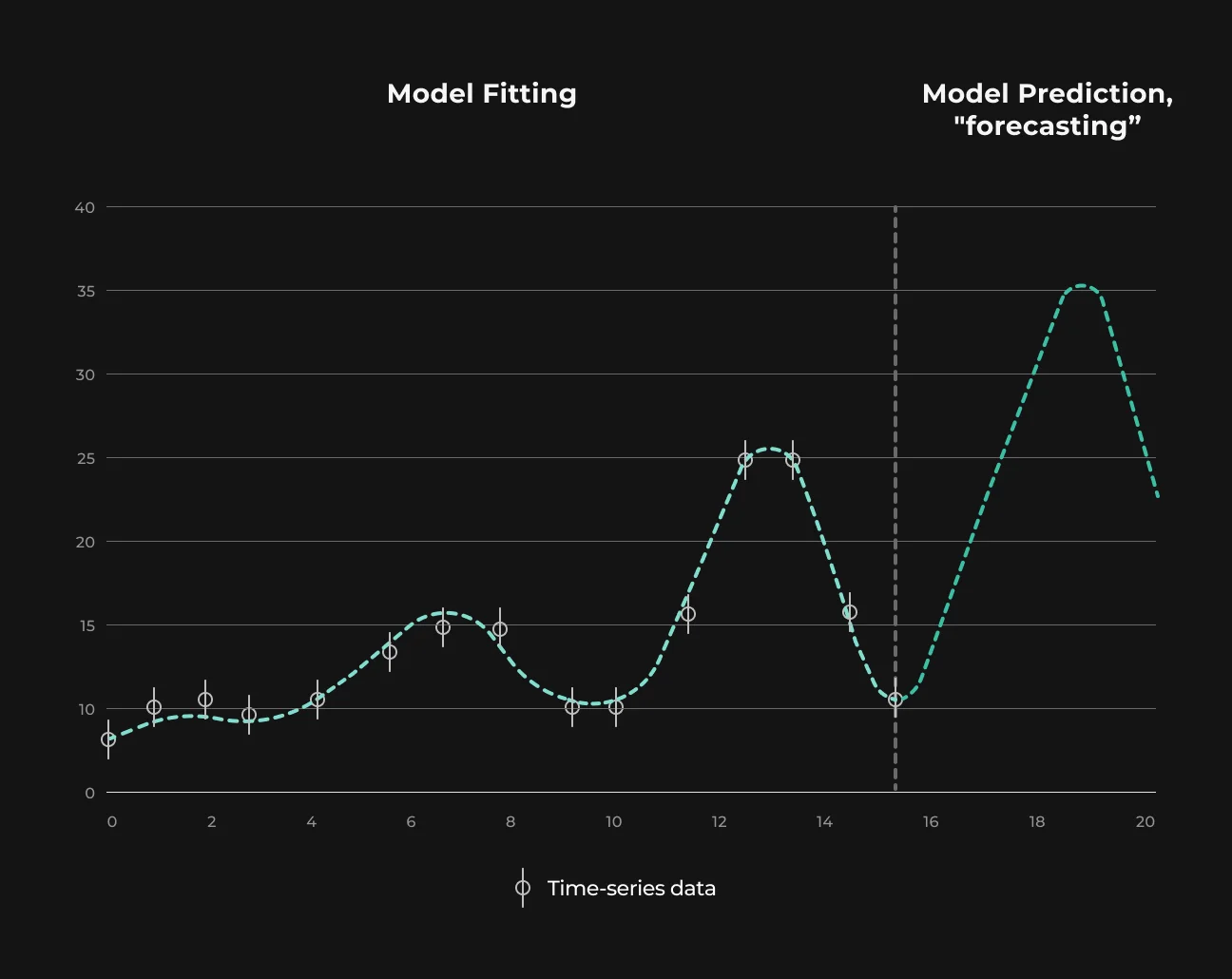
These models forecast based on what they have learned over time. And they are often used to predict future trends like demand, sales, or weather. Common models include:
- LSTM networks. A class of networks for predicting sequences or trends with complex patterns that are time-variant;
- Exponential smoothing. Places a higher weight on recent data when predicting. It’s good for trends that change over time.
Ensemble Models
The ensemble model contains many individual models to enhance accuracy and minimize errors. There are different types, like:
- Gradient boosting machines (boosting). Constructs successive models, with each model correcting the previous one's mistakes to improve accuracy;
- Stacking models. These generate predictions of other models and then use a higher-layer model to determine the best combination.
10+ Best Predictive Analytics Algorithms
Predictive analytics can be generally divided into two types:
- Machine learning predictive analytics involves using data-driven algorithms that work with table-like data and can behave in either linear or non-linear ways. Linear models train quickly, while non-linear ones might take longer due to more complex optimization methods;
- Deep learning predictive modeling is a type of machine learning best suited for tasks like analyzing images, videos, sound, and text.
There are many forecast algorithms that help predict the future. Here are some popular ones often used as base models in predictive analytics.
1. Random Forest
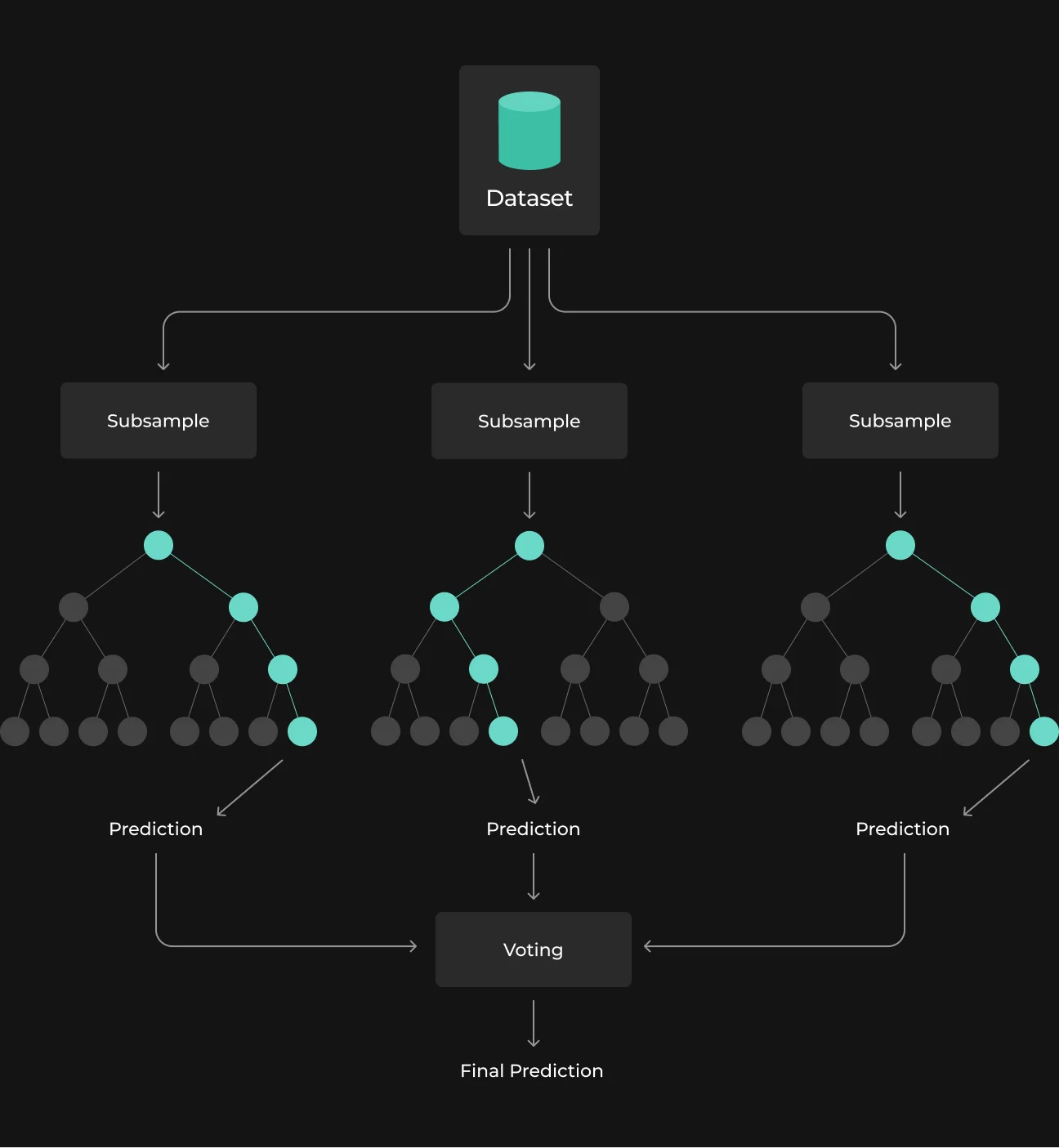
Random Forest is a popular classification algorithm with the ability to do both regression and classification. It can assign accurate tags to vast amounts of information.
A Random Forest is named so because it consists of a forest of decision trees. We compute the value of each tree with a random sample vector. Then, we maintain that every tree in the “forest” is constructed on an identical distribution.
Predictive analytics algorithms reduce errors using methods like:
- Boosting, which adjusts the importance of an observation based on its previous classification;
- Bagging, which creates different data subsets by taking random samples from a training set, with replacement.
While the single trees of Random Forest can be weak learners, they turn into a strong learner when they are together. The Random Forest model is widely used due to several properties:
- It is computationally efficient for large databases;
- More than one tree is helpful, as this solves the problem of bias and variance in a single tree;
- It resists overfitting;
- It runs thousands of input variables without the need to prune them out;
- It can tell you what variables are important for classification.
2. Gradient Boosted Model (GBM)
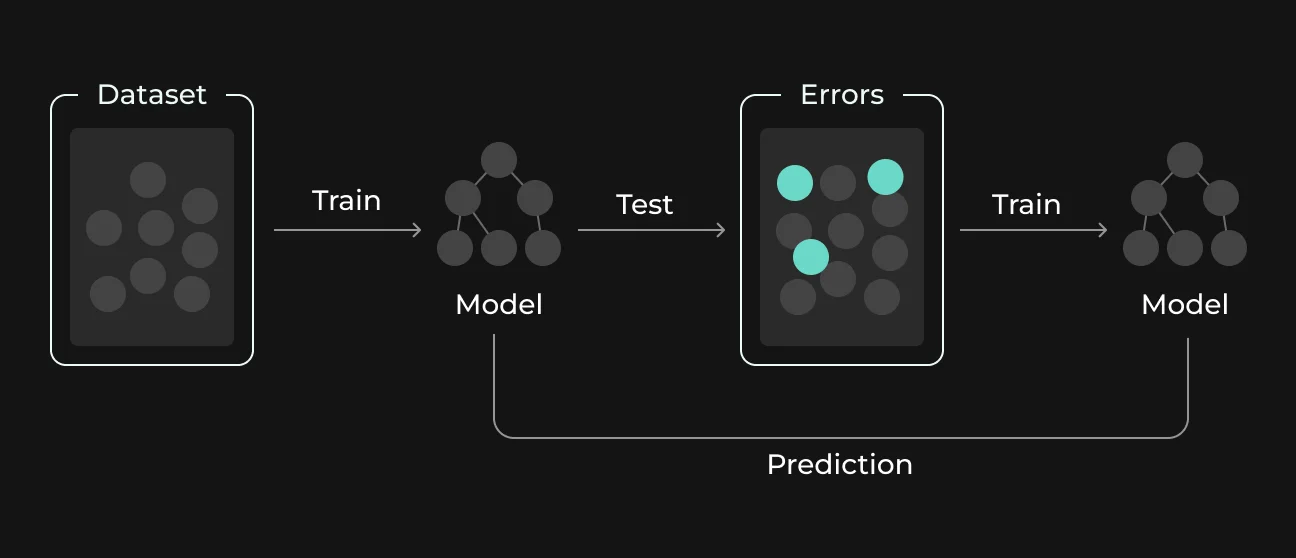
Gradient boosting builds a prediction model in the form of an ensemble of weak prediction models, typically decision trees. Both trees are known as weak learners.
Whereas Random Forest employs bagging, the GBM applies boosting. It constructs trees one at a time and accounts for errors made by the previous tree.
The GBM approach is more expressive of the data and usually has better data completeness. But, since trees are grown one at a time, it is also less efficient than Random Forest.
3. Generalized Linear Model for a Pair of Values
The generalized linear model is an extension of the general linear model. It analyzes the influence of several factors on continuous variables. Plus, it applies multiple dispersions to determine the optimum fit model.
The main advantage of this model is that it's fast to train. It’s also easy to understand, even when it comes to categorical predictors. The generalized linear model helps predict how factors might influence future outcomes without overfitting.
Yet, it requires large datasets and is more sensitive to noise than other algorithms.
4. K-Means
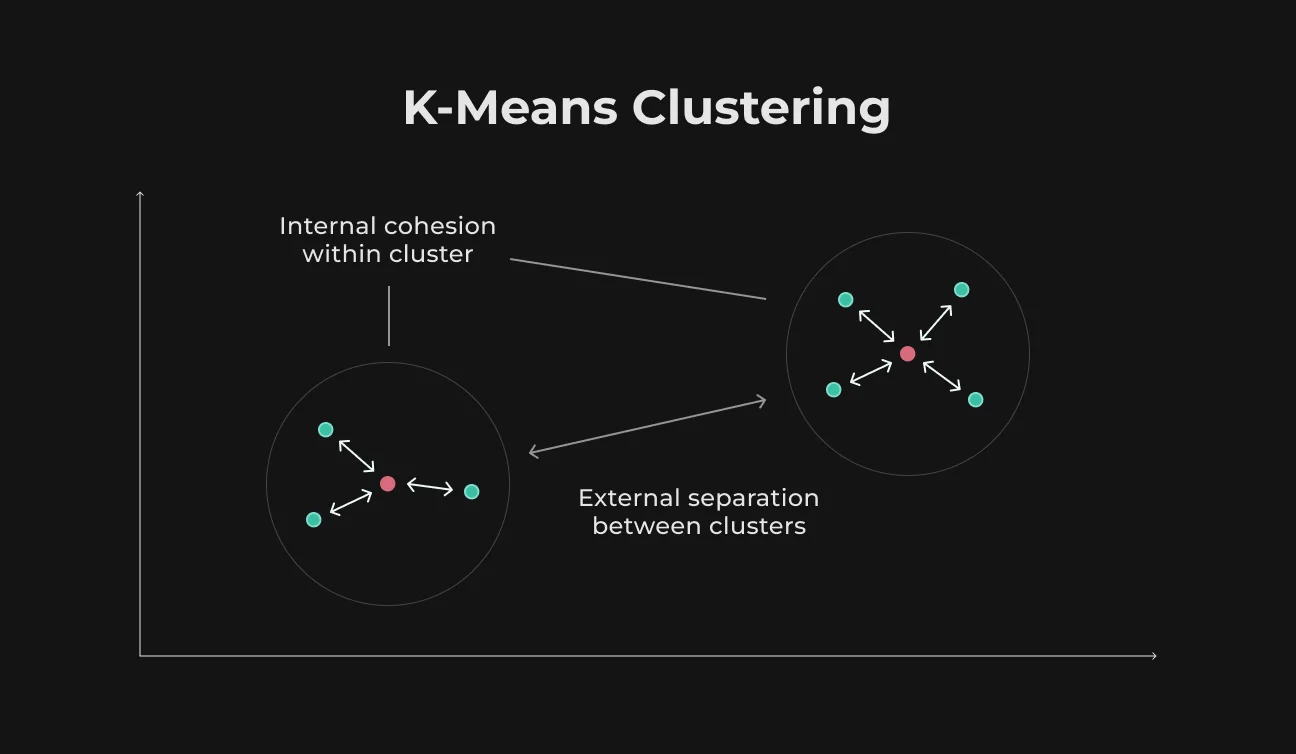
K-means is among the most popular machine learning algorithms, which groups unlabeled data into clusters. The algorithm attempts to identify common properties between elements and cluster them for subsequent analysis.
This method is particularly beneficial when analyzing big data and seeking to apply customized algorithms.
5. Auto-Regressive Integrated Moving Average (ARIMA)
ARIMA is a widely used method for analyzing systems with high variability and non-stationary data. It's useful when measurements are taken at fixed time intervals, like every second, minute, hour, day, week, or month.
Autoregressive here refers to phenomena where inertia occurs, meaning a variable's values depend on their past values over time. The errors in predicting these can also be influenced by previous errors.
Implement Predictive Analytics in Your Product
SapientPro's engineers will provide a detailed consultation and bring your ideas to life.

6. Prophet
Prophet is an open-source forecasting tool published by Facebook. You can use it for things like capacity planning, resource allocation, and setting sales targets.
While traditional forecasting methods may not excel in performance or flexibility, and manual forecasts are often heavily dependent on analysts, Prophet offers the best of both worlds. It automates most work while still allowing you to add your assumptions or insights.
7. AutoML
Automated machine learning (AutoML) is an approach to predictive modeling that provides easy access to complete models and processes. It automates the algorithm selection, hyperparameter tuning, parameter optimization, and model evaluation.
This method enables teams with limited technical skills to build reliable predictive models much faster than the traditional way. By orchestrating the behind-the-scenes complexity, it lets marketing professionals, operations managers, and business analysts create models tailored for their own purposes (even without coding).
The result is faster deployment, better scalability, and increased adoption of predictive analytics enterprise-wide.
8. Temporal Fusion Transformer (TFT)
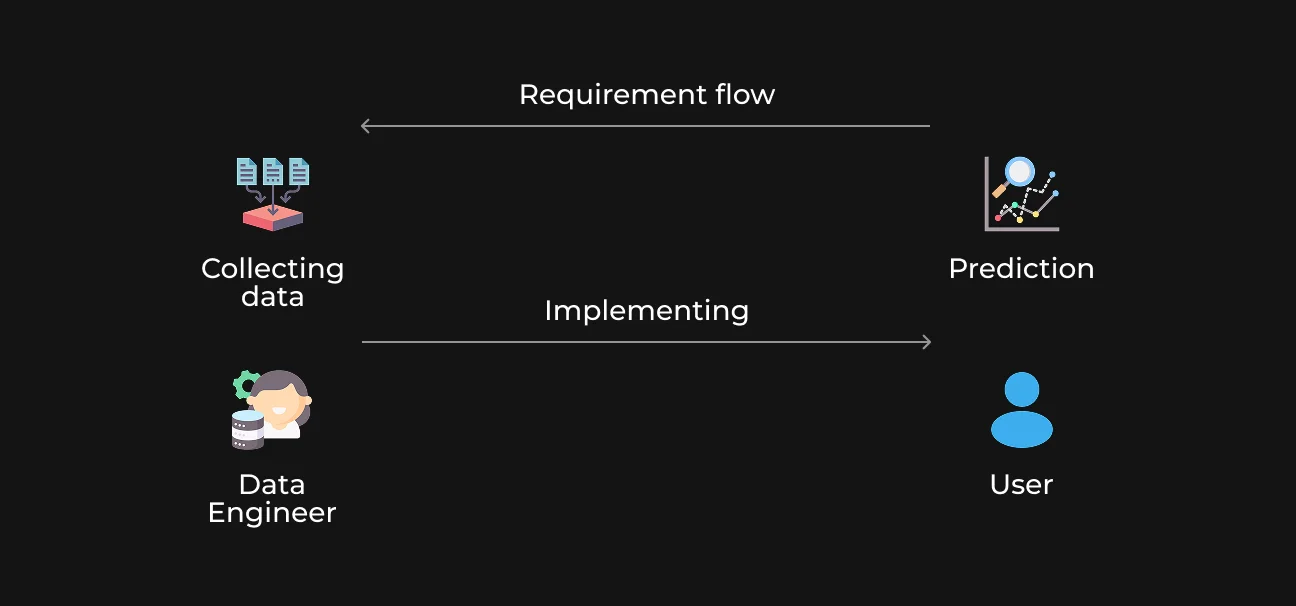
The TFT model is designed for time series prediction. It applies deep learning on sequential data, and uses history, static, and known future to predict. What distinguishes TFT from classical time series models is the presence of attention mechanisms that allow for focusing on only the most important pieces of information.
TFT can be used for sales forecasting of different products and services, or planning staff schedules in healthcare based on past patient demand.
This algorithm suits types of forecasts influenced by different causes, like seasonality, price changes, or weather-related changes.
9. LSTM (Long Short-Term Memory) Recurrent Neural Network
LSTM is an advanced type of artificial neural network. In LSTM RNN, data signals are processed by moving both forward and backward through the network in a feedback loop.
Due to its internal memory, LSTM RNN can remember important features of the input data that might be useful later in future predictions. This makes them the preferred algorithm for predictive tasks, like time series or media data (audio and video).

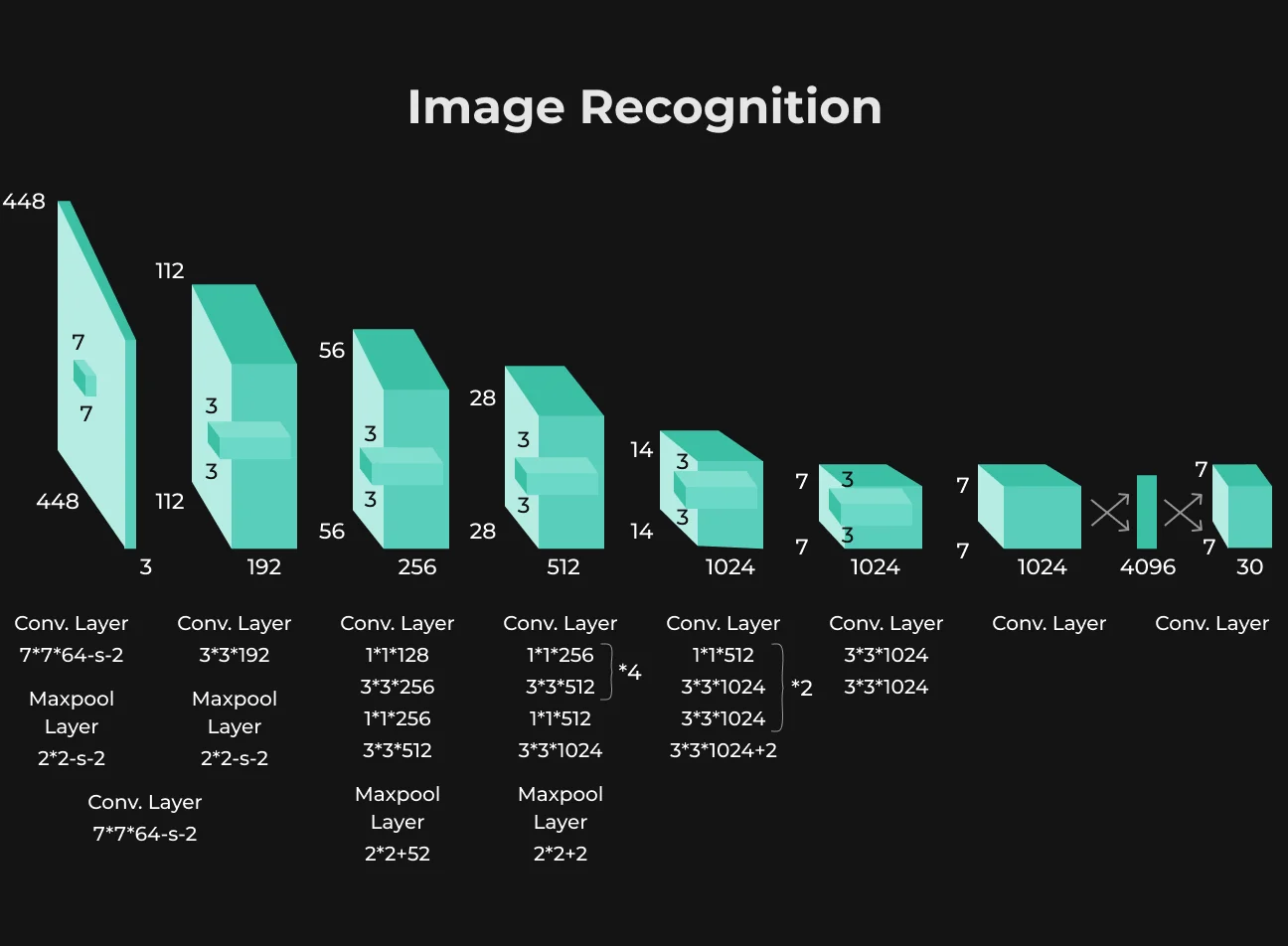
10. Convolutional Neural Network (CNN/ConvNet)
CNNs are artificial neural networks specifically developed for feature detection in image data. They apply the convolution operation to convert input images into matrices that have rows and columns. These refer to different data about the image.
CNNs are inspired by how the human brain's visual cortex works, where neurons are connected. They dynamically learn filters and features of images, instead of traditional data analysis models that need defined filters.
11. YOLO
YOLO uses regression for detection and then assigns this value to class probabilities of detected images. It uses the concepts of CNN to see and analyze images in real time.
The YOLO algorithm actually carries out one-time object detection. This allows it to make a single pass over the image, predicting objects with one run. Unlike CNN, which needs multiple probabilities and bounding boxes at once.
12. Support Vector Machine (SVM)
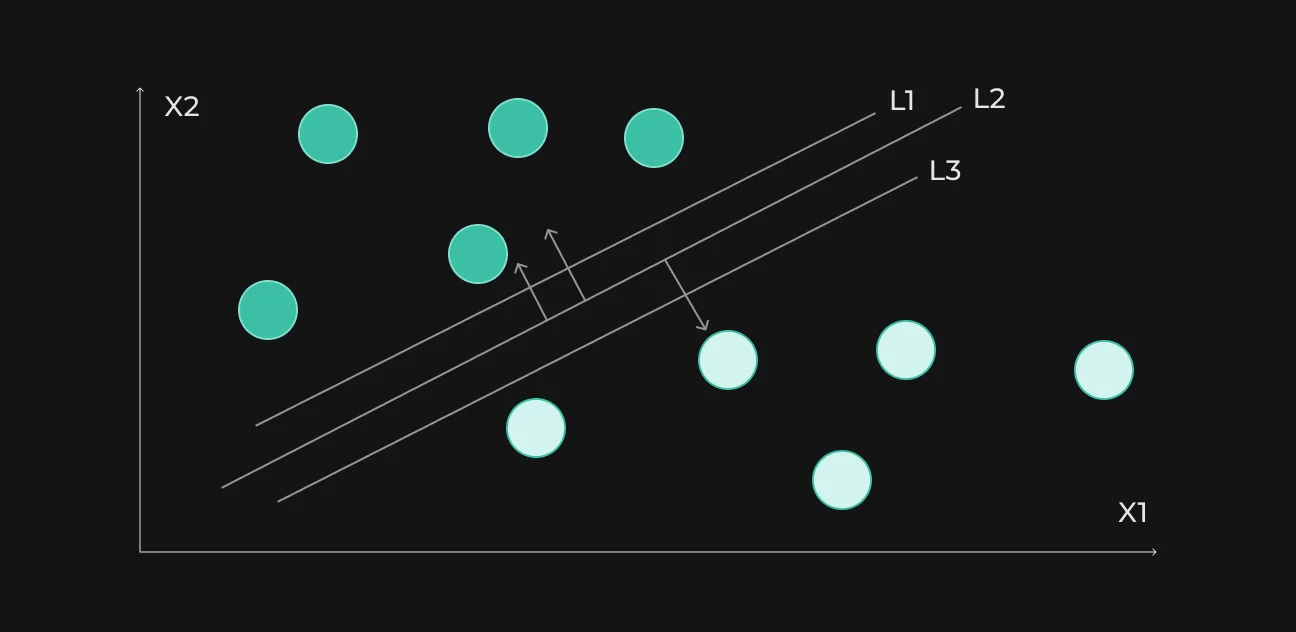
SVM is a supervised machine learning technique for classification and regression. Its primary role is to find the ideal boundary, known as a hyperplane, between different groups within a dataset.
This is helpful in binary classification. For example, the ability to distinguish between whether a lion or a tiger is in an image. SVM works by aiming to maximize the distance, or margin, between two classes and perform better on new data.
Use Cases of Predictive Analytics
Data scientists and business analysts have several applications with predictive analytics, depending on a company's needs. Here are five of them.
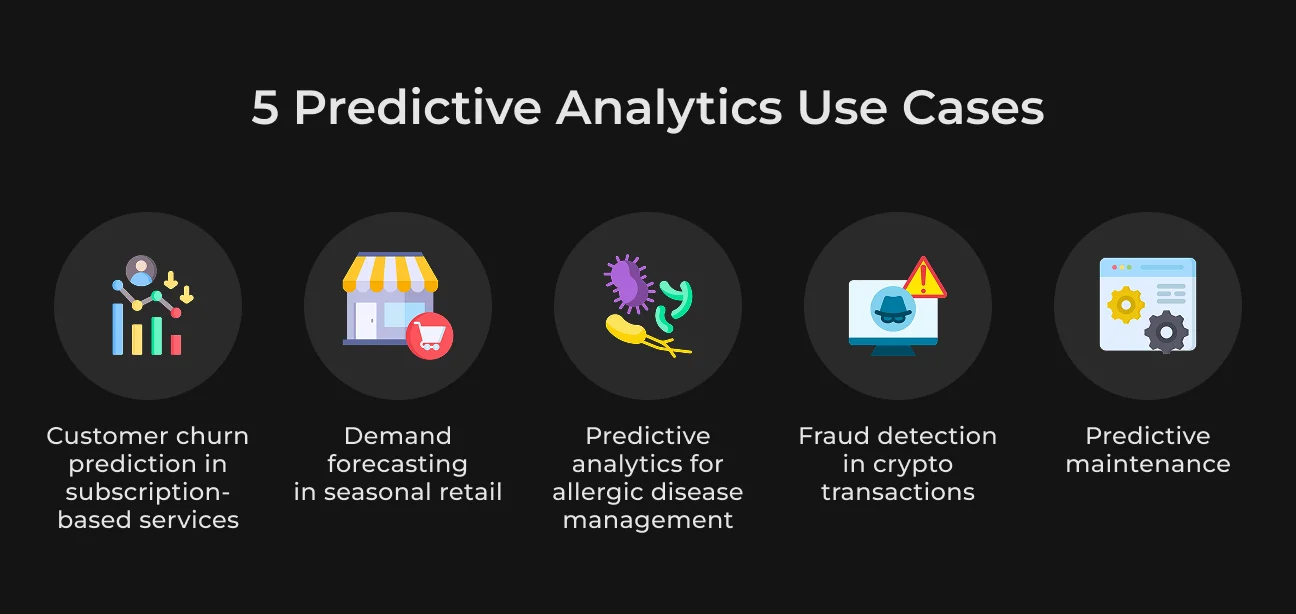
Customer Churn Prediction in Subscription-Based Services
For subscription-based services, for instance, predictive analytics could predict who is going to end their subscription. And what kinds of new features or services might prompt them to remain with the subscription.
By doing this, businesses can build a product that will tighten loyalty and reduce churn.
Demand Forecasting in Seasonal Retail
Predictive analytics can help companies predict demand for goods and services. In retail, predictive analytics models might be based on seasonal periods. It can forecast demand based on appropriate seasonal purchasing behaviors.
For instance, mining historical data about holiday-themed merchandise can help inform how much inventory to carry.
Predictive Analytics for Allergic Disease Management
In medicine, predictive analytics can control allergic diseases. Healthcare professionals can predict allergy instances using environmental information, patients’ previous allergic history, and local pollen index levels.
So, patients can receive preventive care or modifications to their health therapy in case of allergies.
Fraud Detection in Cryptocurrency Transactions
Predictive analytics can enable real-time fraud detection in blockchain transactions. Financial institutions use threat intelligence feeds to detect anomalies in trading or transaction activity. Then, they can build special signatures that will signal potential fraudulent activities.
Predictive Maintenance
For draft-oriented sectors like manufacturing, predictive analytics modeling forecasts when equipment is likely to fail before it does so. It allows for scheduled maintenance, reduces downtime, and extends the equipment's lifespan.
For example, in the domain of smart cities, predictive maintenance can cover infrastructure and utility monitoring. Maintenance needs for public amenities, like forecasting the need to repair streetlights, can be predicted by models.
Benefits of Predictive Modeling
By giving leaders necessary data, predictive analytics allows them to take the right decisions just at the right time, saving time, energy, and money. Look at some more predictive analytics benefits.
Benefit | Explanation |
| Better decisions | Predictive modeling is about businesses making better business decisions using data. |
| Saved money | Predictive models enable spotting future demands or challenges. That way companies can spend their resources smartly and reduce unnecessary costs. |
| Increased efficiency | Through forecasting demand, businesses can manage their inventory and supply delivery to prevent overstock or being out of stock. |
| Spotting market trends | Predictive models allow businesses to catch new trends so they can respond quickly and early. |
| Most efficient use of resources | Businesses can optimize the use of their human and material capital through predictive modeling techniques. |
| Personalized marketing strategies | Through predictive modeling, companies can identify the most effective marketing campaigns for various customer segments, and generate sales. |
Examples of Predictive Analytics Software
Let’s take a look at some predictive analytics solutions.
These are well-known and widely used instruments.
IBM SPSS Modeler
SPSS Modeler is a data mining and text analytics software application from IBM. It offers a wide range of tools for predictive analytics, including text analytics, web mining, and integration with big data.
Some advantages of the model are:
- Data mining. Integrates structured and unstructured data sources to reveal actionable insights;
- Predictive modelling. Features a wide range of algorithm types (including decision trees, neural networks, and regression models);
- Text analytics. Provides predictive insights out of unstructured text data.
IBM SPSS Modeler pricing is based on your package selection and whether you prefer on-premise or cloud deployment. It’s typically available for a monthly subscription, starting at about $529.
Altair’s RapidMiner
Altair’s RapidMiner is a unified data science platform for data preparation, machine learning, and predictive model deployment.
Their key use cases are:
- Visual workflow designer. Provide a drag-and-drop interface for creating machine learning models without programming;
- Algorithms. A rich set of data transformation and machine learning algorithms;
- Real-time scoring. Ability to deploy models that score data in real time;
- Collaboration. Enables team-based data science projects with shared environments and model management.
Altair doesn't have fixed prices. This flexible system lets you purchase units for access to different simulation, AI, and data analytics tools, rather than buying individual licenses. And the price depends on how much you use it.
SAP Analytics Cloud
SAP Analytics Cloud (SAC) is a SaaS that combines BI, planning, and prediction for business users. It’s a data visualization toolkit packed with features to help businesses work with their data.
Here’s an overview of their main features:
- Business intelligence. Comes with powerful data visualization and reporting;
- Predictive analytics. Leverages auto ML to learn from data, detects patterns, and predicts what’s next;
- Planning and budgeting. Offers finance planning, budgeting, and forecasting;
- Natural language query. Enables users to ask questions in natural language, which makes it usable to non-technical users.
SAP Analytics Cloud is available on a subscription basis. The price will depend on the features and user plan that you choose.
How SapientPro Built an AI-Powered Data Analytics Platform
SapientPro was responsible for the frontend development of Big Data Chef. It's a solution that merges upstream business data from various sources to interactive dashboards, infographics, and reports through Microsoft Power BI.
Even though the client’s team was building its own backend, it was important to collaborate and make sure everything worked from request shapes to API responses.
Designing layouts for complex data visualizations across various screen sizes was challenging, particularly in maintaining readability in limited space.
The client basically knew what they wanted: a polished UI design, API specifications, and an implemented frontend for the platform.
To meet the client’s expectations, SapientPro’s team took these steps:
- We integrated single sign-on with Azure Active Directory, linking Big Data Chef with Microsoft accounts;
- We adjusted the layout to keep Power BI visualizations clear and functional on different device screens.
Our team worked closely with the client’s backend developers to make sure we understood their API behavior. We also ensured our frontend logic was in line with response structures and how data flowed through the application.
Partner with SapientPro to Implement Predictive Analytics in Your Business
Unlock the full power of your business with intelligent predictive analytics. Our team of engineers at SapientPro will develop and maintain edge machine learning models designed for the unique purposes of your company.
We build our products to enable growth and innovation, whether that means driving customer engagement, enabling new supply chains, or generating more profits. Let's collaborate to discover new opportunities using data-driven approaches.
Contact us now for a free consultation!
Implement Predictive Analytics in Your Product
SapientPro's engineers will provide a detailed consultation and bring your ideas to life.
FAQ
1. What are examples of predictive analytics?
Some predictive analytics examples are demand prediction, customer segmentation, fraud detection, risk management, and churn prevention.
2. How does predictive analytics in supply chain work?
In the supply chain, predictive analytics relies on historical data and machine learning models or statistical algorithms. It can further forecast product demand, control inventory, provide supplier service, and enhance delivery performance.
3. How is predictive analytics in healthcare used?
Predictive analysis in healthcare is used to predict patient health outcomes, plan personalized care and insurance, foresee the possibility of disease outbreaks, and even make decisions related to hospital staff.

