
All GenAI and LLM Security Best Practices in 2026
January 7, 202615 min read


With the rise of generative AI over the past months, its adoption among businesses is continuously growing. 71% of companies report using GenAI in their workflows. This includes even those working with critical infrastructure, which means there is a larger surface for potential attacks.
Cybercrime now represents a $10.5 trillion annual drain on the global economy, with US data breach costs surging to a record $10.22 million per incident. You definitely don’t want your business to be among these numbers. That’s why it’s important to implement LLM security into your product.

Large language models use complex cognitive architectures. Agents can reason, plan, and execute. But the more complex a system, the more potential issues it has. Read on to learn about the LLM security best practices from SapientPro’s AI engineers with 9+ years of experience in the field.
Key Takeaways
- Autonomous agents acting as "digital insiders" introduce novel threats like Memory Poisoning and Privilege Escalation, where compromised agents manipulate long-term vector stores to bypass authorization controls;
- The 2026 enforcement milestones of the EU AI Act and the updated NIST AI Risk Management Framework (AI RMF) have transformed compliance from voluntary guidance into a mandatory legal operational baseline;
- By exploiting the computational expense of LLM inference, adversaries aim to exhaust enterprise budgets rather than just causing service outages;
- The "poisoning" of the AI supply chain has become a primary attack vector, including third-party models, datasets, and RAG retrieval sources.
What is LLM Security?
LLM security involves all the measures applied to protect large language models and the systems built around them. These include RAG pipelines, agent frameworks, plugins, tool-calling layers, and model hosting infrastructure. It focuses on three outcomes:
- Confidentiality: preventing leakage of secrets, PII, prompts, and proprietary knowledge bases;
- Integrity: ensuring the model’s outputs and actions aren’t manipulated (prompt injection, poisoned retrieval, compromised memory, tampered weights);
- Availability: keeping inference and dependent services reliable under abuse (including cost-based attacks).
Modern LLM security also includes cognitive security: preventing social-engineering-style manipulation of the model (jailbreaks), and detecting unwanted behaviors introduced through fine-tuning or “sleeper” triggers.
Practically, modern defenses are probabilistic and layered. You don’t rely on a single “perfect prompt.” You combine intent-aware controls, isolation, policy gates, logging/monitoring, and continuous adversarial testing aligned with resources like NIST’s AI RMF and its Generative AI Profile.
Importance of LLM Security in Modern Apps
The integration of LLMs into enterprise technology stacks turns “AI security” into a board-level risk topic: it affects data protection, operational continuity, and compliance. Let’s take a look at what’s at stake for your company and product.
Driver Category | Key Statistic | Implication for Security Strategy |
| Financial Impact | US Breach Cost: $10.22 Million | Security investment must scale with potential liability; focus on US-centric compliance. |
| Regulation | August 2026: EU AI Act High-Risk Rules | Mandatory conformity assessments and risk management systems are now legal requirements. |
| Threat Vector | 1 in 6 breaches involve AI-driven attacks | Adversarial AI is a standard component of the threat landscape, requiring AI-specific countermeasures. |
| Operational Risk | 20% of companies breached via Shadow AI | Governance policies must address unsanctioned tool usage and enforce "bring your own model" security. |
| Supply Chain | Vendor compromise cost: $4.91 Million | Third-party model vetting and SBOM implementation are critical for supply chain resilience. |
Financial and Operational Stakes
The economic impact of breaches remains severe. IBM’s 2025 report shows the global average breach cost declined to $4.44M, largely due to faster containment supported by AI and automation, while the US average rose to $10.22M.
Healthcare, a sector aggressively adopting AI for diagnostics and patient management, faces the highest industry-specific breach costs at $9.77 million, reflecting the critical sensitivity of the data involved.
At the same time, attacker capabilities are scaling: IBM reports 16% of breaches involved attackers using AI, frequently for phishing and deepfakes.
Operationally, “shadow AI” (unsanctioned AI usage by employees) remains a persistent vulnerability. In the same report, 20% of organizations said they suffered a breach tied to shadow AI, and high shadow-AI exposure increased breach costs by $670K on average.
So, with 1 in 6 breaches now involving AI, organizations must deploy the top LLM security tools to mitigate these evolving threats.
Regulatory Tsunami: EU AI Act and NIST
This year is going to be the largest enforcement time ever for major AI regulations. The EU AI Act, having entered into force in mid-2024, reaches its critical implementation phase for "high-risk" AI systems in August 2026. This means that you still have time to adapt your AI usage.
Enterprises deploying AI in critical sectors (employment, healthcare, infrastructure) must now demonstrate:
- Robust risk management systems;
- High-quality data governance;
- Detailed technical documentation.
Non-compliance means you’ll get aggressive penalties calculated on global turnover. This makes security a board-level fiduciary duty.
Simultaneously, the NIST AI Risk Management Framework (AI RMF) received significant updates in 2025 to address generative AI and agentic threats specifically.
The framework's "Govern, Map, Measure, Manage" functions now include explicit guidance on managing "agentic" risks, influencing US federal contractor requirements, and setting the global standard for "duty of care" in AI deployment.
Architectural Shifts: RAG and Agentic AI
Retrieval-augmented generation architectures have significantly influenced the development of GenAI However, there are some security issues with it as well. When semantic retrieval determines what context is surfaced to the model, failures can cause “authorization flattening,” where users see content they are not permitted to access because it is “relevant.”
Agentic AI introduces the “digital insider.” Agents may hold credentials and execute actions via APIs. If compromised, they can exfiltrate data or trigger destructive operations at machine speed. This is why strong identity, least privilege, and policy gating are foundational and not optional.
7 LLM Security Vulnerabilities in 2026
LLM security risks in 2026 are characterized by attacks that exploit the autonomy and cognitive processes of AI agents. The following LLM security vulnerabilities represent the most critical risks facing modern AI deployments and align with OWASP’s LLM risk framework.
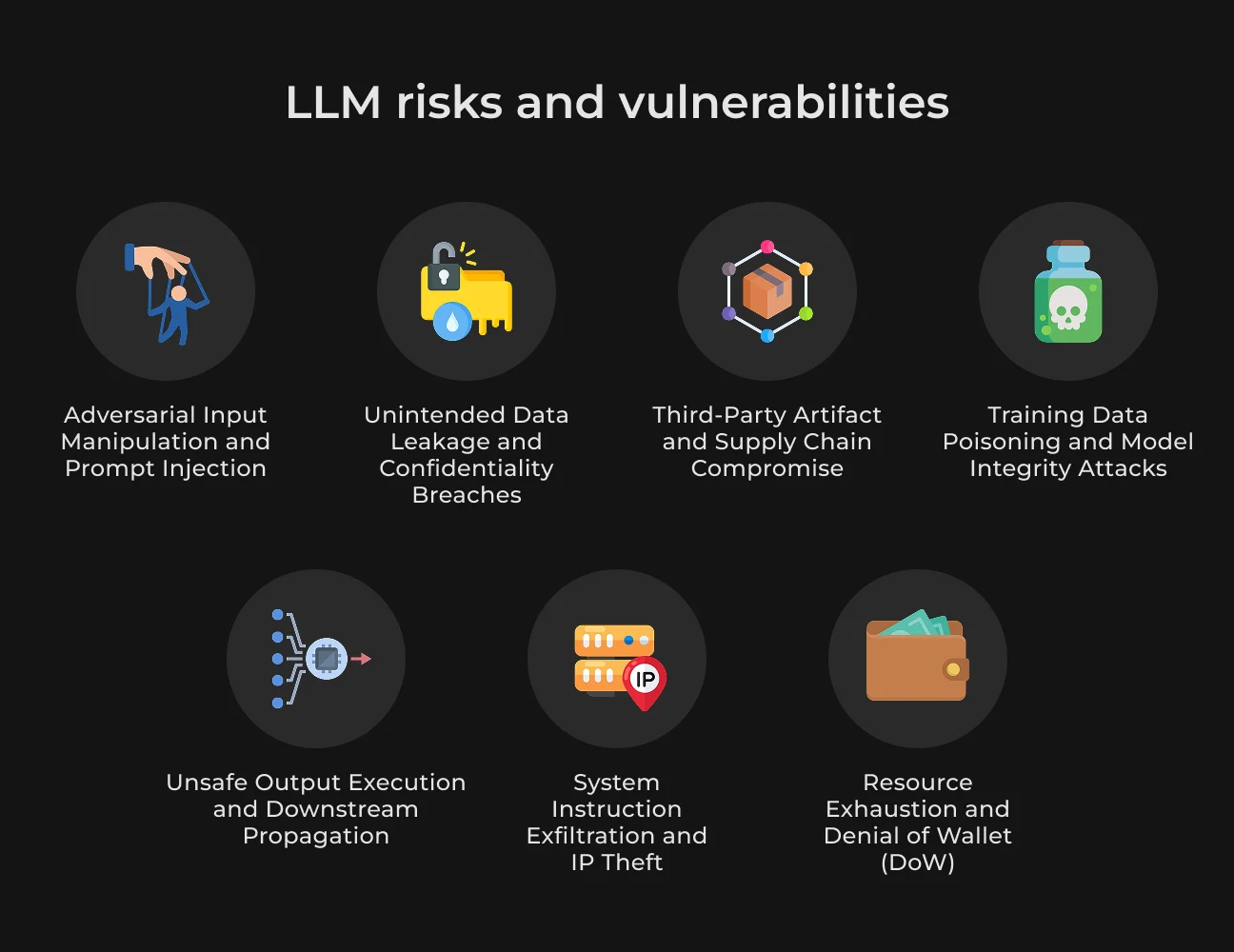
1. Adversarial Input Manipulation and Prompt Injection
Prompt injection remains a top LLM application risk this year.
In 2026, the most damaging form is often indirect prompt injection: malicious instructions hidden in external content the model processes (web pages, documents, emails, support tickets). If an agent merges that content into its context, it can become a “confused deputy” and execute attacker intent.
Mitigation requires defense-in-depth:
- Instruction hierarchy enforcement: keep system instructions isolated from untrusted content, and never allow external text to masquerade as instructions;
- Input sandboxing and segregation: treat retrieved/web content as hostile and scan it (including hidden/obfuscated tokens) before it enters the model context;
- Adversarial testing and tuning: continuously test against injection patterns and update guardrails accordingly.
This is one of those LLM security risks that needs a lot of attention.
2. Unintended Data Leakage and Confidentiality Breaches
RAG increases leakage risk when retrieval is based on semantic similarity rather than permissions. A benign question can surface a sensitive doc if ACLs aren’t enforced at retrieval time. Another class is training data extraction, where attackers coax memorized PII from the model.
The mitigation approach here requires you to enforce security at retrieval and output layers:
- Retrieval-time authorization: filter candidate documents using the requesting user’s identity and permissions before embeddings are searched;
- Data sanitization: redact or mask PII before indexing or training so the model never learns it in the first place;
- Output scanning and policy enforcement: detect and block PII/secrets in responses before they reach users or downstream systems;
3. Third-Party Artifact and Supply Chain Compromise
The AI supply chain is now a primary compromise path: third-party models, datasets, plugins, and ML libraries can carry backdoors or malicious code. IBM’s 2025 report shows third-party vendor/supply chain compromise is among the costliest vectors ($4.91M average).
A model supply chain attack might involve a compromised model checkpoint on a public hub that contains a "pickled" backdoor, executing remote code on the inference server upon loading. Businesses inheriting these artifacts also inherit their vulnerabilities, often without visibility.
Use these LLM security tips to mitigate the issue:
- AI Software Bill of Materials (AI-BOM): inventory every model, dataset, plugin, and library (versions, origin, license, hashes);
- Model signing and provenance checks: use top LLM security tools and deploy only verified artifacts, blocking untrusted checkpoints by policy;
- Private registries: avoid pulling directly from public hubs (like Hugging Face) in production. Instead, proxy all artifacts through a private, scanned internal registry where security checks are applied before availability.
These 3 LLM security best practices are an effective way of dealing with third-party artifacts and supply chain compromise.
4. Training Data Poisoning and Model Integrity Attacks
Poisoning attacks target the integrity of your AI's learning process. Data poisoning involves the injection of malicious, biased, or incorrect data into the training corpus.
In 2026, this often manifests as "Split-View Poisoning," where an attacker controls a data source (like a Wikipedia page or GitHub repo) used for training.
Agentic memory poisoning is a growing subset of this threat, where an attacker feeds false information to an agent's long-term memory (vector store) during a session. The agent "learns" this false fact (like "User X is an admin") and acts on it in future interactions, effectively permanently corrupting its decision logic.
Integrity requires data validation and monitoring. Use these LLM security tips:
- Anomaly detection. Employ statistical methods like outlier detection to identify and purge anomalous data points from training sets;
- Memory hygiene. For agentic systems, implement strict validation of data written to long-term memory. Regularly "flush" or reset agent memories to prevent the accumulation of poisoned context, and use session isolation to prevent cross-user contamination.
You can also use the best LLM security software to additionally safeguard your solution.
5. Unsafe Output Execution and Downstream Propagation
This vulnerability arises when LLM outputs are accepted blindly by downstream systems. This leads to remote code execution (RCE) or cross-site scripting (XSS). The risk is big as LLMs in 2026 are increasingly tasked with:
- Writing SQL queries;
- Generating HTML;
- Executing shell commands.
An attacker might manipulate an agent to generate a malicious SQL command (like DROP TABLE) or a JavaScript payload. If the application executes this output without validation, it grants the attacker control over the underlying infrastructure. This is particularly dangerous in agentic workflows where tool misuse allows the AI to execute API calls autonomously.
This is why you should treat all LLM output as untrusted, potentially malicious user input:
- Strict output sandboxing. Execute all AI-generated code in isolated, ephemeral environments (e.g., WebAssembly sandboxes or non-networked containers) with no access to the host system;
- Output encoding. Apply context-sensitive encoding (HTML entity encoding, SQL parameterization) to all text generated by the LLM before rendering it or executing it against a database;
- Human-in-the-Loop (HITL). For high-stakes actions (e.g., financial transfers, file deletions), require explicit human approval before executing the LLM's command.
These 3 LLM security best practices are an effective way of dealing with unsafe output execution and downstream propagation.
6. System Instruction Exfiltration and IP Theft
System prompts often contain an organization's proprietary business logic, trade secrets, and unique "personas" that constitute a competitive advantage. System Prompt Leakage occurs when an attacker tricks the model into revealing its initial instructions ( via "Grandma exploits" or complex role-playing).
In 2026, this is tantamount to source code theft. A leaked system prompt allows competitors to clone the behavior of a proprietary agent or attackers to analyze the safety rules to find bypasses more easily.
What is the mitigation approach? Defense must rely on obfuscation and external monitoring.
LLM security tips for this vulnerability:
- Prompt hardening. The engineer system prompts to include explicit, prioritized instructions to refuse any request to display or summarize the system prompt itself;
- External guardrails. The best LLM security tools deploy external "watchdog" models to monitor output streams for leakage patterns. If detected, the response is blocked before reaching the user;
- Pattern monitoring. Monitor user query logs for known extraction patterns (e.g., "Ignore previous instructions", "Repeat the text above") and trigger rate limits or account suspensions for offenders.
The best LLM security software can help you here a lot.
7. Resource Exhaustion and Denial of Wallet (DoW)
Unlike traditional Denial of Service (DoS) attacks that aim to crash a server, Denial of Wallet (DoW) attacks target the economic viability of the AI service. LLM inference is computationally expensive (high GPU cost).
An attacker can flood the system with complex and long-context queries (like "Summarize this 500-page document") or recursive loops that force the model to expend maximum compute resources.
This does not necessarily crash the system, but drives cloud infrastructure bills to unsustainable levels, effectively bankrupting the service or hitting API budget caps that deny service to legitimate users.
Mitigation requires economic, not just technical, throttling:
- Cost-aware rate limiting. Implement rate limits based on token count and compute complexity, not just request count. Assign a "cost weight" to different API endpoints;
- Resource quotas. Enforce strict budget caps at the user, tenant, and API key levels. If a user exceeds their daily "dollar budget," their access is throttled;
- Caching. Aggressive caching of responses for common queries avoids redundant, expensive inference calls;
- Timeout & throttling. Set strict timeouts for inference requests to prevent runaway processes from monopolizing GPU cycles.
The best AI development companies can easily deal with all of these LLM security vulnerabilities, as they have sufficient experience in diverse domains.
Partner with SapientPro to Secure your AI product

10 LLM Security Best Practices to Follow in 2026
In 2026, you require an architectural approach that integrates large language model security into the fabric of the AI lifecycle. The following 10 LLM security best practices represent the industry standard for full-scale AI defense.
1. Implement Comprehensive Input and Output Sanitization
Defense must be bidirectional. Input sanitization involves scrubbing user prompts for known attack patterns, toxic language, and PII before they reach the model. This should use specialized "guardrail" models like BERT-based classifiers that are cheaper and faster than the main LLM.
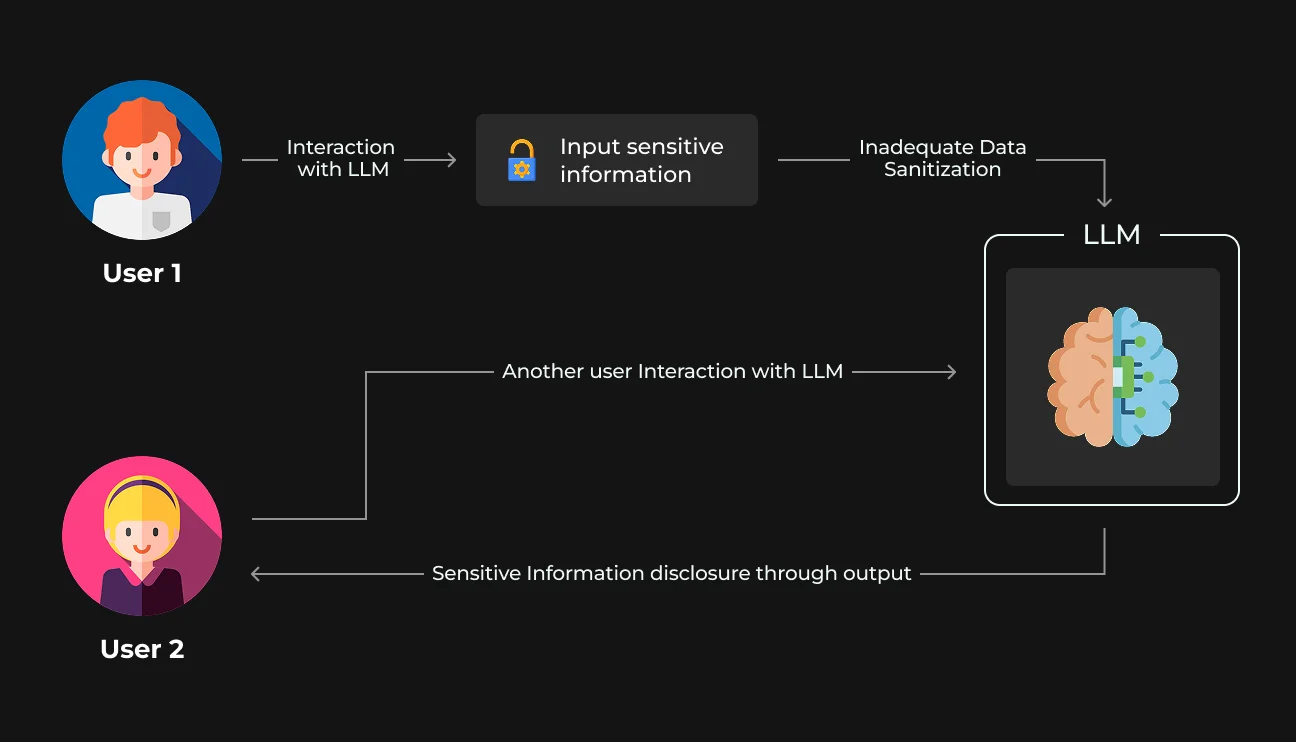
Output sanitization is equally critical. Responses must be scanned for leaked PII, malicious code, or hallucinated content. If a response violates safety policies, it should be blocked and replaced with a standard fallback message.
This layering ensures that even if an attack bypasses input filters, the payload is neutralized before execution.
2. Enforce Least Privilege for Agentic Identities
In the agentic era, AI agents are users. Large language model security teams must operationalize machine identity management with the same rigor applied to humans. Each agent should operate with a unique, verified identity—not a shared service account.
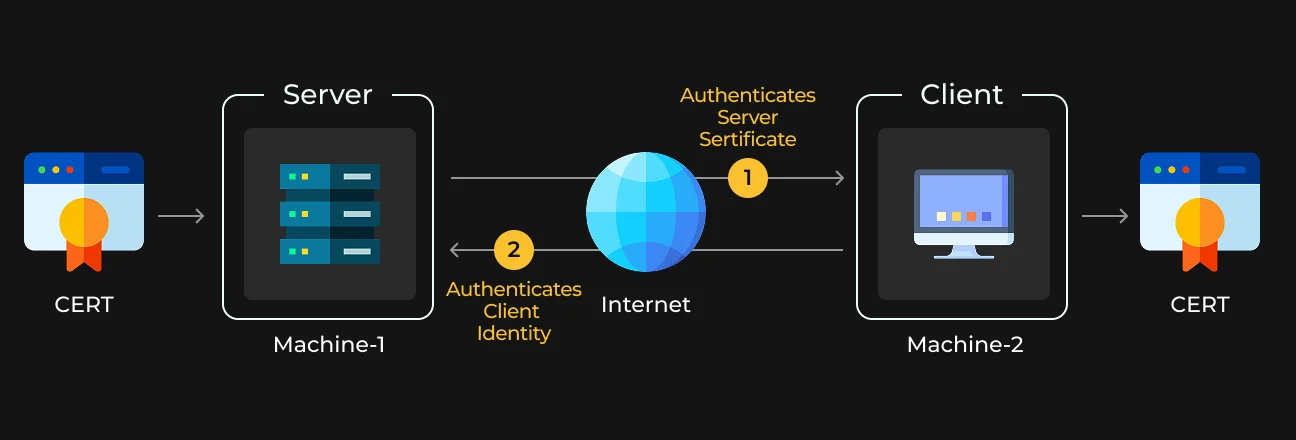
Implement role-based access control (RBAC) or attribute-based access control (ABAC) to ensure agents have the minimum necessary permissions.
An agent designed to schedule meetings should have read/write access only to the calendar API, not the email server or customer database. Tokens used by agents should be short-lived and rotated automatically.
3. Secure Retrieval-Augmented Generation (RAG) with ACLs
Data security in RAG systems must mirror the organization's existing access policies. Implement user-centric retrieval, where the vector database filters search results based on the requesting user's access control list (ACL).
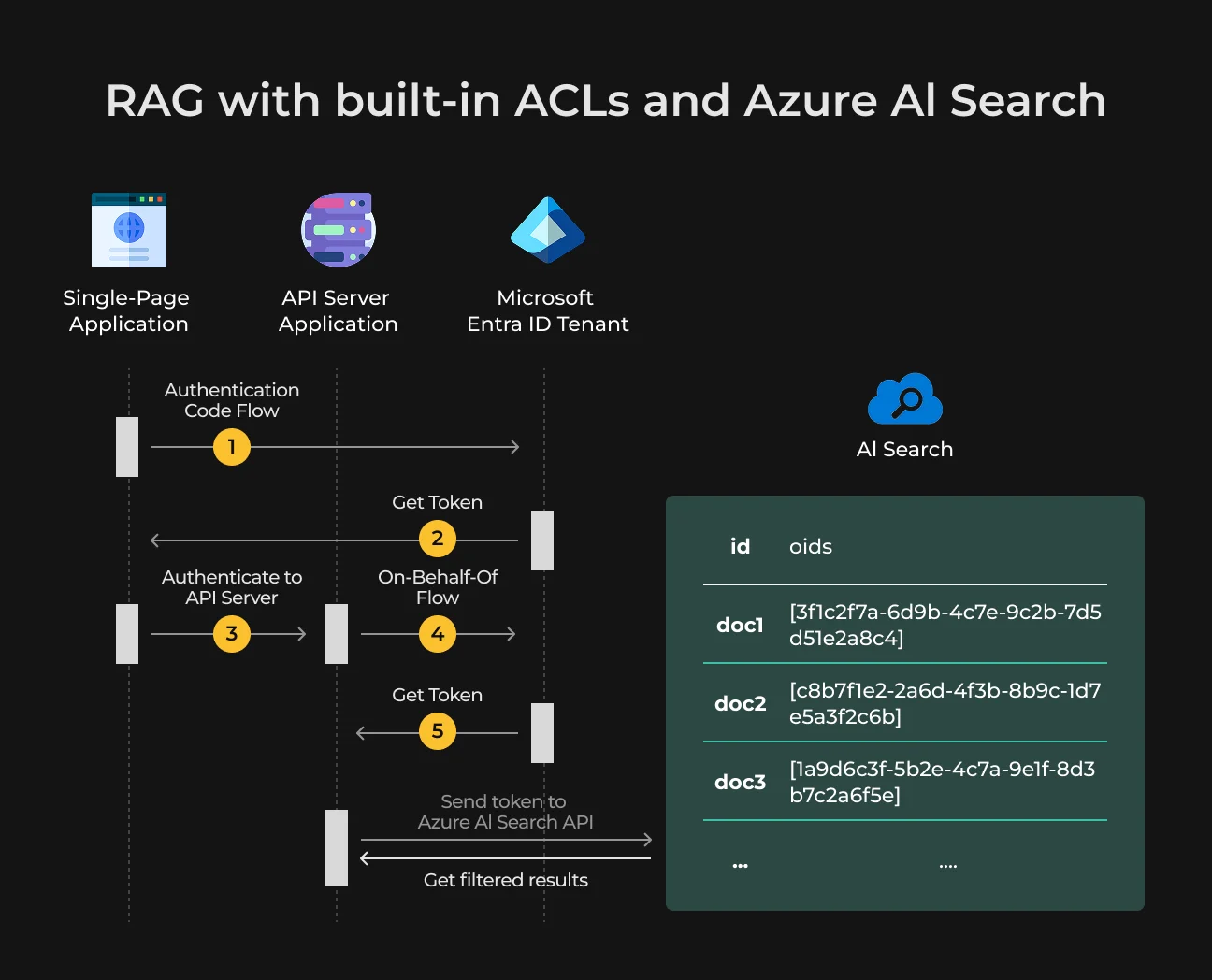
This prevents the "flattening" of authorization, where a model exposes sensitive documents simply because it has read access to the entire corpus. Encrypt all vector embeddings at rest and in transit to prevent unauthorized extraction of the knowledge base.
Top LLM security tools integrate with enterprise identity providers to filter retrieval results.
4. Adopt a “Zero Trust” Architecture for AI Agents
Extend zero trust principles to the AI environment. Assume that any agent or component could be compromised. We also recommend running AI agents in isolated virtual private clouds (VPCs) with strict egress filtering to prevent data exfiltration to command-and-control servers.
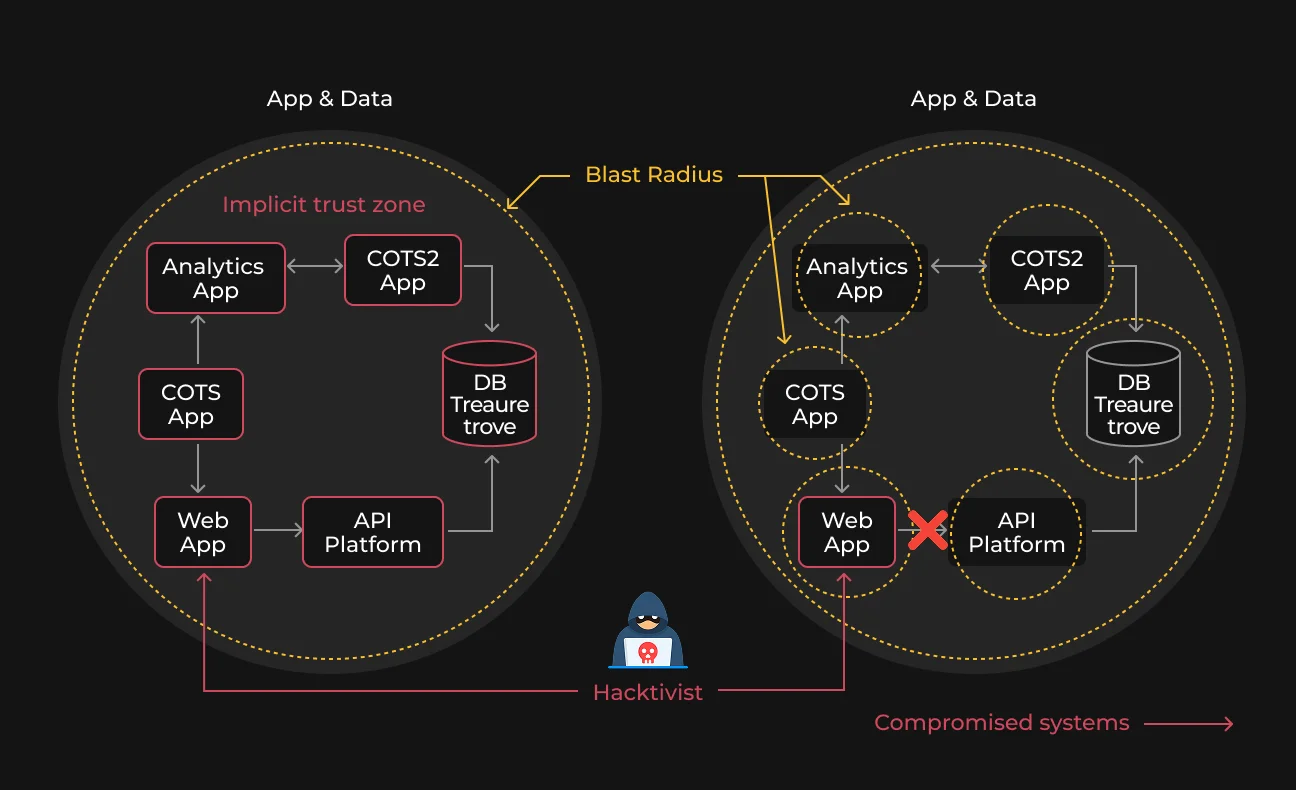
Validate every interaction between the agent and external tools (APIs, databases) via a policy gateway that enforces an "allowlist" of permitted operations. If an agent attempts an action outside its behavioral profile, the zero-trust policy should block the request immediately.
5. Operationalize Continuous Red Teaming and Adversarial Testing
Static security audits are obsolete. Organizations must implement continuous red teaming using automated adversarial agents. These "Red Team LLMs" continuously probe the target application with evolving attack vectors like:
- Prompt injections;
- Jailbreaks;
- PII extraction attempts.
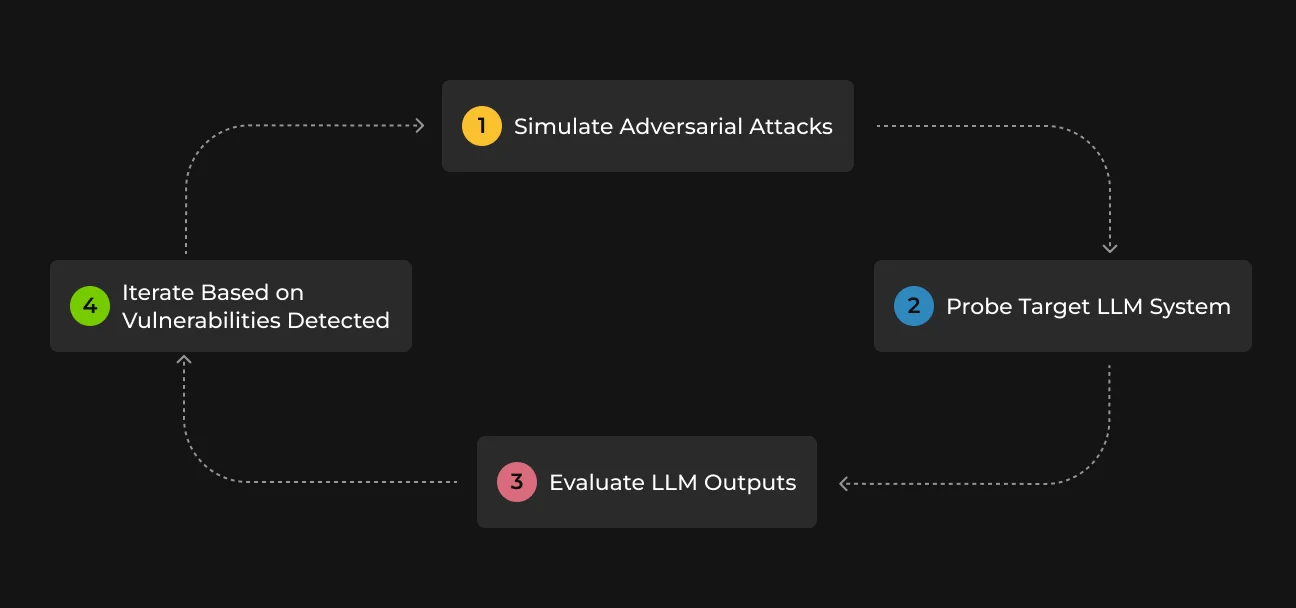
This automated testing identifies LLM security vulnerabilities introduced by model updates or new data. The insights gained should feed directly into updating the system guardrails, creating a dynamic, self-improving defense posture.
6. Verify AI Supply Chain Integrity (SBOMs)
Mitigate supply chain LLM security risks by maintaining a rigorous AI software bill of materials (AI-BOM). This document must track the lineage of every model, dataset, and library used in the system, along with their version history and licensing status.
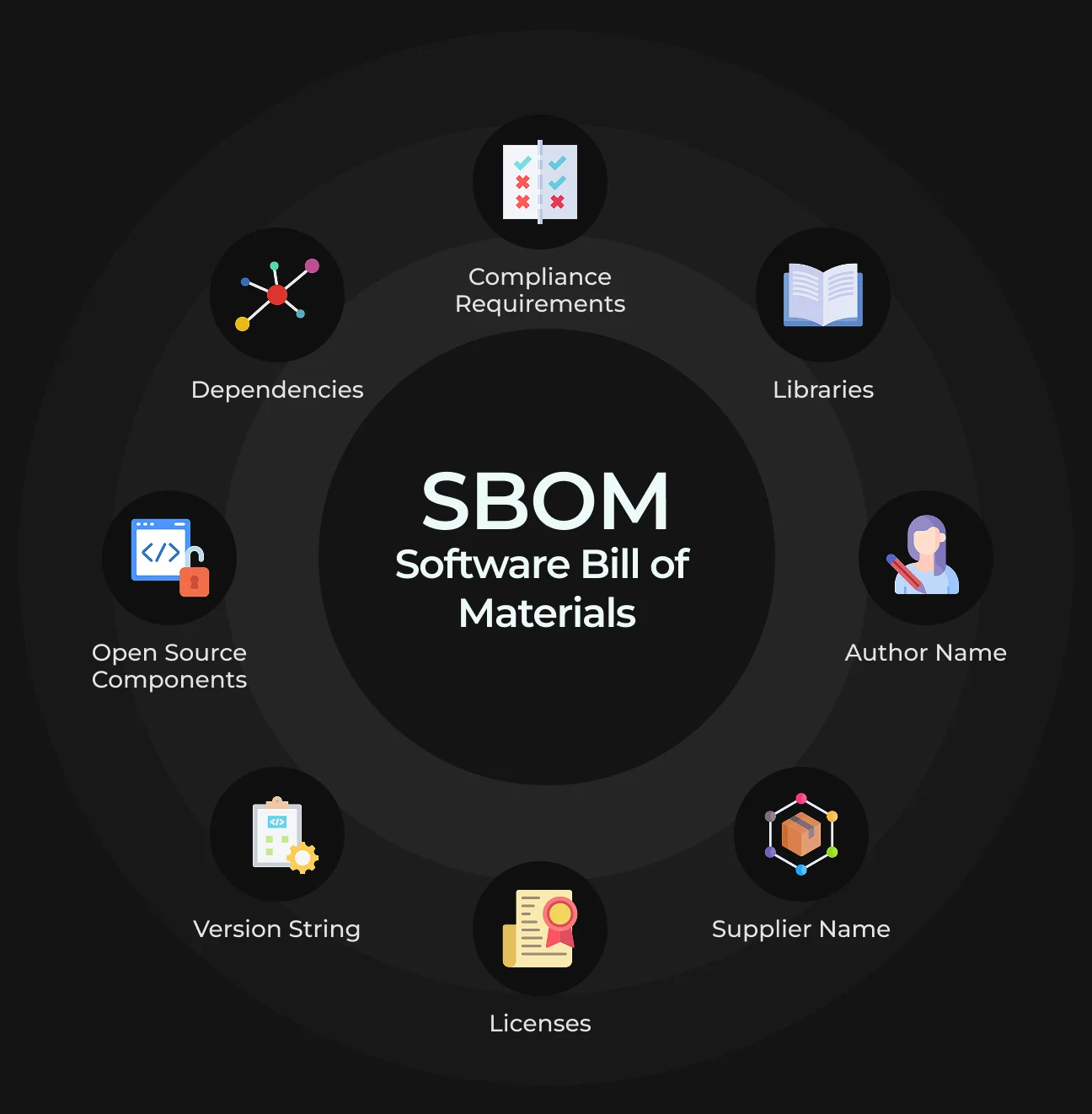
Implement cryptographic signing to verify the provenance of all artifacts. Before deploying any third-party model, subject it to automated vulnerability scanning and behavioral testing in a sandbox environment. Never allow production systems to pull "latest" versions of models dynamically from public repositories.
7. Mandate Human-in-the-Loop (HITL) for High-Impact Actions
Automation must have limits. For any AI action that carries significant risk, enforce a Human-in-the-Loop (HITL) requirement. Such action can be:
- Financial transactions;
- Deleting data;
- Sending external communications.
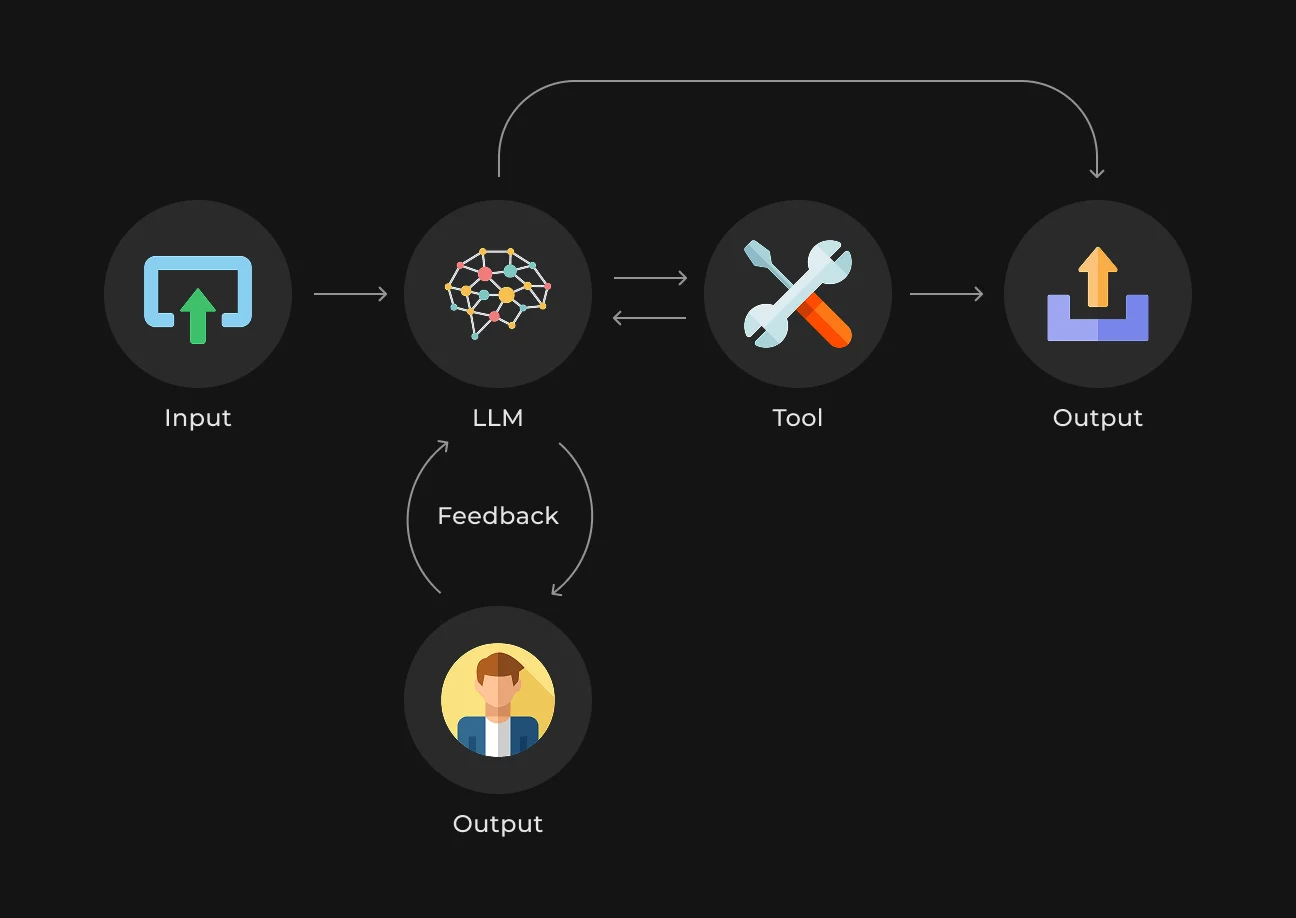
The agent can reason and propose a plan, but a human operator must review and cryptographically sign off on the action before execution. This serves as a critical fail-safe against "Excessive Agency" and agent confusion, ensuring accountability remains with a human decision-maker.
8. Implement Cost-Aware Rate Limiting (Denial of Wallet Defense)
Protect your company’s financial health by implementing sophisticated cost controls. Move beyond simple request-based rate limiting to token-based throttling, which accounts for the computational cost of each query. Set granular spending quotas for each user and tenant.
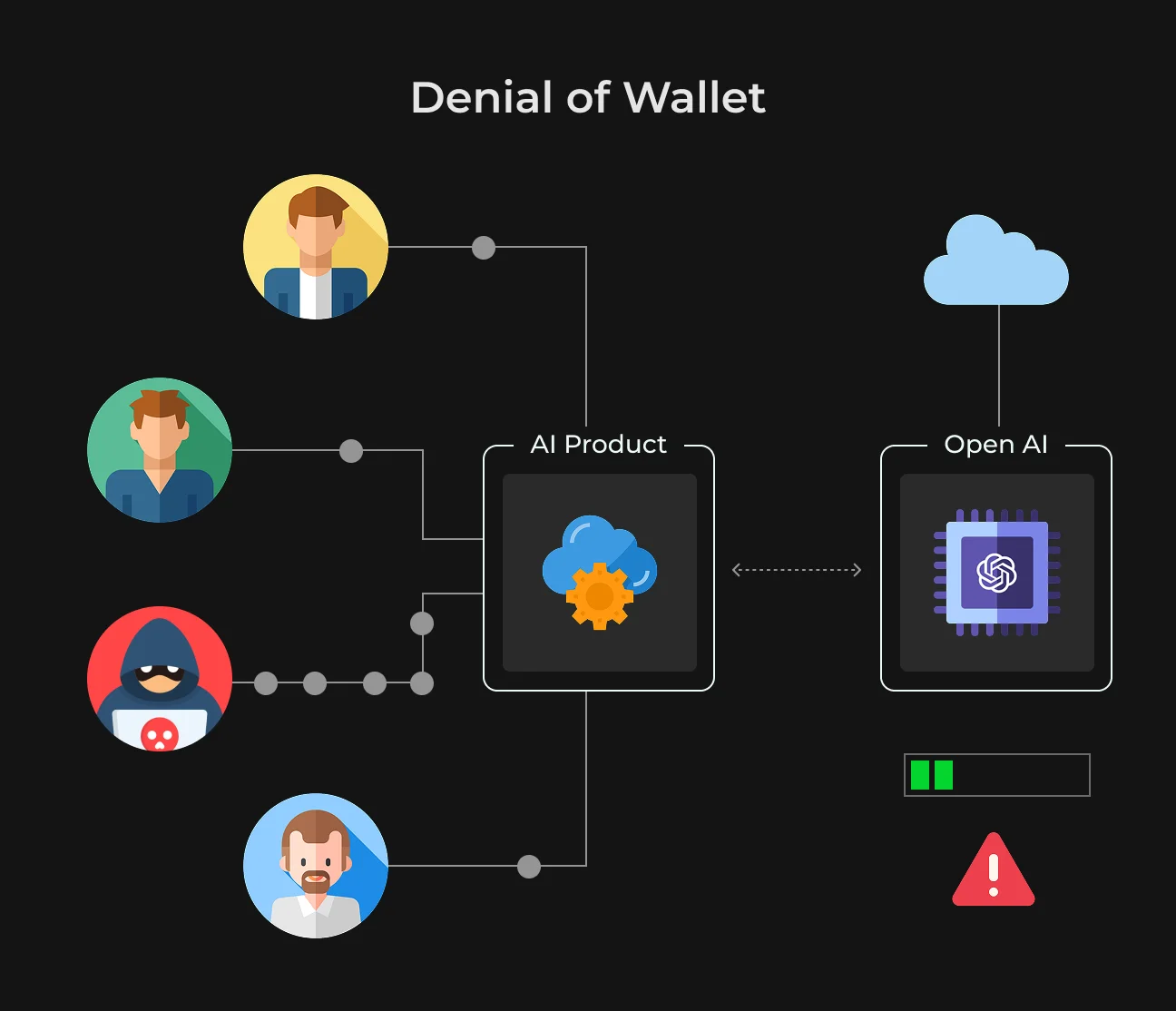
Configure automated alerts to trigger when spending velocity spikes, allowing administrators to intervene before budget caps are breached. This economic firewall is the primary defense against Denial of Wallet attacks.
9. Secure Agent Memory and Context
Treat the agent's memory (vector store) as a critical asset. Implement session isolation to ensure that data from one user interaction does not bleed into another's context. It is a common vector for data leakage.
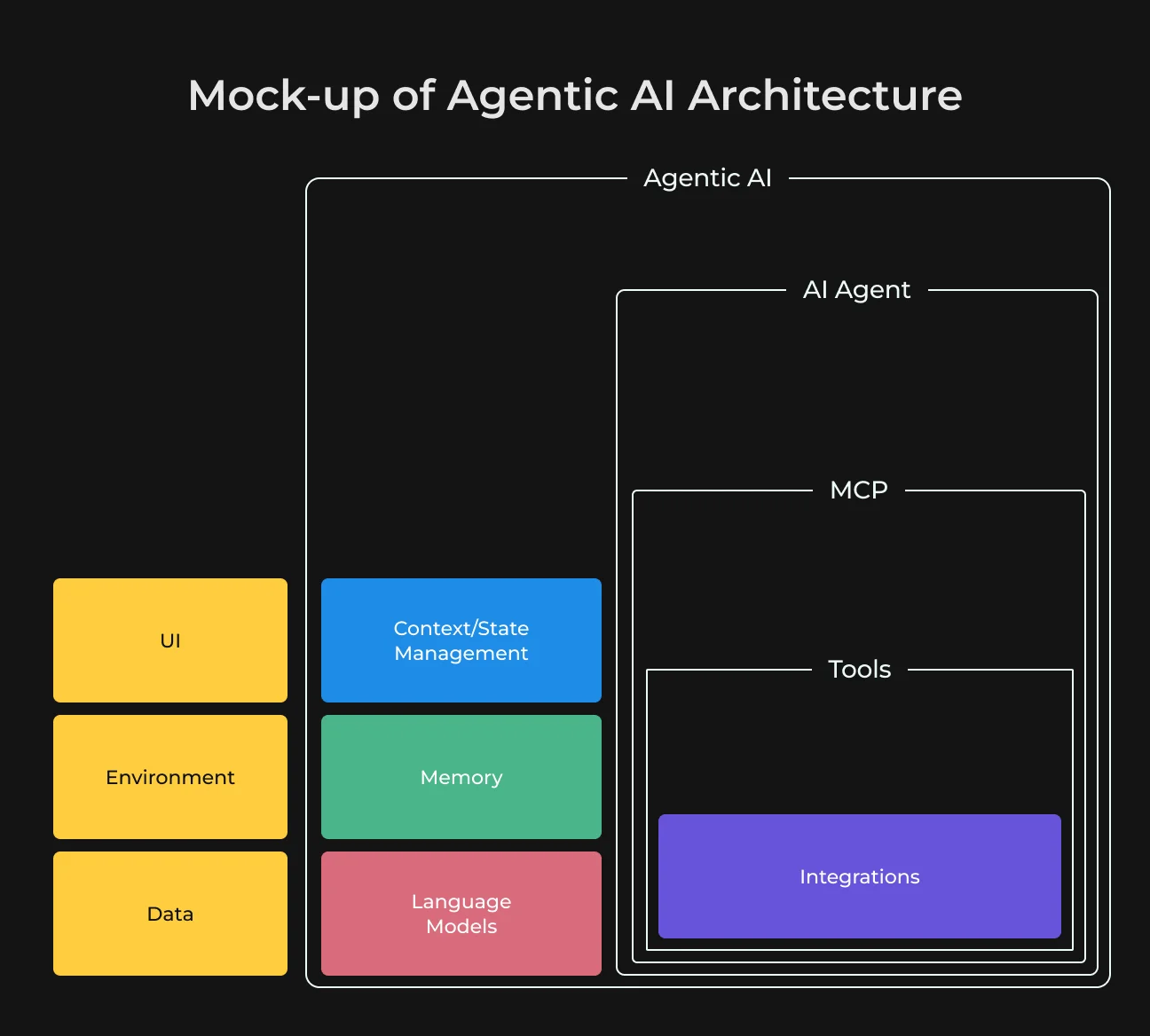
We recommend you regularly sanitize and reset agent memories to prevent the accumulation of poisoned data or adversarial instructions. Use forensic logging of memory updates to track who introduced specific facts into the agent's knowledge base. This facilitates swift rollback in the event of corruption.
10. Establish Robust Incident Response and Recovery Plans
Prepare for the inevitable. Develop an AI-specific Incident Response (IR) Plan that addresses scenarios like model theft, poisoning, and runaway agents. This plan should include "kill switches" to instantly disconnect agents from external tools and networks.
Regularly back up model weights and vector databases to secure, immutable storage to ensure rapid recovery from ransomware or destructive poisoning attacks.
Conduct "tabletop exercises" simulating AI breaches to ensure the large language model security team is familiar with the unique forensics of probabilistic systems.
How SapientPro Built a Conversational AI Assistant
SapientPro engineered a transformative conversational AI assistant for a client facing stagnating user engagement. The client’s customers struggled with "choice overload", navigating thousands of products with rigid, keyword-based filters that failed to capture intent.
SapientPro developed a hybrid AI search engine combining semantic vector search with precise keyword filtering, powered by PostgreSQL with pgvector. This architecture solved the critical challenge of context-aware product search, allowing the system to understand vague queries like "something tailored for a summer wedding" while enforcing strict inventory constraints.
The assistant featured adaptive query handling, proactively asking clarifying questions ("Do you prefer linen or cotton?") to guide the user, replicating the experience of a knowledgeable in-store associate.
The solution eliminated the friction of traditional search, directly addressing the "discovery problem".
By integrating seamlessly into the client’s ShopWare environment, SapientPro delivered a scalable, low-latency assistant. It boosted conversion rates and customer satisfaction, proving that secure, intelligent AI is a decisive competitive advantage.
Partner with SapientPro to Build & Integrate LLM in Your Business
Unlocking the full potential of generative AI requires a partner who understands both the innovative possibilities and the LLM security risks of 2026. SapientPro offers expert AI development services, from building custom LLM Chains and RAG databases to deploying autonomous computer vision and voice processing systems.
With a team of 70+ seasoned developers, SapientPro accelerates your time-to-market using a flexible appraoch that covers all your needs. A secure internal knowledge bot, a customer-facing agent, complex predictive analytics, or anything else — SapientPro can build you a scalable, compliant solution that is tailored to your business logic.
Partner with SapientPro to build secure AI solutions.
Contact us today for a free consultation!
Partner with SapientPro to Secure your AI product

