
All 20+ Best SaaS Application Ideas for Profits
March 29, 202615 min read


With the rising popularity of cloud computing and digital tech, it’s easier than ever to start a business. Today, organizations use an average of 112 SaaS applications, up from just 16 in 2017. And SaaS is now the leading software model, accounting for over half of the market.
The hardest part in this process, though, is finding that next idea that will make a big impact in the SaaS market.
This guide will show you why SaaS is the perfect model for startups in 2026, different types of SaaS applications, and the most profitable SaaS ideas to help your company succeed.
Key Takeaways
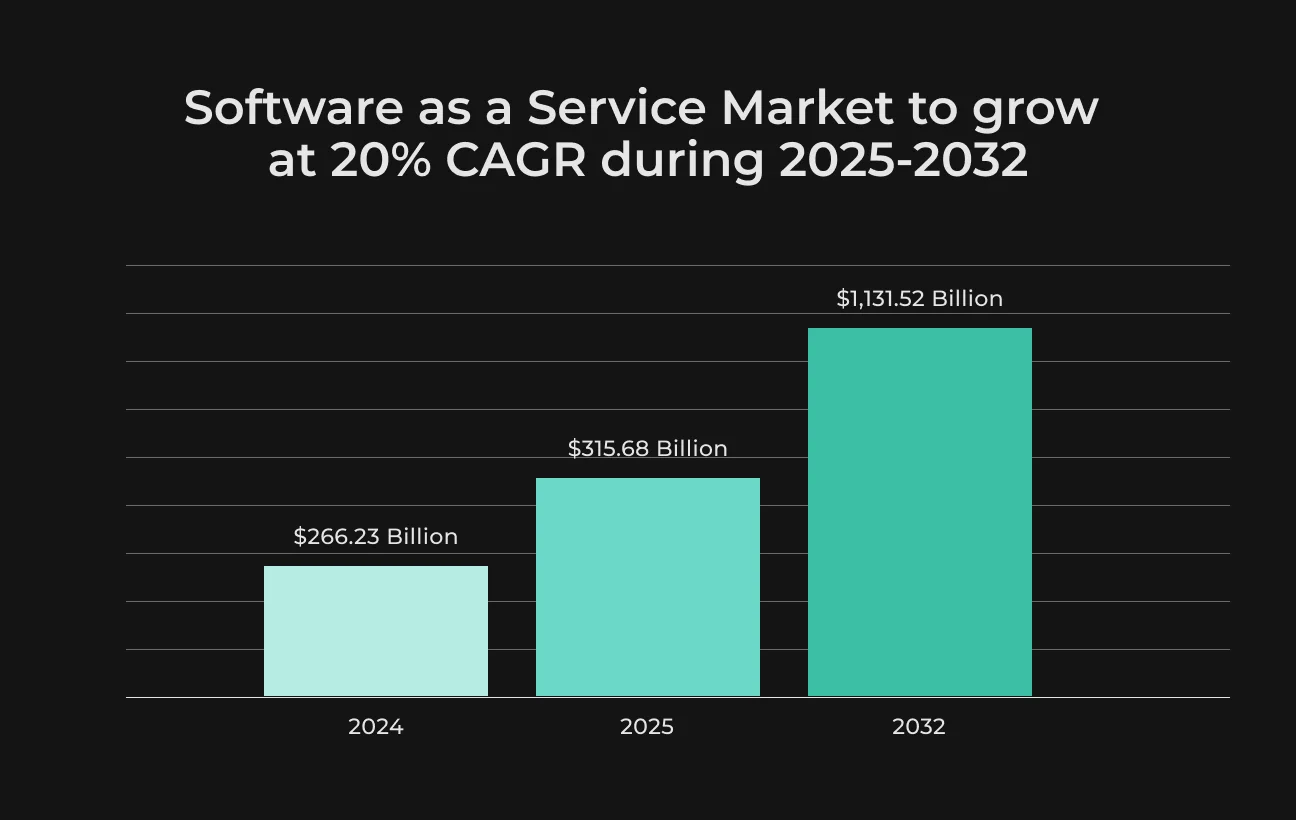
- The SaaS market is expected to reach $1,131.52 billion by 2032;
- There are about 30,000 SaaS companies globally, and 17,000 of them in the US;
- Vertical SaaS solutions are designed for specific industries, like finance, automotive, healthcare, and retail;
- Micro SaaS tools typically address one specific issue for a small target group.
Why Is SaaS the Perfect Model for Startups in 2026?
SaaS (software-as-a-service) is probably the most widely used aspect of cloud computing, and it makes a lot of money for its suppliers. The SaaS market is projected to reach $1,131.52 billion by 2032.
SaaS companies provide critical infrastructure like servers, networks, and databases, to store digital products. Businesses are just charged a subscription fee and can use services via web browsers. That way, companies can integrate with other digital tools via APIs and keep everything moving along.
There are plenty of advantages for beginners. One of the big pluses is that the SaaS provider takes responsibility for software setup, maintenance, and updates. This results in a very high uptime, solid security for your data, access control, and disaster recovery.
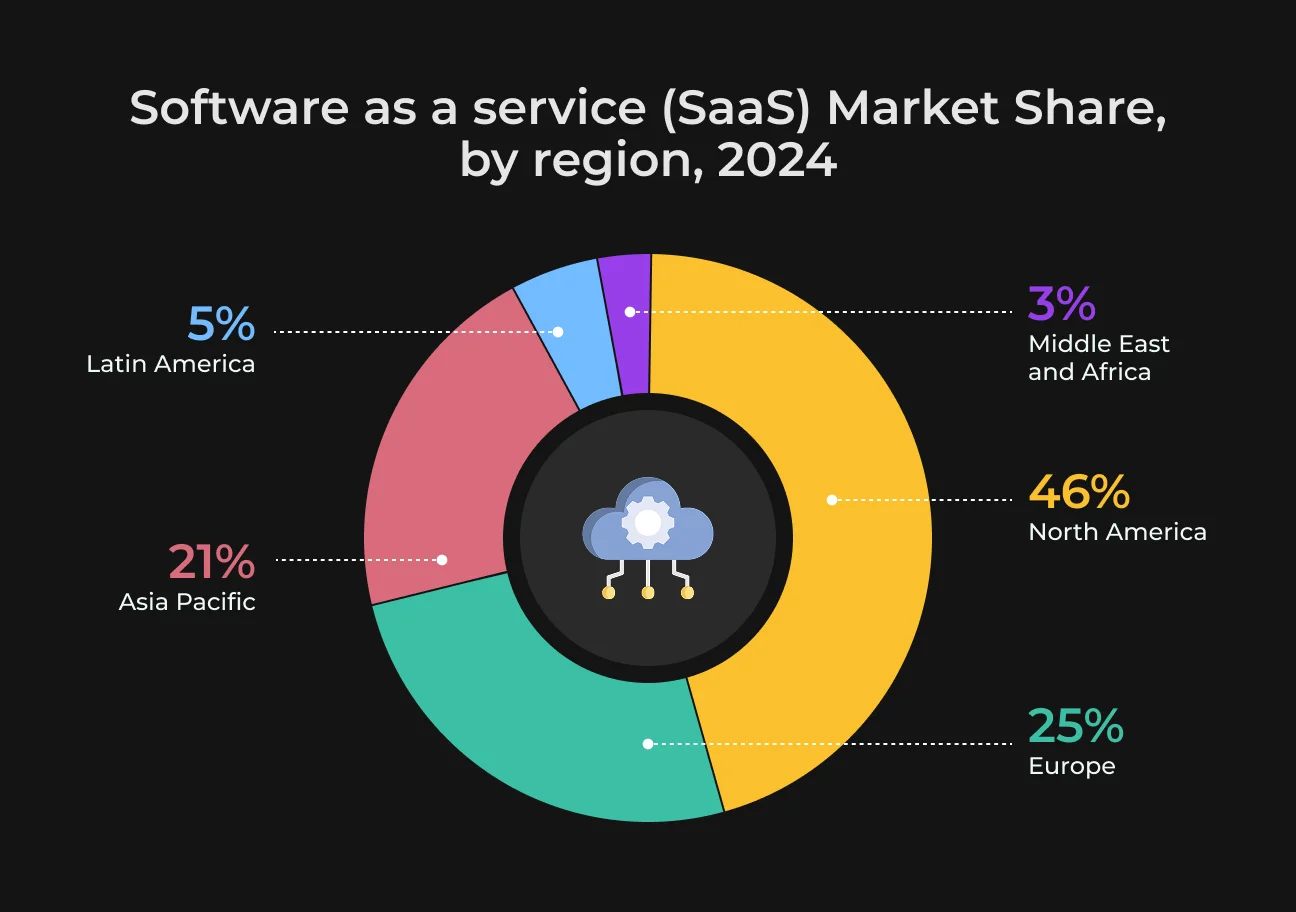
By outsourcing these tasks to cloud providers, businesses receive an agile solution and freedom in terms of the payment plan they decide on. There are approximately 30,000 SaaS companies globally, and 17,000 of them in the United States.
By 2026, the leading SaaS markets are expected to be in the US, China, the UK, Germany, India, Japan, Canada, France, Australia, and Brazil.
Types of SaaS Applications
There are two fundamental types of SaaS applications: vertical SaaS and micro SaaS.
Let's check these out.
Vertical SaaS
These SaaS models are designed for specific industries, for example, finance, automotive, healthcare, and retail. They offer specific tools, enabling companies to succeed without the need for expensive hardware or IT staff.
This is particularly good for startups or small-to-medium businesses that are looking for high performance without the high costs of traditional solutions.
Micro SaaS
These are the kind of applications that address one problem for a very specific target audience. For example, a scheduling system designed specifically for a local vet center, which lets them manage their appointments.
Whereas larger SaaS applications serve a vast user base, micro SaaS goes after smaller target markets and specific issues. They tend to be smaller, more flexible teams that require less money up front to get started.
20+ Profitable SaaS Examples and SaaS Startup Ideas
Thinking about starting your own business with a SaaS or small-scale software solution? Here are 20+ ideas to inspire your journey into the universe of SaaS. You'll receive all the insights you need to focus on the ideas that are worth your time and effort.
#1 AI-Powered EMR Software With Virtual Health Companions
Doctors spend about half their time on paperwork instead of seeing patients. A SaaS platform with AI can increase productivity by listening to visits, providing real-time medical notes, and easily integrating with electronic medical records.
AI can likewise be a virtual health companion. Such artificial intelligence assistants can accompany physicians on rounds, provide real-time updates on diagnostic and treatment options, and tailor recommendations based on individual patients’ histories or genetics.
#2 Predictive Customer Churn SaaS With AI Insights
Client churn can be a huge risk for companies, and they may not be recognized until it's too late. It’s cheaper to keep existing customers than to attract new ones, but identifying which customers might leave is not always that simple. The customer churn analysis software market is expected to grow to $3.5 billion by 2033.
You could move beyond numbers, and track client feelings using sentiment analysis. This can help predict if and when they might leave, not just by looking at how much they use the service, but also by reading their emotional signals.
#3 AI-Driven Legal Tech SaaS With Risk Assessment
Lawyers are spending around 56% of their day on manual document jobs.
An AI-powered SaaS platform can boost your contract analysis with predictive risk tech. It highlights risky clauses, uses historical data to simulate legal disputes, and gives you a risk probability score. Actually, 65% of law firms are already using AI for things like automating research and reviewing documents.
One SaaS product example is Clio - an AI-powered platform that improves legal practice management. It helps law firms simplify their daily tasks like client intake, case management, billing, and document organization. You can build your own custom product with SapientPro.
#4 AI Assistants for Digital Marketing Automation
Sales and marketing teams are overrun with repetitive tasks like writing emails, creating campaigns, or making graphics. All these might lower their creativity and ROI.
Growing companies often prefer HubSpot Marketing Hub. It’s an all-in-one SaaS marketing tool that brings together email marketing, landing pages, automation workflows, and analytics. However, they still need custom integrations and features – that’s where developers help.
You can give your marketing teams artificial intelligence that doesn’t simply automate tasks, but tailors incredible brand stories and campaigns. This virtual assistant would create emotionally-engaging content with a compelling narrative for specific markets.
#5 Micro SaaS Workforce Culture Builder
There is a lot of talking and laying plans when it comes to hiring workers and running HR. It’s hard enough to get people through the door and much harder still to keep them around. Only 12% of employees believe that their organization does a good job of onboarding members.
Micro SaaS ideas, like a candidate screening app, skill assessment and evaluation tool, or an employee onboarding app, are all helpful tools for HR professionals.
You can also transform remote work by providing virtual hangouts. Your app might recommend team-building activities and provide customized wellness check-ins and games to build communion.
#6 SaaS App for Learning and Education
There are so many ways we can teach and learn new things more effectively — whether it’s a school subject or work skill, music or whatever else. Technology can be used to personalize learning for every student. Duolingo, for instance, uses personalization for everyone.
You can go a step further with your e-learning solution and add AR and VR components. Imagine students visiting ancient ruins during history class in virtual reality, or conducting a virtual experiment in a simulated science lab.
#7 Retail Inventory Management SaaS
Many retailers find it hard to manage inventory, which results in either overstocking or understocking and losing money. There’s a sizeable potential market for inventory management software as a whole, projected to reach $5.40 billion by 2032. This suggests that many want solutions to these stocking issues.
This niche SaaS tool helps retailers improve stock management, have better sales reports, and automate reorder alerts. Implement AI that doesn't just monitor current stock but forecasts what products will be in demand. It could look ahead based on trends, seasons, and local experiences.
#8 Real Estate Lead Generation SaaS With Virtual Tours
It’s no secret that real estate agents spend much time and effort on keeping good leads, especially when long sales cycles are involved. Now, without the appropriate follow-up, leads might lose interest.
That's great to have a lead generation software that tracks, scores, and schedules follow-ups. Realtor.com is a SaaS product example that provides chat software for agents to manage leads and automate sales interactions.
You can also improve real estate lead generation by providing immersive VR property tours. Clients can visit prospective homes from around the world.
#9 Hospitality Feedback and Guest Re-Engagement SaaS Solution
To offer great service, hotels must know what their guests want, lack, and expect. Gathering feedback during and following a guest’s stay helps hotels understand how happy their guests are. What is interesting, is that after a good stay only about 40% of guests write a review. But 48% are likely to write one after a bad experience.
You can equip hotels with AI that monitors how guests are feeling in-stay based on their real-time engagement. This will suggest proactive hospitality interventions and strategies to re-engage unhappy guests before they check out.
One such example is TrustYou. It's an AI-inspired solution that collects and analyses feedback for hotel staff members, helping them boost service quality and increase direct bookings.
#10 Fitness Studio Scheduling and Management Micro SaaS
Fitness studios frequently deal with booking mix-ups or clients who don’t show up. These headaches even get worse with old or manual tracking systems.
A micro SaaS app can handle class bookings, track attendance in real time, and engage customers automatically.
Zen Planner, for example, simplifies the task of schedules for fitness studios, automates billing practices, and keeps instructors connected with their clients.
#11 Restaurant Table Reservation and Management SaaS
There are many reasons why online reservations are so vital to your restaurant’s success. They act as crowd control and help facilitate the dining experience.
A SaaS app that allows for taking reservations can make booking easier, let you manage tables better, and reduce no-shows. An AI system may also recommend dishes based on the diner's taste and previous visits, as well as seating preferences.
Securing €6M Investments for a SaaS Startup
See how SapientPro helped Contentoo achieve success.
#12 Micro SaaS for Immersive Event Planning
Organizers can manage these tasks easily online, as opposed to trying to navigate cumbersome software or outdated spreadsheets.
Now, more than half of the large companies that host events use software for ticketing, registration, managing the agenda, check-ins, and analytics.
Bizzabo, for example, is a full event management platform. It has registration, marketing, ticketing, and an on-site tool. These all allow tech-savvy users to find data insights about an event.
You can take your events to the next level with VR. You may let clients pre-tour their event, like looking at seating or staging decor.
#13 Manufacturing Process Monitoring Micro SaaS
Lots of manufacturers suffer from poor real-time process monitoring, which makes them less productive.
Manufacturing SaaS comes with a myriad of advantages, namely cost savings, scalability that’s easier to access, and better data availability. That is because this technology lets manufacturers work with expensive software without hefty upfront costs or complex IT infrastructure.
For example, Tulip is a cloud-based no-code solution with edge connectivity. It's meant to change the production floors with interactive interfaces and AI capabilities.
#14 White-Label Software for Agencies and Resellers
White-label software is popular among agencies or service providers that want to generate recurring revenue without building new solutions.
You can turn your white-label solution into a creative powerhouse. This will enable agencies to provide dynamic, AI-driven content creation and personalization experience under their brand. This SaaS can change graphic design on the fly, edit video on its own, or adapt campaigns in real time.
One such platform is Vendasta. It's a cloud-based software suite for marketing agencies or media companies that serve local small-business clients.
#15 Tourism Experience Personalization Micro SaaS
Tourism companies need to provide standards that appeal to different groups, but many don’t own data-backed tools for this kind of customization.
An AI-powered adventure map of places to visit could allow tourists to plan based on the experience they want, their budget, preferred time, and weather.
The solution may involve AI and augmented reality to give users a feel of their trip. With an interface that takes in preferences (like how excited they want to be or cultural preferences), travelers can see custom-built trips before booking travel.
#16 Freelance Contract and Payment Micro SaaS
Today, 1.57 billion people in the world are freelancers, which is out of a workforce of about 3.38 billion or so. Freelancers have a lot of daily battles that micro SaaS apps can solve. For example, Bonsai is an all-in-one freelancers' platform helping them manage their business.
They could use quick and easy billing, time-tracking, and client feedback tools. An AI-powered freelancer platform with a virtual assistant can evolve around the specific needs of a single freelancer. It could develop tactics aligned to their unique project management style.
#17 Home Renovation Project Management Micro SaaS
Many homeowners struggle to control their renovations because of messy projects, budget blowouts, or uncertain timelines. This software solution may be a helpful asset in renovation management.
The app could manage schedules, budgets, and communication between homeowners and contractors. It might also provide templates and tools to track progress and costs, and allow for photo sharing to monitor the process.
#18 Micro SaaS for Digital Detox Management
Over 1 billion people suffer from mental health disorders. As time spent on screens affects our mental health and productivity – there is quite the demand for a digital detox solution.
A software as a service system could track screen time across devices and offer personalized digital detox plans, reminders, and statistics. With extra AI features, it could suggest break times, recommend offline tasks, and help users set screen time targets.
#19 SaaS for Elder Care Coordination
Caring for an elderly relative is anything but simple — particularly when the person requires the care of multiple people.
With a nicely designed SaaS platform the family can enter care schedules, set up medication reminders, and exchange health updates including emergency contact info. It might also enable caregivers to communicate easily with one another and share notes.
#20 Remote Education Compliance Management SaaS
The online education business takes up 15.9% of the global education market. Educational institutions need to meet various regulations and standards in their approach to remote learning. But navigating different laws and shifting policies can be tricky.
Remote education compliance SaaS can include real-time monitoring, policy changes, and compliance checklists. This can help institutions ensure that their courses meet accreditation requirements.
#21 Neighborhood Community SaaS Platform
Many neighborhood communities don’t have a good way to reach out, interact, and support one another. This means they might miss socialization opportunities and community help. A SaaS solution could just bring community members closer together.
With this application, residents will be able to coordinate events, share resources, and send alerts via forums or live chat.
How to Launch Your SaaS Product: Checklist
SapientPro's tech experts created a checklist to help you launch your SaaS product successfully. It covers eleven key steps for strategic development, marketing, and ongoing growth.
Step | Details |
| Figure out who your customers are, what they need, and what your competition looks like. Quick-check with surveys, interviews, or reports. |
| Clearly communicate why your SaaS is unique. And how it solves customer issues better than anyone else. |
| Build a basic version of your product to test its core functionality. Then gather feedback to iterate and choose updates. |
| Choose the price points of your product based on research and the value that it delivers. You could try with a freemium model in order to get the early adopters. |
| Create a strong brand identity with compelling messaging that resonates with your audience. |
| Choose trustworthy technology and tools for coding, hosting, and managing the development plans of your product. So that it can be secure and scaled up in the future. |
| Make sure to follow laws related to data security, privacy, and compliance (like GDPR and similar requirements). |
| Prepare marketing activities via social media, emails, and PR. Try to build relationships with influencers. |
| Set up help channels like chat, email, and phone. Also, develop an FAQ page with materials that will address the most common user questions. |
| Define the goals (e.g., user acquisition, conversion) to measure post-launch success. Monitor with analytics on a routine basis. |
| Collect user feedback after the launch to improve continuously. Schedule updates and make sure to include user recommendations for the next updates. |
Partner with SapientPro to Build Your SaaS Product
The SaaS revolution is happening. Yet, many companies are struggling to scale their applications. Organizations that want to deploy SaaS solutions should collaborate with reliable developers. These technology partners must have the ability to think outside of the box and provide modern solutions.
With over 8 years of SaaS project development practice, SapientPro is here to become your reliable AI partner. Our expertise creates innovative and leading AI-driven SaaS products to help you build a successful business.
Contact us today for a consultation and quote on your project.
Build Your SaaS with SapientPro
FAQ
1. How much does SaaS development cost?
The price to build a SaaS product can fluctuate depending on several factors. These are the complexity of features, technology stack, what country your development team is from, or what skill level you need them to have.
Developing a minimum viable product can cost from $30,000 to $100 000 (this is for quite simple software). High-quality SaaS products with full features generally cost at least tens of thousands of dollars. And can even reach hundreds of thousands or more.
2. How long does it take to make a SaaS MVP?
A SaaS MVP takes about 3-6 months to develop. This period will include market research, planning, designing, developing, testing, and early feedback gathering. That timeframe may be longer or shorter depending on the product complexity and how effective your team and workflows are.
3. Can SapientPro provide full-scale development & support?
SapientPro is an end-to-end software development services provider. We handle everything: designing, coding, and long-term maintenance. Our basic package includes consulting, building, launching, and supporting after deployment.
For more details on specific services, you can discuss then directly with the SapientPro's team before starting a project.

