
All AI Agents in Hospitality: Use Cases and Features for Business
July 23, 202510 min read


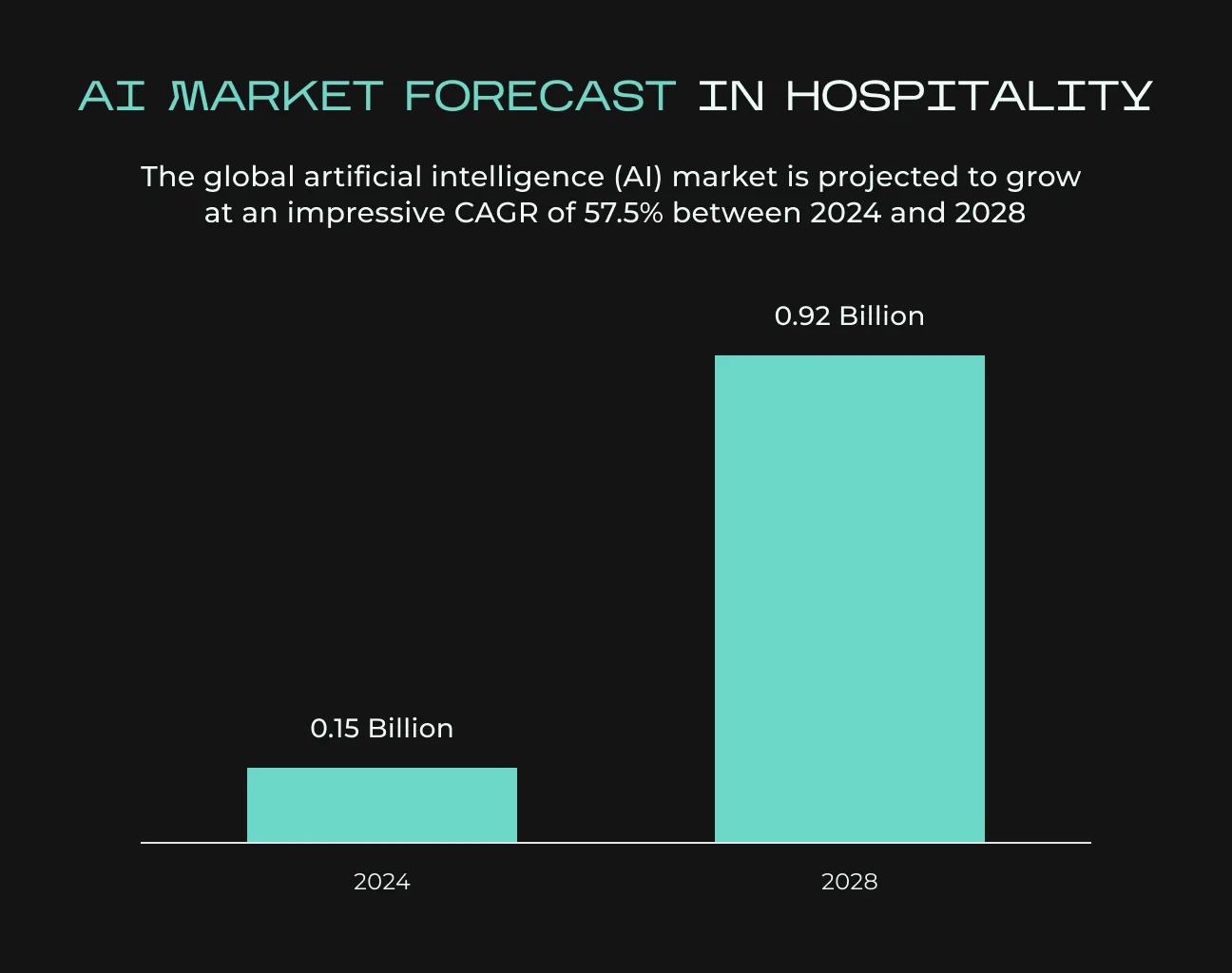
There's much use of AI now in hospitality. AI chatbots and virtual assistants can answer questions and help guests easily find services to improve their experience. You can see chatbots welcoming guests on booking sites, voice assistants assisting in hotel lobbies, and AI-driven menu recommendations. About 73% of travelers prefer using their phones for things like check-in, payments, and ordering food.
Still, it's important to figure out which AI tools actually bring value and aren't just trendy technology. This article from SapientPro's experts will show you various AI applications in hospitality and how they can improve guest experiences and increase profits.
Key Takeaways
- AI agents in travel and hospitality enhance guest experience provide tailored recommendations and 24/7 virtual assistance;
- AI hotel chatbots can make booking easier and quickly answer guest questions;
- Restaurants can use AI to adjust menus and analyze trends, which helps them manage inventory and reduce waste.
What is AI in Hospitality?
The hospitality industry strives to create memorable experiences for their guests. However, with so much competition, it sometimes can be challenging to stand out. So, lots of hospitality companies start using AI to leverage its unique capabilities.
AI in travel and hospitality can improve customer service and simplify operations. AI-powered assistants and chatbots improve the way hotels communicate with guests, which makes it easier for contact center agents to offer accurate information. This allows hotel staff to quickly meet guests' needs and create more personalized experiences.
AI is also important in areas like distribution and revenue management. Hotels are trying to rely less on online travel agencies by encouraging guests to book directly with them. AI helps create better booking experiences to attract customers, which pushes online travel agencies to improve their services.
In terms of revenue, AI can analyze large amounts of data to create pricing strategies that help boost net operating income (NOI).
Examples of AI in Tourism and Hospitality
In 2023, the global market for AI in hospitality was valued at $16.33 billion and is projected to reach $70.32 billion by 2031. There are actually many uses of AI in the hospitality industry.
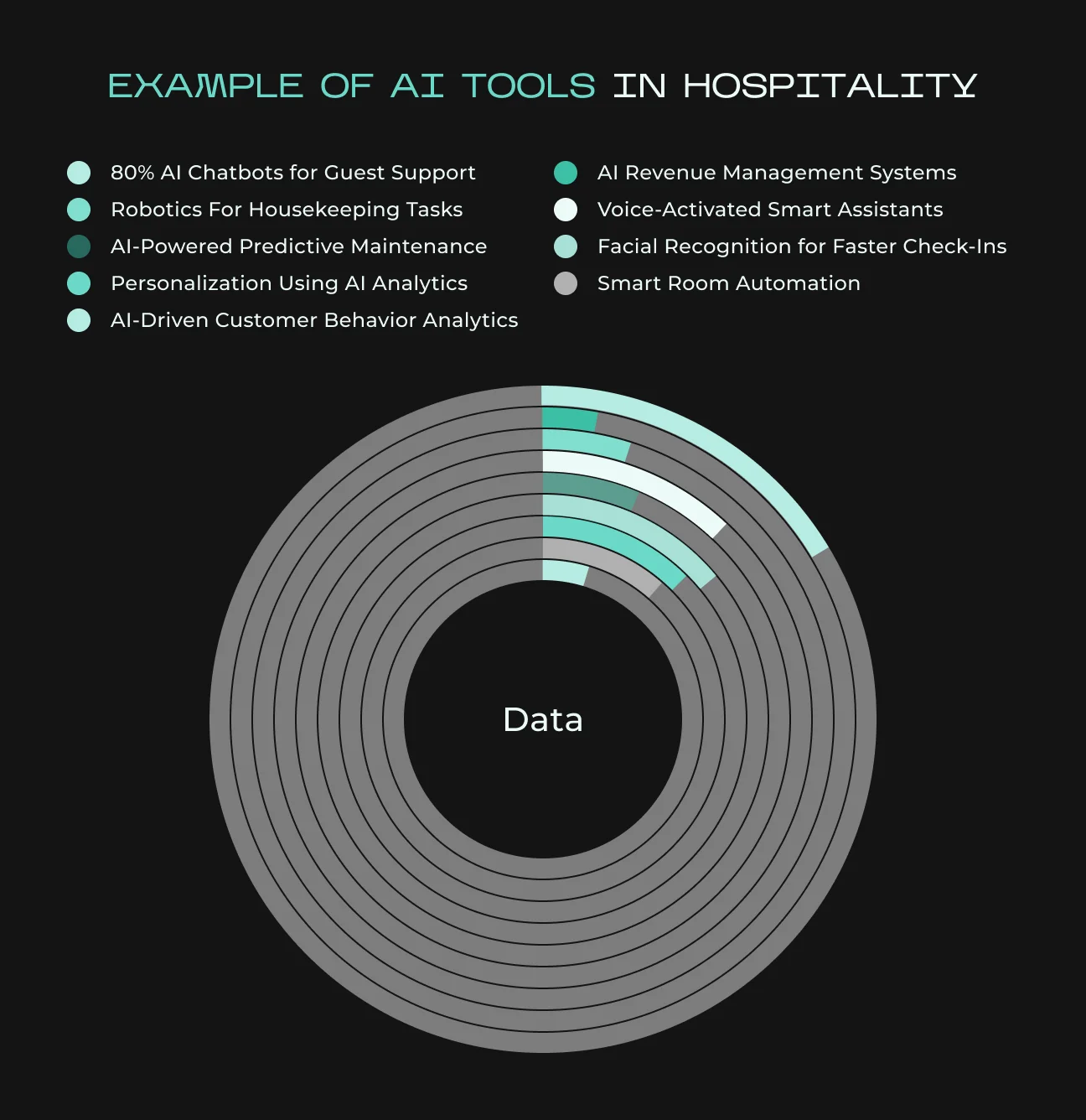
For example, AI can make reservations through chatbots and virtual assistants, or use recommendation systems to suggest amenities based on one's preferences and past behavior.
Interesting fact that millennials are 57% more likely to be influenced by hotel technology. They are more tech-savvy and appreciate features like mobile check-ins, digital room keys, and personalized apps. Also, 58% of guests think AI can improve their hotel experience.
Let's look at some real-world examples of how AI is used in the industry.
- In 2023, Air France started using generative AI in their services. They launched My Trip Assistant, a chatbot that gives personalized answers to questions on customers' baggage questions, using information from their reservations.
- FOX is another tool that analyzes customer feedback for Air France, and helps them understand customer needs and concerns. With generative AI, FOX can automatically interpret customer comments, even complex or humorous language;
- Restaurants like Domino's and Wingstop have used voice AI assistants to manage customer calls and orders. They've recently upgraded these assistants by including regional accents and adjusting the tone to make interactions feel more natural. This technology now supports various speaking styles. For example, customers in places like Atlanta might talk to an AI assistant with a Southern accent when placing orders at Domino's;
- Hilton has partnered up with the Be My Eyes app to help guests in the US and Canada who are blind or have limited vision. This partnership allows guests to get real-time help from Hilton agents through the app during their stay. Users can now easily connect with Hilton's English-speaking team for free through live video and AI. Agents can help with tasks like adjusting the thermostat and using the coffee machines.
Of course, there are many other innovative ways AI is used in hospitality. We've highlighted a few to show how integrating AI can elevate your company, transform customer service completely, and lead to higher profits.
Benefits of AI in Hospitality
Just ten years ago, having a call center was all you needed to stay competitive. But in the past decade, we've seen changes that have transformed the industry forever, all thanks to AI. Although AI tasks still need some human oversight, it undoubtedly leads to better customer experiences, more efficient staffing, and improved financial outcomes.
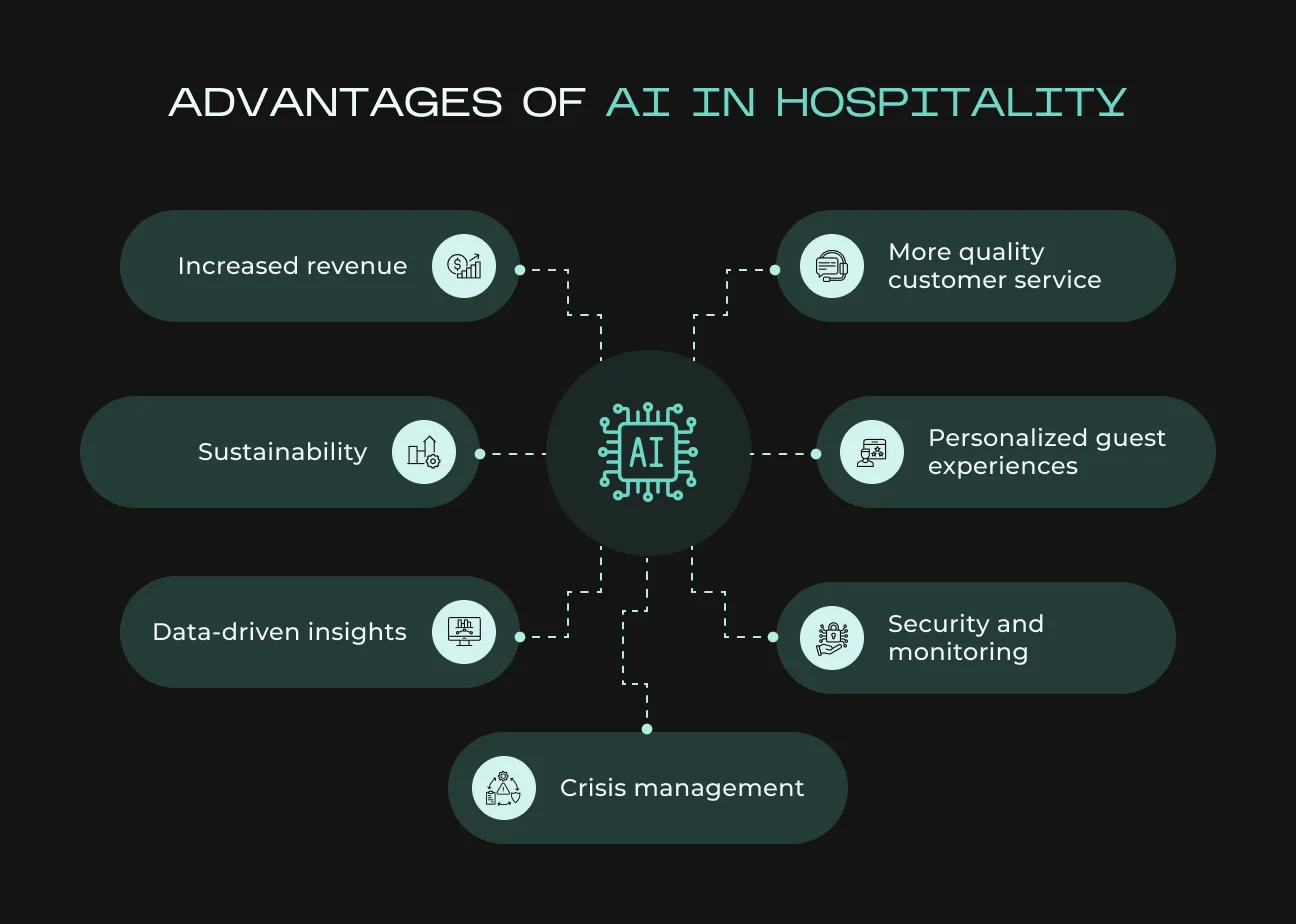
- More quality customer service. AI technology helps make customer service in hospitality faster, more personalized, and consistent. For example, AI tools help hotels understand guest behavior and preferences, which results in a 20% increase in repeat bookings. This helps hotels improve their marketing and services and build stronger connections with returning guests;
- Personalized guest experiences. AI-based customized features like mood lighting in rooms, adjustable temperature settings, and loyalty rewards can boost guest satisfaction and spending. This often leads to more bookings and repeat visits;
- Data-driven insights. By using AI to analyze data, hospitality staff can better understand operations, guest behavior, costs, and seasonal trends. For example, hotels can build detailed guest profiles by looking at past visits, note preferences during their stays, and gather feedback. This allows them to predict guest needs and ensure personalized attention for everyone;
- Increased revenue. Hospitality companies use AI to improve revenue management by analyzing financial data and past trends to set prices. For example, hotels using AI have experienced a 17% increase in revenue and a 10% boost in occupancy compared to those that don't use it;
- Sustainability. Hotels consume much energy, especially for cooling, lighting, heating, and ventilation, which can make up to 60% of their carbon emissions. Implementing AI for smart energy management helps hotels reduce energy and water use, cut down their carbon footprint, save money, and minimize their environmental impact;
- Security and monitoring. Most travelers (78%) consider hotel security a top priority when choosing where to stay. AI improves video surveillance and access systems, which helps staff automatically detect any suspicious activity and strengthen security;
- Crisis management. Hospitality companies can use AI to anticipate crises, react quickly, and keep in touch with guests to ensure their safety. Generative AI in hospitality, for example, helps hotels send personalized mass alerts about the weather and guide guests on necessary actions or evacuation if needed.
AI Agents in Hospitality: Use Cases
Here are some practical uses of AI technology that are becoming essential for hospitality companies.
Chatbots and Virtual Assistants
In hospitality, face-to-face interactions with a friendly, welcoming staff member now also require digital engagement. Chatbots and virtual assistants are crucial since they can interact with guests and potential customers 24/7. Unlike traditional live chats that need human agents, these AI chatbots offer personalized responses at any time.
They can manage booking inquiries, room-service orders, gather guest feedback, and even suggest local attractions. With their advanced language skills, they offer a human-like experience without the cost of full-time staff. For example, KLM Royal Dutch Airlines uses a chatbot called BlueBot to help with ticket bookings and flight information.
Voice-Activated Devices
Voice-activated devices are becoming quite popular in hospitality, like smart kiosks around the property, speakers in rooms, and concierge robots at the front desk. More than 1,000 guests have left positive reviews on Tripadvisor for hotels using these technologies.
AI voice models can answer questions, suggest options, adjust room settings, and manage purchases. They help hotels provide excellent service even when staff members aren't around.
Recommendation Systems
Hospitality companies use AI to improve guest experience by offering personalized suggestions. AI can recommend dining options, activities, or room settings based on what guests like and their past behaviors. This information can also be used in marketing strategies for different customer groups and applied during booking or while guests are at the hotel.
AI tools help businesses collect customer feedback and find trends for improvement. For hotels, these tools can increase revenue by adjusting prices in real time based on demand, season, and competitors' prices.
Smart Energy Management
There's so much hotel waste now that roughly one-third of food ends up in the trash. This waste also impacts the energy needed for food production, packaging, and transportation. AI and machine learning can help develop smart systems to monitor and manage energy use. These systems can predict when energy demand will be high, manage temperatures, and regulate lighting to reduce electricity waste.
For example, Hilton has used predictive analytics and automated controls to reduce energy consumption by 36%.
Pricing and Revenue Management
AI-based revenue management helps hospitality businesses maximize occupancy and profits. AI examines financial data and historical trends, like costs, weather, occupancy rates, etc., to suggest the right room prices.
It can also boost revenue from hotel services like meeting space rental and restaurants, and optimize how guests use these services.
Maintenance Prediction
An hour of downtime can cost businesses over $100,000 in lost productivity. Predictive maintenance uses sensors and IoT devices to monitor equipment like vehicles, HVAC systems, and elevators. They gather data on how these machines work. Machine learning then analyzes this data to find signs of potential failures.
Predictive maintenance aims to keep equipment running longer and save money by preventing unexpected breakdowns.
Facial Recognition Technology
Facial recognition in hospitality security helps manage access to areas like restaurants and gyms. When combined with smart locks that have cameras, it allows guests to enter their rooms without keys. Around 74% of hotel operators expect biometrics to be a common way to identify hotel staff in 2025.
Besides checking identity, face scanning can detect gestures like nods or smiles to approve payments without a credit card. This system is useful at the front desk, kiosks, and on mobile devices, improving security by using guests' unique biometric information.
Surveillance Automation
AI-powered surveillance systems enable security teams in hospitality facilities to be more efficient while doing less. They monitor camera feeds, analyze smart access data, and study crowd behavior to alert staff of potential issues or illegal activities.
This automation is a cost-effective approach to manage facilities, which reduces the need for numerous staff members to monitor cameras all day long.
Targeted Marketing
Digital marketers can use AI to tailor experiences for guests by studying their data. This helps personalize aspects like room selection, spa activities, or dining preferences.
AI can also customize communication through emails, app notifications, and texts, based on the guest's interests and travel history. For example, if a guest likes staying in urban European towns, AI can send them newsletters about similar destinations, interesting museums, or city tours.
Sentiment Analysis
Sentiment analysis in hospitality is all about understanding how guests feel about their stay by looking at online reviews, social media, direct comments, or surveys. By analyzing this feedback, companies can see how satisfied guests are, identify where they can improve, and make changes to better meet guest expectations.
For example, if many guests praise the dinner, the hotel might consider extending dinner hours or adding new dishes to enhance the experience.
Virtual Tours
Virtual tours let places like restaurants, hotels, and shops give people an immersive experience from afar. Hotels that offer virtual tours have seen a 135% increase in online bookings.
Potential guests can explore a property as if they're actually there, moving around and getting a true feel for the hotel's layout and offerings. They can check out areas like the check-in desk, restaurants, lobby, and gym. This helps them decide if the hotel suits their needs without reading long descriptions.
AR Features
Augmented reality in hospitality boosts guest experience and marketing. Traditional photo descriptions might miss details guests want, but AR provides detailed views of rooms and other amenities. For example, Marriott Hotels offers an AR app where users can virtually explore their Caribbean and Mexican resorts with 360-degree views before booking.
Restaurants also use augmented reality to provide clear menu details. AR menus allow guests to view 3D images of dishes before ordering. In 2018, Domino's introduced the “New Pizza Chef,” which lets clients customize and preview pizzas with AR, which made ordering more interactive and enjoyable.
Point of Sale Intelligence
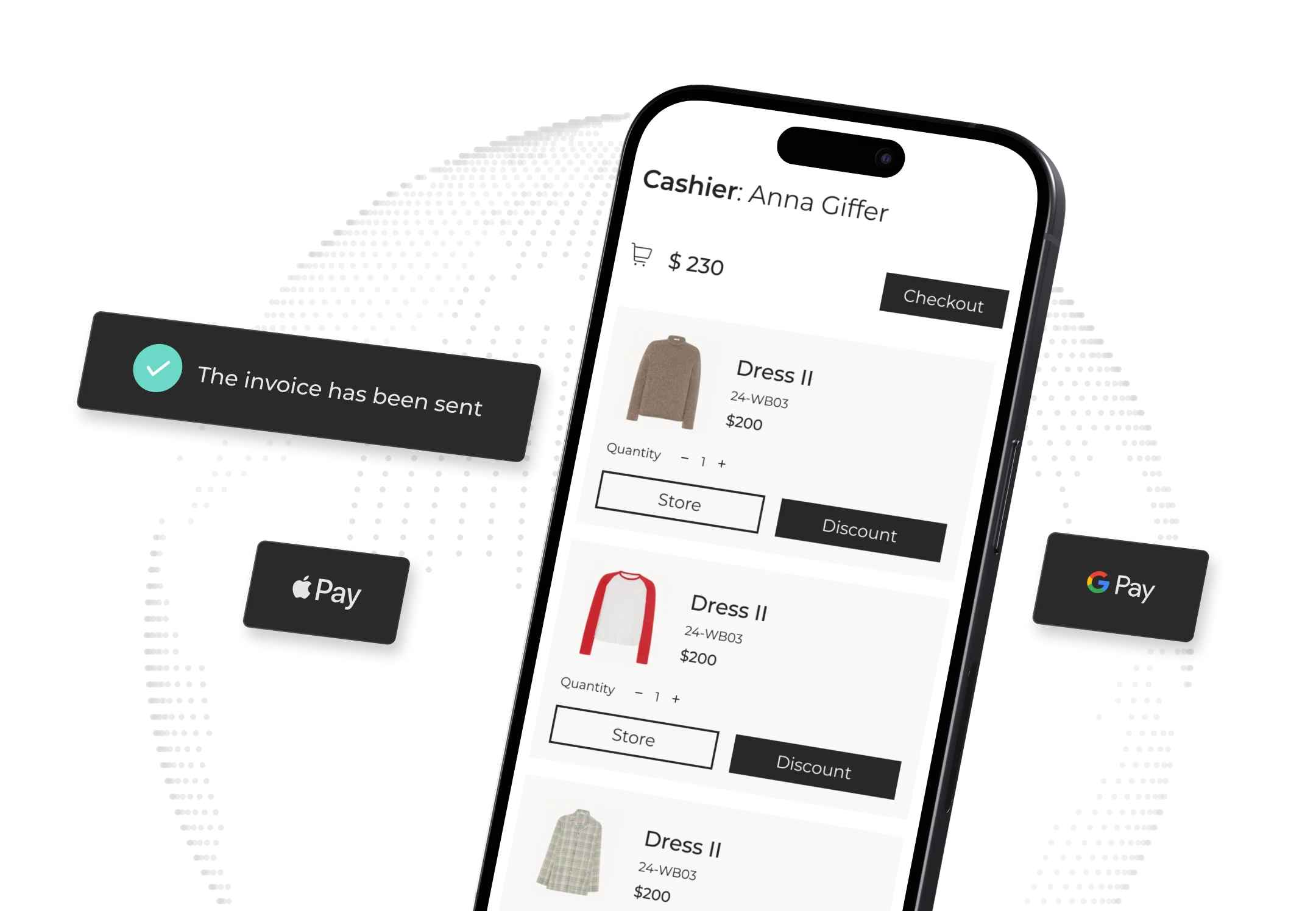
A POS system is what helps streamline and simplify operations in hospitality. It improves customer service with personalized recommendations, boosts sales, manages inventory, and offers data that helps make the right decisions.
For example, when a cashier completes an order, a smart system recommends side dishes based on past choices and available inventory. If steaks are almost out, it recommends chicken strips as an alternative. After the shift ends, sales trends are used to adjust prices or create new deals for the next shift.
SapientPro's POS for Magento 2 is Live!
You'll get all features needed for a powerful point-of-sale system to help your business grow. We also build custom solutions.
Automated Cleaning & Scheduling
Sensors and AI have made cleaning more effective. Sensors can check air quality, surface cleanliness, and water safety, detecting bacteria or allergens so housekeeping can act quickly. AI analyzes this data to recommend better cleaning methods.
Automated systems help efficiently organize tasks by checking room occupancy, guest preferences, and staff schedules. Plus, inventory management systems keep track of cleaning supplies to prevent shortages and waste, which helps maintain the right stock levels.
Loyalty Programs
Successful loyalty programs depend a lot on strong analytics. AI-powered predictive analytics can analyze customer behavior to develop strategies that promote more bookings or spending through smart recommendations.
For example, a loyal guest who sometimes eats at a lodge might be offered a free drink when they book a table. Besides, guests who regularly stay at a hotel during sports events might get a special deal for a future event.
Real-Time Translation
Hotels and resorts enhance their services for international visitors by using real-time translation through their apps and digital platforms. AI lets them provide instant translations and communicate easily without language barriers.
This system can translate messages into the recipient’s language, whether it's a specific task or casual conversation. It helps staff better understand their tasks and even learn the local language and work-related terms.
SapientPro Built an AI-Powered Voice Assistant
See how our engineers ensured AI could understand Arabic-speaking dialects, handle mixed language, and provide accurate responses.
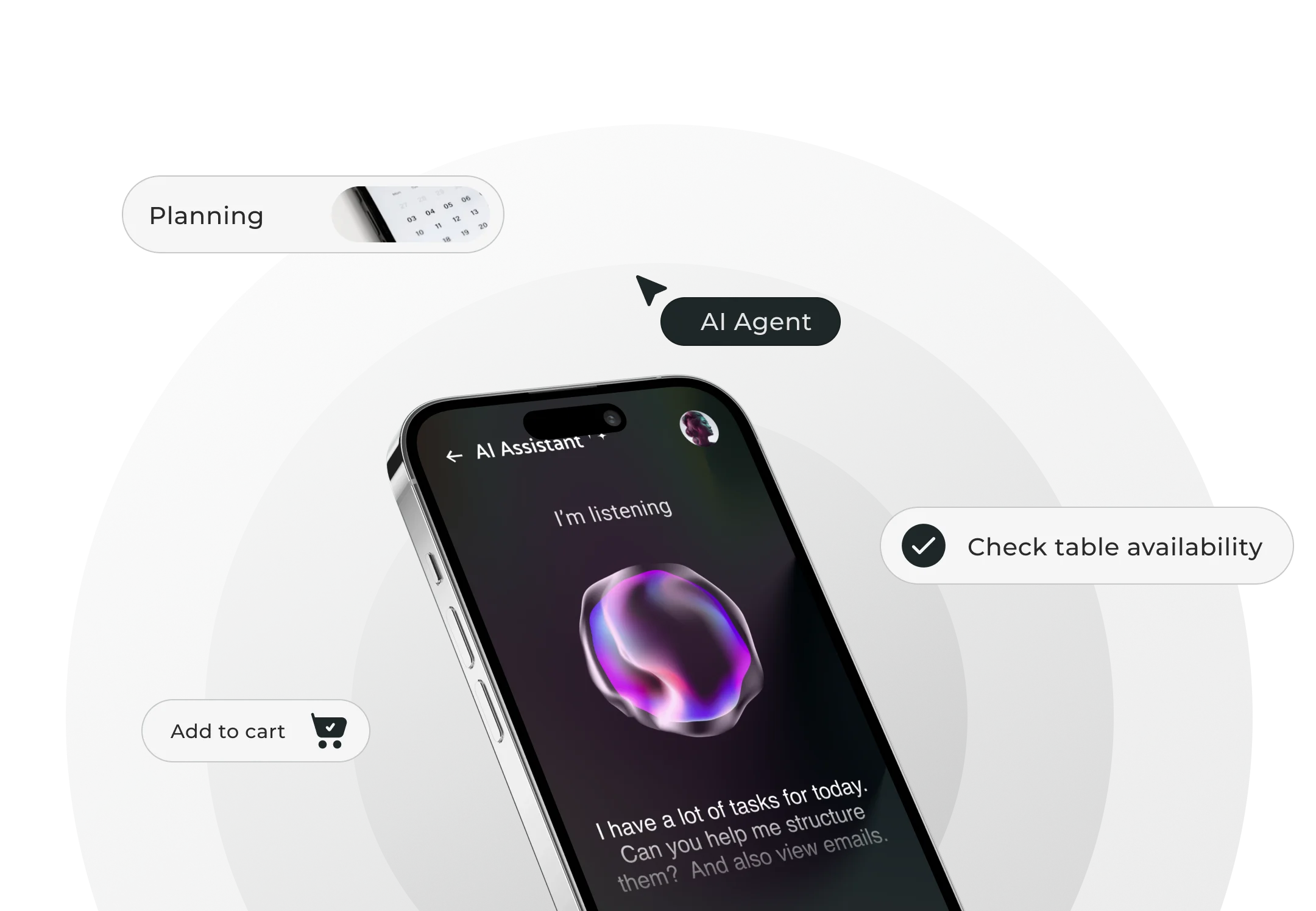
For example, hotel managers who are from other countries can easily assign tasks in the local language. Also, since many housekeeping teams are international, real-time translation apps help train housekeepers, communicate tasks, and manage schedules.
Inventory Management
Poor inventory management can affect every part of a hotel's operations. Many hotels, for example, can't distribute their rooms correctly and often rely on online travel agencies for strategy.
Hoteliers can use their limited space in the best possible way with the help of an inventory management system. This technology lets hotel managers control room availability across various booking sites in real time and set the right prices for rooms and other products. When someone makes a booking, the software automatically updates all other sites to prevent overbooking.
These systems also track inventory in hotel gift shops, rooms, and stores. Employees, for example, can scan barcodes with special devices to automatically update the inventory.
How Much Does it Cost to Build an AI Agent for Hospitality
AI agents are now much more sophisticated than simple rule-based programs. With improvements in large language models, these agents can now chat, plan, analyze, code, and continue to learn. Creating such an AI agent can cost you between $20,000 and over $150,000, depending on the app's complexity. For example,
- Basic AI agent ($20,000 - $50,000) offers a simple chat interface, basic interactions, preset responses, and limited system integration;
- Intermediate AI agent ($50,000 - $150,000) provides improved language processing, personalized interactions, multilingual support, integration with booking systems, and basic analytics;
- Advanced AI agent (starting at $150,000) includes advanced machine learning, extensive data integration with systems like CRM and POS, in-depth customer insights, real-time analytics, and customizable interfaces.
If you're planning to develop a custom AI solution for your business, look at these potential costs for each stage of development:
Development phase | Service | Estimated cost ($) |
| Planning / requirements | Understanding project needs and defining scope | $5,000 - $15,000 |
| Research / design | Prototyping and UI/UX design | $10,000 - $30,000 |
| Development |
|
|
| Testing / quality assurance | Testing and debugging | $5,000 - $20,000 |
| Deployment | Deployment and launch | $5,000 - $15,000 |
| Maintenance / support | Ongoing support, performance monitoring, regular updates | $10,000 - $30,000 per year |
| Customization | Adding advanced custom features | $20,000 - $80,000 |
Of course, the total cost of creating an AI agent for hospitality depends on what the client wants. Businesses need to understand their goals, desired features, and integration requirements to get an accurate cost estimate. Consulting with a specialized development partner like SapientPro can offer a detailed project analysis and a custom quote.
Partner with SapientPro to Build Your AI Hospitality Solution
SapientPro is your perfect partner for AI development services. Our skilled team offers AI solutions for all business stages, aiming to simplify tasks, boost team performance, and add lasting value to your company. Contact us to check out how our AI can elevate your hospitality business.
Build Your AI Agent with SapientPro
Create a powerful AI agent for your industry to automate sales, data processing, customer support, and more.
FAQ
Will AI replace hospitality?
AI won't completely take over the hospitality industry. It's there to improve service quality and efficiency. AI can manage routine tasks like check-ins and guest queries, but the personal touch and empathy of human staff are irreplaceable.
What are the benefits of AI agents in hospitality?
Key benefits include improved customer service, personalization, better data insights, reduced costs, and enhanced operational efficiency.
How can hotels use AI to increase their income?
Hotel AI can instantly change room prices based on market trends, demand, and competitor prices to increase revenue. It can also find opportunities to upsell services like room upgrades, spa packages, and dining experiences, tailoring them to guest preferences.

