
All How to Develop a DAO-Enabled NFT Marketplace: Detailed Guide for Business
Updated:July 27, 202615 min read


The blockchain tech is attracting attention with its various uses, like cryptocurrencies, NFTs, DeFi, and DAOs. NFT marketplaces operated by DAOs are now especially popular. Non-fungible tokens have changed how we see and trade digital assets.
In 2024, the global NFT market was worth $36.23 billion. It's expected to increase from $48.74 billion in 2025 to about $703.47 billion by 2034, growing at an annual rate of 34.53% between 2025 and 2034.

These unique digital items, stored securely on a blockchain, offer new ways for creators and collectors to earn money and exchange their digital work.
NFTs might achieve their full potential when used with a decentralized autonomous organization marketplace. This article from SapientPro’s experts will explain everything about DAO-enabled NFT marketplaces and how to build one step by step.
What are DAO Token Marketplaces?
Smart contracts provide a new approach to running a business by making agreements clear, self-managing, and accurate. They can create rules for marketplaces and manage complex tasks like arbitration, event-driven refunds, and conditional disclosures.
These systems are known as DAO technology marketplace and don't need special protocols or modifications once recorded on the ledger. They can be fully developed with interconnected smart contracts.
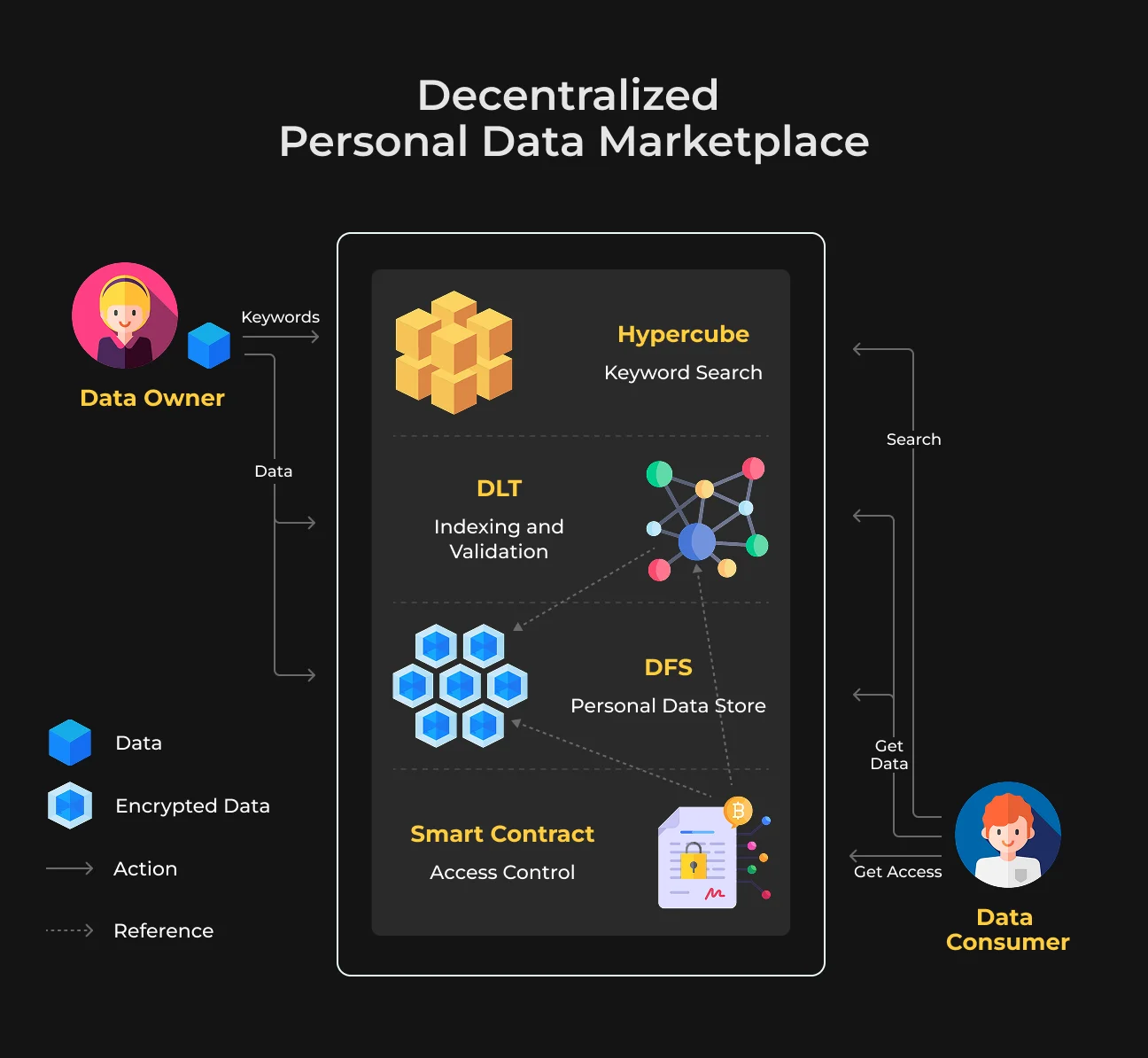
The goal is to create a series of commercial templates based on contract law and best business practices. So developers can then use these templates in their smart contracts and make sure they follow certain marketplace rules.
Why Are DAO-Enabled NFT Marketplaces Important?
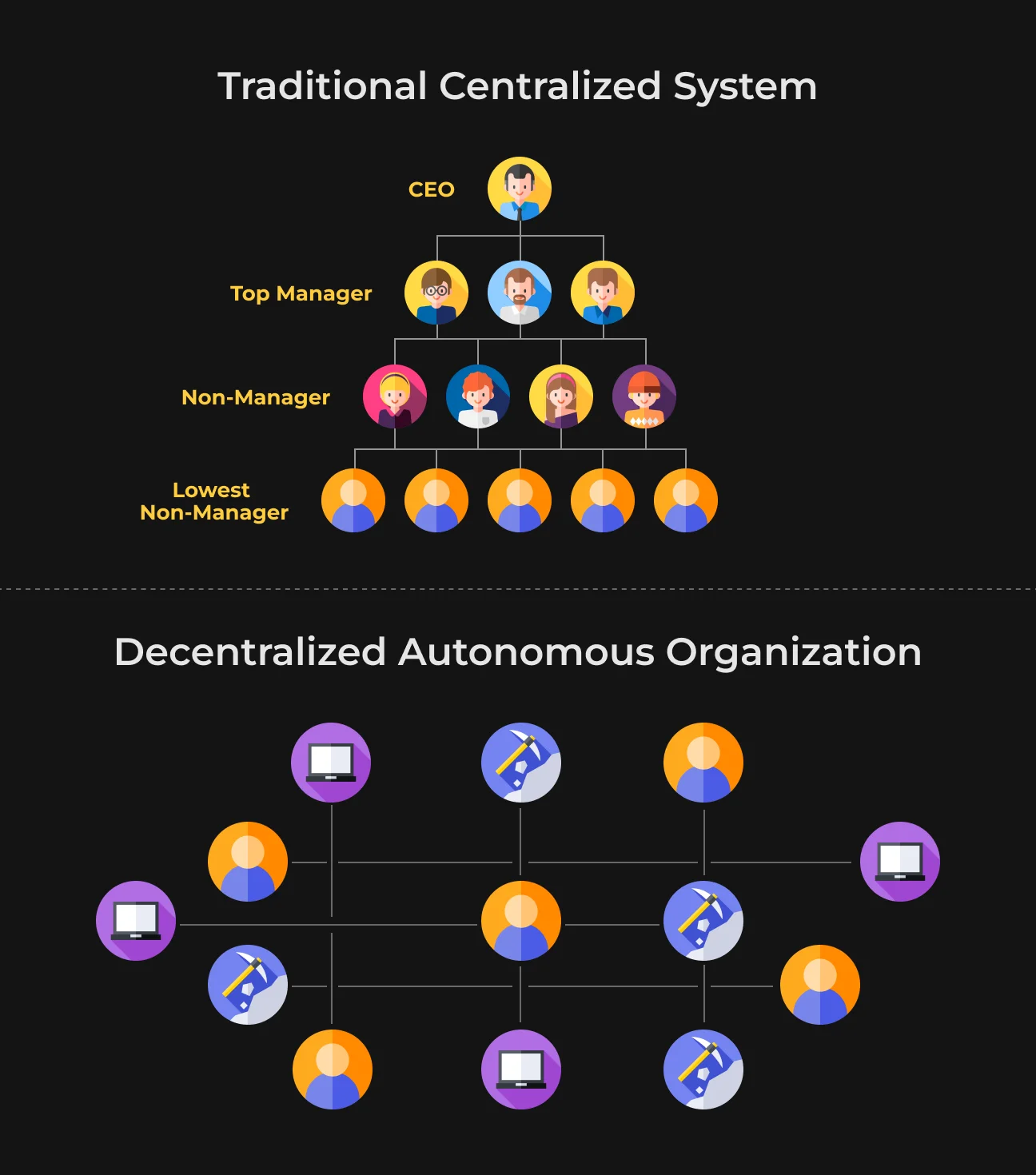
DAOs are transforming traditional companies into community-owned organizations that are decentralized. DAOs, though a new concept, can improve NFT platforms, supporting Web3's goal of giving value back to users.
DAOs are blockchain-based groups where members vote on their direction and goals. For those interested in the crypto world, DAOs are valuable because they help democratize the creator economy and promote open connections between projects without middlemen.
DAOs, like cooperatives, offer democratic authority and ownership. Members have voting rights through a governance token, controlled by transparent, open-source code.
This ensures no single person has all the power, which leads to faster and more effective decisions. NFT creators and community members can use this voting system to work together safely on future plans.
Here are some more benefits of using DAO-enabled NFT platforms:
- Users can participate in decisions about content moderation, asset management, and auction rules;
- They use smart contracts and NFTs to operate independently, without a CEO or centralized control;
- Users can earn rewards by staking their tokens and NFTs in a decentralized app;
- Users maintain complete control over their NFTs, even when staked or in a liquidity pool.
Key Elements of a DAO-Enabled NFT Platform
An NFT platform using a DAO integrates various elements to manage and trade NFTs without central control. Knowing these factors helps understand how these platforms work.
Let's take a look.
Smart Contracts
Smart contracts use code to automatically execute actions. They are important for DAOs and NFTs because they simplify processes and improve transparency. For example, smart contracts help:
- Automate transactions: they automatically complete transactions when certain conditions are met;
- Build trust: stored on a blockchain, they ensure transactions are transparent and unchangeable;
- Manage NFTs: they manage the creation, transfer, and ownership of NFTs, which ensures each one remains unique and verifiable;
- Decentralize governance: in a DAO, smart contracts allow members to vote on changes without a central authority;
- Save money: smart contracts can lower transaction costs by eliminating middlemen and automating processes.
Governance Tokens
Governance tokens in trusted DAO platforms let users take part in decision-making. Token holders have voting rights and can vote on proposals about platform changes or how funds are used, which helps influence the platform's future. These tokens often offer rewards to encourage people to participate in decision-making and development.
Some platforms let users stake tokens to gain more voting power or earn rewards. The value of these tokens can change based on the platform's success and user involvement, connecting governance to economic advantages.
At SapientPro, we help clients create independent communities, encourage democratic decision-making, and build trust in their organization with our DAO development services.
Voting Mechanisms
Voting systems let community members make decisions, which ensures fairness and transparency. Here are a few types:
- Token-based voting: members can use tokens to vote. More tokens gives a member more influence;
- Quadratic voting: members spread out their votes to show their preferences, balancing strong opinions and preventing dominance by any one group;
- Delegated voting: members can pass their voting power to trusted individuals.
These systems promote active involvement, give members a sense of ownership, and inspire creative solutions by including different viewpoints.
NFT Minting and Management
NFTs in DAOs open up great opportunities for both creators and collectors to manage assets without a central authority. Artists can easily make NFTs with user-friendly tools.
DAOs let members collectively own and buy NFTs, combining resources to get valuable items. Members decide which NFTs to buy or display, creating collections that reflect the community's preferences.
DAOs can also increase an NFT's value through virtual exhibitions or collaborations with artists.
NFT minting for a Metaverse project
See how SapientPro created a complex solution on the blockchain.
Marketplace Functionalities
A DAO trading platform provides important features for buying, selling, and trading NFTs in a decentralized manner. Here's a closer look at these elements:
- Listings and auctions: users can sell NFTs at a fixed price or through auctions, selecting whichever method suits them best;
- Search and discovery: advanced search and filter options help users easily explore the DAO ecosystem marketplace, find NFTs by category, see trending items, view newly listed ones, and get personalized recommendations;
- Wallet integration: the platform integrates with popular cryptocurrency wallets, which makes NFT transactions secure and easy;
- Cross-chain compatibility: it supports multiple blockchain networks like Ethereum, Binance Smart Chain, and Polygon, enabling NFT trading across different ecosystems;
- Community features: social features encourage users to interact by commenting, liking, and sharing NFTs.
All these elements in a DAO-enabled NFT platform help build a secure and community-focused space for creating, managing, and trading NFTs. This approach gives creators and collectors more control while keeping the system decentralized.
Benefits of Using DAO NFT Marketplaces
Let's explore the main benefits of NFT marketplaces that use DAOs.
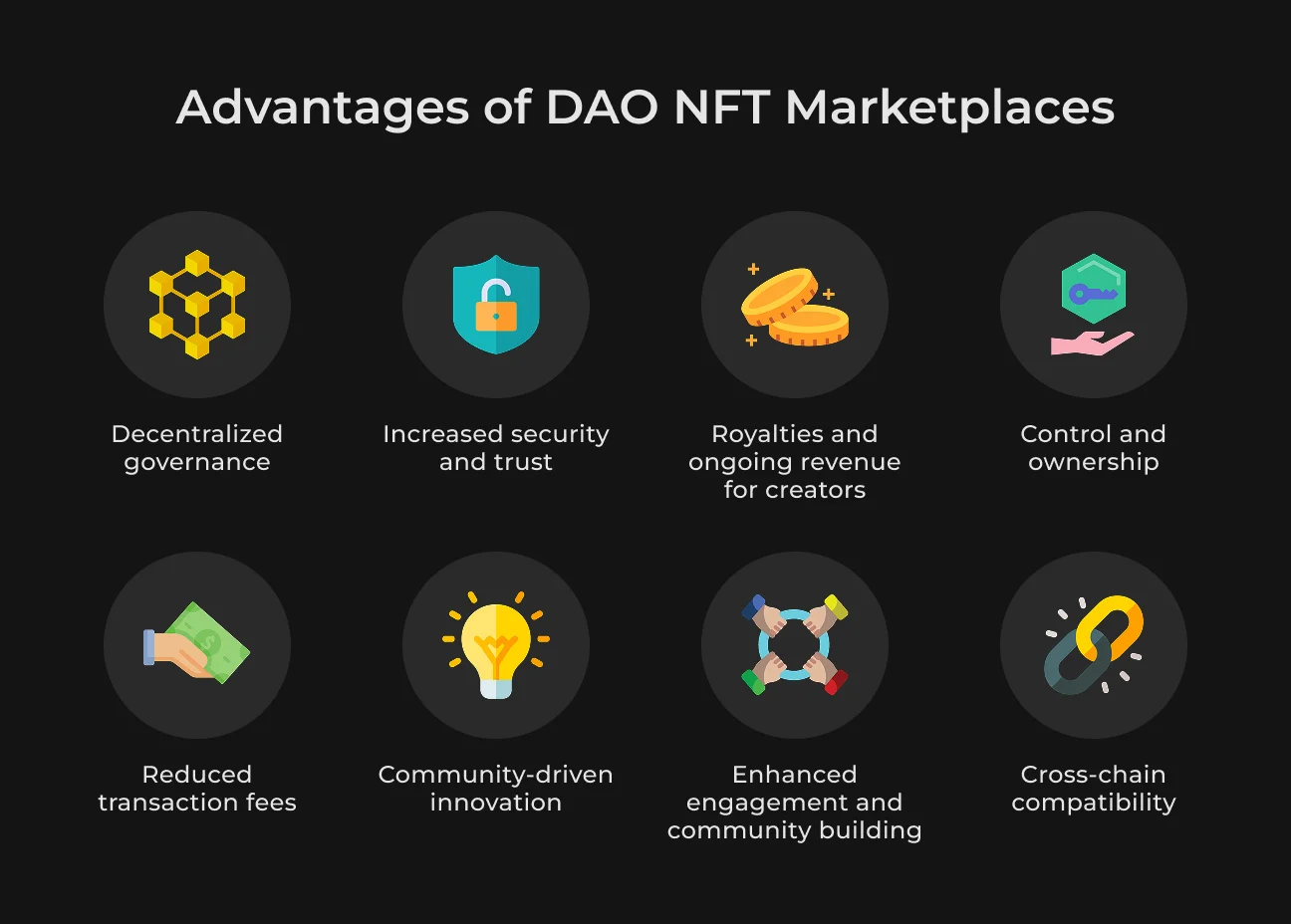
- Decentralized governance:
DAO NFT marketplaces are run by their users, who can participate in decision-making. People who own tokens can suggest changes and vote on key matters. This makes the platform grow in a way that benefits the community, instead of being controlled by one group.
- Reduced transaction fees:
DAO NFT marketplaces, which don't rely on centralized middlemen, often have lower transaction fees. This means more money stays with creators and collectors.
- Increased security and trust:
Blockchain technology is the backbone of DAO NFT marketplaces. It provides a transparent and unchangeable record of all transactions.
This builds trust among users, as they can verify ownership and transaction records on their own, without intermediaries. Smart contracts ensure that transactions are completed securely and automatically.
- Community-based innovation:
DAOs promote innovation by involving the community. Users can propose and vote on new ideas or changes, allowing the platform to quickly adapt to market trends and user needs. This keeps the marketplace growing and competitive.
- Royalties and continuous revenue for creators:
NFT creators can earn a percentage every time they sell their NFTs by setting royalties. This offers artists and creators a steady income beyond just the first sale.
- Enhanced engagement and community building:
DAO NFT marketplaces often include social features like comments, likes, and sharing to encourage user interaction. These features build a community, increase engagement, and enhance connections between creators and collectors.
- Control and ownership:
In a DAO marketplace, users fully own and control their NFTs and digital assets. There are no central authorities that set rules, which gives users more freedom and control.
- Cross-chain compatibility:
Lots of DAO-based NFT marketplaces now support cross-chain trading. This means you can trade NFTs across various blockchain networks, expand their reach, and increase their liquidity by connecting different ecosystems.
These benefits show how DAO-enabled NFT marketplaces give users more power, reduce costs, increase security, and create a space for collaboration and innovation.
5 Steps to Create a DAO-Enabled NFT Marketplace
Building an NFT marketplace with DAO features involves a few important steps that combine technical skills with community-focused ideas. The technical half of that work, meaning the governance contracts and the minting logic beneath them, is where teams that lack an in-house blockchain unit rely on Web3 development services.
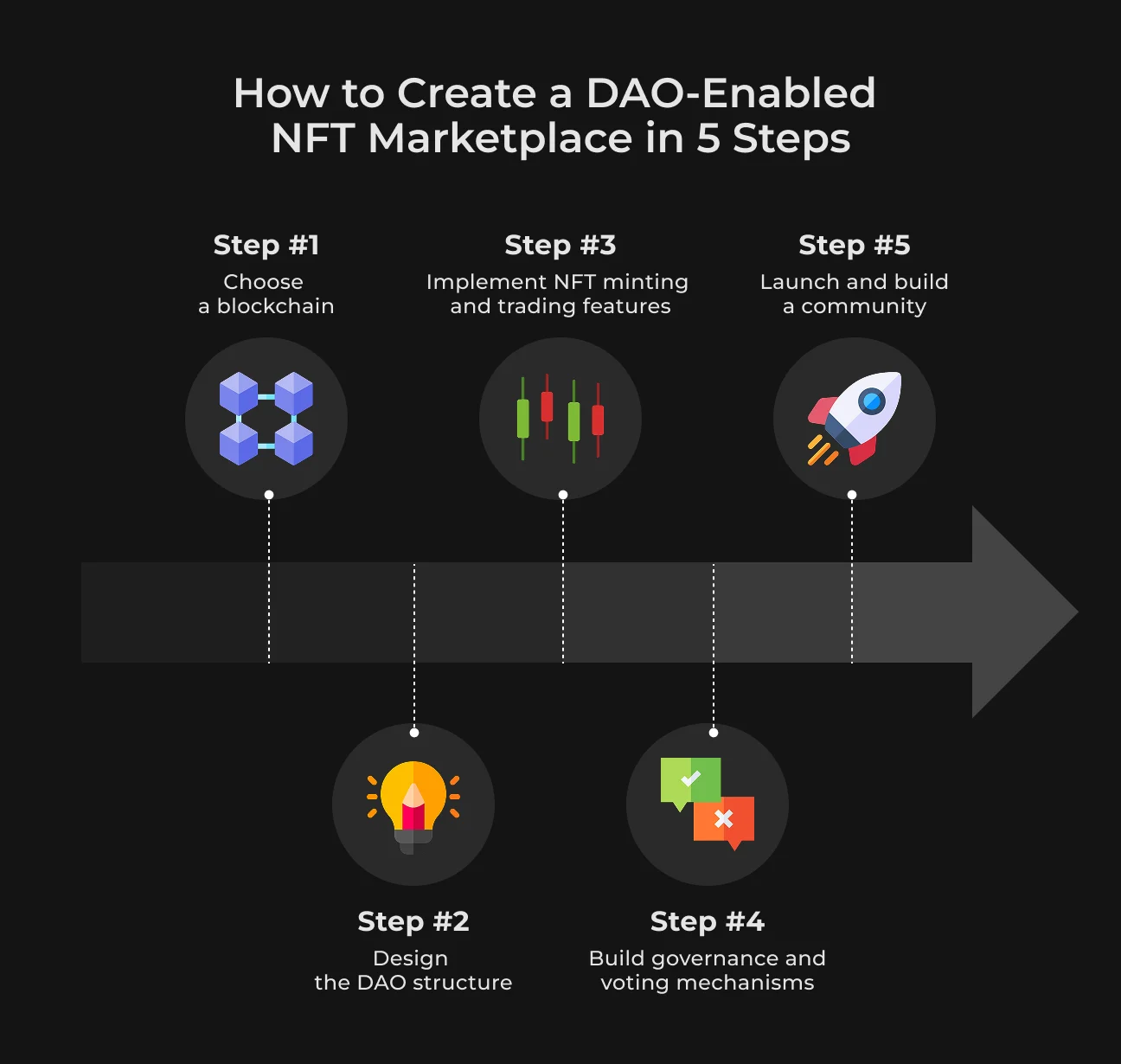
Take a look at this step-by-step guide.
1. Choose a Blockchain
First, you should choose a blockchain platform that works with smart contracts and NFTs. Many people prefer Ethereum because of its popularity and strong infrastructure.
But you might also look at Binance Smart Chain, Polygon, or Solana for lower transaction fees and faster processing times.
Also, consider the network's scalability, transaction speed, and gas fees. If you expect your marketplace to have a lot of users, go for a blockchain that can manage high transaction volumes.
2. Design the DAO Structure
Define clear goals for your DAO, like community decision-making, fair revenue sharing, or encouraging creative partnerships.
Create a native token for governance and transactions, and distribute it fairly to reward early supporters and contributors. After that, develop secure, transparent smart contracts to outline the DAO's structure, covering membership, voting, and fund management.
3. Implement NFT Minting and Trading Features
To create and manage NFTs, use well-known standards like ERC-721 or ERC-1155 on Ethereum. These standards offer clear instructions for NFT creation and management.
For the minting process, design easy-to-use interfaces so artists can create NFTs without dealing with complicated smart contracts. Include options for adding custom details, categorizing their work, and setting royalties.
Also, create tools for listing, buying, and selling NFTs. Provide options for auctions and fixed-price sales to give users more choices. Make sure these features are backed by reliable smart contracts to ensure secure transactions.
4. Build Governance and Voting Mechanisms
Create voting systems so users can suggest changes and vote on important marketplace issues. Platforms like Snapshot make voting easy and are free of transaction fees.
Create easy ways for users to communicate and submit ideas, like through forums. Offer rewards to motivate active participation and contributions that enhance the platform.
5. Launch and Build a Community
Make sure you test your platform in a sandbox environment to fix bugs. Also, perform a security audit on your smart contracts to protect user assets and data.
When you launch, start creating a community. Use social media, forums, and NFT platforms to promote your marketplace and attract users. Host events, offer rewards, and often interact with the community to build loyalty and grow.
Always listen to user feedback to keep improving the platform. Respond to community needs and be open to changing features and governance based on user suggestions.
DAO-Powered NFT Marketplace Tech Stack
Creating a DAO-powered NFT marketplace requires various technologies that support blockchain functions, smart contracts, governance tools, and NFT standards.
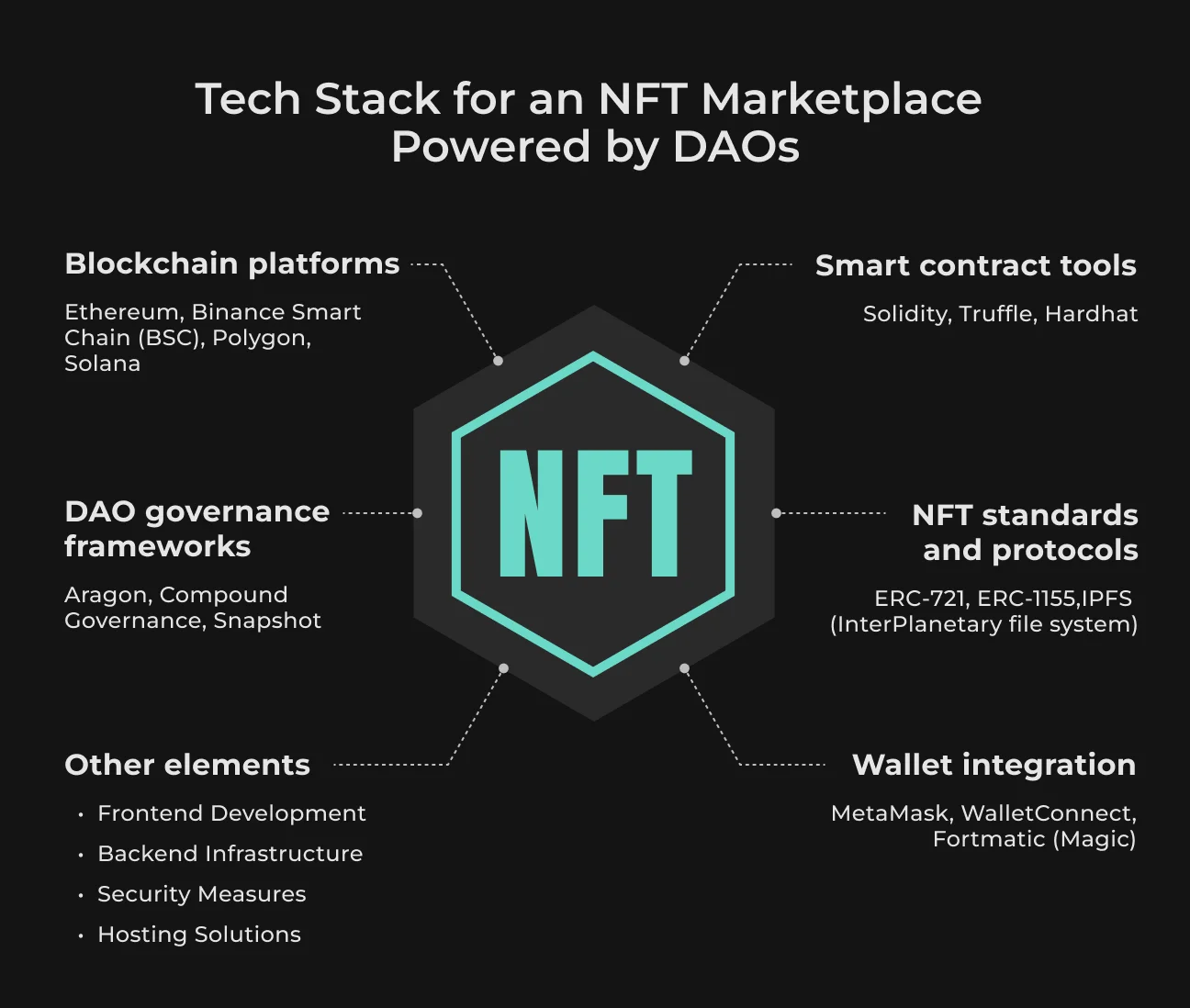
Let's look at each part.
Blockchain Platforms
Blockchain platforms are essential for running an NFT marketplace because they provide the necessary decentralized framework. Here are some popular choices:
- Ethereum: it's reliable and popular for building NFTs and DAOs. Ethereum has a comprehensive base with various tools and resources;
- Binance Smart Chain (BSC): with faster transactions and lower fees than Ethereum, it’s a great choice for marketplaces that manage many transactions;
- Polygon: uses Layer 2 technology for scalable and affordable transactions, which makes it perfect for reaching a broad audience;
- Solana: provides fast and affordable options. It's perfect for marketplaces looking for scalable solutions.
Smart Contract Tools
Smart contracts are used for minting, trading, and governance of NFTs.
They let transactions happen without intermediaries. Here are some programming languages and tools used to create them:
- Solidity: key language used for writing smart contracts on Ethereum. It's powerful and flexible, perfect for complex contracts;
- Truffle: a popular development framework for Ethereum. It comes with tools for testing, deploying, and running smart contracts;
- Hardhat: a development environment that helps build, test, and deploy smart contracts. It also supports plugins and has debugging features to make development easier.
DAO Governance Frameworks
DAO frameworks allow communities to make decisions collectively and interact without any third parties.
Here are a few options you can choose from:
- Aragon: this framework provides tools for setting up and running DAOs, including voting, token management, and proposal creation features to simplify governance;
- Compound governance: this model was originally created for the compound protocol and lets stakeholders vote on changes;
- Snapshot: this platform lets people vote without blockchain transaction fees, making it easier and cheaper for communities to participate in decision-making.
NFT Standards and Protocols
Standards and protocols set the rules for creating, trading, and using NFTs on the blockchain.
Here are a few examples:
- ERC-721: it's a popular NFT standard used on Ethereum. It creates unique, non-fungible tokens, which are perfect for digital collectibles;
- ERC-1155: this standard lets you create both fungible and non-fungible tokens in a single smart contract, offering more flexibility and efficiency;
- IPFS (InterPlanetary File System): this is a storage system that keeps NFT metadata and files off-chain, providing long-term security and persistence.
Wallet Integration
Wallets help you store NFTs and make transactions in the marketplace for DAO projects.
You can choose from these options:
- MetaMask: a browser extension wallet that lets users securely use dApps and manage assets on Ethereum and similar networks;
- WalletConnect: lets you link your mobile wallet to the decentralized marketplace for DAOs for more flexibility and easy access;
- Fortmatic (Magic): makes wallet management easy by allowing you to log in with your email or phone number. It's a good choice for newcomers.
Other Elements
Creating a fully functional DAO community marketplace requires more than just adding blockchain elements. You'll also need these important components.
Frontend Development
Try using frameworks like React.js or Vue.js to build interactive user interfaces. React.js is popular for its efficiency and flexibility, allowing developers to create reusable UI components that make development faster and maintenance easier. Vue.js is easy to use and integrate.
Additionally, using Web3 libraries can simplify blockchain connections.
Backend Infrastructure
We suggest using Node.js for server-side tasks, blockchain interactions, and managing smart contract requests. Its design is perfect for handling many connections simultaneously, without blocking events.
You can also choose alternative backend options like Python or Go. Python, with Django or Flask, is popular for its readability and extensive libraries. It offers user-friendly development, strong security, and ORM support.
If you need high-performance and efficient multitasking, Go is ideal. It's easy to deploy and great for high-performance apps.
Security Measures
You can use tools like MythX and OpenZeppelin to perform detailed security checks. MythX is a tool that scans Ethereum smart contracts for security issues and helps improve coding practices.
OpenZeppelin provides audited smart contract libraries and tools to simplify secure Ethereum development. Also, follow secure coding practices like regular code reviews and penetration testing to minimize risks.
Hosting Solutions
Consider platforms like AWS or Google Cloud. They offer robust infrastructure-as-a-service (IaaS) with resources that can scale and be accessed globally.
With features like auto-scaling, database management, and security monitoring, your DAO project marketplace can easily manage traffic surges.
Alternatively, you can choose decentralized hosting options like IPFS and Filecoin. IPFS is a peer-to-peer network for sharing and storing large files without a central server. It's great for NFTs because it keeps metadata and digital assets stable and unchangeable.
Filecoin is based on IPFS and offers a reward system for decentralized storage. This enables more people to use it and protects data by storing files across a network.
A DAO-supported NFT marketplace combines everything needed for a safe, efficient, and easy-to-use experience, with decisions made by the community.
Future of Treasure DAO Marketplace
Despite some legal uncertainties, DAO’s future is still promising. As technology progresses, it will demonstrate how processes can become more efficient with less human involvement.
The Global DAO-as-a-Service Market is projected to reach about $680.6 million by 2033, growing at 18.6% annually. This year, it's expected that 60% of blockchain projects will use DAO crypto structures, allowing token holders to engage in decision-making.
NFTs are also used more in DAOs. Platforms like OpenSea and Rarible explore DAO opportunities to encourage more community participation.
As DAOs grow, they'll offer new solutions in areas like supply chain management, content creation, social projects, and DeFi. By 2026, it's predicted that 40% of traditional businesses will consider using DAO investment strategies to boost transparency and trust with stakeholders.
Partner with SapientPro to Build Your DAO NFT Marketplace
Want to build your NFT marketplace with DAO features? At SapientPro, we manage every part of NFT development. Our tech experts create best DAO marketplaces, community websites, and any other solutions your business needs.
SapientPro’s team brings your ideas to life, ensuring they stand out and attract a wide audience. Reach out to us and let’s discuss your project.
Build Your NFT Marketplace with SapientPro
We'll provide a detailed estimate and bring all your ideas to life.

