All How to Create a DAO: Development Guide in 2025
June 21, 202510 min read


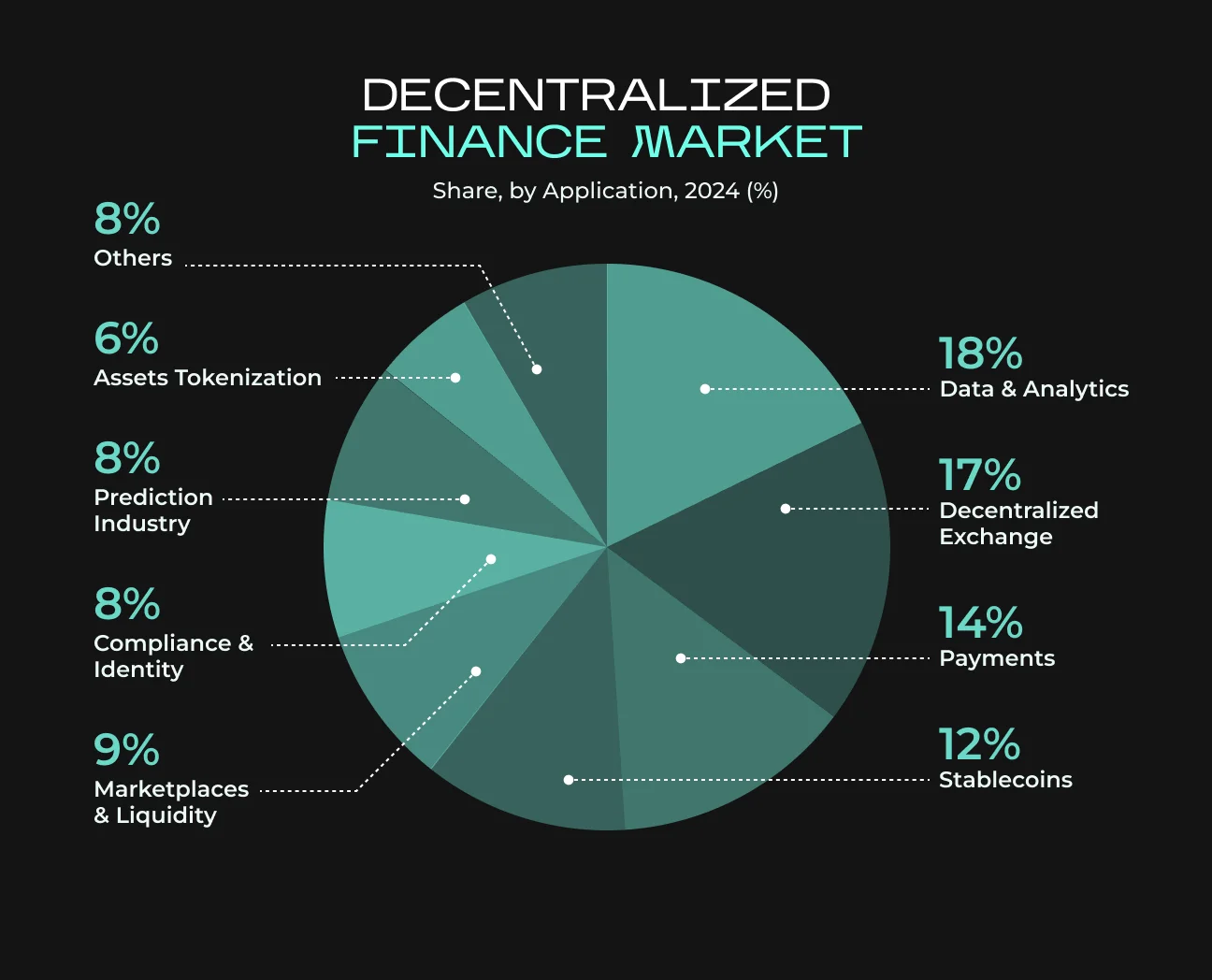
Could you imagine running a company where a global community makes decisions? That's exactly what a DAO, a decentralized autonomous organization, does. DAOs use blockchain to run projects or businesses openly with community involvement. By 2023, there were more than 13,000 DAOs worldwide. The global decentralized finance market is expected to grow from $32.36 billion in 2025 to about $1,558.15 billion by 2034.
DAOs are changing how we use blockchain for group decisions, making everything more democratic and transparent than traditional businesses. However, creating and managing a DAO requires a solid understanding of blockchain and decentralized governance.
In this article from SapientPro's experts, you'll discover the key aspects of how to build a DAO covering everything from understanding the core concept to a complete development guide. Read now!
What is a DAO?
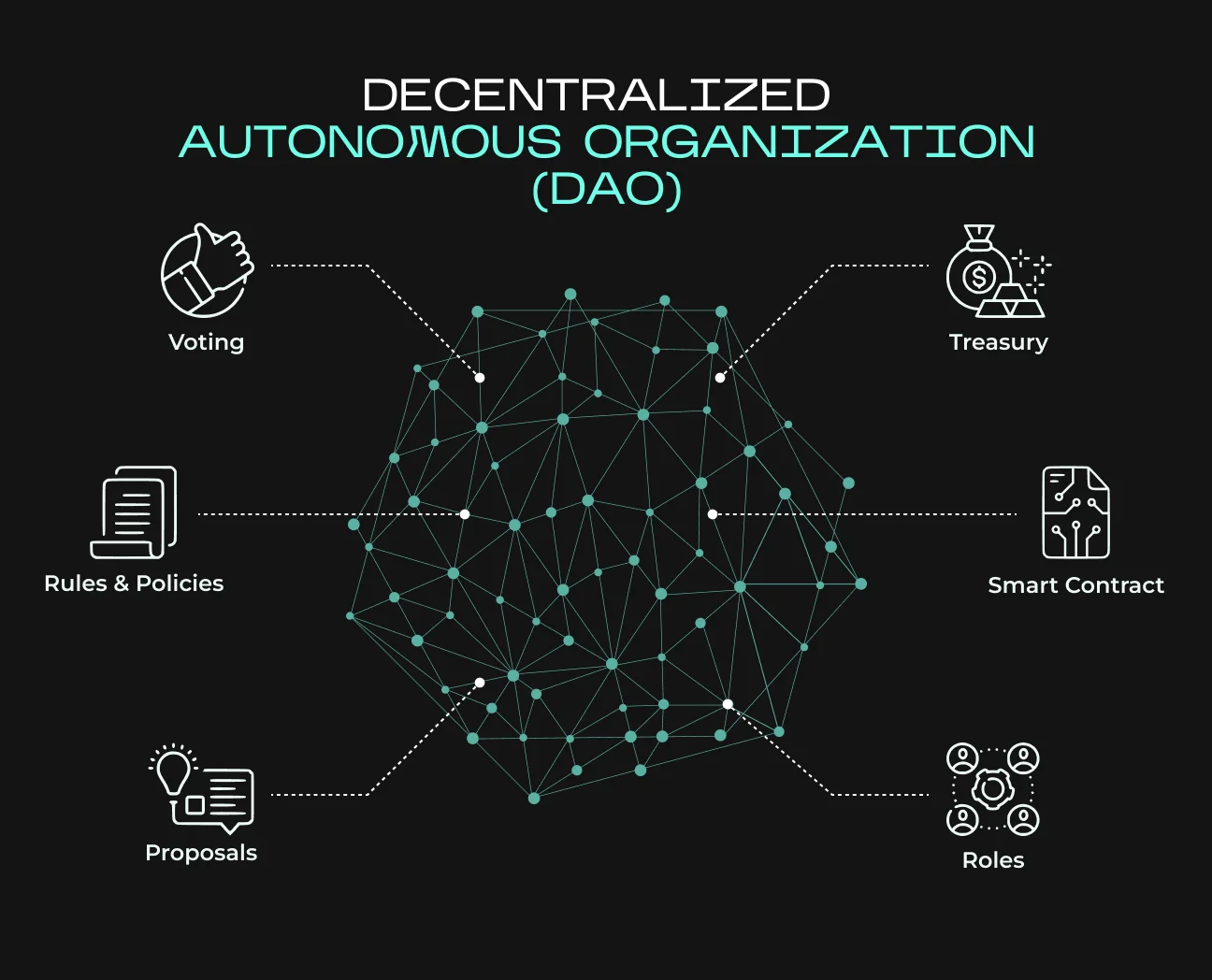
A decentralized autonomous organization (DAO) is a type of organization that operates without a central leader. In DAOs, members work towards what’s best for the community. These organizations are open and use a bottom-up approach to making decisions.
DAOs use smart contracts (automatic computer programs) to efficiently perform set tasks. By using open-source software, blockchains, and economic incentives, DAOs could be more accountable and flexible than traditional organizations.
Moreover, DAOs might offer fairer governance by involving diverse stakeholders and rewarding effort and participation. They represent a new way to govern, connect, collaborate, and innovate.
Importance of DAO Blockchain Development Company in 2025
DAOs have gone from being a niche technology to a key part of various industries. They've transformed everything from improving global supply chains to boosting Web3 social networks.
The factors behind this growth include scalability, user-friendly designs, and more widespread use of blockchain solutions. In a world that values transparency and user participation, DAOs fit perfectly, offering a more cost-effective alternative to traditional organizations. Now, you can easily vote on business decisions from home thanks to DAO innovations.
Benefits of DAO Development
DAOs are formed on the internet with no central control, opening up many possibilities for businesses and communities. Even though they're still new, DAOs are already involved in projects like DeFi protocols, social media, and venture funds because of their many benefits. Let's look more into what makes DAOs so advantageous.
- Decentralization: DAOs eliminate traditional top-down structures, giving everyone an equal say in decision-making. This decentralized method reduces corruption and inefficiencies common in centralized systems, promoting fairness within the organization.
- Trust and transparency: DAOs use blockchain technology to securely record and manage data in a way that can't be changed. Transactions are public, so everyone can see them. DAOs also use smart contracts to establish rules. Once in place, these contracts ensure all actions follow those rules. To change a smart contract, all members must vote.
- Fostering engagement: in an organization, people often feel more empowered and connected when they take part in decision-making. In a DAO, even though one person's vote may not seem such significant, token holders are encouraged to participate by voting, burning tokens, or using them in ways that can benefit the group.
- Cost-efficiency: DAOs help reduce costs by automating tasks with smart contracts, eliminating the need for middlemen. This minimizes administrative costs and lowers the chance of mistakes. Businesses can benefit from cheaper and more efficient operations.
- Security and compliance: DAOs provide a strong solution for data security and compliance by working on blockchain platforms with cryptographic techniques. A reliable DAO developer can build a secure platform to protect an organization from threats and keep it compliant with regulations.
Core Concepts of Decentralized Autonomous Organizations
DAOs change how organizations work and open up new ways for people to work together and manage resources. Let's explore the key concepts behind DAOs.
Governance and Decision-Making
DAOs allow stakeholders to vote in the organization's future through democratic, decentralized decision-making.
Token-Based Voting
In DAOs, governance tokens give holders the power to vote on important decisions, like funding or upgrading protocols. Owning more tokens gives you more influence.
It's important to know that governance tokens for voting are different from utility tokens, which are used for transactions and services on the platform. Balancing these helps prevent too much power in one place and encourages people to get involved.
On-Chain vs. Off-Chain Governance
On-chain governance allows token holders to vote on blockchain changes in a decentralized manner, keeping everything transparent and secure. The downside is that it can be costly due to transaction fees, which might discourage people from taking part. On the other hand, off-chain governance is more centralized, with a smaller group responsible for suggesting and implementing changes.
Snapshot Labs, known for its popular off-chain voting platform used by 96% of DAOs like Lido and Aave, now provides a blockchain-based voting option through Ethereum's layer-2 network, Starknet. Snapshot X is a new governance tool using cryptographic technology (storage proofs). Developed with StarkWare and Starknet experts, it lets users verify assets across blockchains without needing a third party.
Platforms like Snapshot, Tally, Aragon, and DAOHaus help make decision-making quicker and less expensive, with results verified on the blockchain afterward.
DAO Tokenomics
Tokenomics combines “token” and “economy” to describe managing a token's supply, generating demand, and its usage. It also includes distributing tokens and managing treasury operations.
Only those who own governance tokens can vote on decisions. To remain decentralized, tokens need to be widely distributed, not concentrated among a few people. This often requires strategies to keep tokens moving and circulating.
Using the “flywheel effect” to expand the network is a great way to keep tokens moving and growing. By limiting supply, tokens become scarcer, which can increase demand if they're valuable. As demand grows, the tokens circulate more and the network expands.
Regulating token circulation ensures they aren't just held by a few investors. Instead, participants in a DAO actively use them to create economic, financial, and social value.
Token Distribution: Fair Launch vs. Pre-mining Tokens
Pre-mining can seem unfair because it gives insiders a head start, which might discourage others. It often comes up in the context of initial coin offerings (ICOs) to reward founders, developers, or early investors. Unlike regular mining, which involves processes like proof-of-work to earn tokens, pre-mining directly gives tokens to specific addresses without such processes.
A fair launch, on the other hand, distributes tokens in a fair and open manner, encouraging community participation. This approach stops any group or person from getting an unfair advantage during token distribution.
Incentives and Rewards
DAOs often encourage people to participate by giving rewards, like governance tokens, for their contributions. These rewards aim to match the interests of investors, users, and other players with the DAO's mission.
Token holders can earn additional tokens or benefits by staking or providing liquidity, which keeps them involved with the DAO long term. Staking means putting tokens into the system to support activities like transaction validation, and participants typically earn more tokens in return.
Also, adding token pairs to decentralized exchanges or liquidity pools helps with trading. Liquidity providers earn part of the trading fees and might get extra token rewards. More liquidity makes trading smoother and reduces price differences, which benefits the entire system.
Marketplace Considerations
Integrating marketplaces into decentralized autonomous organizations can enhance their ecosystem. These marketplaces allow users to trade assets, services, or digital goods like NFTs, which increases user engagement and economic activity.
Moreover, it generates extra income for the DAO through trading fees, membership charges, or marketplace services.
Legal and Regulatory Factors
DAOs often operate without clear legal structures, which might raise questions about responsibility, governance, and how to manage rights and duties. They also need to comply with various local regulations, particularly those related to anti-money laundering (AML) and know-your-customer (KYC) rules.
Cryptocurrency rules also differ around the world. In El Salvador, for example, Bitcoin is a legal currency, while China has banned its use in transactions by institutions. National regulations for DAO development services in the USA are still in development, but states like Wyoming have recognized DAOs as a type of limited liability company (LLC), giving them a legal structure. In 2023, the European Union launched the MiCA framework for crypto assets, but there are no specific rules for DAOs yet.
As more and more countries explore blockchain technology, they are creating new regulations. Tokens might be classified as securities, commodities, or utilities, so DAOs need to define their tokens according to these categories.
Also, DAOs should collaborate with experts in both DAO development and regulations to ensure they comply and operate efficiently.
What are the Types of DAOs?
Let's look at the main types of DAOs and their purposes.
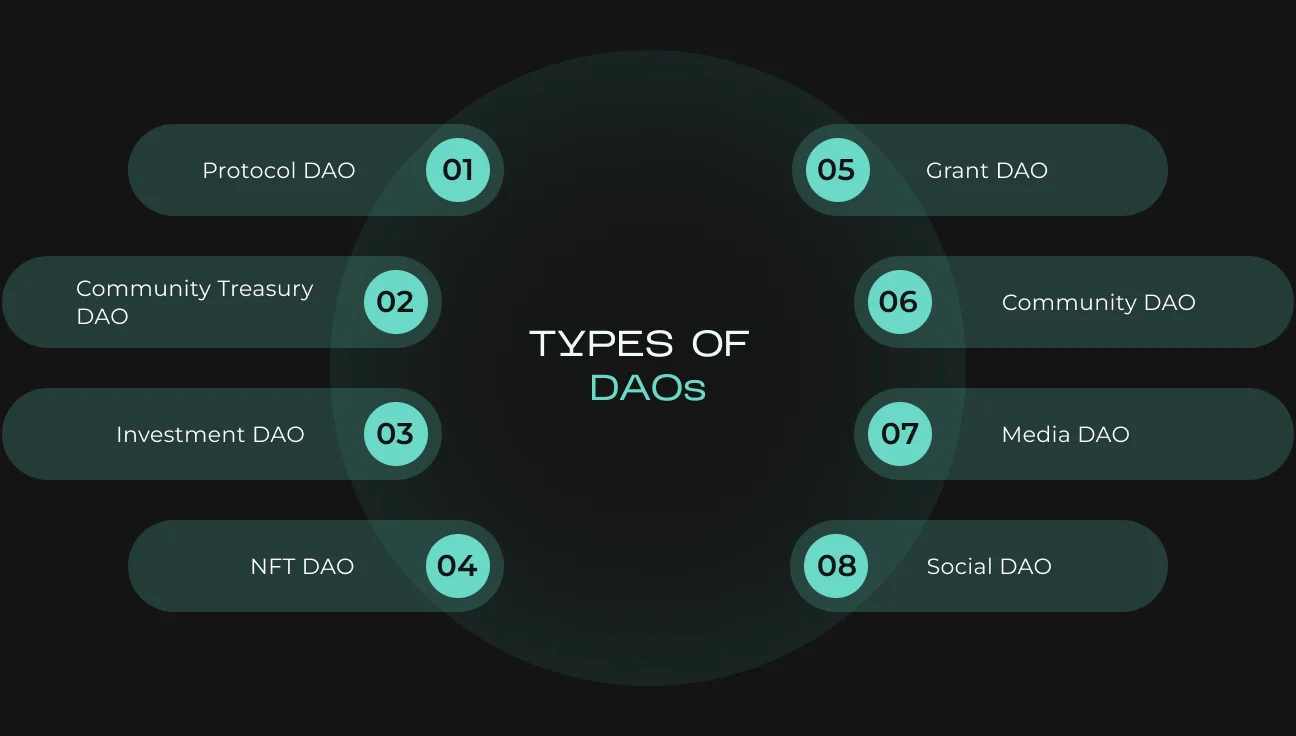
Protocol DAO
A protocol DAO focuses on two main goals: bringing together people interested in a decentralized blockchain protocol and motivating them through incentives. These incentives encourage the community to develop the protocol, create decentralized apps, issue NFTs, or engage in similar activities.
To increase involvement in the blockchain protocol, a special tokenomics system is created. This system offers various rewards to contributors, like earning tokens through staking or yielding, minting tokens for tasks like confirming transactions, and providing grants to founders who launch DApps on the blockchain.
Investment DAO
An investment DAO lets people pool their money together to buy or invest in things they can't afford alone. It's like crowdfunding or a group investment plan. Members can earn returns and sometimes share assets, like real estate, and they also have a say in how those assets are traded or managed.
NFT DAO
DAO-driven NFT marketplaces provide an easy and transparent platform for artists and art fans to buy and sell digital art. A key advantage is that they give members control.
These platforms enable the creation of NFT projects within a community that values transparency, independence, and efficiency. This structure allows collectors and investors, even those with limited budgets, to participate in NFT collections, and offers creators effective governance through the NFT DAO.
Community DAO
A community DAO allows people with common interests to work together on projects, both online and in person, and make team decisions. Members can propose ideas and vote on initiatives, events, and policy changes. This system ensures everyone has a voice and builds a stronger community.
Community Treasury DAO
A community treasury DAO is a group that manages and uses a shared pool of money from members or outside sources. It functions like a decentralized investment fund, where stakeholders collectively decide how to allocate resources.
Members vote on using these funds for investments, grants, or projects that benefit the community. The goal is to invest in projects or assets that align with the community's interests and provide returns for its members.
Grant & Donation DAO
Grant DAOs are designed to help groups manage donations in the web3 space, with a focus on supporting projects that encourage fairness and sustainability. Applying for a grant is similar to traditional non-profits. Applicants send in proposals, so the community can vote on them. The community then evaluates projects based on their size, funding needs, potential impact, and the team's skills.
Media DAO
Media DAOs focus on creating, organizing, and sharing content. They enable community members to contribute to, manage, and oversee media platforms. The aim is to provide a fresh way of producing and consuming media. This gives participants more control, ownership, and influence over the content they make and enjoy.
Social DAO
Social DAOs design and support communities with common interests and goals. They provide a place for members to connect, collaborate, and make decisions together. This helps people feel they belong and supports community projects.
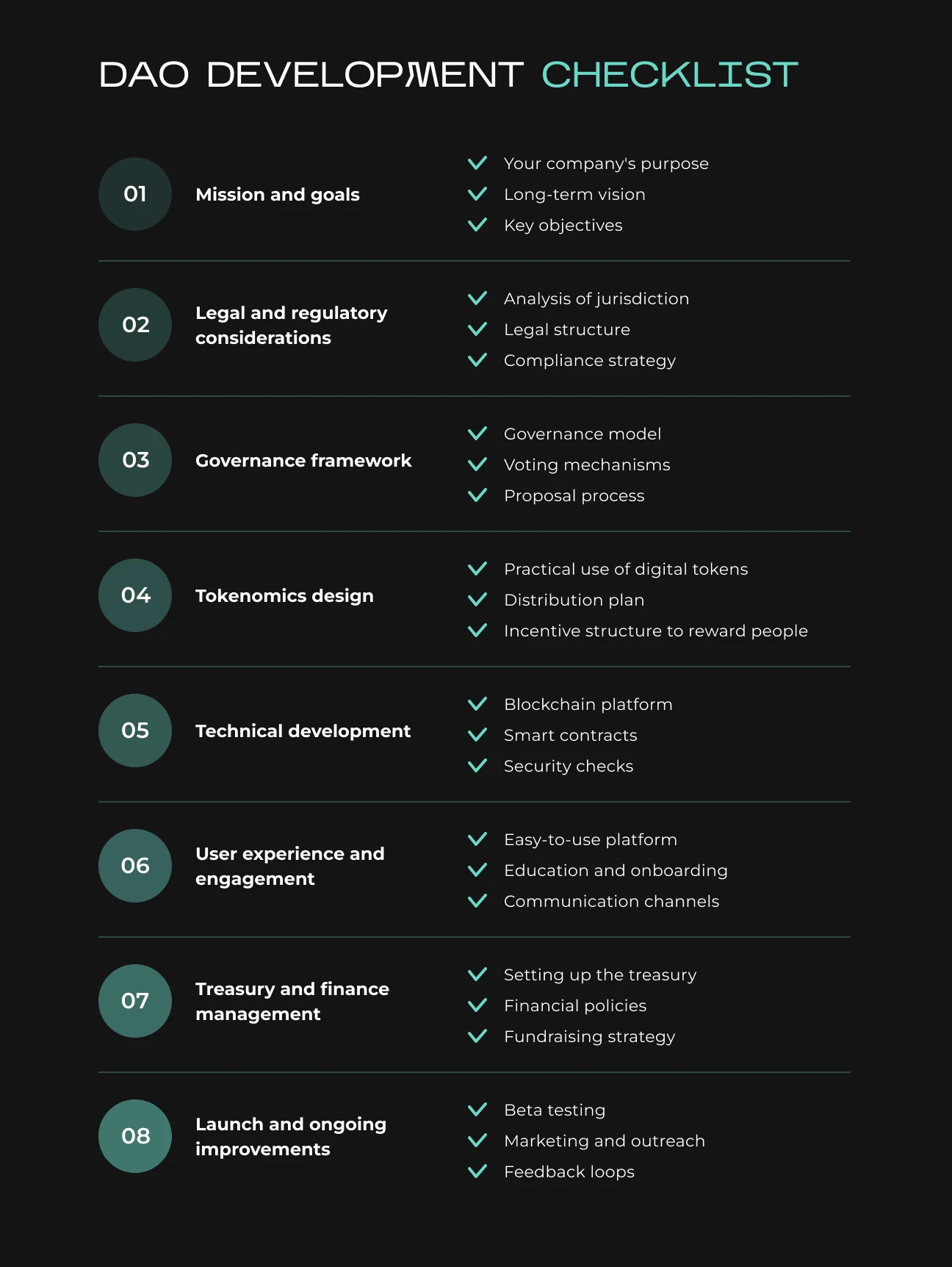
DAO Development Checklist
Here's a detailed checklist to help you develop a DAO system step by step, guiding you from concept to launch.
Mission and Goals
- Your company's purpose: explain the purpose of the DAO system and what issue it wants to solve or opportunity to pursue;
- Long-term vision: set a future-focused goal to guide the DAO’s growth and strategies. It can also motivate current and future members by showing them the project's potential impact and success;
- Key goals: determine specific, measurable goals to monitor progress and success. This will help you evaluate performance and make adjustments based on data.
Legal and Regulatory Considerations
- Analysis of jurisdiction: decide on the legal location for the DAO and research the relevant regulations. Different areas have their own laws affecting DAOs, like those about securities and taxes. Knowing these laws can help avoid legal issues when running a DAO;
- Legal structure: think about creating a legal entity, like an LLC, for liability protection. This structure also attracts serious investors and partners by showing a commitment to following the rules;
- Compliance strategy: create a plan to follow regulations on securities, anti-money laundering (AML), and know-your-customer (KYC), especially if you plan to issue tokens.
Governance Framework
- Governance model: choose a governance model, like direct democracy or representative governance, that fits the community's needs;
- Voting mechanisms: choose voting methods like token-weighted or quadratic voting. These methods influence decision-making and affect the organization's power structure;
- Proposal process: create a clear process for members to suggest and vote on changes in the DAO, letting community members actively share ideas and innovations.
Tokenomics Design
- Practical use of digital tokens: describe the roles of governance and utility tokens within the system. For example, governance tokens usually give voting rights, while utility tokens provide access to products or services. Knowing how each token works helps people understand their value and engage better with the DAO;
- Distribution plan: describe how tokens are shared among founders, investors, and the community. A well-balanced distribution plan avoids concentrating power and rewards early supporters;
- Incentive structure to reward people: create incentive systems, like staking, to keep the community engaged and committed to the DAO's success.
Technical Development
- Blockchain platform: choose a scalable and secure blockchain like Ethereum or Polygon. Each has its own unique features and tools. Your choice of blockchain platform impacts the speed of transactions, their security, and the overall user experience;
- Smart contracts: develop and test smart contracts to safely automate DAO processes. These contracts automatically enforce agreements and rules, which are crucial for DAOs;
- Security checks: perform audits to find and fix any issues before launching, reduce risks, and build trust.
User Experience and Community Engagement
- Easy-to-use platform: create a user-friendly platform for management and communication. A smooth interface eliminates barriers, making it easy for people to participate;
- Education and onboarding: offer tutorials to help new members understand and participate in the DAO;
- Communication channels: set up forums and social media for community interaction and support.
Treasury and Finance Management
- Setting up the treasury: create a secure system for managing funds, like using multi-signature wallets, to ensure they are protected from unauthorized access;
- Financial policies: set clear rules for budgeting, approving expenses, and reviewing finances to ensure transparent financial management;
- Fundraising strategy: develop a plan for raising funds. Consider options like funding rounds or token sales, and make sure to follow all the regulations.
Launch and Ongoing Improvement
- Beta testing: use beta phases to test the DAO platform and fix any issues before the official launch;
- Marketing and outreach: use marketing strategies to attract users and contributors and build a strong, active community;
- Feedback loops: gather regular feedback from the community to make improvements.
7 Steps to Build a DAO in 2025
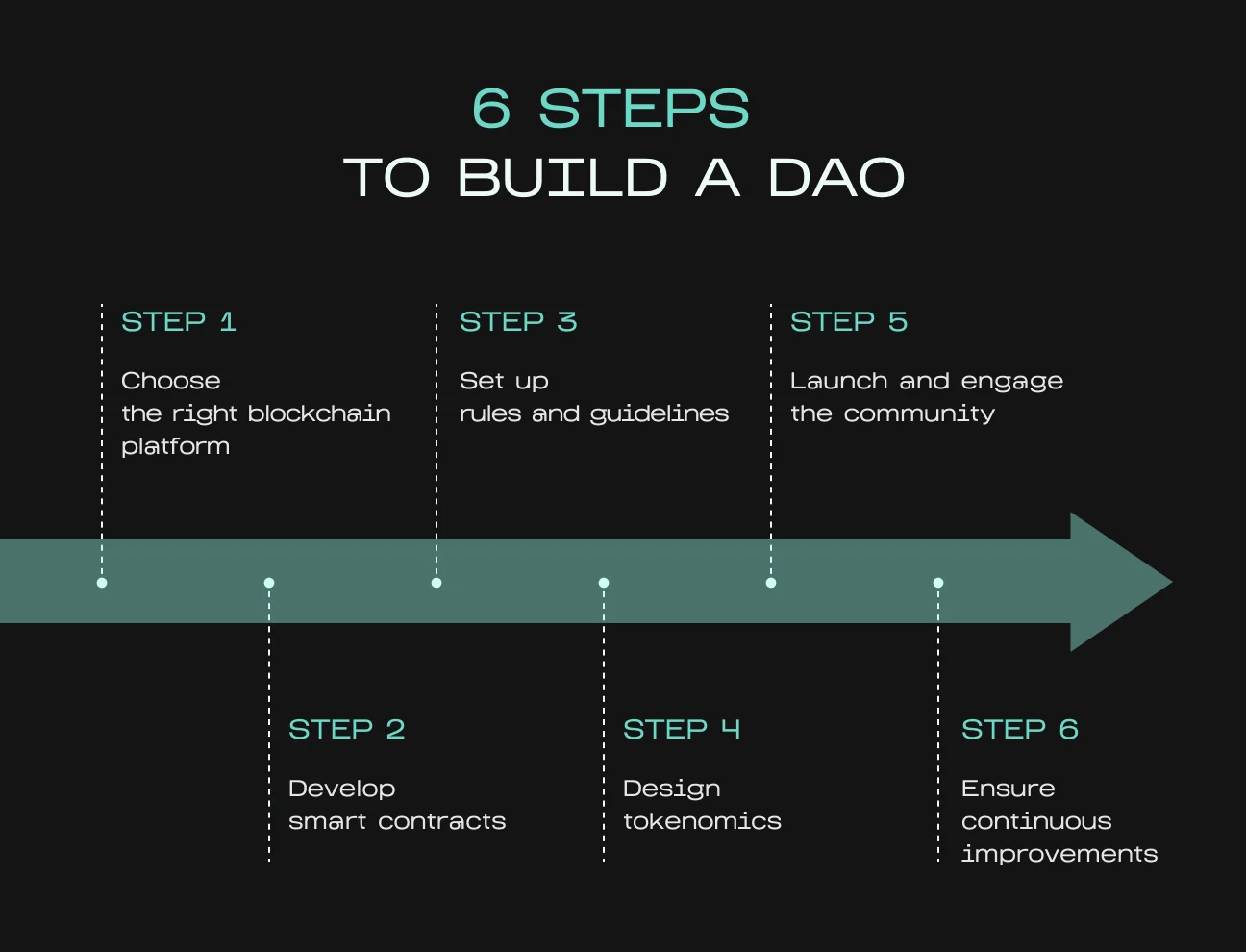
To successfully launch a DAO in 2025, there are key steps to follow. Since each blockchain platform has its own unique features, you'll need to tailor these steps accordingly. Here's a general guide on how to build a DAO on Ethereum, Solana, and Avalanche.
1. Choose the Right Blockchain Platform
When choosing a blockchain for your DAO, think about scalability, transaction speed, cost, security, and ecosystem support. Here are some pros and cons of popular platforms:
- Ethereum is great for decentralized apps due to its strong ecosystem, but it has issues with scalability and high gas fees;
- Solana is known for its high speed and low costs, though its support for decentralized apps is still developing.
- Avalanche lets you create multiple subnets, which is useful if your DAO needs custom networking solutions.
2. Develop Smart Contracts
Create smart contracts to set the rules and procedures for a DAO, and test them to avoid any weaknesses. Different blockchain platforms use specific tools and languages, for example:
- Ethereum uses Solidity as its main language, with lots of resources and development tools like Truffle and Hardhat;
- Solana uses Rust and C for smart contracts, focusing on speed;
- Avalanche supports Solidity through compatibility with the Ethereum Virtual Machine (EVM).
3. Set Up Rules and Guidelines
Define decision-making and voting processes that ensure inclusivity and fairness. When choosing a governance model, consider the differences in blockchains. For example,
- Ethereum offers tools like Snapshot for off-chain voting and Aragon for on-chain governance, which can be tailored to your needs;
- Solana offers quick transaction finality, ideal for real-time governance;
- Avalanche allows for high-throughput governance with flexible budgeting.
4. Design Tokenomics
Describe why tokens are important in your DAO, focusing on governance, utility, and incentives. For example, Ethereum supports creative token use in its large DeFi ecosystem. Solana offers low transaction costs that make small incentives possible. Avalanche's easy cross-chain features allow you to use assets and services from various networks.
5. Launch and Engage the Community
Create strategies to launch and engage your community using educational resources, forums, and incentive programs. Also, keep in mind that:
- Solana attracts different users by using its active NFT ecosystem and partnerships with gaming communities;
- Avalanche raises visibility and opportunities by partnering across various blockchains;
- Ethereum has a well-established community and uses platforms like Discord and Telegram for outreach and engagement.
6. Ensure Continuous Improvements
Keep your DAO updated by listening to community feedback and keeping up with new tech. You can use Ethereum's improvements like rollups and sharding for better scalability, or explore Avalanche’s fast adoption of new technologies and partnerships to remain competitive and innovative.
Whatever blockchain you choose, each has their own pros and cons for DAO development. Just be sure to adapt your strategy to the platform's features to increase your DAO's success and viability.
Partner with SapientPro to Build Your DAO Project
Creating a successful DAO means paying close attention to its legal, technical, and community aspects. This is why collaborating with experts like SapientPro is the right choice.
We're here to support you in developing your DAO on Solana, providing the technical expertise and strategic guidance you need.
Planning to Develop a DAO?
SapientPro's engineers will help you bring any idea to life. You'll get expert support.