All How to Build an AI Startup: Launch Guide and Checklist for 2026
Updated:July 27, 202615 min read


The surge in artificial intelligence can power an incredible wave of new startups. There’s no shortage of resources for entrepreneurs to begin innovative AI startups companies using generative AI or machine learning solutions.
Many founders are building AI products that meet genuine business needs. These are applications that make decisions for you, adjust to how you use them, and run complex business operations more efficiently than traditional software ever could.
Yet, even with this promise, the path to creating a successful AI startup involves significantly more than merely having a smart idea. What it does require is clarity of strategy, flexible talent, and a strong emphasis on scalability from the outset.
Check out this practical guide from SapientPro’s experts on how to start an AI company that delivers real value.
Why AI Startups Are the Current Trend in 2026
AI has come out of research to become common across all fields, from healthcare to automotive. It isn’t experimental anymore — like in the case of self-driving cars.
For example, Waymo in the United States provides more than 150,000 driverless rides a week.
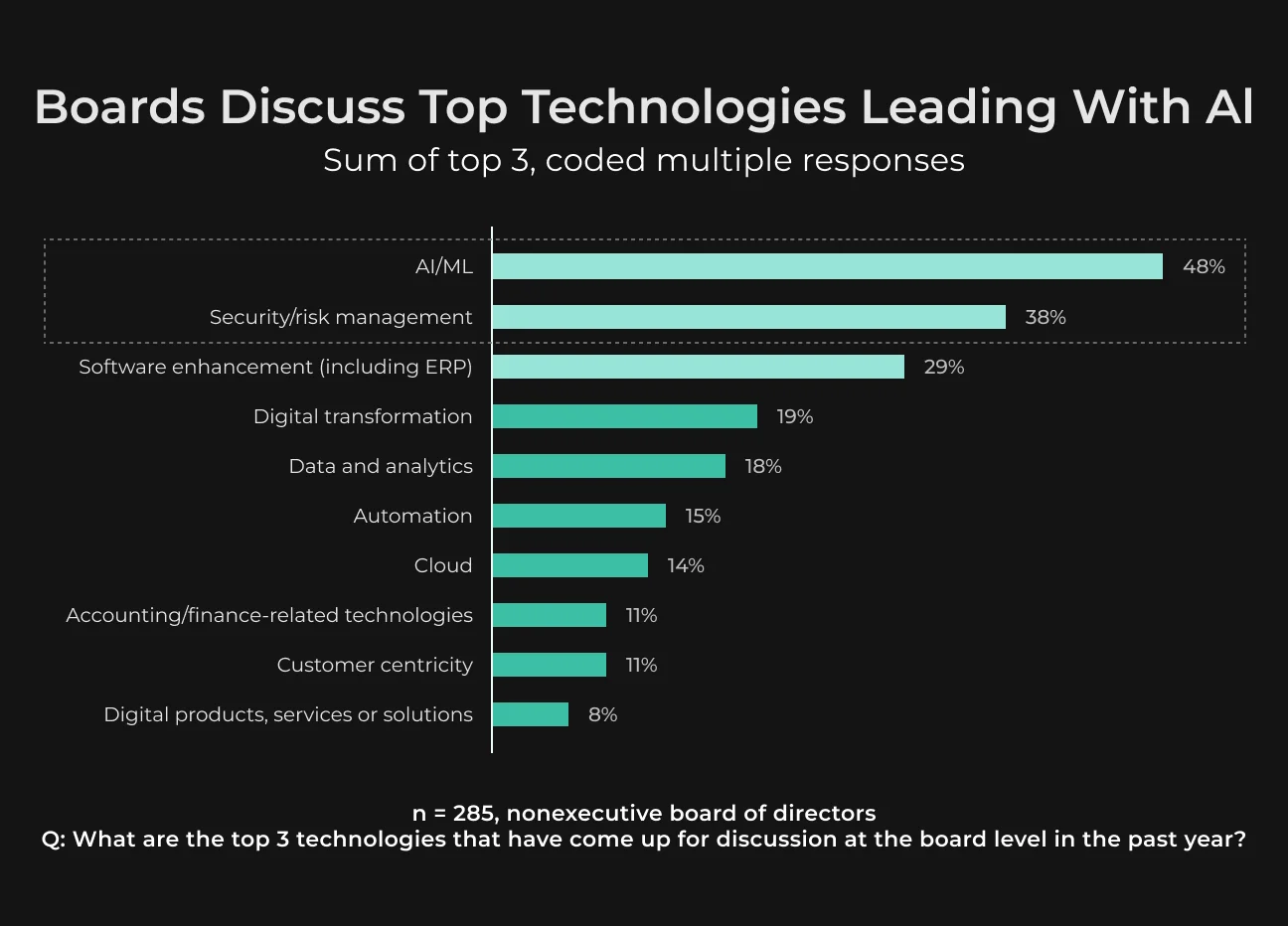
Some forward-looking companies, like Adobe and Salesforce, jumped ahead by investing in AI while it wasn't as mainstream as it is now. In 2026, more companies are expected to invest in and use AI, especially generative and agent-based AI.
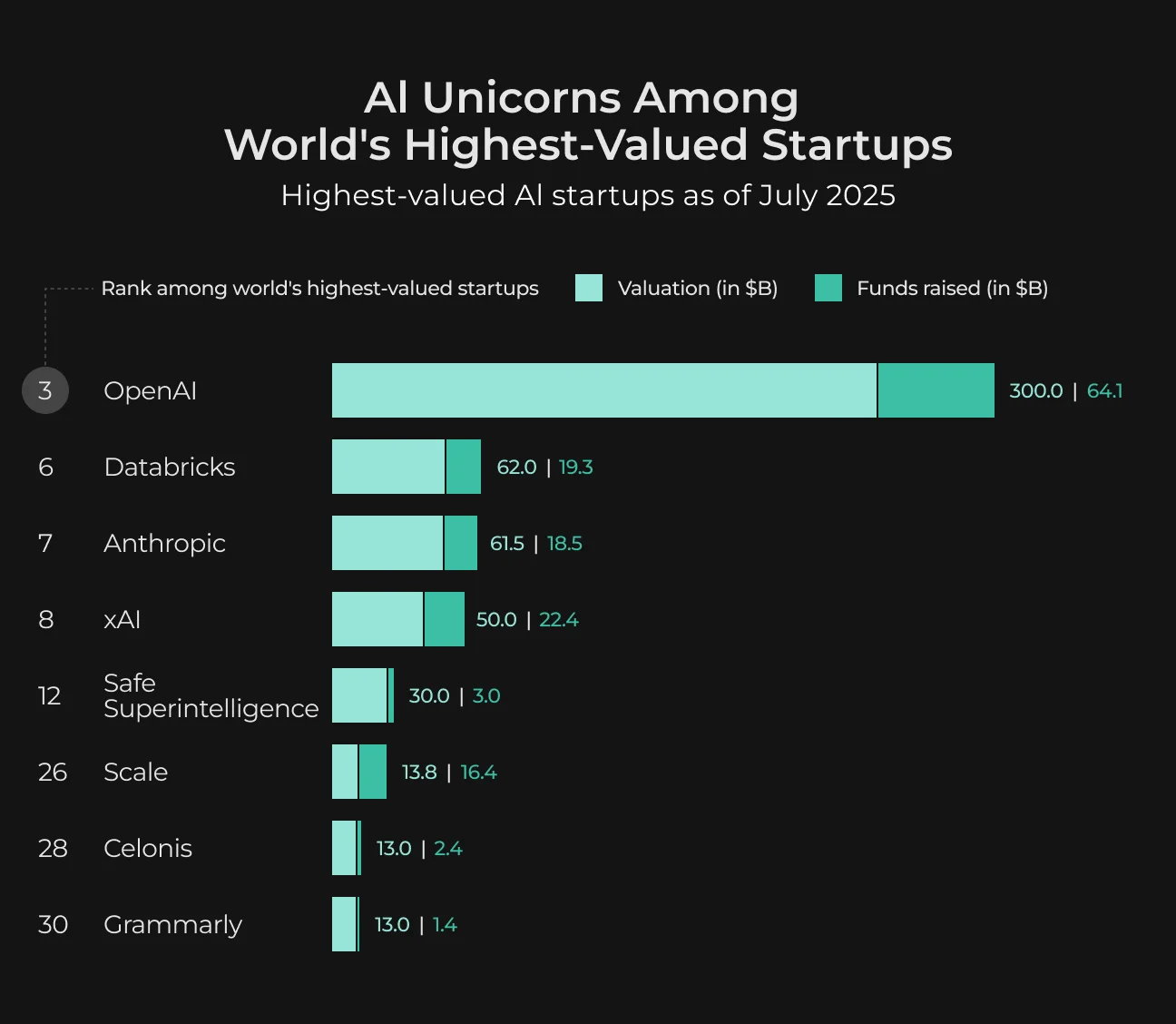
Artificial intelligence startups in Silicon Valley raised a record $150 billion in 2025, then surpassed that sum with $92 billion raised in 2021. OpenAI alone raised $40 billion, the biggest private fundraising of all time.
AI startups will also be a huge driver for new jobs, potentially creating 170 million new jobs while displacing 92 million existing ones by 2030.
In short, 2026 is supposed to be the year when software starts taking over full-work roles and when humans can concentrate much more on strategic thinking.
7 Steps on How to Build an AI Company and Profit
Launching an AI company is a challenging yet rewarding experience that will take planning, timing, and prudence to get exactly right. Here is an extensive guide that you can work with as a reference if you are looking to build a winning AI startup.
Step 1. Pick an Idea That Survives in the Modern World
Choosing the right idea is your first step to getting started with your AI startup. The idea should not only serve the market today but also look ahead to what will be needed.
You might go for something futuristic, like healthcare AI, predictive maintenance in manufacturing, or AI for the environment.
For even more ideas, check out these profitable AI business ventures from SapientPro's AI experts.
Validate Demand
To see if your idea is relevant, try interviewing customers, offering surveys, and analyzing the market. Start the conversation with your ideal customer as soon as possible to know what they lack in their life. And if they believe that their issue could be solved by your AI solution.
You can’t protect yourself from market risk without validating your idea with actual feedback.
Vertical vs. Horizontal Products
It's also fundamental to understand whether your product is a vertical or horizontal one. Vertical products cater to particular industries with deep solutions for niche problems. For example, financial fraud-detection systems that are designed specifically for banks.
Horizontal products, like data analytics platforms, serve more general markets and extract information from a range of industry applications.
Step 2. Define Your Product Strategy
Your product strategy will involve key decisions for you, like who your market is, what features you’re building, and where to allocate your resources. Your approach will work optimally depending on the goals you set.
Consider these startup models:
- Generative AI startup. If your product is all about generating new content, images, sounds, or similar items, invest in the most innovative tech and a user-friendly interface. This might serve creative industries like media or advertising;
- Machine learning startup predictive & scoring products. The impact of predictive analytics can revolutionize sectors like finance and healthcare. Your techniques should be of high accuracy and meet the industry standards;
- Hybrid AI startup. Mix and match technologies to provide multifunctional solutions, like matching generative AI with predictive. It's a balanced approach to various market needs, and it stresses the flexibility of your solutions.
Step 3. Build Your Data Strategy
A strong data strategy is the backbone of your AI company’s success. It requires information about data access and quality, as well as the ongoing optimization of your AI models.
Data Access and Rights
Be mindful of legal rights and customer consent before training or running data through the model. This might need data sharing understandings with service providers or adherence to privacy laws like the GDPR. Clear agreements can help avoid legal pitfalls later and build trust with users.
Data Quality and Coverage
Evaluate the quality and coverage of your data with powerful metrics. Ensure your dataset is a proper sample of the data you will see in practice – both common use cases, extreme examples, and long-tail scenarios.
Feedback Loops
Create feedback loops with product instrumentation and human-in-the-loop review. These models give label signals that are useful for fine-tuning your models. Also, don’t forget to keep your models refreshed frequently with new data to avoid drifts.
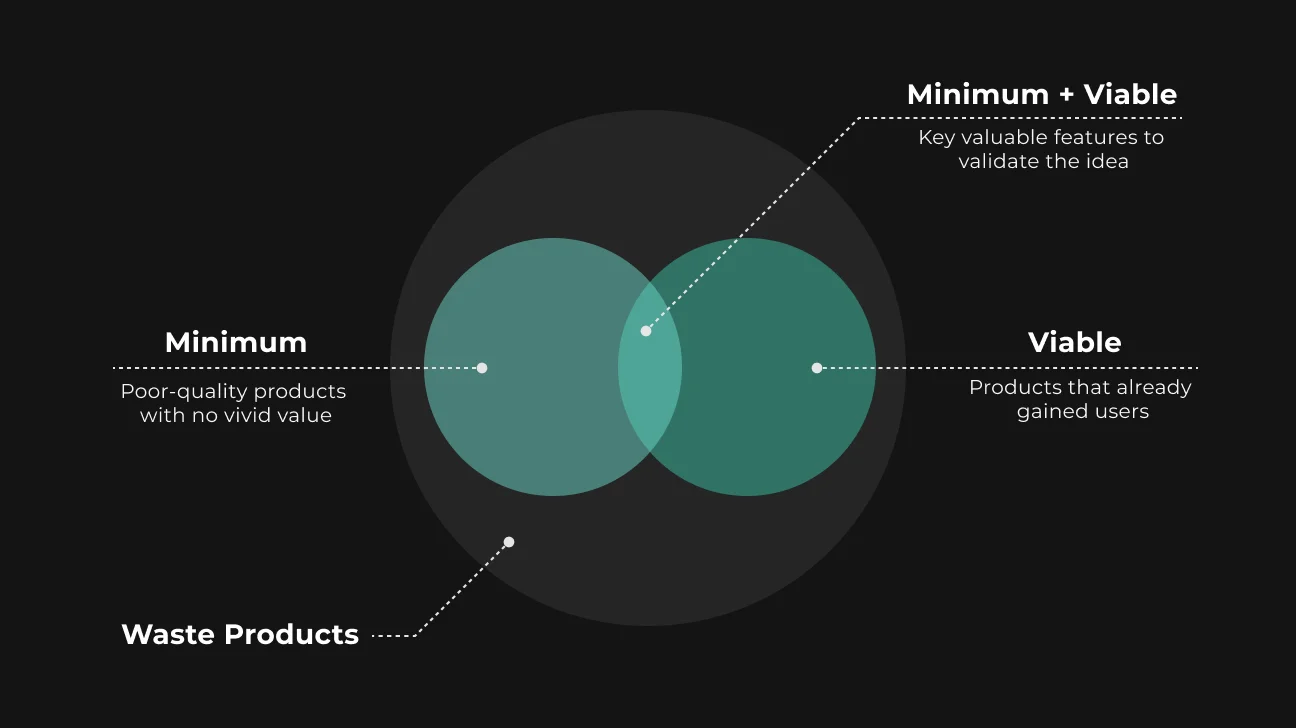
Step 4. Make the MVP Architecture for Your AI Startup Product
When developing your minimum viable product (MVP), you should have all the architecture to support your AI solution. That includes building a sustainable and secure architecture, keeping in mind security aspects. Standing this architecture up correctly on the first attempt is hard for a founding team on its own, and it is the reason many route the build through MVP development services that keep the AI logic under senior engineering review.
An MVP for an AI product will consist of the following key elements:
- API. The engine that connects your user to this AI service. It must be well-documented and high-performance to support effortless integration;
- Orchestration. This is responsible for moving information and performing operations in different parts of your system. It determines the order of tasks (whether one needs to run first or if they can all run at the same time);
- Vector store. These act like brains for applications that need to recall information and perform similarity searches, such as recommendation systems. Tuning a vector store properly is crucial for good performance.
- Guardrails. Set guardrails to govern the safety, ethics, and consistency of your AI model's results by controlling model behavior.
A Simple Reference Architecture for AI SaaS
When building your AI Software as a Service (SaaS), these are some things you should consider:
- Routing and retrieval. Routing of requests should be easy and efficient, following precise retrieval results;
- Versioning. The ability to keep versions of various models and prompt variants as you migrate changes or improvements;
- Observability. Implement localization, logging, and monitoring to observe the behavior of your system and spot any issues early.
Constant Evaluation
Create thorough tests that emulate a real-world environment before releasing your product. Define what success means in terms of performance for your models. Develop plans to avoid setbacks and keep quality high during updates.
Step 5. Team, Budget, and Timeline Planning
A solid organizational basis is key to helping you grow your AI startup. It requires finding the right team for the job, having a realistic budget, and developing a timeline with accuracy.
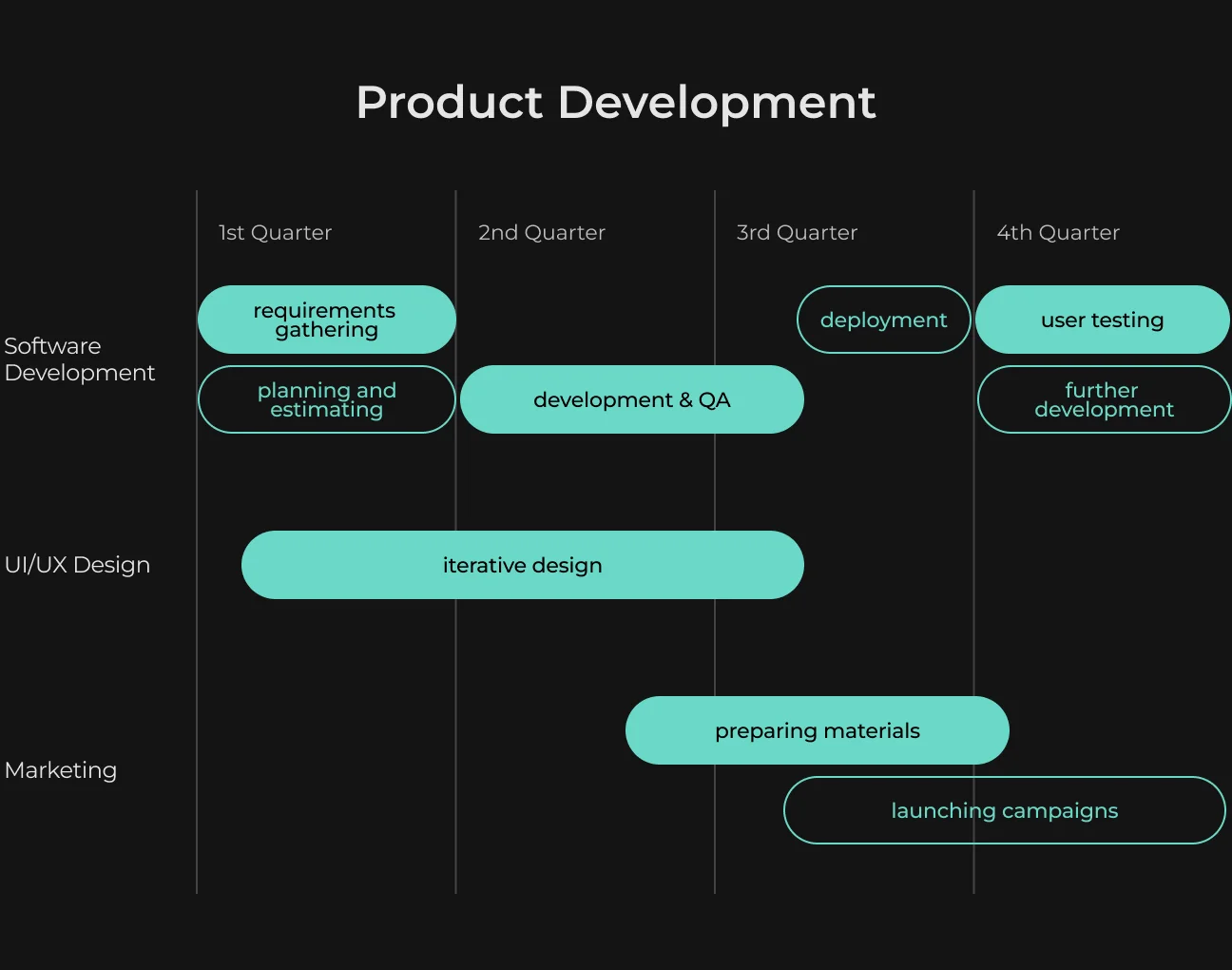
Minimum Team Roles to Launch
For a successful launch, you need an expert team that includes:
- Data scientists who will analyze insights from the data;
- Backend developers manage the logic, server-side, and database;
- Frontend developers create user-friendly interfaces;
- Product managers drive the development of products and ensure they align with business objectives;
- DevOps engineers handle integration and deployment so that your product is reliable and grows without fuss.
At SapientPro, we offer expert consulting services to support your team with AI project development and leadership.
Budget Planning for the Long-Term
Set a budget for all your costs, including operational and marketing. Consider other data points as well, like cloud-based service subscriptions, employment needs, or their spendings on R&D. It’s good to have some financial runway for any unanticipated pivots.
Development Roadmap
Create a progression or path to completion that details the process from idea to finished product. Break the process down into stages with objectives set to achieve the purpose for each stage of design. Consistently monitor the roadmap as you go along to stay on time and under budget.
Step 6. Compliance and Trustworthy AI
In the world of AI, compliance and trustworthiness are not a choice but a necessity. This requires a knowledge of regulations and how to start an AI business and deploy strong management processes.

The AI Act is a European regulation that sets comprehensive rules for artificial intelligence. It basically classifies AI applications into three risk levels. The first level includes systems with unacceptable risks, like government-run social scoring, which are banned.
The second level covers high-risk applications, like CV-scanning tools for job applicants, which must meet certain legal requirements. The third level consists of AI applications that are not prohibited or high-risk and which, in general, are unregulated.
The AI Act also defines responsibilities for several parties related to AI, like providers, users, importers, distributors, and manufacturers.
Also, try to set up your operational standards based on well-known frameworks like ISO/IEC 42001. This standard structures your AI work by setting quality and compliance standards.
Following these guidelines can help you build trust with your customers and partners, showing that you’re dedicated to creating safe AI technologies.
Step 7. Marketing and Promotion
How you market and position your AI startup is what makes the difference in its success. It would involve writing a good message, finding the right price, and achieving broad-scale distribution.
AI Feature vs. AI Product
Let's differentiate an AI feature from an AI product. An AI feature is something that we already have, but it has been boosted by AI. An AI product is not one product that solves all, but is more lean towards the built-in service.
Emphasize what is special about your product — be it faster performance, economies for the customer, or higher accuracy. Support your position with evidence, like practical examples or statistics.
Pricing Plan for SaaS
Choose a pricing model based on the value of your product and how customers are going to use it. For the AI SaaS, pricing may be on a per-user basis, usage basis (amount of data processed or AI used), or based on achieved results.
Think about how much your token costs and how it influences the profits. Set a price for your product or service that would allow you to gain profit but at the same time be affordable for the consumer.
Distribution and Partnerships
Plan your distribution through partnerships and integrations to get a wider reach. Marketplace or platform partners can be more effective than outbound sales. Choose partners that make good sense for your company.
See How SapientPro Secured €6M in Funding for Contentoo

AI Product Launch Checklist
Here is a detailed checklist that sums up the key stages we’ve just covered, to help you create an effective strategy for your AI product launch. Investors at seed and Series A read the technical claims as carefully as the revenue model, and few founding teams have the documentation ready. CTO as a service produces the architecture diagrams and security overview that survive that scrutiny.
| Idea validation |
|
| Product strategy |
|
| Data strategy |
|
| MVP architecture |
|
| Security measures |
|
| Compliance |
|
| Team assembly |
|
| Budget planning |
|
| Development roadmap |
|
| Pricing strategy |
|
| Distribution channels |
|
| Monitoring and feedback |
|
| Regulatory and compliance |
|
5 Best AI Startup Ideas in 2026
In 2026, AI won't just be used for something common. The real potential is in tackling everyday issues that need solutions. Here are some artificial intelligence startup ideas to consider.
Smart Urban Mobility Solutions
Cities will remain plagued by traffic jams and pollution in 2026. A startup that uses artificial intelligence for urban mobility might offer a great solution. It might forecast traffic and public transport with predictive tools and driverless cars.
The smart urban mobility market could grow at a CAGR of 21.50% during 2025 to 2034. Hopefully, this will reduce travel times by 15-20% in smart cities. There may also be more electric and self-driving cars, not to mention different types of personalized modes of transportation.
Cities can solve congestion, cut emissions, and open the way for low-cost, scalable transportation.
AI-Powered Climate Modeling
Many are focusing on climate change. That means there is demand for accurate models that can predict it and help reduce its impact. By 2050, the digitalization effect could reduce emissions by up to 20% in the three largest sectors — energy, materials, and mobility.
There might be an artificial intelligence startup that applies sophisticated algorithms to vast troves of data about weather patterns, helping governments and companies make more sustainable choices.
Specialized Visual Design with Generative AI
Though there are plenty of generic AI image tools available, many don’t work well for certain types of technical or specific visuals. It creates an excellent opportunity for startups to boost industries like real estate or manufacturing with low investment.
The focus here is on being accurate and following rules rather than creating impressive images.
AI-Powered Career Coaching
Traditional career coaching is expensive and time-consuming — it typically comes at an hourly rate, with the average price of $272 per hour.
With AI-powered career coaching, you never have to worry about managing your job search. It doesn’t just serve up a resume or beyond tips. It comes with resources to help you predict your skill gaps and how they match with current and future job openings.
Subscribers, for instance, can try out mock interviews and receive tailored learning plans or take a look at hidden job opportunities in niche markets.
AI Mental Health App
It is no secret that a primary issue with mental health care is the staffing shortage. Worldwide, on average, there are 9 mental health workers for every 100,000 people — but that figure is closer to 1 per 100,000 in low-income countries and more than 70 in high-income ones.
Artificial intelligence-powered mental health care could be anything from therapy to screening for conditions like depression or anxiety. Or, it can offer treatment in cases of post-traumatic stress or eating disorders.
You could also create a product specifically for women, single-parent families, teenagers, or other groups.
Partner with SapientPro to Build Your AI Startup
With a range of services that span the entire product development process, SapientPro is an ideal partner to accelerate your AI startup. Below is a more detailed overview of the services we offer:
- AI/ML development services.
SapientPro develops intelligent AI and ML solutions specifically for your business.
Our engineers can make custom AI applications for predictive analytics, natural language processing, or computer vision. If you already have a product but it doesn't include advanced capabilities, we can integrate AI features into your existing systems;
- MVP development.
Thinking about your market proposition and organizing all the components will help you succeed. SapientPro's MVP development services will help bring your AI product concept to life, get feedback, and test what works in the market.
Our rapid prototype process will turn your idea into something you can touch and play with before committing to full development. We keep your prototype ready to grow and expand as your business does;
- Product discovery & UX.
The partnership with SapientPro's creative teams provides your product with a focused and compelling vision through intuitive and easy-to-use interfaces.
You can also elevate your product with our 3D modeling and rendering. We provide photo-realistic, top-quality graphics that bring your product to life;
- Data engineering & analytics.
Making sense of data is central to AI. SapientPro excels in data engineering by establishing efficient data pipelines to collect, process, and store data securely.
We ensure high data integrity and quality, which is critical for the performance of AI models.
- Cloud & DevOps/MLOps.
SapientPro creates cloud infrastructure that can be adapted to suit the changing requirements of AI applications.
We have CI/CD pipelines for automatic testing and integration. So that new features could be added to production quickly and with confidence.
Our MLOps integrates easily into any stage of your ML model workflow, from development to production, ensuring smooth collaboration between operations and development teams.
Here are several case studies that showcase SapientPro's capabilities in action.
Contentoo
Contentoo is a content marketing platform that allows brands to access good-quality content without having to build their own full in-house team.
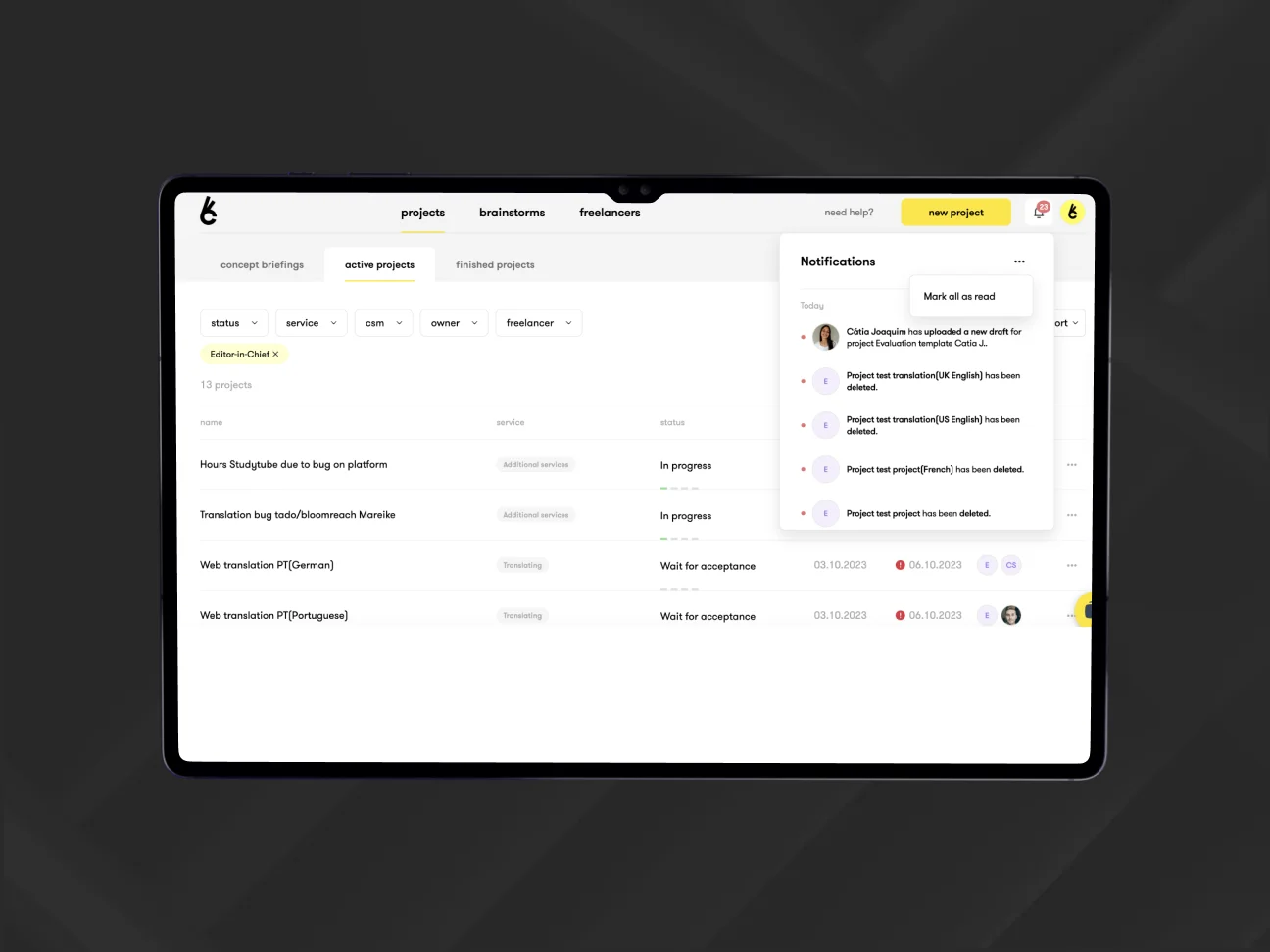
It played a critical role in letting one talent startup secure €6 million and grow its profit by 30% each year. By pairing marketing teams with expert writers, translators, and strategists, Contentoo makes it easy to produce articles, white papers, social media posts, and more.
AI Language Learning App
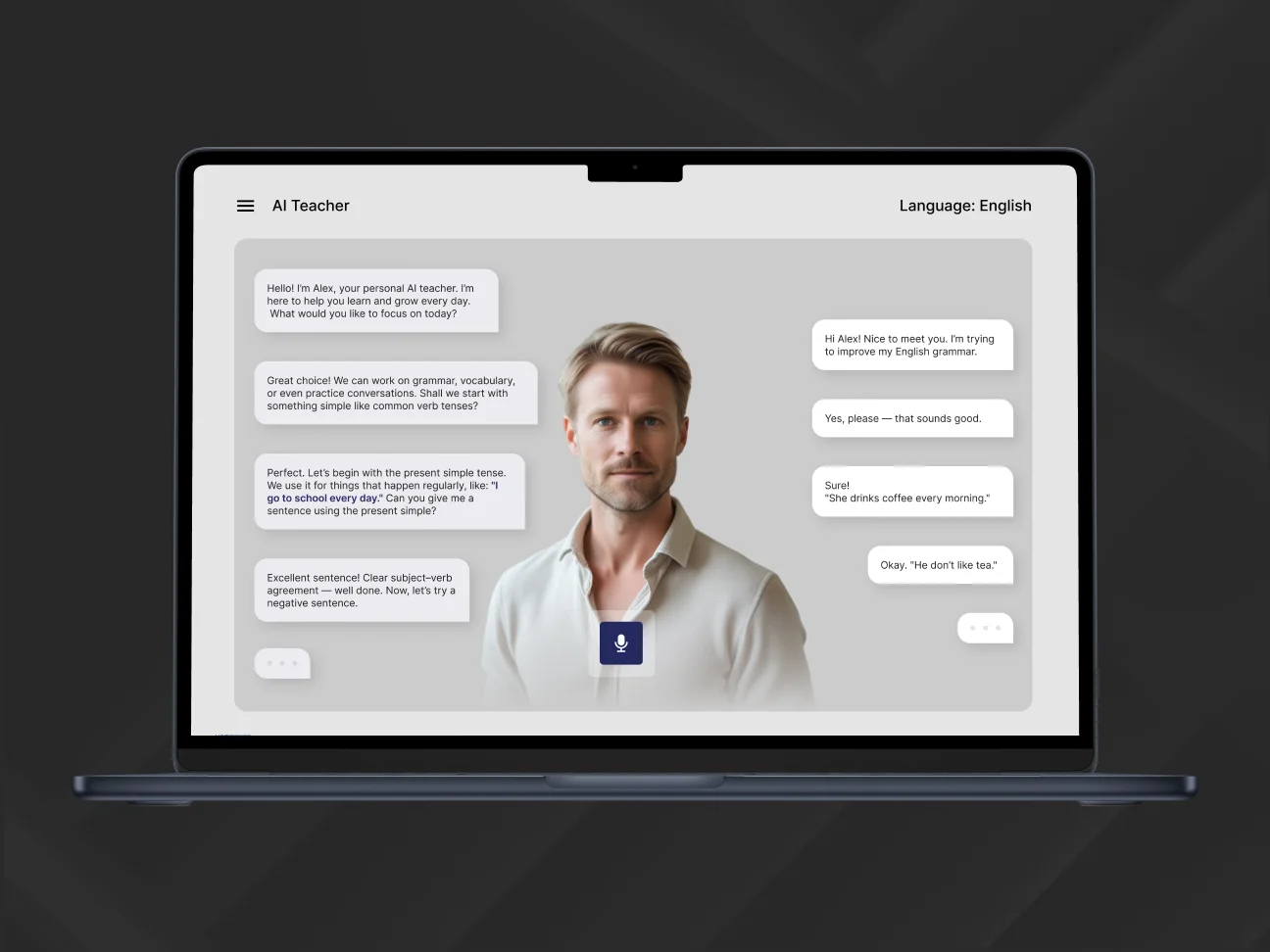
The SapientPro’s developers invented an AI teacher with voice recognition capability and interactive avatars for learning a language. This AI is suitable for all skill levels, offers real-time advice, and acts just like a live tutor.
Sprinkle
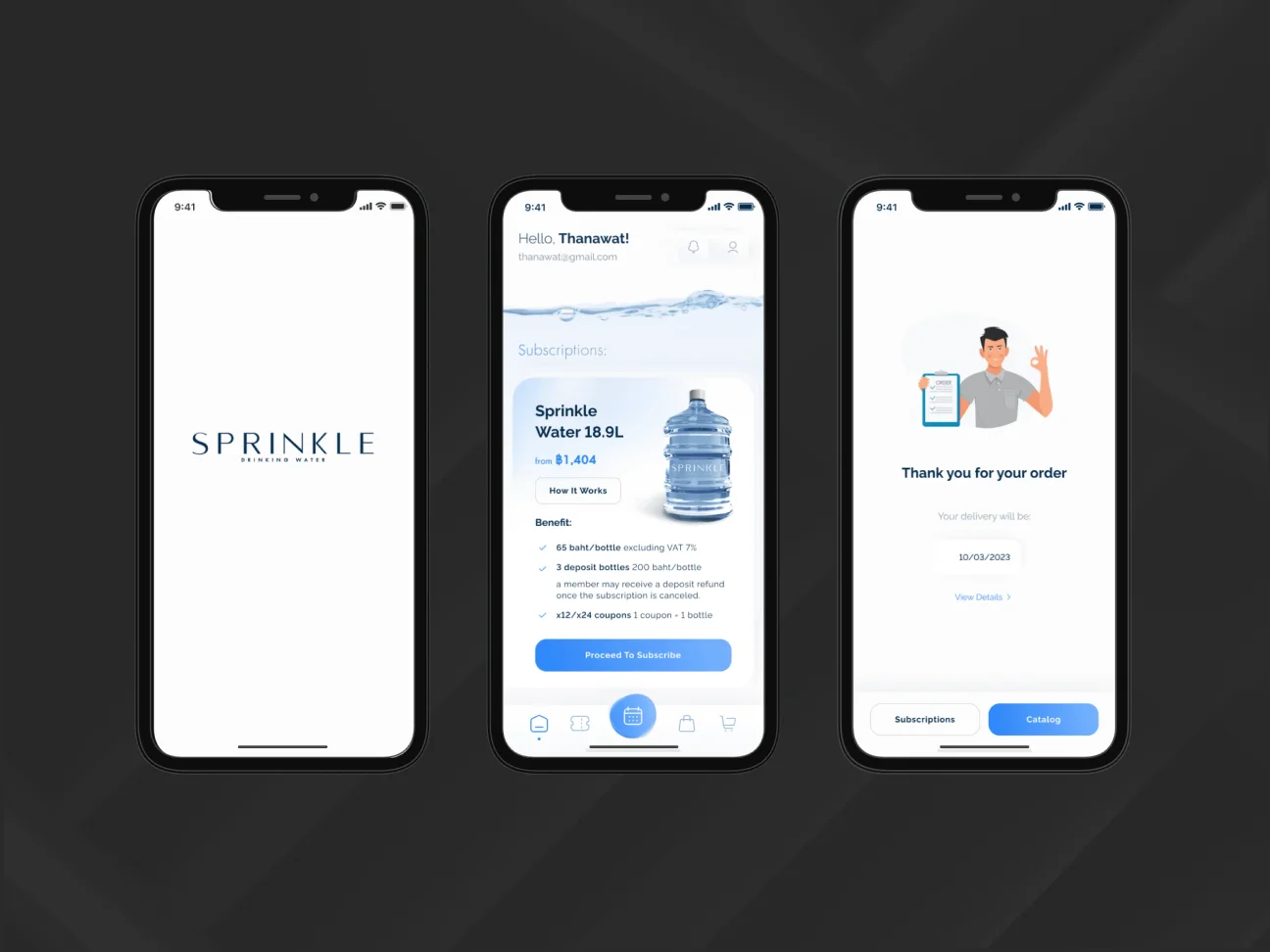
Sprinkle, which has been growing its in-house capabilities, collaborated with SapientPro to improve internal processes and create a better client journey. We transitioned to EspoCRM, which helped efficiently manage their logistics and subscriptions.
This change helped the company cut delivery costs in half and increase income by up to 45%.
In search of expert advice or top-notch tech support?
SapientPro’s team is eager to help your AI startup, from clarifying your idea to building the entire technology. Let’s bring your idea to life!
Build Your AI Startup with Professionals
SapientPro's team will provide all the AI expertise needed.