All How to Build a SaaS Membership Management Solution in 2026
Updated:April 29, 202615 min read


Modern businesses focus on building strong relationships with their customers and expanding their client base. However, managing multiple customers and plans manually can cause inefficiencies, billing errors, and lost revenue.
Management software is a game-changer because it keeps all subscription data in one place, preventing wasted resources and poor decisions.
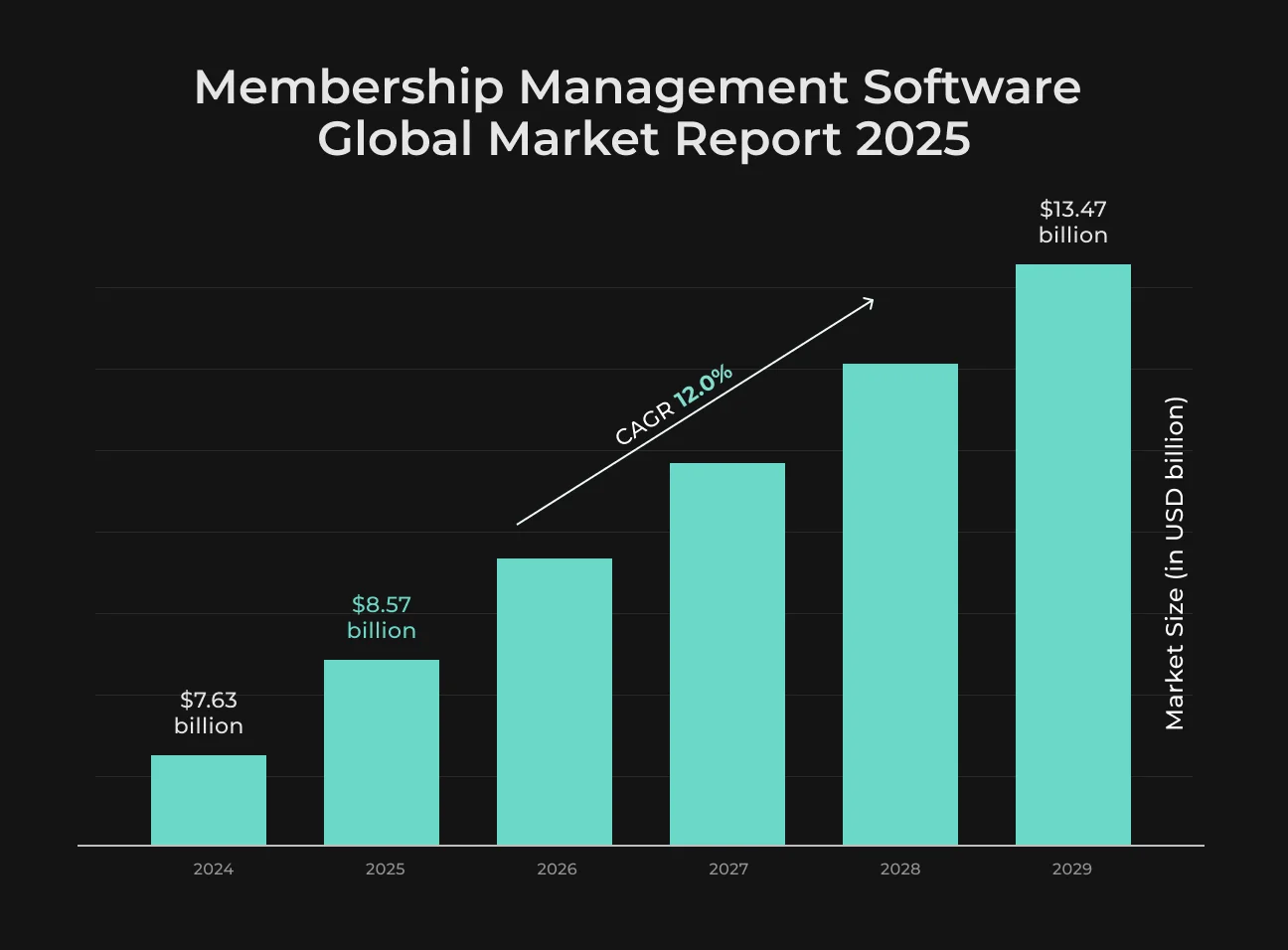
As a result, the market for membership management software is booming and is expected to reach $13.47 billion by 2029, growing at 12% annually.
This article explores the creation of SaaS membership management software, covering important features and technical details.
It also includes a step-by-step guide to building your own platform. You'll understand how to choose SaaS membership software to help your business grow successfully.
What is Subscription Management Software?
Subscription management involves effectively managing ongoing customer subscriptions. It streamlines managing customer profiles, updating agreements, billing, and automating renewals.
For businesses that depend on steady income, good subscription management is key to keeping customers happy and loyal. Poor management can lead to losing customers and revenue, so having the right tools is important.
Many software options are available to help manage subscriptions. These include:
- CRM systems for managing customer information;
- SaaS billing and invoicing for memberships;
- Subscription platforms that cover everything from signup to renewal.
SaaS subscription management software often combines these features. It automates tasks like onboarding, billing, invoicing, renewals, managing trial cancellations, and providing analytics. This helps businesses reduce customer loss, improve efficiency, and boost recurring revenue.
The Membership Economy in 2026
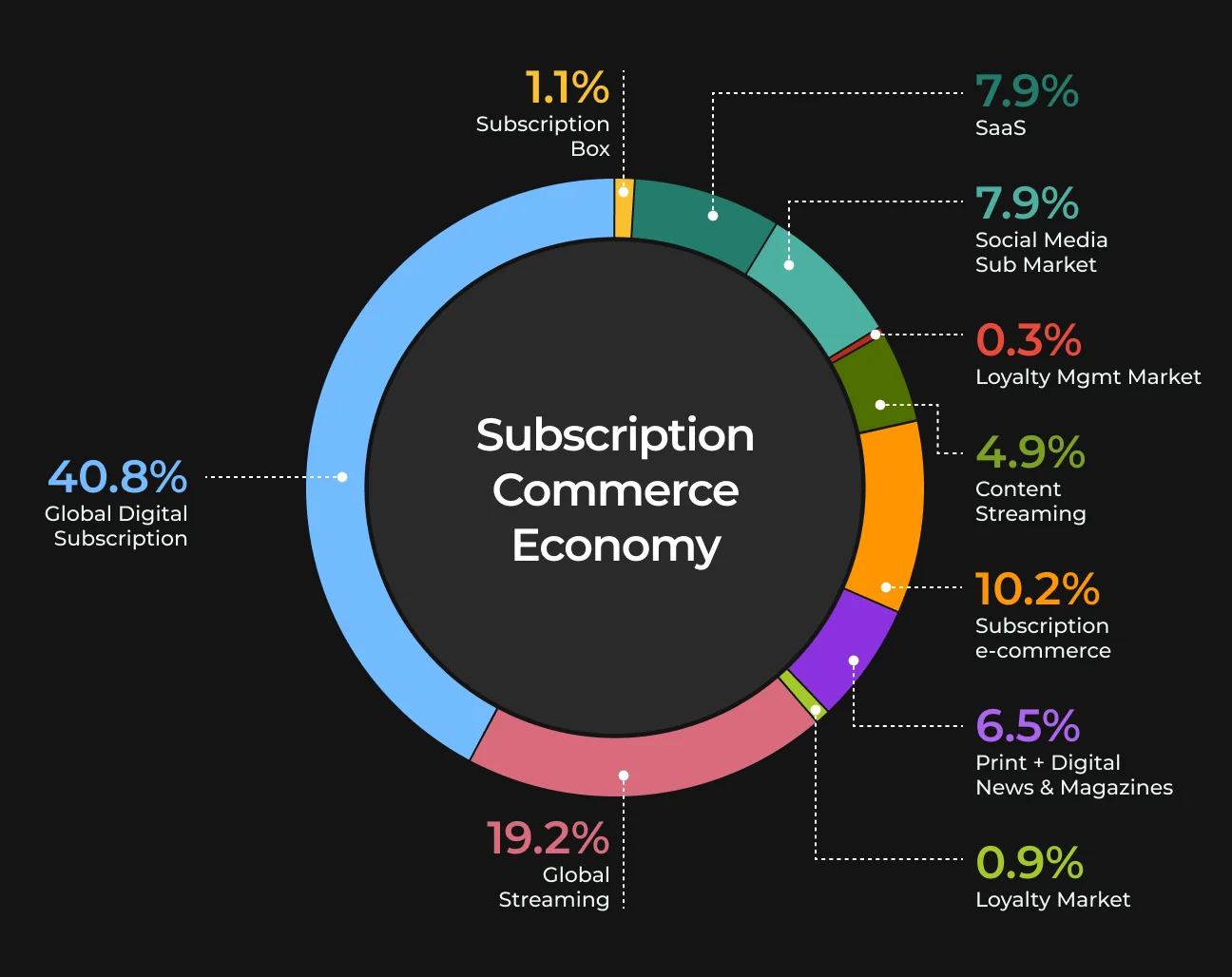
Subscriptions have transformed the way people access products and services, making it easy to enjoy what they love without interruption. For businesses, this means a steady and profitable income. By 2028, subscription economy revenues are projected to reach $996 billion, a 68% increase from $593 billion in 2024.
We've gathered some key statistics for 2025. Check out these numbers to see where the subscription economy is headed.
- Over the past ten years, the subscription economy has grown by 435%. It's predicted to reach $1.5 trillion in 2025. This shows that it's not just a passing trend and will continue to thrive;
- Basically, 75% of direct-to-consumer businesses will offer subscription services by the end of the year. Many industries are shifting to recurring revenue models, with consumer-focused businesses at the forefront;
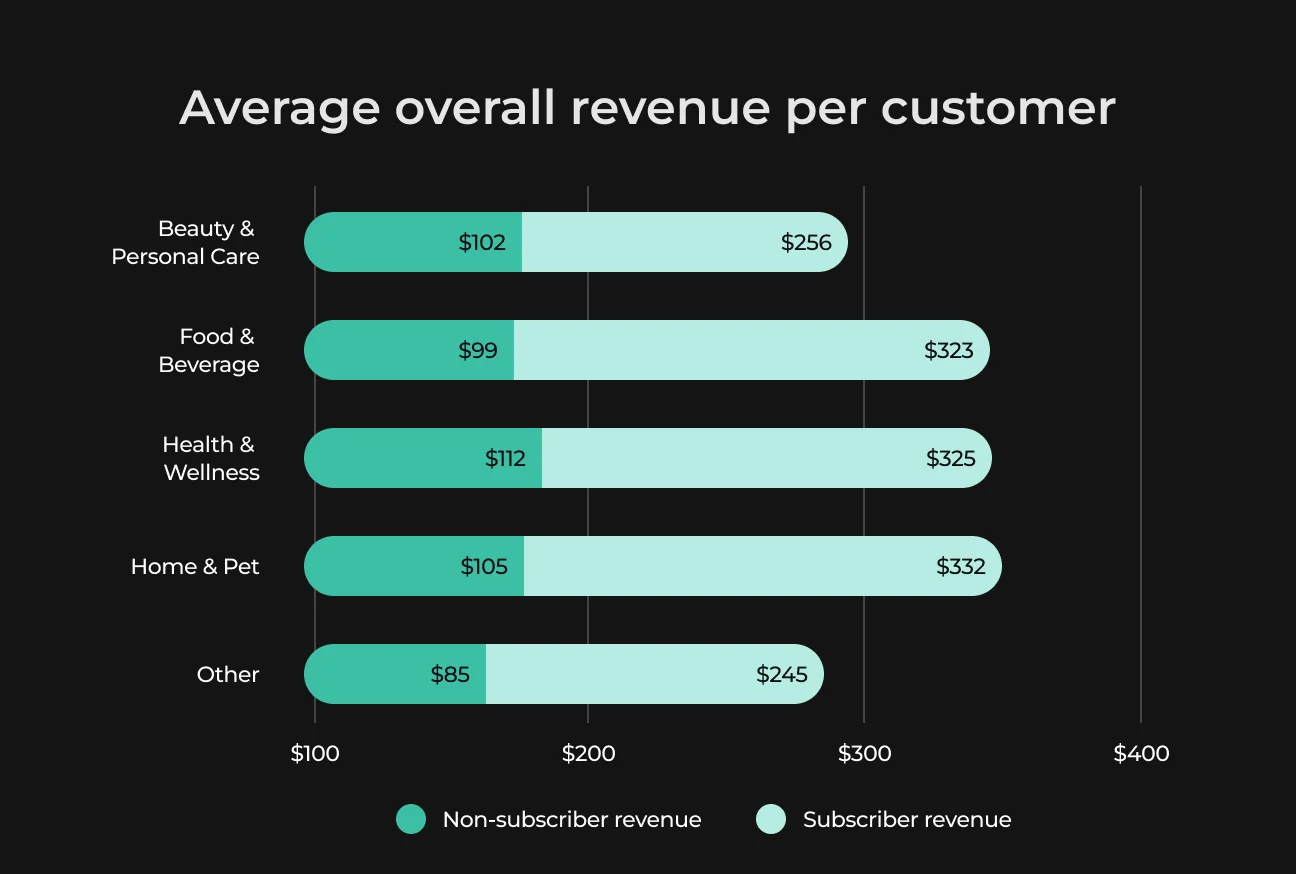
- Between 2012 and 2018, subscription businesses increased by over 300%. The Home and Pet industry stood out, earning an average of $332 per customer, more than double the $105 that non-subscribers spent;
- In 2025, 77% of media leaders believe subscriptions will be vital for their companies. Subscribers are 18 times more valuable than anonymous users. Their value increases by 169% when you add in revenue from data and ads in newsletters and apps;
- Over 83% of subscription businesses have invested in AI or plan to. Of these, 33% use AI for choosing and creating content.
Subscriptions benefit both consumers and businesses. Customers pay only for what they use, which can save them money over time. Meanwhile, companies gain a steady income by keeping customers engaged and loyal.
This system helps both parties succeed in the expanding subscription market.
Must-Have Features of a SaaS Membership Platform
Choosing the right SaaS membership platform for your business can sometimes be tough given so many available options. The goal is to find software that supports your business growth and keeps you competitive.
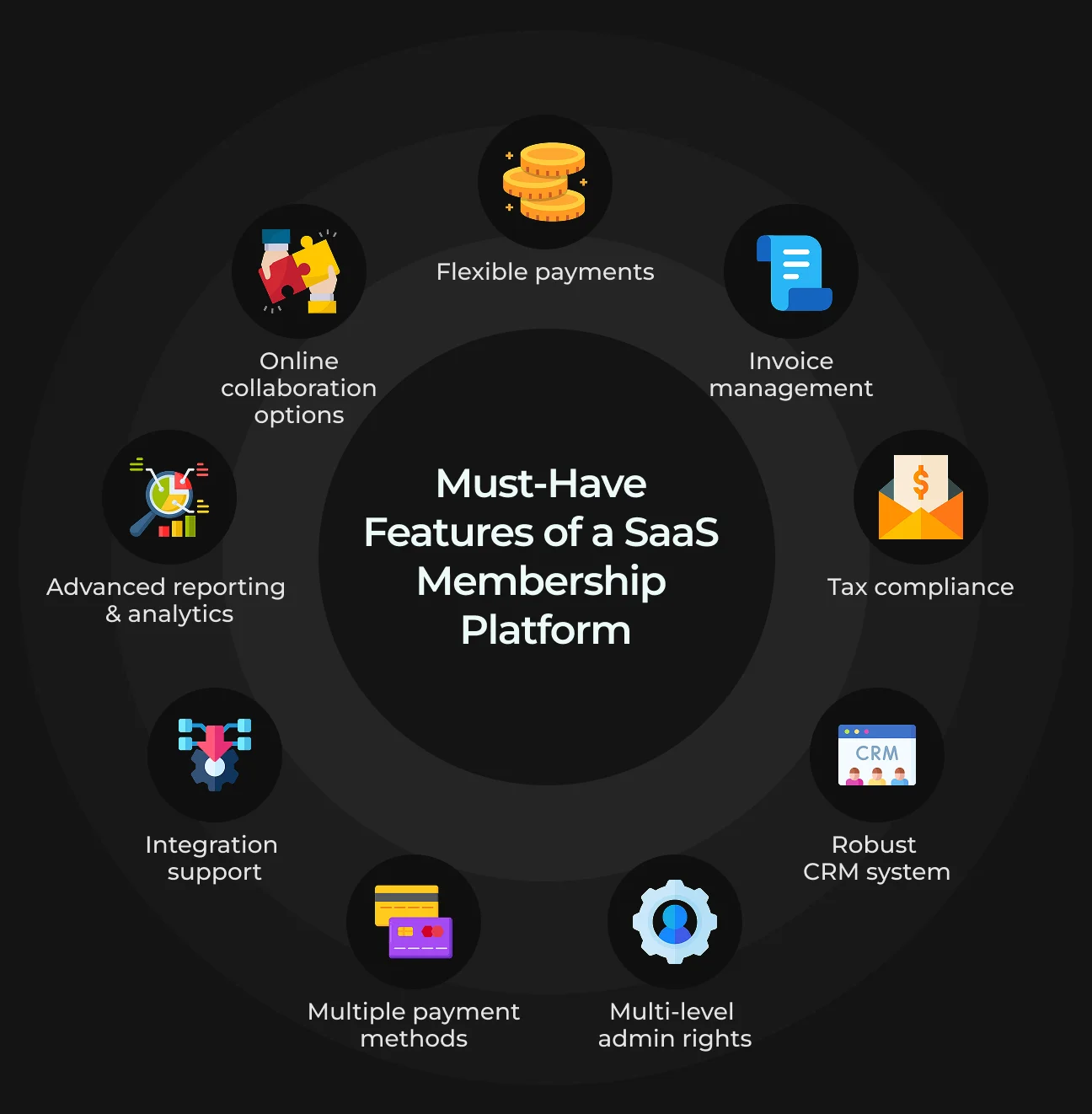
Here are some key features to look for in a SaaS membership platform:
- Flexible payments: your subscription management software should allow you to offer various plans, discounts, pricing models, trial periods, and free options. Also, choose a solution that helps you easily manage pricing levels and quickly create promotions and plan changes;
- Invoice management: find SaaS software that offers automatic invoicing to ensure timely payments without using extra platforms. It should manage complex account structures and allow you to merge or split invoices easily. Also, customizable invoice templates let you create unique invoices for different business units or regions;
- Tax compliance: for tax compliance, choose SaaS software that automatically manages taxes no matter where you're working. It should connect easily with external tax systems to calculate sales tax, GST, VAT, and other global taxes, ensuring you meet all tax regulations;
- Robust CRM system: integrating SaaS with CRM helps nonprofits link all donor and volunteer information. It keeps member details organized, making it simple to find specific people, groups, track payments, manage different types of revenue, and improve communication. It also helps track member involvement and predict when they might leave;
- Multi-level admin rights: multi-level admin rights let you assign access based on different roles and improve security. You can give users specific permissions, like membership approval or accounting access, which speeds up tasks and enhances accountability;
- Integration support: your subscription management software should integrate easily with your other systems, like CRM, ERP, and finance tools. This integration will streamline your workflow, reduce manual tasks, and save costs;
- Advanced reporting & analytics: most SaaS software comes with basic reporting, but it's best to choose one that also offers detailed business intelligence. Look for options with custom reports, dashboards, and analytics in addition to standard reports;
- Online collaboration options: effective collaboration tools allow team members to communicate, share information, and make updates in real time. They speed up tasks and enable easy collaboration from different locations.
Test the program before you buy it to make sure it’s the right choice for you. m You can request a demo or use the free trials many providers offer.
Technical Architecture of a SaaS Membership Platform
Building a robust SaaS membership platform requires a reliable technical framework to take over key tasks like SaaS membership user engagement, payment processing, content delivery, and analytics tracking. Let's take a look at the main parts of this framework and how to ensure the system can grow and remain accessible.
Basic Tech Stack
A SaaS membership platform's success depends on its tech stack, which should meet current needs and allow for future growth. This basic tech stack consists of:
- Frontend: build using JavaScript frameworks like React, Angular, or Vue.js to provide a smooth, user-friendly experience for members;
- Backend: choose languages like Node.js, Ruby on Rails, Django, or Java Spring that manage server-side processes efficiently and support RESTful API architecture;
- Database: combine SQL databases like PostgreSQL or MySQL with NoSQL options like MongoDB for flexible data management;
- Authentication and authorization: use OAuth and JWT (JSON Web Tokens) for secure user access and permissions;
- Payment gateway: work with services like Stripe, PayPal, or Square to guarantee secure payment processing.
Multi-Tenant Model
The multi-tenant model is key to SaaS applications since it allows one software instance to serve many customers efficiently. Here are the available options:
- Single database, shared schema: all tenants use the same database and schema, with unique IDs separating their data. It's a cost-effective and easy-to-manage system;
- Isolated data access: it's important to ensure each tenant's data is private and can't be accessed by others, which is achieved by using logical isolation;
- Custom configurations: tenants can make minor customization in SaaS membership tools to meet their needs without impacting others.
Data Flow
For a great user experience and stable system, smooth data flow is essential and relies on three key components:
- User requests: user actions go through the frontend and send data to the backend using API calls, which keeps response time fast and minimizes delays;
- Centralized logging: all user actions and system operations are logged in one place, making it easier to troubleshoot and audit;
- Data synchronization: real-time updates with WebSockets or server-sent events keep the platform up-to-date during user sessions.
Scalability and Availability
Keeping the platform scalable and always available is key to retaining user trust and managing growth. Here's how to achieve it:
- Horizontal scaling membership services with SaaS: use container tools like Docker and orchestration tools like Kubernetes to scale the app across several servers easily;
- Load balancing: use load balancers to distribute traffic evenly across servers, making resource use efficient and preventing any server from being overloaded;
- Disaster recovery: set up automated backups and data redundancy to quickly recover from data loss;
- Content delivery networks (CDNs): use CDNs to deliver content closer to users, reducing delays and speeding up loading times globally.
Building a SaaS membership platform is more than just tech work. It's also about making a reliable, flexible, and user-friendly space. A SaaS product can effectively meet user needs and grow easily by using a multi-tenant model, setting smooth data flow, and ensuring scalability and reliability.
If you need help with your SaaS platform, contact SapientPro for professional advice. Our expert team is ready to help you navigate technical challenges and offer tailored solutions for your business.
Pricing Models for SaaS Membership Platforms and ROI Modeling
Effective pricing strategies are key for a SaaS membership platform to attract and keep customers while maximizing revenue. Here are some common pricing strategies and factors you should consider for ROI modeling:
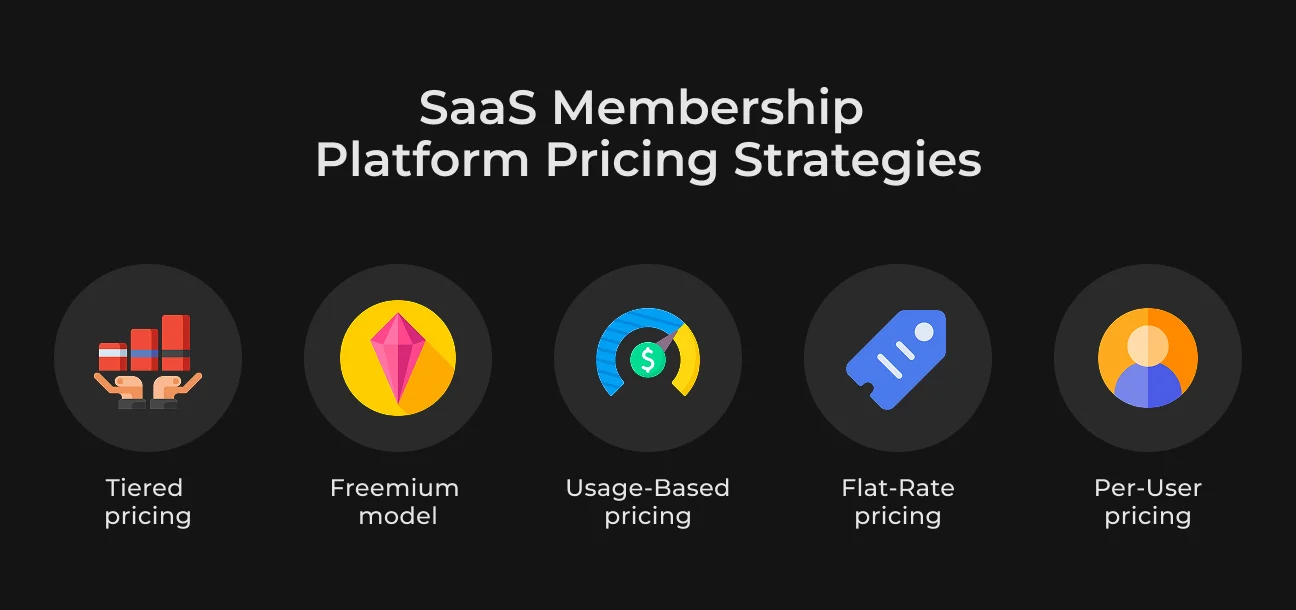
Tiered Pricing
Tiered pricing models offer different pricing levels based on features, usage, and access. This way, customers can choose a plan that best fits their needs and budget. This approach attracts a variety of people, from casual users to large businesses, and offers an easy way to upgrade.
To evaluate the return on investment, you can study how users behave in different tiers to find upsell opportunities and adjust features for the most perceived value.
Freemium Model
A freemium model offers a basic version of a platform for free, while charging for premium features. It easily attracts users and helps build loyalty, potentially leading to paid upgrades over time.
You can monitor how many users switch from free to paid plans and compare the costs of supporting free users with the income from paid subscriptions.
Usage-Based Pricing
Usage-based pricing charges customers according to how much they use the service, like the number of users, transactions, or resources. This approach lets users pay just for what they use, aligning cost with value. By tracking usage trends, you can predict revenue and adjust prices if usage changes a lot.
Flat-Rate Pricing
Flat-rate pricing means you pay one price for all features, no matter how much you use them. This model is simple and predictable, which makes it easier for both the provider and the customer to manage budgets.
To ensure profitability, just check if the average usage of customers supports the price and factor in any additional costs.
Per-User Pricing
Per-user pricing charges a fee for each user, which makes it simple for organizations to estimate costs. As a client organization grows, this pricing model adapts and offers predictable revenue.
Now, let's go over the key factors for effectively modeling ROI for a SaaS membership platform:
- Customer lifetime value (CLTV): determine how much money each customer makes for the business, minus the costs of bringing them in and serving;
- Customer acquisition cost (CAC): add up the expenses of attracting a new customer, including marketing, sales, and onboarding;
- Churn rate analysis: track how often customers stop using your service, understand the reasons, and adjust your strategies to retain them;
- Trial conversion rates: check how effectively free trials convert to paying customers and enhance your onboarding to increase this rate.
For more help with these strategies and custom modeling for your platform, reach out to SapientPro. Our experts can offer personalized advice and solutions to boost your business strategy and financial results.
7 Steps to Develop a SaaS Membership Management Platform
Building SaaS membership management automation might seem complex, but following these steps makes it much easier.
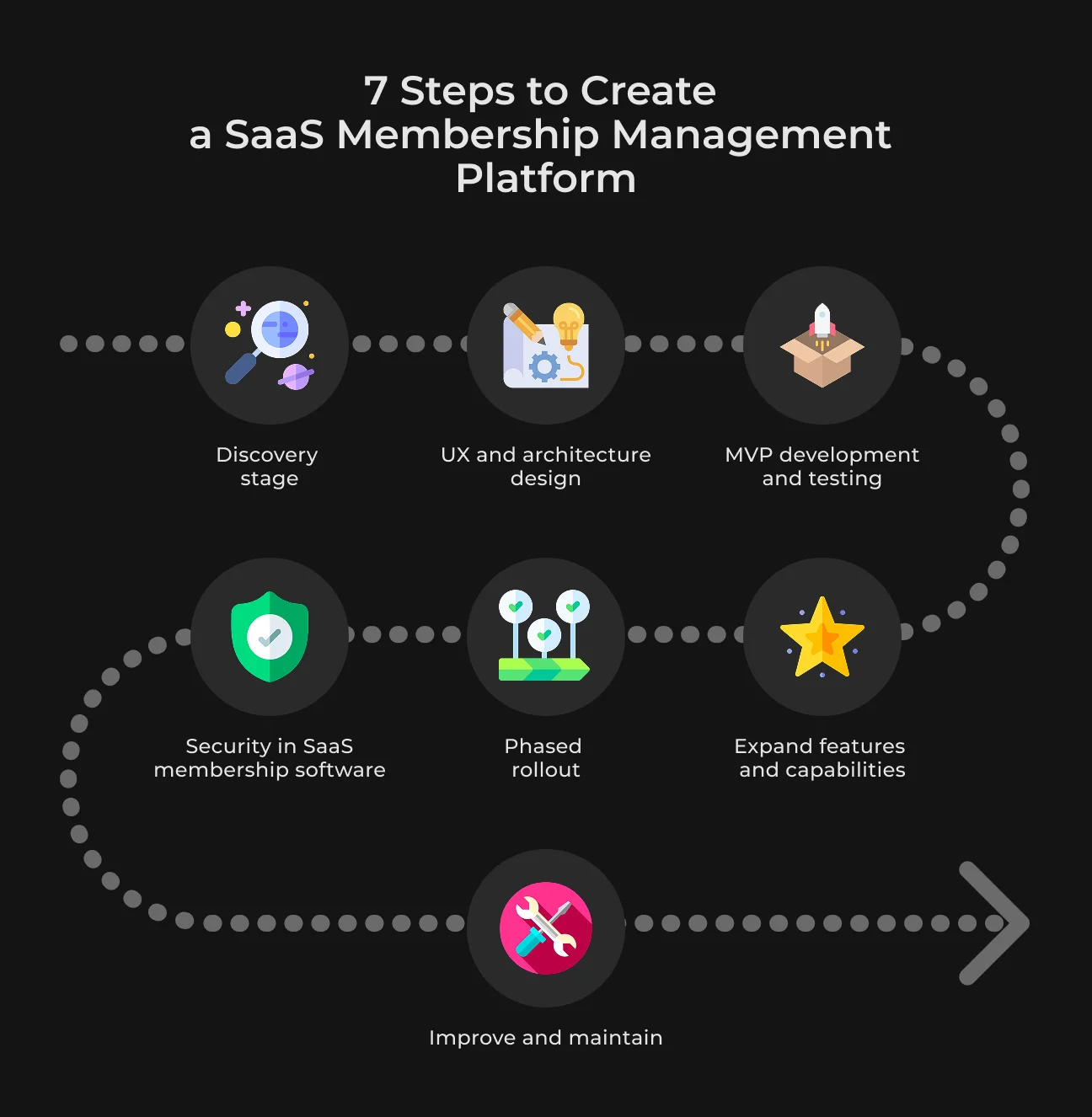
1. Discovery Stage
Each business has specific characteristics that define its target audience. Before creating a custom subscription management software, think about who you're trying to reach. Research the subscription market to find opportunities or gaps. Gather information on user needs and plan a solution to address current market challenges.
2. UX and Architecture Design
Keep your focus on user experience and solid architecture to design a successful membership platform. Begin with thorough user research to understand your audience's needs and challenges. Develop user personas and journey maps to picture how people will use the platform.
Sketch wireframes to outline the basic design and interface. Then, build interactive mockups to simulate the user experience for early feedback from stakeholders.
3. MVP Development and Testing
This product version provides an easy way to manage your custom subscription software. It includes key features for your Minimum Viable Product (MVP), allowing you to test the software with real users and collect feedback for improvements.
Also, you can find and fix any issues or bugs at this point. Listening to user feedback is important to identify which new features could improve the software.
4. Security and Compliance Integration
Because the platform will deal with sensitive personal data and financial transactions, it's crucial to include strong security measures and follow important regulations. This involves:
- Using SSL/TLS to protect data during transmission;
- Setting up role-based access control to ensure only authorized users can access specific features;
- Following regulations like GDPR for data protection and privacy, and PCI DSS standards for secure transactions.
5. Phased Rollout
Implementing a phased rollout reduces risk and allows you to early collect user feedback. You can start with a private alpha phase, where a small group (like internal users) tests the platform to catch major issues. Then, move to a wider beta release to involve real users in testing.
Deploy the platform in stages, gradually adding more users. This approach helps monitor system performance under increasing loads and make adjustments before the full launch.
6. Expand Features and Capabilities
Once the platform is stable, you can focus on adding new features to provide more value and remain competitive. Collect real user feedback to know which features to focus on to meet new demands.
Also, use analytics in membership management software to see how users engage with the platform. This information will guide you in making informed decisions to improve and expand your SaaS solution.
7. Improve and Maintain
Keeping your platform successful is crucial in a changing market. Here are some simple ways to regularly improve and maintain the quality of your software:
- Regular SaaS upgrades and updates for membership tools: keep the platform updated to include new tech and quickly fix security issues;
- Boost performance: use monitoring tools to find and fix slowdowns, ensuring fast and reliable service for users;
- Customer support in SaaS platforms: offer strong customer support and training resources to help users easily navigate the platform.
Following these steps will help you build a standout SaaS membership platform.
Best Membership Management Tools
Let’s now check out some top SaaS platforms for managing memberships.
Wild Apricot
Wild Apricot is a membership management software tailored for small associations and nonprofits. It's a cloud-based membership management solution that supports website management, event registration, and communication with the member community.
Pros:
- User-friendly interface with drag-and-drop features;
- Various features like a built-in website builder and event management tools;
- Flexible membership levels and automatic renewals.
Cons:
- The cost might be high for smaller organizations with tight budgets;
- Limited customization, which might not suit every organization’s needs.
Join It
Join It is a membership management platform designed to help with member subscriptions, payments, and communication.
Pros:
- Easy-to-use interface with good payment gateway integration like Stripe;
- Handy automation like automatic renewals and expiration reminders.
Cons:
- Limited reporting and analytics, which might not suit data-focused organizations;
- Event management features aren't as comprehensive as those in specialized event tools.
MemberPress
MemberPress is a WordPress plugin that turns any website into a membership site. It lets users manage subscriptions, process payments, and restrict content.
Pros:
- Easily integrates with your existing WordPress site, so you don't lose your past work;
- Offers strong content protection and effectively integrates with email marketing tools.
Cons:
- Only works with WordPress, which might not suit your needs if you use a different platform;
- Support can be limited, and complex setups might need outside help.
Your Custom SaaS Membership Management Solution
Off-the-shelf solutions are indeed easy to use but often require compromises. For businesses with specific needs, creating a custom SaaS membership management system can be more advantageous.
A custom platform can be tailored to your exact business processes and branding, ensuring it integrates smoothly with what you already do. It can also grow with your business, letting you add or change features without the limitations of a third-party product.
If flexibility, integration, and long-term value are priorities for your organization, a custom membership management platform could be a better choice.
Partner with SapientPro to Build Your SaaS Membership Platform
Choosing the right tech team is key to the success of your SaaS membership platform.
You can rely on SapientPro, as we have over 9 years of experience with SaaS projects.
Our talented team creates custom AI-driven SaaS solutions that make admin tasks easier, improve user experiences, and help manage your membership programs efficiently.
Contact us for a consultation and project estimate.
Team up with SapientPro
Our engineers will help you get a solution that boosts your SaaS application.