All Wholesale Distribution Software: Automating Key Business Processes
August 30, 202615 min read


If you run a wholesale distribution business, you are managing tighter margins, larger product catalogs, and increasingly complex global supply chains. Yet many distributors still rely on spreadsheets to keep critical processes moving. In fact, 53% of organizations with more than 500 employees use spreadsheets for core operational tasks, so this is far from a small-business problem.
The problem is that spreadsheets become harder to control as order volumes, suppliers, SKUs, and locations grow. Inventory data goes stale, teams re-enter the same information across systems, and purchasing or fulfillment decisions are made from records that may no longer match.
Those gaps carry a real cost.
Inventory carrying costs can consume up to 25% of total stock value, while process audits suggest that 15% to 20% of operating expenses may come from preventable inefficiencies such as checking emails manually, maintaining unvalidated spreadsheets, and re-keying purchase orders into disconnected systems.
Wholesale distribution ERP software brings these workflows into one connected system.
Instead of managing inventory, orders, purchasing, and financial data separately, teams work from the same records. Order-to-cash accuracy can exceed 99%, compared with the mid-90% range common in disconnected environments, helping reduce fulfillment errors, improve cash flow, and protect margins.
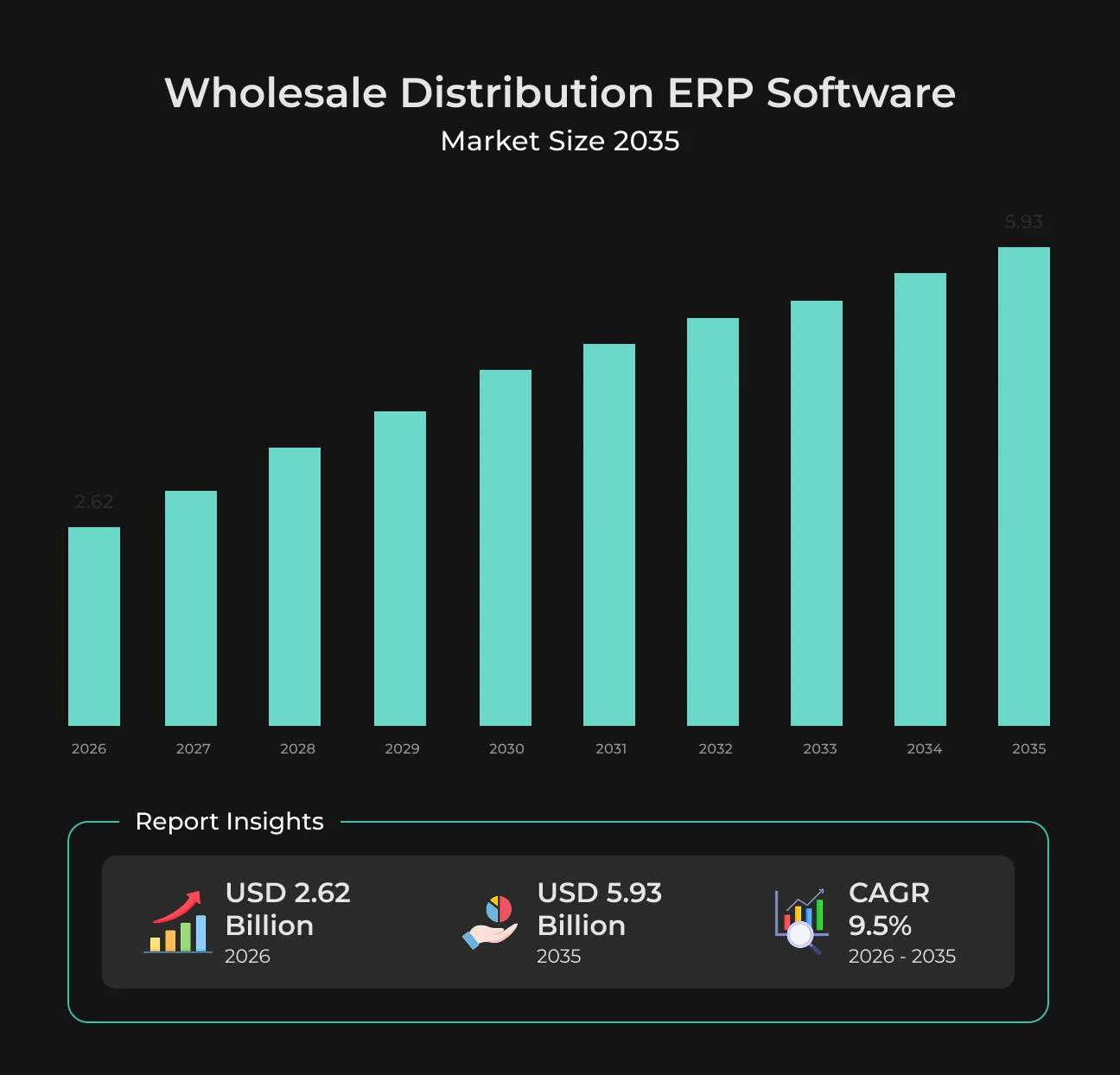
What Is Wholesale Distribution Software?
Wholesale distribution software is built to handle high-volume B2B commerce: multi-warehouse inventory, supplier trading rules, and everything in between.
Standard retail software just processes single-item transactions at a fixed point of sale. Dedicated wholesale platforms do more — they coordinate stock allocation across warehouses, ingest bulk purchase orders, apply tiered pricing, and sync vendor data across your supply chain.
When you centralize operations in dedicated wholesale software, you bring your procurement, warehouse, and accounting teams into one system instead of three separate ones.
Where Generic Wholesale Software Isn’t Enough for Distributors
Off-the-shelf business systems break down under the real demands of wholesale distribution. They're built for standardized retail catalog pricing and low-volume orders, not for what you're actually managing:
- Thousands of active stock-keeping units;
- Multi-tier pricing contracts;
- Vendor rebate programs;
- Distributed warehouse networks.
Without real-time inventory visibility across your stocking locations, inaccurate counts lead to misallocated inventory. Regional sites end up placing duplicate purchase orders while excess stock sits elsewhere.
It's a common problem: 43% of small distribution businesses don't track inventory actively, and 72% of mid-market distributors deal with unpredictable supplier lead times on top of that.
Static spreadsheets worsen it because they don't validate data as it's entered.
Manual keying introduces errors that throw off your forecasting and erode customer trust. Standard business tools simply weren't built to handle complex volume breaks, vendor rebate thresholds, or automated purchase order execution.
How to Automate Supplier Onboarding
If your procurement team is still collecting supplier records through unformatted PDFs, paper tax documents, and spreadsheets emailed back and forth, you're not alone, and it's costing you. Manual onboarding takes 14 to 34 days on average, pulls in up to seven people per vendor record, and can cost upwards of €300 per onboarding event.
Send prospective suppliers a 200-column spreadsheet template and you'll get a completion rate around 12%. Manual catalog setup alone eats 2 to 5 hours per SKU across 10 to 15 rounds of back-and-forth.
Automate that intake process, and the numbers flip: onboarding portals push completion rates up to 80%, and automated catalog mapping cuts product onboarding from several weeks to a single day. Once onboarding is automated, you can grow your vendor network without growing your admin headcount.
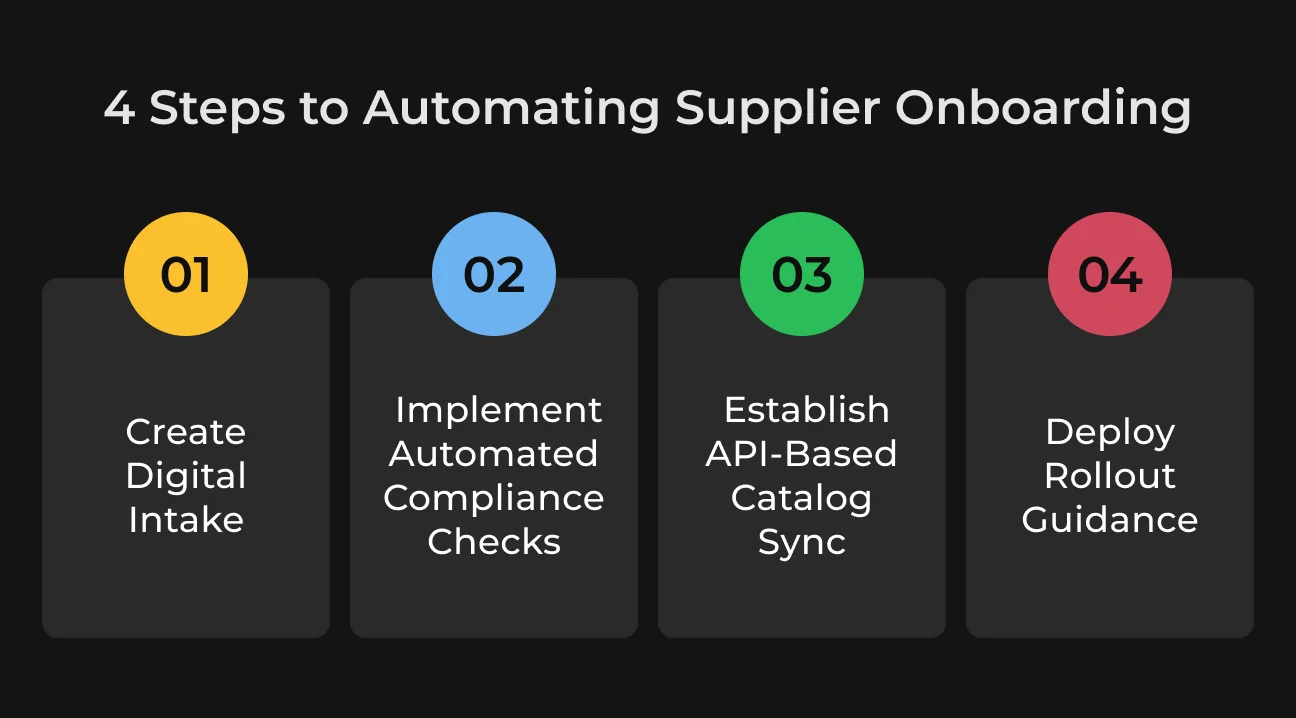
Create Digital Intake
Replace static email submissions with a vendor portal, and you give new suppliers a secure place to enter their own information straight into validated web forms: company profiles, tax IDs, banking details, and insurance documents. Because the system checks formatting as data comes in, incomplete or faulty records get flagged before they ever reach your team.
You can go a step further with AI data extraction from PDF technology, converting tax forms, W-9 filings, and insurance certificates into validated system entries automatically instead of someone retyping them.
Implement Automated Compliance Checks
Manual credential verification slows down vendor setup and adds risk. Connect your intake platform to external compliance and risk databases instead, and it can screen vendor details automatically against:
- Sanction registries;
- Tax databases;
- Credit reporting agencies.
You can also set up automated alerts that track expiration dates on insurance policies and safety certificates, so suppliers get notified before anything lapses.
Establish API-Based Catalog Sync
Sending catalog data through spreadsheets creates errors that ripple downstream through your distribution channels. Set up direct API connections instead, and suppliers can stream catalog updates, pricing tables, and stock levels straight into your platform.
Automated mapping tools then translate vendor specs into your internal taxonomy and validate units of measure and tax categories on the fly. If you're structuring these data transformation workflows, an ETL process optimization approach keeps your database clean across incoming data streams.
Deploy Rollout Guidance
Rolling out supplier onboarding software works best with a structured plan.
Best practices for automating supplier onboarding start with prioritizing your high-volume vendors during the initial launch so you can refine your validation logic before opening access to long-tail suppliers. Set clear compliance benchmarks from the start, and portal adoption will hold up across all your vendor tiers.
Onboarding Phase | Automated Workflow Action | Operational Benefit | Primary Validation Rule |
| Vendor Identity Capture | Portal self-registration & pre-filled web forms | Reduces vendor setup from 34 days to under 48 hours | Mandatory field validation upon entry |
| Compliance Verification | Automated sanction screening & tax document extraction | Cuts onboarding administrative costs by 80% | Automated PDF data parsing & risk scoring |
| Catalog Data Sync | API ingestion & automated SKU attribute mapping | Reduces catalog activation time from weeks to 1 day | Data model taxonomy validation |
| Ongoing Governance | Automated insurance & certification expiration monitoring | Prevents legal compliance lapses across vendor tiers | Automated reminder notifications every 48 hours |
How to Automate Pricing Rules and Tiers
B2B pricing needs to flex around customer contracts, quantity breaks, and vendor rebate programs, and generic sales software just can't keep up. When specific client accounts need customized rate cards based on order history, contract terms, or regional agreements, off-the-shelf tools break down fast.
Automated pricing engines handle this logic instantly, right when a purchase order is generated. Modern wholesale distribution business management software checks several order parameters at once:
- Account tier schedules apply account-specific contract pricing to your pre-negotiated buyer tiers;
- Quantity break rules trigger tiered discounts automatically once an order crosses a set volume threshold;
- Contract rebate calculations track vendor rebates and customer volume incentives without you reconciling spreadsheets after the fact;
- Margin safeguards compare selling prices against real-time acquisition costs and flag low-margin sales for review.
Building a rules engine that can evaluate thousands of price points without slowing your system down takes specialized wholesale business management software engineering.
If you want to embed this kind of custom commercial logic into your platform, specialized AI development services can build the pricing engine and margin protection rules for you.
How to Automate Order Processing
Manual purchase order processing slows you down and leads to shipping errors. Your incoming orders probably arrive across several channels at once:
- Electronic data interchange (EDI);
- Direct system APIs;
- Web forms;
- Emailed PDF attachments.
Looking at real-world intelligent process automation use cases shows how automated purchase order parsing removes manual data entry and speeds up your order throughput.
Before a warehouse fulfillment task is even created, automated order engines parse the incoming purchase order, validate line items against your available inventory, and verify pricing rules.
From there, smart routing assigns the task to the best warehouse location based on stock availability, distance, and transport cost. Your stock allocation system then handles picking automatically, following First Expired, First Out (FEFO) for perishable goods or First In, First Out (FIFO) for manufactured items.
Automated fulfillment generates picking queues, prints shipping documents, and sends tracking information to buyers; no manual staff involvement is needed. To connect your procurement channels with your backend warehouse systems, you'll need dedicated integration services that sync purchase order feeds across your wholesale & distribution management software.
Ready to Automate Your Distribution Operations?
Let's talk about the custom software that fits your supplier, pricing, and order workflows.
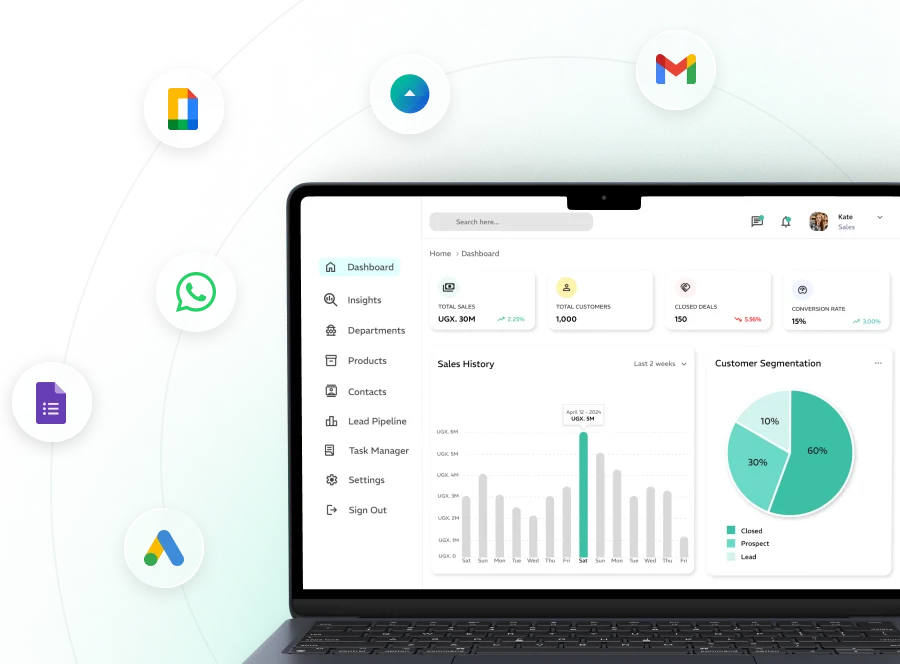
Matching Distribution Software to Business Size
What you require from business management software depends on your order volume, catalog complexity, and warehouse footprint.
If you're running a smaller operation, lean wholesale distribution software small business platforms that focus on real-time stock visibility and basic order management will cover you. As you grow, you'll need multi-location inventory routing, dynamic pricing matrices, and automated vendor compliance tools.
Operational Capability | Wholesale Distribution Software Small Business Needs | Growing & Enterprise Operation Needs |
| Order Ingestion | Single-channel entry & basic order tracking | Multi-channel automated ingestion (EDI, API, PDF) |
| Pricing Architecture | Standard list pricing & simple volume discounts | Dynamic matrix pricing, customer contract tiers, & rebate tracking |
| Inventory Allocation | Single-warehouse tracking & manual reorder points | Multi-location allocation, FEFO/FIFO tracking, & demand forecasting |
| Vendor Onboarding | Direct portal entry & manual document uploads | Automated supplier portals, AI document parsing, & automated risk screening |
| System Interoperability | Basic accounting software coupling | Connected enterprise ERP, WMS, and TMS software networks |
As your wholesale software scales with you, accurate demand forecasting becomes essential, so you're not stuck holding excess inventory or dealing with stockouts.
Check out our guide on how to build AI demand planning software to build predictive replenishment models that adjust safety stock based on seasonal demand.
How to Integrate ERP, Accounting, and Management
Connecting wholesale distribution software solutions with core enterprise platforms creates a unified digital operational framework. Establishing reliable data streams across enterprise software components eliminates manual record reconciliation and maintains accurate financial reporting across departments.
Enterprise Resource Planning (ERP)
Linking wholesale management platforms with central enterprise resource planning infrastructure creates a unified operational database. Cloud wholesale distribution ERP software synchronizes:
- Inventory records;
- Purchase orders;
- Financial accounts.
Establishing real-time inventory visibility through specialized enterprise software raises order-to-cash accuracy to over 99%, eliminating split shipments and reducing expensive correction freight costs.
Accounting Systems
Connecting order processing platforms directly with general ledgers automates:
- Billing;
- Payment collection;
- Ledger reconciliations.
Automated invoice matching reconciles incoming supplier invoices against purchase orders and warehouse receiving records before issuing payment. Streamlining financial data flows reduces monthly financial close cycles by 50%, shortening standard 10-day accounting closes to just 5 days.
Management and Operations Systems
Connect your warehouse management platform with your transportation management tools, and you get complete visibility over your operational workflows. From a single dashboard, you can monitor fulfillment KPIs, track warehouse picking efficiency, and manage carrier performance.
With wholesale business management software centralizing that visibility, you can catch fulfillment bottlenecks early and keep service consistent across your regional distribution network.
Food and Fuel Distribution: Compliance Issues
If you distribute food or fuel, you're dealing with compliance requirements that generic wholesale software usually can't handle. Your system needs to combine inventory management with safety controls, traceability, automated monitoring, and regulatory reporting all at once.
For food distribution, wholesale food distribution software should give you:
- Cold-chain monitoring. Temperature sensors record storage and transportation conditions automatically and alert your staff when products exceed safe ranges.
- FEFO (First Expired, First Out) inventory rotation. This makes sure products with the nearest expiration dates ship first, cutting waste and keeping expired goods away from customers.
- Batch tracking. Batch and lot tracking speeds up recalls — you can identify affected inventory and see exactly which customers received a given batch.
Fuel distribution calls for its own set of functions for handling hazardous materials:
- Fuel measurement. Wholesale fuel distribution software should integrate with flow meters and tank monitoring systems to record fuel quantities automatically.
- Transportation. Your software should manage safety inspections, shipment documentation, and compliance checks.
- Taxation. If you operate across multiple regions, automated tax calculation should apply the right fuel taxes and fees based on delivery location and local regulations.
SapientPro builds custom modules that fold these compliance requirements directly into your daily workflows, so you can automate monitoring, cut manual errors, and keep your regulatory records accurate.
How SapientPro Builds Custom Wholesale Distribution Software
SapientPro builds custom wholesale software to eliminate manual bottlenecks and speed up your order throughput. With experience in enterprise system engineering, automated data ingestion pipelines, and cloud software development, we build applications around your specific B2B wholesale distribution requirements.
Here's what we can build for you:
- Custom Vendor Intake Portals. Self-service supplier portals with AI document parsing, automated compliance validation, and API catalog syncing.
- Dynamic Commercial Rules Engines. Automated pricing modules that handle complex customer tiering, volume break schedules, and vendor rebate tracking.
- High-Volume Purchase Order Pipelines. Automated order ingestion engines that handle multi-channel EDI, API, and PDF purchase order streams.
- Multi-Warehouse Allocation Platforms. Centralized inventory software with real-time multi-location visibility, FEFO/FIFO tracking, and predictive replenishment tools.
- System Connection Architecture. Custom integrations linking your core ERP infrastructure, accounting databases, and warehouse management tools.
Custom distribution software gives you the room to scale your operations.
Contact SapientPro to talk through wholesale distribution software built around what you actually need.
Build Software That Fits Your Business
SapientPro designs wholesale distribution platforms around your catalog, warehouses, and vendor network.