All What is Agentic RAG: Architecture Patterns & Best Use Cases for Your Business
Updated:September 21, 202620 min read


LLMs rely on fixed training data. They don’t see real-time updates, struggle with multi-step tasks, and can produce confident but incorrect answers. This becomes a problem in business scenarios that depend on current data, complex logic, and inputs from multiple systems.
RAG (Retrieval-Augmented Generation) was introduced to address this. It connects models to external data sources, so responses are based on actual documents instead of internal memory.
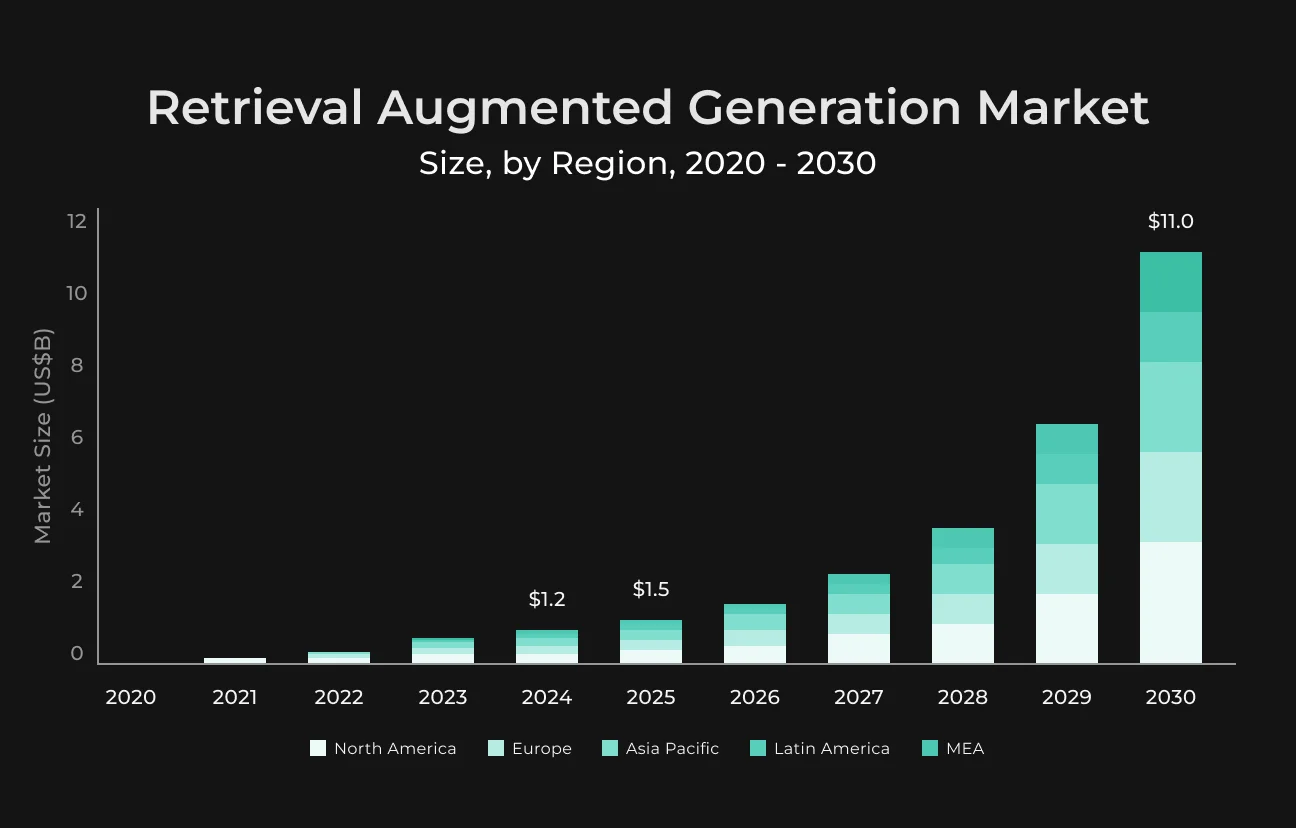
Standard RAG still follows a one-pass flow: retrieve, then generate. If the retrieved data is weak or incomplete, the output suffers, and the system doesn’t retry or adjust.
Agentic RAG builds on this by adding planning, iteration, and validation. The system can break down a query, re-run retrieval with better inputs, and refine results before generating a response. This shifts it from a static pipeline to a system that can handle more complex tasks with higher reliability.
In this article, SapientPro’s engineers will help you understand the key architecture patters and which technologies are used. Read on for more!
What is RAG?
Retrieval-augmented generation connects a language model to external data sources. Instead of storing all knowledge inside the model, it retrieves relevant information at query time and uses it to generate answers. This avoids constant fine-tuning and keeps responses grounded in actual data.
Components of RAG Architecture
Every RAG system architecture depends on a set of components working together in sequence.
How data moves through them affects response speed, retrieval quality, and the accuracy of the final output. Within this structure, mathematical embeddings act as the critical translation layer between human natural language and machine computation.
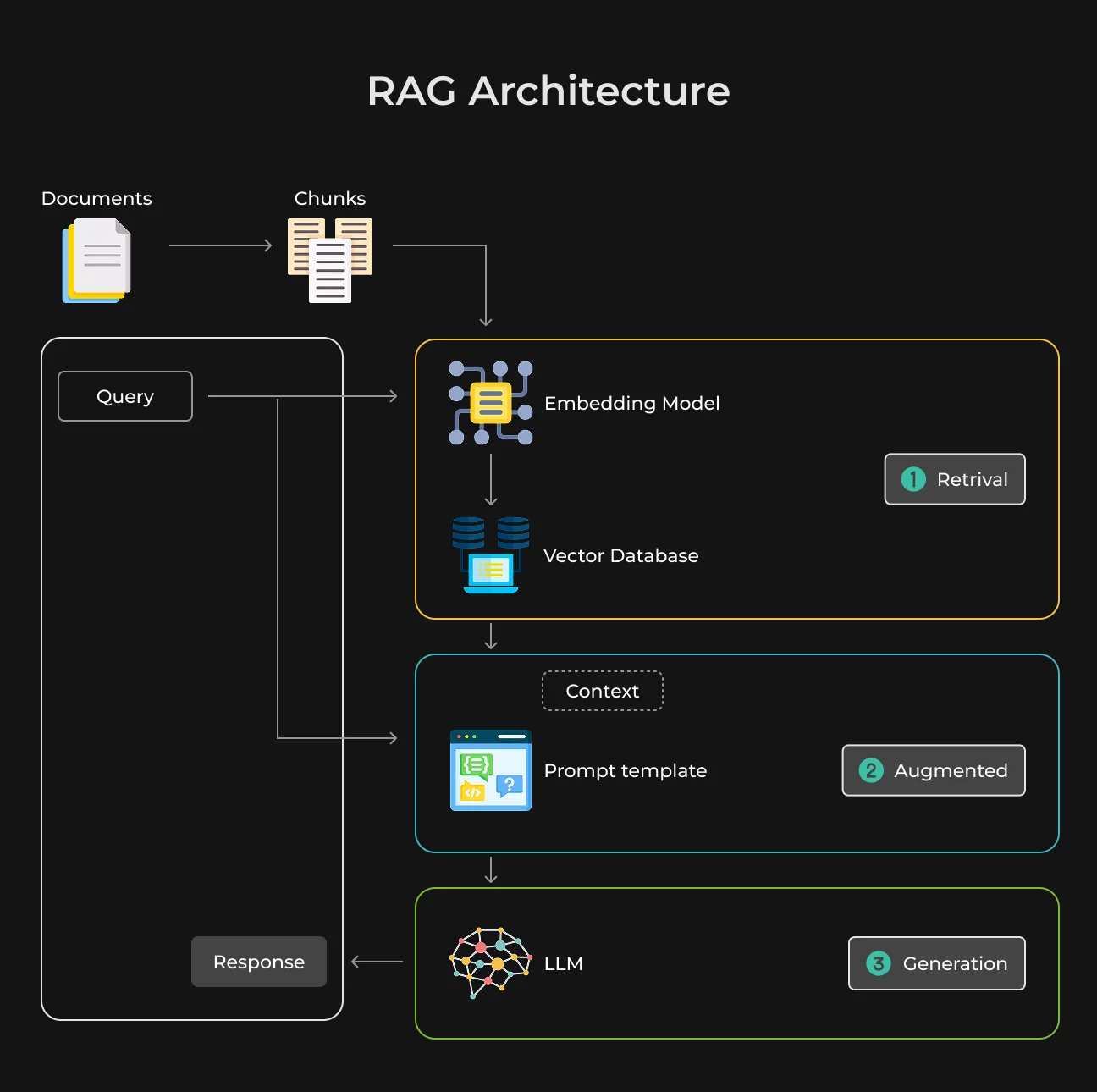
Let’s take a look at the core components of RAG architecture.
Architecture Component | Function | Role in Pipeline |
| Vector Database | Stores text as vectors (Pinecone, Weaviate, FAISS); | Finds closest matches to the query using similarity search; |
| Embedding Model | Converts text and queries into vectors; | Creates a shared space for semantic search; |
| Retriever | Queries the database (often hybrid: semantic + keyword); | Returns the most relevant data for context; |
| LLM (Generator) | Generates responses from prompt + retrieved data; | Produces the final grounded answer; |
This setup is the foundation of modern RAG. Still, it has a clear limitation: the pipeline is linear.
If a user asks a vague or complex question, the embedding model turns that ambiguity into a vector. The vector database then retrieves content related to that vague meaning, which may miss the user’s actual intent. The generator has no way to verify or correct that input.
It simply produces an answer from whatever it receives.
That is where standard RAG starts to break down. Once retrieval goes off track, the rest of the pipeline follows. This is why more advanced systems add reasoning, validation, and retry loops instead of relying on a single retrieval step.
What is Agentic RAG?
Standard RAG follows a fixed pipeline: retrieve data once, then generate a response. Agentic RAG adds a feedback loop. It can interpret the task, plan steps, choose tools, evaluate results, and retry when needed.
An agentic RAG system can:
- Understand its environment;
- Reason about the goal;
- Break a request into smaller tasks;
- Use tools or data sources on its own;
Before retrieval starts, the system may rewrite the query, clarify vague terms, expand it with domain-specific language, or split it into separate intents. It then routes each part to the right source or tool.
After retrieval, the system reviews the results. If the data is incomplete, irrelevant, or conflicting, it adjusts the query and searches again. This makes the process iterative rather than one-pass.
The main difference is simple: standard RAG retrieves and answers, while agentic RAG plans, checks, and corrects itself before producing the final output.
Key Difference Compared with Traditional RAG
Traditional RAG works as a one-step pipeline: retrieve, then generate. If retrieval misses the right data due to a vague query or wording mismatch, the final answer will be wrong or incomplete.
Agentic RAG replaces this with an iterative loop. It can analyze the problem, adjust queries, re-run retrieval, and refine results before generating an answer. In short:
- Traditional RAG: single-pass execution;
- Agentic RAG: multi-step reasoning with retries and validation;
This shift allows the system to recover from errors instead of failing on the first attempt.
Benefits of Agentic RAG for Businesses
The primary advantage of agentic RAG lies in its proven ability to transition AI from a generalized novelty into a highly reliable enterprise asset.
Improved Accuracy and Reduced Hallucinations
These systems use continuous evaluation loops to reduce incorrect outputs. Evaluator agents check retrieved data against the original query, filter out irrelevant content, and trigger new searches when key information is missing.
Better Decision-Making Through Real-Time Data
An agentic RAG setup can:
- Trigger APIs;
- Run SQL queries;
- Perform live web searches;
This keeps decisions based on current, not outdated, data.
Scalability of AI Systems
Multi-agent RAG setups allow companies to expand AI capabilities without building a single complex system. You can deploy focused agents for tasks like:
- Compliance checks;
- Contract data extraction;
- Data formatting;
A central controller coordinates their work.
Automation of Complex Workflows
Traditional retrieval systems can answer questions. Agentic systems can execute tangible business tasks. By equipping agents with secure access to internal software tools and operational interfaces, you can fully automate multi-step processes.
Key Architecture Patterns in Agentic RAG
Building agentic systems requires clear design choices. The selected architecture affects latency, cost, reasoning depth, and overall business value. Each pattern fits specific use cases, so alignment matters if you want predictable performance and ROI.
Router Architecture
Router architecture works as the entry point of the system. It analyzes the incoming query and decides where to send it — for example, a vector database, a structured database, or an external API.
This decision is usually based on intent classification or semantic routing. A query about internal policies may go through semantic search, while a request for a specific metric can be routed directly to a database.
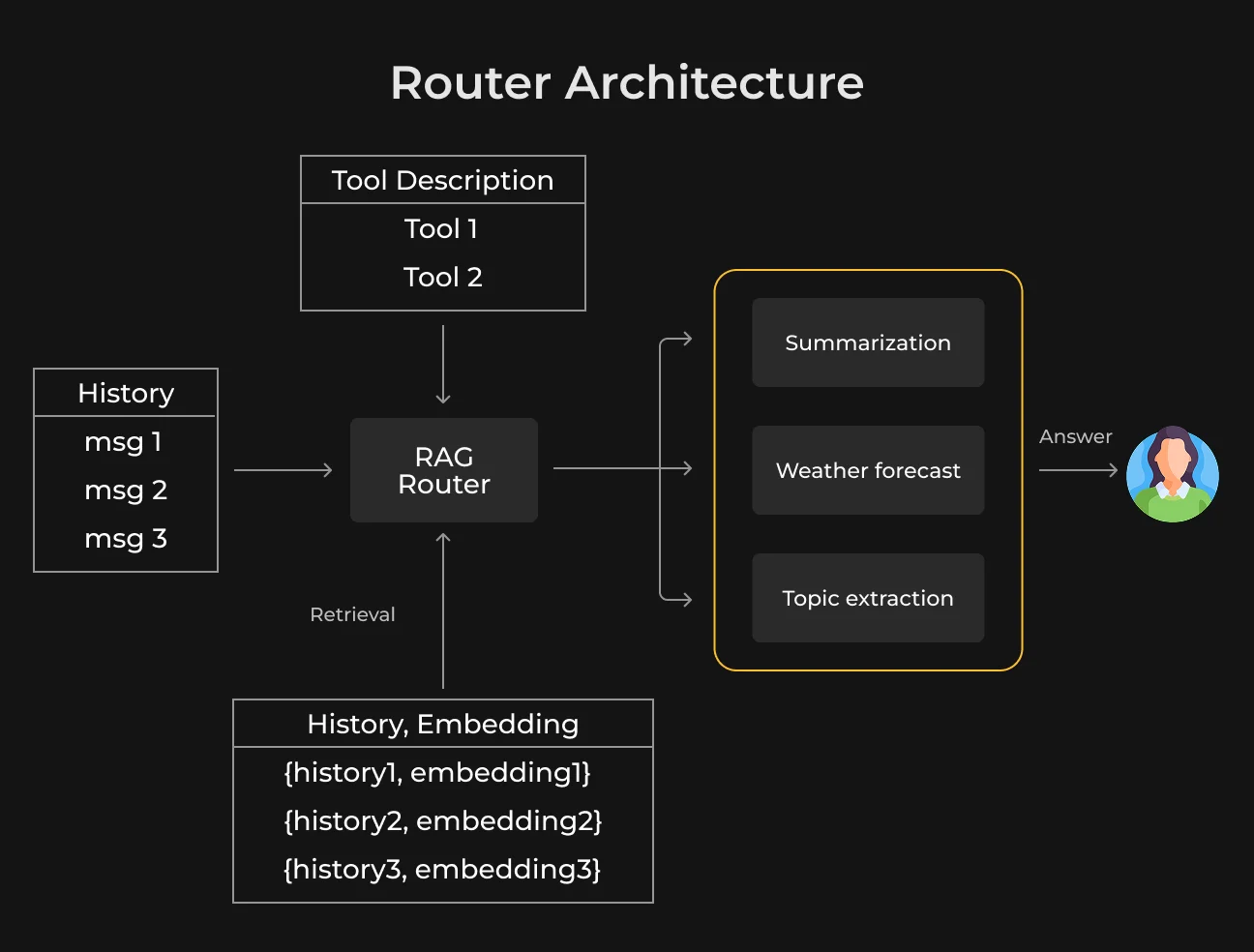
This approach improves efficiency by avoiding unnecessary computation. Instead of always running semantic search, the system uses the fastest available path. It is also relatively simple to implement compared to more complex agent-based systems.
The main limitation is its dependence on correct classification. If the router misinterprets the query, the system follows the wrong path and produces poor results. It also remains a single-step decision layer, which limits its ability to handle multi-source or multi-step reasoning tasks.
Tool-Use Architecture
Tool-use architecture extends the system beyond text generation by allowing it to interact with external tools and services. The agent has access to predefined functions such as APIs, databases, or code execution environments.
It can decide which tool to use based on the query and then execute the required action.
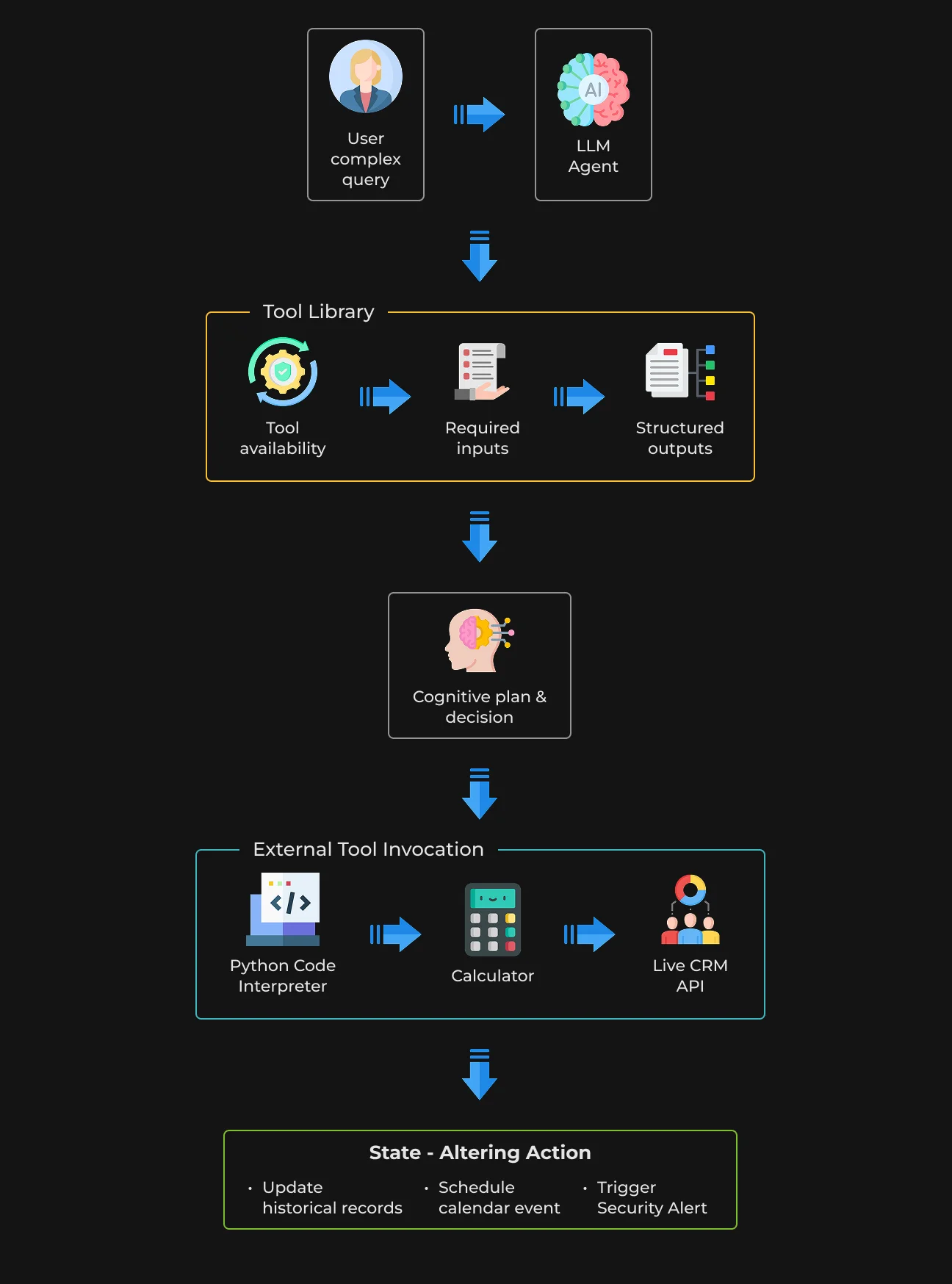
This pattern enables the system to perform real tasks, such as retrieving customer data, running calculations, or updating records. It reduces the need for hardcoded logic, since the agent selects tools dynamically instead of relying on fixed workflows.
The trade-off is complexity. Implementing a secure RAG architecture LLM agent with tool-use capabilities requires immensely complex engineering to handle:
- API timeout failures;
- Rate limits;
- Unexpected external system behavior.
Integrating multiple tools requires handling failures such as timeouts, incorrect inputs, or inconsistent responses. Security also becomes a major concern. If access is not strictly controlled, the system may expose sensitive data or perform unintended operations.
For this reason, tool-use systems require strict permissions and monitoring.
Multi-Agent Architecture
Multi-agent RAG architecture splits the system into several specialized agents, each responsible for a specific task. One agent may handle data retrieval, another performs analysis, and another generates the final output. A central controller coordinates their interaction and combines results.
For example, a monthly financial reporting workflow might use:
- Data Extraction Agent specifically tuned to pull numbers accurately from ERP systems;
- Analysis Agent equipped with mathematical tools to identify variance trends;
- Writing Agent fine-tuned on corporate communications to compile the final executive narrative.
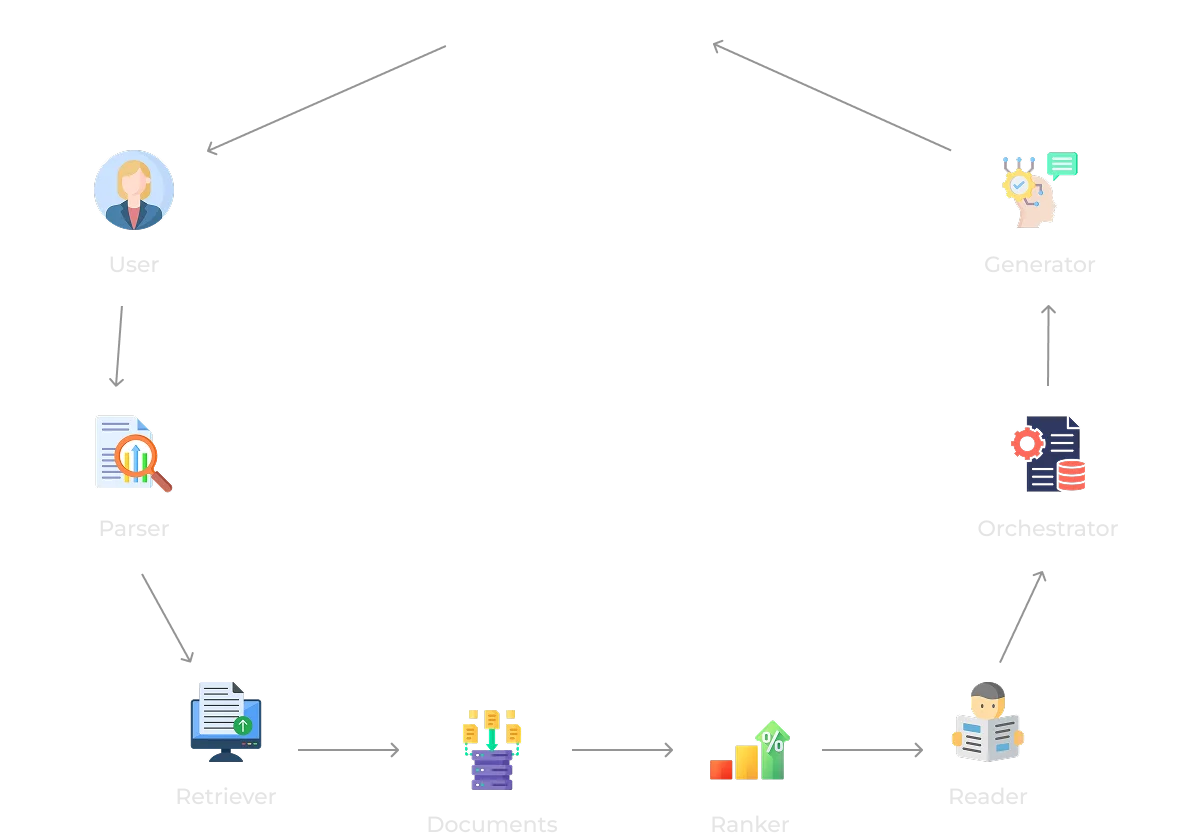
This approach works well for complex workflows that exceed the capabilities of a single model. It allows teams to develop and update individual components independently, which improves flexibility and maintainability. It also supports more structured reasoning, since each agent focuses on a narrow task.
The downside is higher overhead.
Communication between agents increases latency and token usage. Coordination also becomes more difficult, especially when multiple agents depend on each other’s outputs. Without strict control mechanisms, the system may enter loops or fail to complete tasks, which affects reliability and cost.
Plan-then-Execute Architecture
Plan-then-execute separates reasoning from execution. A planning component first breaks the user query into a sequence of steps. Then, execution components carry out those steps one by one, and the results are combined into a final answer.
This structure improves reliability for complex tasks. By defining a clear plan upfront, the system reduces the risk of random or inconsistent outputs. It also provides transparency, since each step can be reviewed and traced, which is useful in regulated environments.
The main drawback is speed. Multiple stages increase latency compared to simpler pipelines. The overall result also depends heavily on the initial plan. If the plan is flawed, the system will still execute it correctly but produce incorrect results. This makes planning accuracy critical for overall performance.
Corrective and Self-Reflective RAG (CRAG / Self-RAG)
Corrective and self-reflective approaches introduce evaluation directly into the pipeline. After retrieving data, the system assesses its quality before generating a response. If the data is incomplete or irrelevant, it modifies the query and performs retrieval again. The syste, will also:
- Actively rewrite the search query using different semantic terminology;
- Trigger a fallback mechanism (such as initiating a broad web search);
- Execute a mathematical reflection step to self-correct its internal logic before attempting to generate the final text.
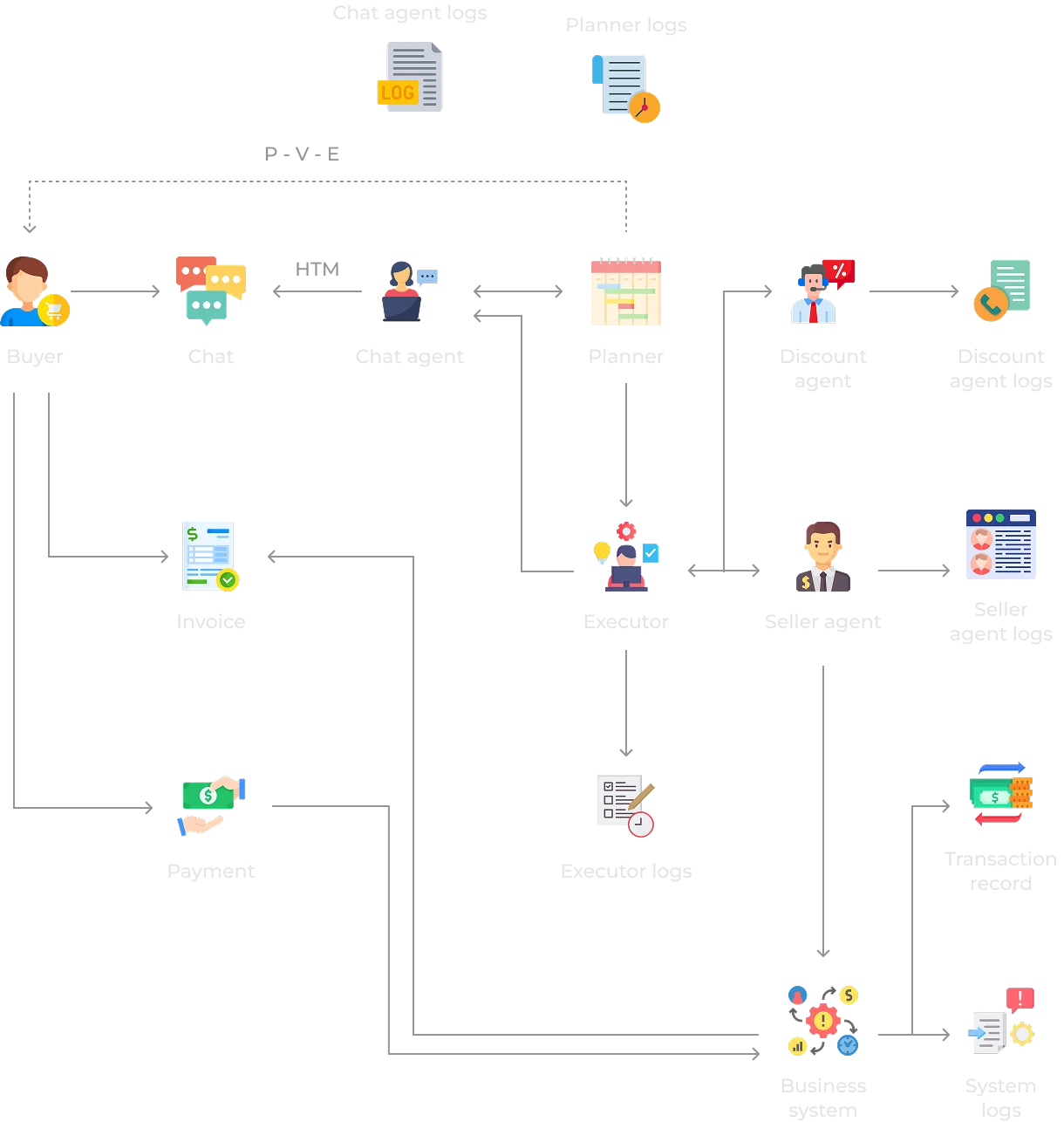
This iterative process improves accuracy by reducing reliance on a single retrieval attempt. It helps prevent cases where the model generates answers based on weak or misleading context. In practice, this leads to more consistent and reliable outputs.
The trade-off is higher computational cost.
Each evaluation and retry adds extra processing steps. Designing the evaluation logic is also challenging. If the system is too strict, it may reject useful data and repeat retrieval unnecessarily. If it is too lenient, it may accept poor context. Balancing this behavior is key to making the system effective.
How Agentic RAG Works in Practice
An agentic RAG system runs as a continuous execution loop rather than a single request-response step. The model doesn’t just retrieve and generate — it plans, checks, and adjusts along the way.
This loop includes distinct stages: understanding the query, retrieving data, evaluating results, and producing an output. Each step in the RAG pipeline architecture can influence the next, which allows the system to refine its behavior instead of relying on a single attempt.
Let’s take a look at each phase.
Execution Phase | Agentic Functionality and System Behavior |
| 1. User query received | The system processes the input and combines it with context such as user role, history, and access permissions to define the scope of the task; |
| 2. Agent plans actions | The controller analyzes intent, identifies ambiguities, and splits the request into ordered sub-tasks or tool calls; |
| 3. Retrieves data from sources | The system queries multiple sources at once: vector databases for semantic context, SQL databases for structured data, and APIs for live inputs; |
| 4. Evaluates relevance | A validation step checks retrieved data for accuracy, completeness, and consistency with the original query; |
| 5. Refines query if needed | If results are weak or inconsistent, the system rewrites the query, adjusts parameters, or switches sources and retries; |
| 6. Generates response | The model combines validated data into a structured answer or output; |
| 7. Validates output | A final check confirms the response matches the query and meets safety and compliance rules before delivery. |
In practice, this RAG AI agent loop turns raw data into usable insights.
For example, if an operations manager asks why a shipment is delayed and what it costs, the system doesn’t rely on a single search. It builds a sequence of actions: checks logistics data for status, reviews contract terms for penalties, and calculates financial impact from internal systems.
The final response combines these results into a clear explanation backed by multiple data sources.
Technologies & Frameworks for Agentic RAG
A production-ready RAG system architecture uses advanced observability monitoring, specific model hosting environments, and robust graph-based orchestration to maintain stability.
Frameworks
The deployment of a LangChain agentic RAG system natively supports the deep composability of tools, analytical chains, and autonomous agents.
LangChain's highly specialized extension, LangGraph, enables developers to build incredibly resilient language agents as cyclical computational graphs. You can manage persistent state and complex conditional edges, which are essential for multi-step reasoning and self-correction.
Alternatively, LlamaIndex excels as an agentic RAG framework specifically optimized for large-scale data ingestion, hierarchical indexing, and highly complex retrieval strategies over messy document repositories.
For enterprise environments deeply embedded in the Microsoft ecosystem, Semantic Kernel acts as the premier agentic RAG framework. It offers native.NET and Python support, seamless out-of-the-box Azure integration, and enterprise-grade security compliance built directly into the core library.
Vector databases
The system's critical external memory resides in specialized vector databases optimized for high-dimensional geometric searches.
Pinecone offers a fully managed, serverless infrastructure that is ideal for high-scalability, low-maintenance enterprise deployments. Weaviate provides a robust open-source option with sophisticated built-in hybrid search capabilities. It allows developers to blend dense vector scores with sparse BM25 keyword scores.
FAISS (Facebook AI Similarity Search) remains a highly efficient, foundational library for localized, computationally intensive dense vector clustering and massive similarity search operations.
LLM infrastructure
Selecting the appropriate RAG architecture LLM infrastructure dictates both the cognitive intelligence of the agents and the economic viability of the entire system.
Yes, OpenAI's proprietary models (like GPT-4) remain the commercial industry standard for complex, multi-step reasoning and tool-calling reliability. But, severe enterprise data privacy concerns and massive inference costs at scale are driving a massive shift toward open-source models.
The adoption of open-source models accelerates rapidly when paired with advanced serving engines.
Powering a robust RAG architecture LLM deployment demands specific inference optimizations. vLLM has emerged as a critical, industry-standard technology here.
By using PagedAttention to efficiently manage memory fragmentation for massively long-context windows and supporting continuous request batching, vLLM drastically increases the serving throughput for open-source models like Llama 3 and Qwen.
This technological advancement makes self-hosted, private agentic deployments economically feasible for the enterprise.
Supporting tools
The cognitive engine of an autonomous system relies heavily on total architectural observability. As multi-agent systems grow in complexity, tracing token usage, visualizing execution paths, and debugging API failures becomes mandatory.
Orchestration and MLOps tools like ZenML or LangSmith provide unified visibility and comprehensive data lineage. They allow engineering teams to trace a hallucinated output back through the graph to the exact prompt version, the specifically retrieved document, and the exact node execution that caused the failure. They effectively close the continuous evaluation loop and enable rapid iteration.
Build Your RAG Agent Today
SapientPro will provide a detailed estimation and help you get a reliable solution.
Use Cases of Agentic RAG for Business
Agentic RAG systems create measurable value in data-heavy environments by combining retrieval, reasoning, and execution. They work best where decisions depend on multiple data sources and require more than simple lookup.
1. Enterprise knowledge assistants
Large companies store knowledge across disconnected systems, which makes it hard to find and use. Traditional search requires users to know where and what to look for. An enterprise AI assistant can address this problem by connecting company knowledge across multiple tools and giving employees a single interface for finding information and completing work.
Typically, an internal RAG model architecture can:
- Search across intranet systems;
- Interpret complex HR and policy documents;
- Summarize long meeting transcripts;
- Return answers with clear references.
This reduces time spent searching and improves access to internal knowledge.
2. Customer support automation
Basic FAQ bots handle simple queries but fail on more complex issues. Agentic systems can resolve full support cases without constant human input. They can:
- Interpret user intent;
- Retrieve technical documentation;
- Access billing or account data via APIs;
- Suggest fixes or process refunds.
Escalation happens only when the case falls outside defined scenarios.
3. Healthcare AI systems
In clinical settings, decisions depend on accurate and up-to-date data. Agentic RAG systems assist by combining patient data with medical knowledge sources. They can:
- Detect potential drug interactions;
- Combine long-term patient records into a timeline;
- Support decisions with verified medical data;
This helps clinicians work with structured, relevant information while following strict data privacy rules.
4. Financial analytics
Financial environments require fast processing of large, changing datasets. Agentic systems can combine multiple sources to support analysis and compliance. They can:
- Track regulatory updates;
- Analyze earnings reports in real time;
- Retrieve historical market data;
- Generate comparative insights.
They also support compliance by checking internal activity against current regulations.
5. SaaS platforms
Software providers embed AI agents into their products to simplify complex workflows. Users interact with systems through natural language instead of menus. An embedded agent can:
- Review project inputs;
- Assign tasks based on workload and history;
- Retrieve relevant code or documentation.
This shifts the platform from a storage tool to an active assistant.
6. Legal Compliance and Case Preparation
Legal work involves large volumes of structured and unstructured data. Agentic systems help process and analyze this information. They can:
- Review large sets of legal documents;
- Identify patterns in past rulings;
- Detect gaps in arguments or evidence.
Outputs are grounded in source documents, which supports auditability and reduces manual research time.
7. Supply Chain Management
Supply chains depend on real-time data and fast response to disruptions. Agentic systems monitor multiple inputs and provide actionable insights. They can:
- Track logistics data and external events;
- Detect delays or risks early;
- Calculate financial impact using contract terms;
- Suggest alternative routes or suppliers.
This helps maintain operations under changing conditions.
Challenges & Limitations of Agentic RAG
Agentic RAG systems bring stronger reasoning and automation, but they also introduce higher costs, complexity, and operational risk. These trade-offs matter in production environments.
System Complexity
Moving from a linear pipeline to a multi-agent, stateful system increases engineering difficulty. The system must manage coordination, memory, and error handling across multiple components. This requires:
- Orchestration of agent interactions;
- Reliable failure handling;
- State and context management across steps;
Failures are harder to trace. One incorrect output can propagate through the system and affect downstream results, which makes debugging and maintenance resource-intensive.
Cost of Infrastructure
Agentic systems consume more resources than standard RAG. Each query may involve multiple reasoning steps, retries, and data fetches. Costs come from:
- Repeated model calls;
- Vector database usage;
- Orchestration and monitoring infrastructure;
Without limits, expenses scale quickly. Production systems need strict control over query depth, retries, and token usage to stay within budget.
Latency Issues
Multi-step execution increases response time. Planning, retrieval, evaluation, and generation happen in sequence, which adds delay compared to simple pipelines.
This becomes a problem for use cases that require fast responses. While techniques like caching and batching can reduce delays, multi-step systems remain slower by design.
Data Privacy Risks
Granting agents access to internal systems creates security risks. The system must enforce user-level permissions at every step. Key concerns include:
- Unauthorized data access due to weak permission control;
- Misuse of system privileges during autonomous actions;
- Prompt injection attacks targeting tool execution;
Without strict access control and validation, the system can expose sensitive data or execute unintended operations.
Best Practices for Building Agentic RAG Systems
Running agentic RAG in production requires strict control over architecture, data, and system behavior. Without this, complexity, cost, and security risks quickly escalate. Stable systems rely on clear separation of components, high-quality data, and continuous monitoring.
Modular Architecture Design
A modular setup allows teams to update or replace components without rebuilding the entire system. This keeps the architecture flexible as tools and models change. Key principles:
- Separate retrieval from generation;
- Decouple individual agents and services;
This reduces dependency on specific vendors and makes it easier to switch models or databases as needed.
Robust Data Pipelines
System performance depends directly on data quality. Poor or outdated data leads to incorrect outputs, regardless of model quality. A reliable pipeline should:
- Ingest data continuously;
- Clean and normalize inputs;
- Split content into usable chunks;
- Convert it into embeddings for retrieval.
Consistent data maintenance keeps the knowledge base accurate and usable.
Monitoring & Evaluation Loops
Production systems require constant tracking of behavior and cost. Without visibility, issues remain hidden until they affect users. The system should:
- Detect anomalies in outputs or usage;
- Alert engineers when thresholds are exceeded;
- Support rollback when failures occur.
Evaluation pipelines also help measure output quality against test datasets over time.
Security and Compliance
Access control must apply at every layer, including retrieval and tool execution. The system should respect user-level permissions and restrict sensitive operations. Key practices:
- Enforce role-based access control;
- Limit data exposure during retrieval;
- Isolate actions that affect external systems.
Critical operations should require human approval, especially when they involve financial or irreversible changes.
Iterative Development Approach
Deploying a full multi-agent system at once increases risk. A phased approach allows teams to test and improve each stage. Typical progression:
- Start with read-only assistants;
- Validate retrieval and response quality;
- Gradually add tools and automation;
- Increase autonomy step by step.
This reduces failure risk and helps teams scale the system with more control.
Why Choose SapientPro for Agentic RAG Development
SapientPro brings hands-on experience in building AI systems that combine retrieval, reasoning, and automation. Our engineers design RAG-based solutions that work with real business data and integrate into existing workflows. Here are some of the solutions you can get with us:
- Custom RAG systems for enterprise knowledge management;
- Multi-agent architectures for complex workflows;
- AI copilots integrated into SaaS platforms;
- Real-time data pipelines with API and database integration;
Looking to build or scale your AI solution?
Let’s talk and turn your idea into a production-ready system.
Start your RAG project
Build scalable, secure AI systems with real-time data and automation with SapientPro.