All Loyalty App Development: How to Build a Rewards App That Drives Retention
June 28, 202615 min read


Customer acquisition has reached a state of unsustainable inflation. Data from 2024 and 2025 indicates that the cost to acquire a customer has surged by approximately 40% within just two years in the e-commerce sector.
For many organizations, particularly those in SaaS or high-competition retail, the median acquisition ratio has climbed to $2.00 for every $1.00 of new annual recurring revenue.
This means initial transactions are frequently loss-leading activities. When brands lose an average of $29 per newly acquired customer, reliance on top-of-funnel marketing becomes a threat to long-term solvency.
The traditional reliance on third-party cookies and rented audiences on social platforms is also failing as privacy regulations tighten and digital ad costs increase by over 5% annually. Executives now face a reality where 75% of software companies report declining retention rates despite increased spending on customer success personnel.
The loyalty system app has become the most critical variable in the profitability equation for 2026. The probability of selling to an existing customer stays high, while the likelihood of converting a new prospect fluctuates between 5% and 20%. This is why the customer loyalty program app represents a massive opportunity for teams.
What is a Loyalty App?
A digital loyalty app is a dedicated platform where a brand and its customers engage in a transparent exchange of value. Specifically, it is a mobile interface that replaces physical punch cards or plastic membership identifiers with a real-time tracking system for rewards and interactions.
This platform is the primary repository for first-party data.
It allows a business to monitor individual purchase patterns, behavioral triggers, and engagement levels without intermediaries. A loyalty program app allows for 1:1 personalization at scale. By consolidating membership details into a smartphone application, you reduce the friction that historically led to program abandonment.
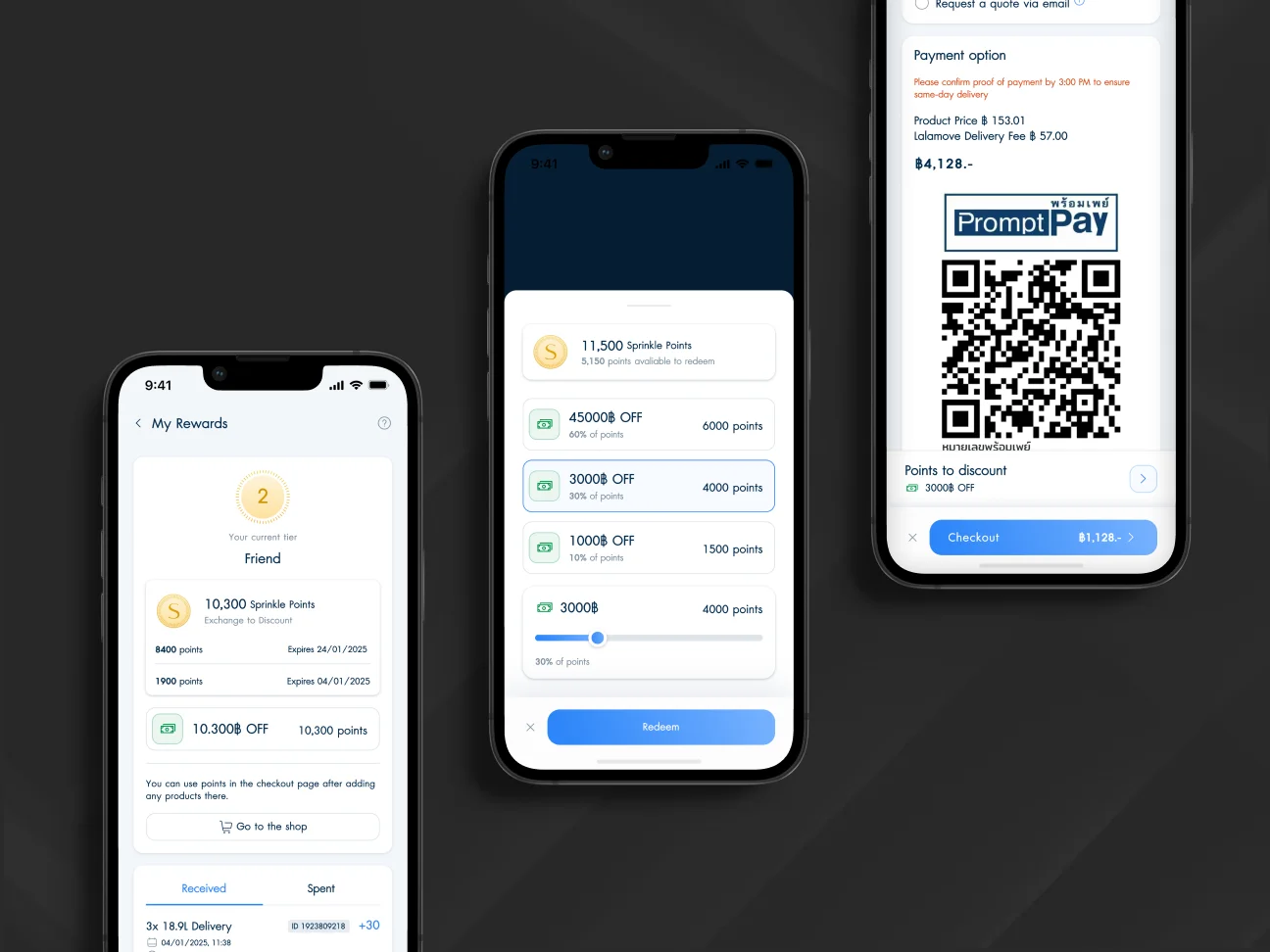
These applications work by assigning a digital identity to each user, which is then linked to their transaction history across all sales channels. This creates a unified view of the customer, whether they are shopping online or in a physical store.
For the user, a rewards app offers a sense of progression and recognition.
It provides instant gratification through real-time point updates and personalized offers. For the business, it is a proprietary marketing channel where the cost of a message is effectively zero — bypassing the rising CPMs of traditional digital advertising.
Why Businesses Invest in Loyalty Apps in 2026
The decision to deploy a customer loyalty app in 2026 is driven by the need for data sovereignty and economic efficiency. As the global loyalty management market is projected to reach over $32 billion by 2031, simple points systems are being replaced by complex engagement networks.
Retention and Acquisition as a Key Driver
Existing customers are the primary source of revenue stability, accounting for 65% of a company's total income on average. Loyal users buy 50% more often than non-members, and their lifetime value is frequently double that of a casual shopper. The ROI logic of a mobile loyalty app is rooted in the fact that repeat customers spend 67% more than first-time buyers.
This increased spending volume, combined with a 5–25x lower cost to retain a customer versus acquiring one, creates a high-margin revenue stream that offsets the initial costs of loyalty app development.
Metric | New Customer Profile | Loyal Member Profile |
| Cost to Acquire/Retain | $2.00 per $1.00 ARR | $0.08 - $0.40 per $1.00 ARR |
| Conversion Probability | 5% - 20% | 60% - 70% |
| Referral Rate | Baseline | 4x higher than new customers |
| Avg. Transaction Value | Standard | 67% higher than first purchase |
First-Party Data as a Competitive Advantage
A cookieless future has made third-party data less reliable.
A digital loyalty app provides a direct stream of clean, consented data that is necessary for modern marketing automation. By tracking which rewards a user chooses and which notifications they ignore, you can build behavioral models. Predictive segmentation can then identify at-risk customers who haven't opened the digital loyalty app in 60 days, triggering a personalized offer to prevent churn.
To understand how this data fits into a broader organizational strategy, examine the role of AI in customer relationship management.
Mobile-First Loyalty Ecosystems
Consumer behavior has shifted decisively toward mobile interfaces, with digital loyalty adoption growing by 40% as physical cards disappear. A loyalty card app is significantly more effective than a physical one because it is always accessible.
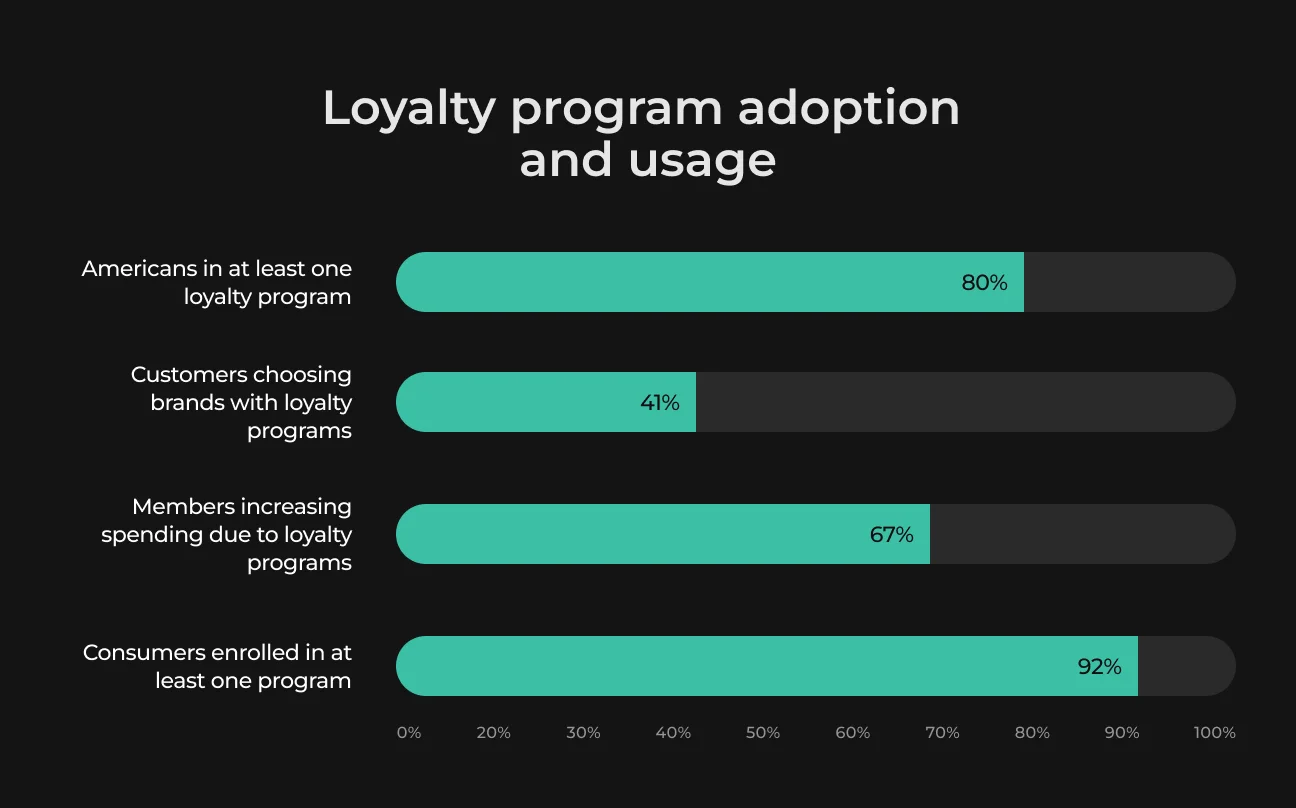
65.9% of customers report that using a loyalty program is a standard part of their lives, and the majority of that interaction occurs via smartphone. Mobile apps allow for push notifications and location-based services that physical programs cannot match.
The preference for digital interaction is particularly strong among younger generations.
Around 42% of Millennials demonstrate brand commitment by installing a brand's app. 55% of Gen Z participants prefer programs that use AI for personalization. For a company to remain relevant to these cohorts, providing a high-quality customer loyalty app is a requirement for entry into their consideration set.
Types of Loyalty Apps & Business Models
Choosing the right structure for a loyalty program app depends on the specific industry and the desired customer behavior. Research from Bond Brand Loyalty shows the average American consumer belongs to 18 loyalty programs. You must choose carefully what type of loyalty app suits your use case.
Model | Primary Motivator | Complexity | Typical Industry |
| Points | Transactional Value | Low | Fast Food, Retail |
| Tiers | Social Status | Medium | Airlines, Hotels |
| Cashback | Financial Savings | Low | Grocery, Electronics |
| Subscription | Convenience | High | Media, Delivery |
| Gamification | Entertainment | High | Tech, Healthcare |
Points-based (earn & burn)
Users earn a set number of points for every dollar spent. This is a simple, transactional model that is easy for customers to understand.
The risk of point breakage — when points expire before they are used — can lead to frustration. Successful apps mitigate this by offering small, immediate rewards for lower point totals.
Tier-based loyalty programs
Tiered systems reward the most active customers with status and exclusive benefits. Users strive to reach Gold or Platinum status. These programs work well because they offer increasing value without necessarily increasing the cost of every transaction. Consumers are 56.8% more likely to join programs that offer tiered rewards because they value the recognition and exclusivity associated with higher levels.
Cashback and wallet apps
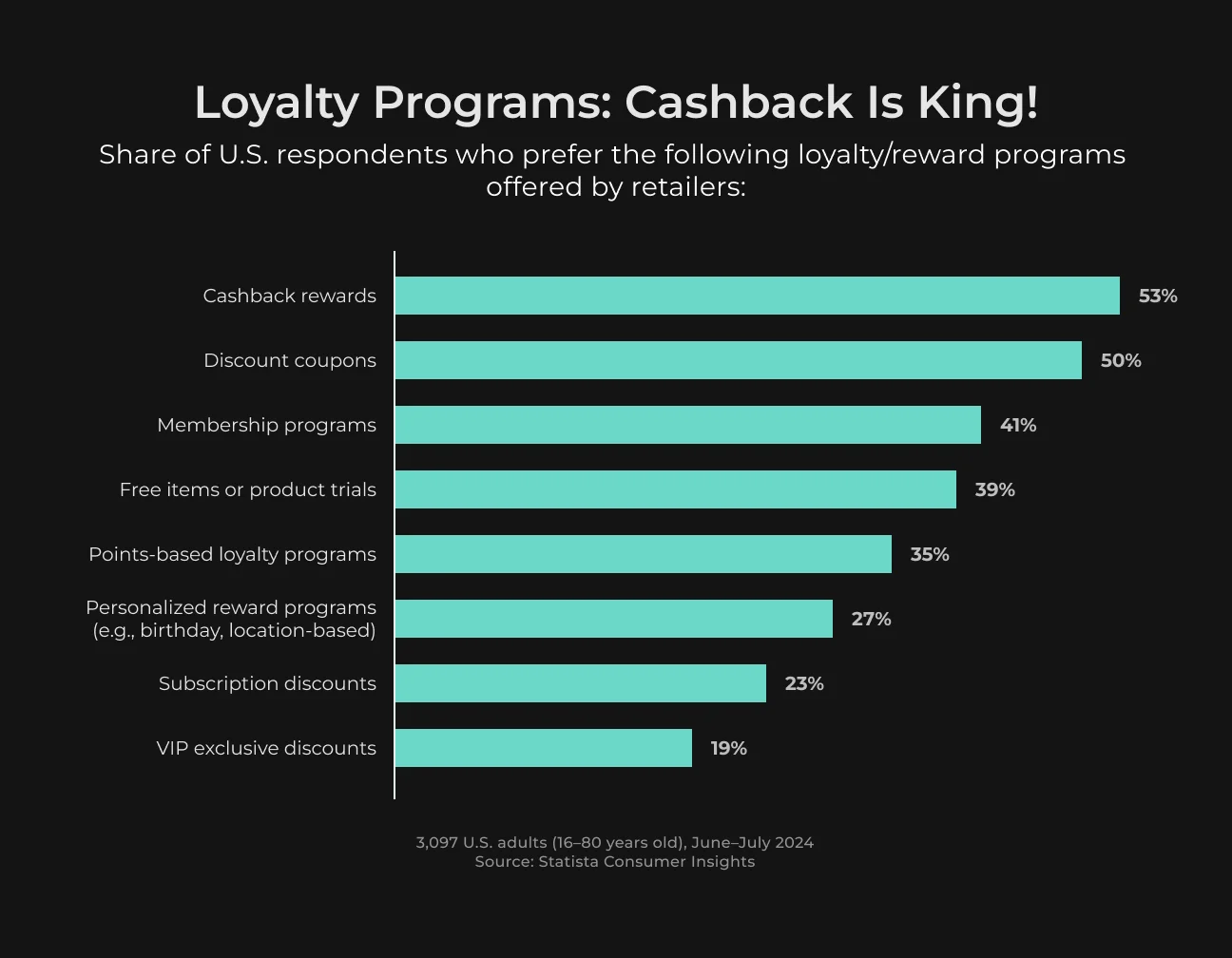
The loyalty app for small business with a cashback approach returns a percentage of the purchase value to a digital wallet within the app. This credit can then be spent on future purchases at the same store.
The cashback model is essentially a deferred discount. It improves cash flow for the merchant while guaranteeing that the user returns to spend their balance. It works particularly well in price-sensitive sectors where direct financial value is the primary motivator.
Subscription-based loyalty
Paid loyalty programs, such as Amazon Prime or Walmart+, involve a recurring fee in exchange for high-value benefits like free shipping or exclusive discounts.
This model provides immediate recurring revenue and significantly increases share of wallet. Members feel compelled to use the service to justify the subscription cost.
Gamified loyalty apps
To make the experience more interactive, a loyalty gamification app uses mechanics like:
- Badges;
- Leaderboards;
- Challenges;
- Points and leveling systems;
- Achievement milestones;
- Daily or weekly streaks;
- Progress bars (goal tracking);
- Missions or quests;
- Spin-to-win rewards or mystery bonuses;
- Referral competitions;
- Time-limited events or campaigns;
- Social sharing and community recognition;
- Personalized goals and rewards.
By turning the act of shopping or engaging with a brand into a game, you can increase daily active usage. Gamification can boost retention by up to 40%. It is particularly effective when users are rewarded for non-purchase behaviors like sharing on social media or completing a wellness challenge.
Must-Have Features of a Successful Loyalty App
How to create a loyalty app? Start with the must-have and advanced features. The effectiveness of a rewards app is often determined by the technical quality of its features and the lack of friction in the user experience.
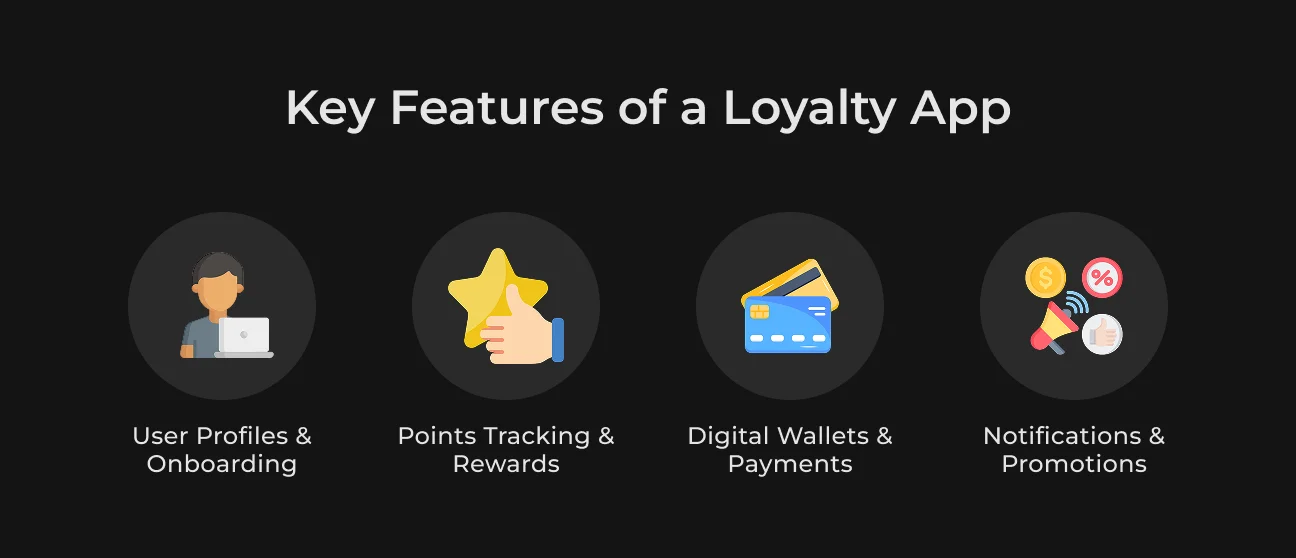
User onboarding & profiles
The registration process must be as short as possible. High-performance apps often use biometric authentication, such as FaceID, or social logins.
A detailed user profile should be the secondary step. It must allow customers to set preferences and see their progress at a glance.
Points tracking & rewards
Real-time synchronization is essential for a loyalty system app.
If a customer makes a purchase and doesn't see their point balance update instantly, they lose trust in the program. The interface must clearly show how many points are needed for the next reward. Visual progress bars trigger the human psychological desire for completion.
Digital wallet/payments
An integrated digital wallet allows for a smooth checkout experience. In 2026, many shoppers prefer to use stored credentials or digital cards within the app to complete purchases. A digital loyalty app that stores payment methods or gift cards reduces the steps to purchase, which directly impacts conversion rates.
Notifications
Push notifications are the primary way a mobile loyalty app stays top-of-mind. However, they must be highly personalized. Effective notifications include:
- Reminders about points that are about to expire;
- Exclusive offers based on a user's previous purchase history.
Generic notifications are ignored by most users and can even lead to app uninstalls.
Advanced features of a Loyalty App for Business
To stay competitive, a loyalty app for business must provide sophisticated features that use AI and location data to create a high-value experience.
AI personalization
Advanced personalization can increase engagement by up to 35%.
By analyzing behavioral data, AI can:
- Suggest specific products or rewards;
- Recommend personalized discounts or bundles;
- Identify churn risk and trigger retention campaigns;
- Adapt reward structures based on user preferences;
- Personalize in-app content and messaging in real time;
- Recommend next-best actions to increase engagement.
This level of customization ensures that the user feels understood by the brand. For deeper insights into how these automated systems work, read our AI customer service automation guide.
Geolocation offers
A loyalty rewards app can use geofencing to send notifications when a user is physically near a store. This just-in-time marketing can drive impulse visits and foot traffic.
For example, a coffee shop might send a coupon for a discount when a loyalty member walks within 730 feet of their location.
Referral systems
Word-of-mouth is one of the most effective ways to acquire new customers. A loyalty rewards app should include a built-in referral system that rewards both the advocate and the new customer.
Double-sided incentives increase referral participation by 29%. These successful referral programs are common within loyalty apps because they provide a win-win scenario that feels more authentic than traditional advertising.
Gamification mechanics
A loyalty gamification app might include features like:
- Mystery rewards;
- Streak counters for daily logins;
- Interactive challenges.
You simply increase the frequency of brand interactions and strengthen the psychological bond between the customer and the company.
Common Challenges in Loyalty App Development
The path to a successful customer loyalty program app is often complicated by technical debt and poor user engagement strategies.
Low user engagement
Many companies launch an app and find that users download it once and never open it again. Shopping apps have a 30-day churn rate of nearly 90%. Discounts alone are not enough.
The app must provide ongoing utility, whether through personalized content, easy ordering, or exclusive experiences.
Scaling & technical debt
Building an app that works for 1,000 people is very different from building one that handles millions of transactions simultaneously. A loyalty system app must be built on a scalable cloud architecture that can expand as the user base grows.
If your backend is not modular, the cost of adding new features or integrating with new sales channels will become prohibitive over time.
POS integration complexity
The most significant technical hurdle in loyalty app development is often the integration with Point of Sale (POS) systems.
Many businesses use legacy hardware that does not easily share data in real-time. Without a seamless API connection between the POS and the loyalty engine, customers experience:
- Delays in point earning;
- Errors in reward redemption.
Such problems damage the program's credibility.
Your Retention Problem Has a Fix
SapientPro builds loyalty apps that turn one-time buyers into regulars.
Industry Use Cases of Loyalty Apps
How to create a loyalty program app? Consider the specific applications before developing, because they vary by sector.
Retail & eCommerce
Retailers use loyalty apps to bridge the gap between online and offline shopping.
Omnichannel strategies allow customers to earn points in-store and redeem them via a mobile loyalty app for online discounts. This provides a unified experience that keeps the customer within the brand's network regardless of the channel.
For more technical details on this sector, reading our guide on building shopping apps is highly recommended.
Food & beverage
Here, the loyalty app for business reduces wait times and increases order frequency.
Features like order ahead and last order memory provide a level of convenience that drives repeat business. Loyalty programs in this sector often use "punch card" mechanics, where every fifth or tenth visit results in a free item.
Travel & hospitality
The travel industry relies heavily on tiers and status. Loyalty members in this sector are often willing to pay a premium or travel out of their way to stay within a specific airline or hotel network to maintain their VIP benefits. These programs focus on experience-based rewards like:
- Lounge access;
- Late checkout;
- Complimentary room upgrades;
- Priority boarding;
- Fast-track security and check-in;
- Free checked baggage;
- Dedicated customer support lines;
- Bonus miles or points multipliers;
- Access to exclusive events and partner offers;
- Early booking privileges;
- Guaranteed room availability during peak seasons;
- Welcome amenities (e.g., drinks, snacks, gifts).
They are rarely interested in simple discounts.
Healthcare
Medical providers use a customer loyalty program app to encourage healthy behaviors.
Patients can earn points for:
- Refilling prescriptions on time;
- Attending preventive screenings;
- Completing wellness workshops;
- Booking and attending regular check-ups;
- Following personalized treatment plans;
- Tracking physical activity (e.g., steps, workouts);
- Maintaining medication adherence over time;
- Participating in telehealth consultations;
- Completing health risk assessments;
- Achieving milestones (e.g., weight loss, smoking cessation);
- Receiving vaccinations on schedule;
- Engaging with educational health content in the app.
This reduces no-show rates and improves patient adherence to treatment plans, which produces better clinical outcomes and higher provider profitability.
B2B loyalty programs
B2B companies use loyalty apps to manage relationships with distributors and partners.
These programs often reward long-term partnerships and professional development rather than simple transactions. Partners can earn points for completing product training or reaching sales milestones, which can then be redeemed for business tools or exclusive industry events.
For organizations looking to automate their support, SapientPro also offers guidance on how to make an AI voice chatbot for customer support.
Loyalty App Development Guide: Step-by-Step Process
How to create a loyalty program app?
Here are the steps required to build a high-performing loyalty app.
Step | Stage | Description |
| 1 | Define Objectives | Determine if the goal is churn reduction, increasing average order value, or gathering first-party data. |
| 2 | Segment the Audience | Identify high-value customers and understand what rewards truly motivate them. |
| 3 | Design the Reward Logic | Create a balanced system for point accrual and redemption that is sustainable for the business. |
| 4 | Develop the MVP | Launch a version with the most essential features to test user response in a live environment. |
| 5 | Integrate with Sales Systems | Ensure real-time connectivity with POS and CRM databases. |
| 6 | Train the Staff | Make sure employees understand how the app works so they can explain it to customers. |
| 7 | Measure and Optimize | Use behavioral data to continuously refine rewards and notification strategies. |
Technology Stack & Architecture of a Loyalty App
The performance of a loyalty card app is highly dependent on the choice of technology.
Most modern projects favor cross-platform development to reach both iOS and Android users without doubling the budget.
| Component | Recommended Technology | Reason |
| Frontend | Flutter or React Native | Cost-effective and provides a native-like experience. |
| Backend | Node.js or Python | High scalability for real-time transaction processing. |
| Database | PostgreSQL | Reliable for transactional integrity and member records. |
| Cache | Redis | Essential for fast point balance lookups and session management. |
| Infrastructure | AWS or Google Cloud | Provides the necessary security and global availability. |
| Security | OAuth 2.0 / Biometrics | Protects sensitive user data and point currency. |
Cost of Loyalty App Development
The investment required to build a rewards app varies based on complexity and the number of integrations required. You can build a generic one that is cheap or an expensive one with luxury-brand-like features. It all depends on your vision and needs.
Note that the costs below are based on the market average and are only used for an approximate evaluation. For a detailed estimate made for your app and idea, please contact SapientPro’s team – we provide a free consultation and calculater all costs based on your project specifics.
Tier | Price Range | Description | Key Features |
| Minimum viable product (MVP) | $25,000 – $55,000 | A basic loyalty app for small businesses looking to test the concept. | Simple points system, basic push notifications, standard rewards catalog |
| Advanced custom app | $60,000 – $150,000 | A more robust loyalty app with deeper engagement and customization. | Tiered rewards, referral system, POS integration, custom UI/UX, basic personalization |
| Enterprise network | $150,000 – $500,000+ | A high-end solution built for scale and complex operations. | AI-driven recommendations, geofencing, complex data architecture, multi-region hosting, high concurrency, enterprise-grade security |
How SapientPro Build E-Commerce and Retail Solutions
SapientPro has extensive experience engineering platforms that can handle the massive data volumes and high-traffic events typical of the retail sector.
Saleslogs
The Saleslogs project involved creating a retail sales performance platform that replaced inefficient manual spreadsheets. The goal was to centralize data from multiple retail locations to provide real-time visibility into store activity.
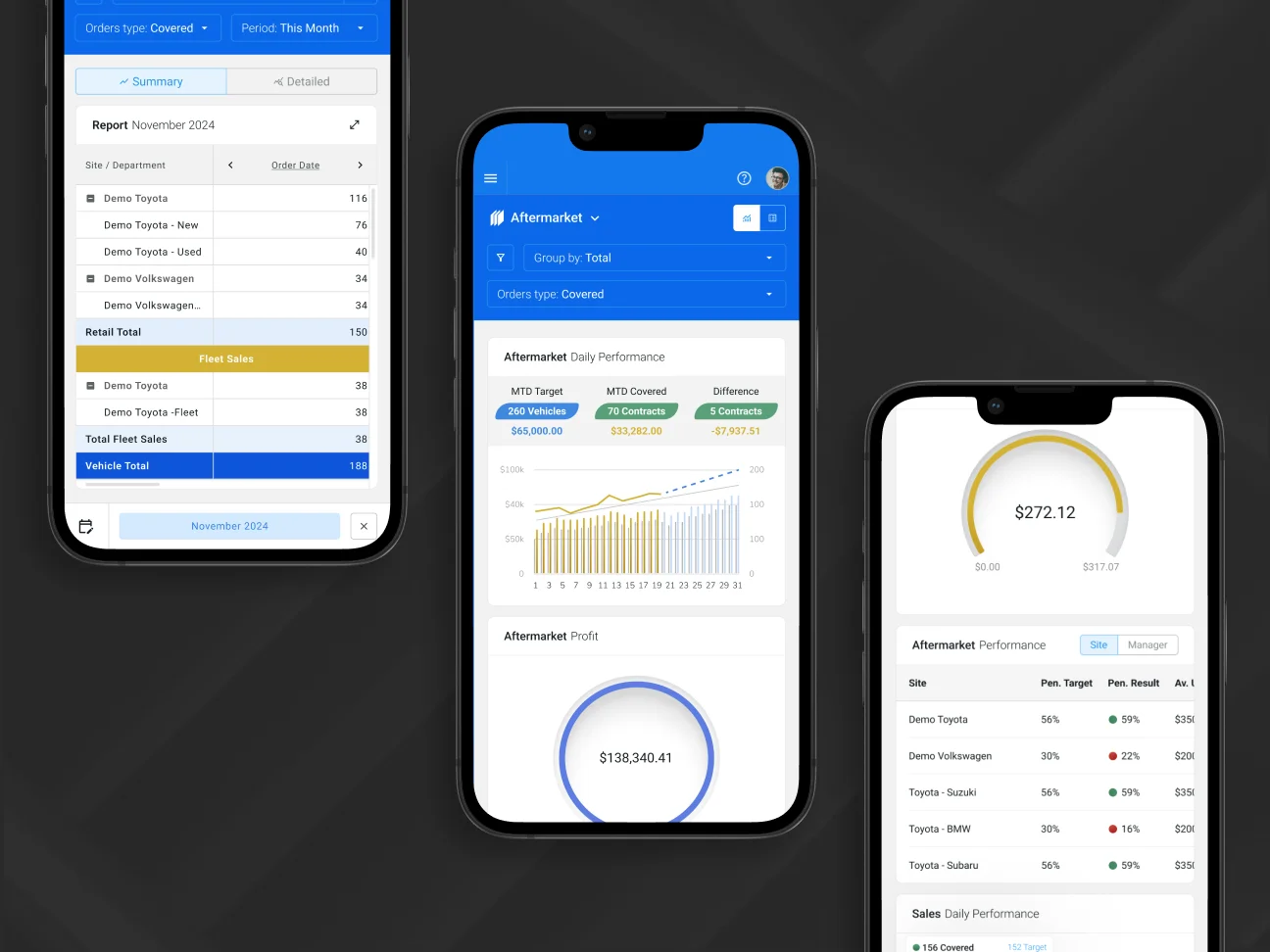
SapientPro built a modular architecture using Angular, allowing the platform to grow alongside the expanding retail network without requiring a system rework.
The solution included real-time dashboards and performance leaderboards that helped managers monitor team metrics and sales forecasts across the entire organization.
Footshop
Footshop is a leading sneaker retailer that required a high-capacity online storefront and warehouse module to support rapid growth across Europe. The main challenge was ensuring the site remained stable during hyped releases when traffic spikes dramatically.
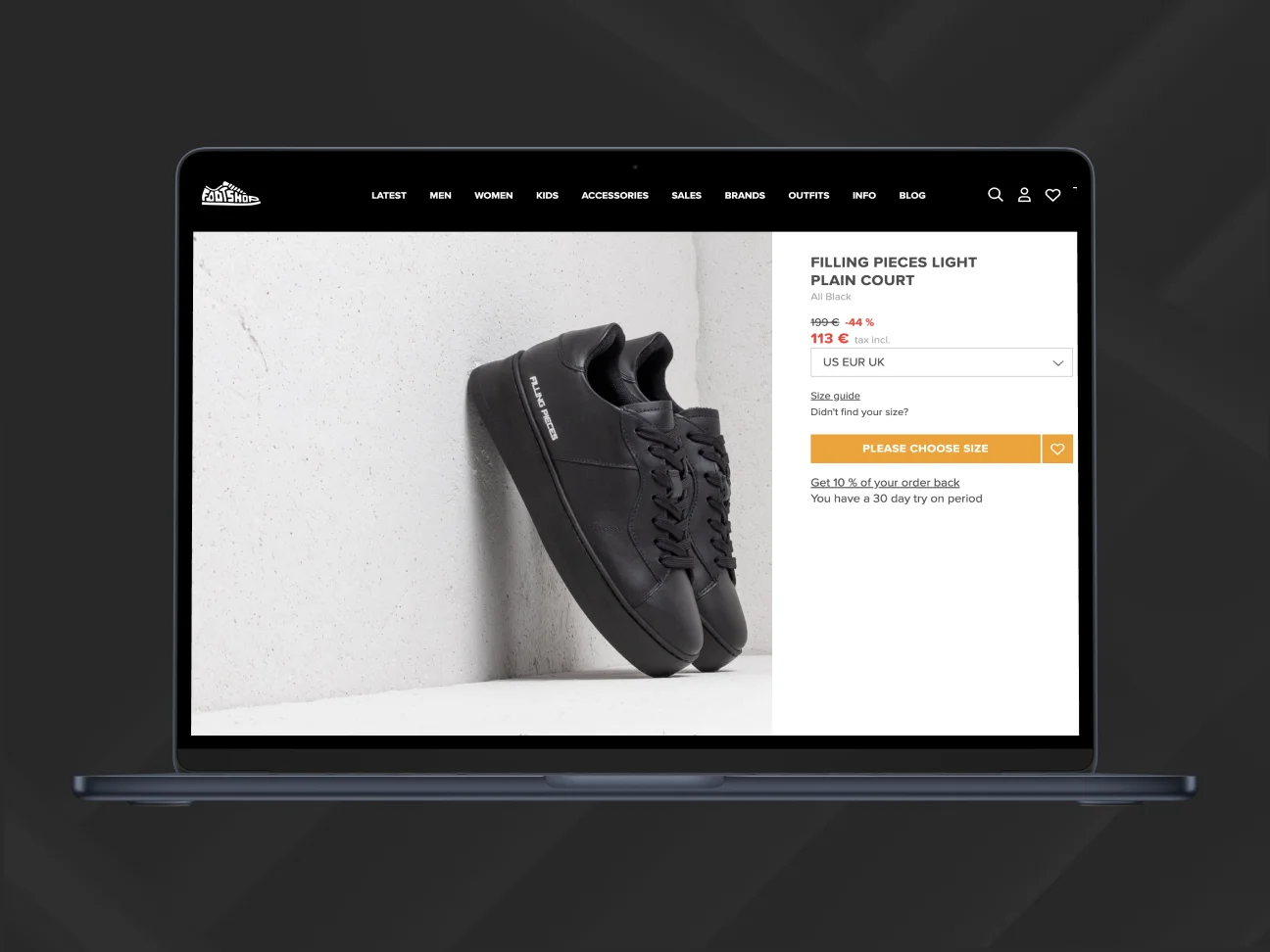
SapientPro modernized the aging platform, completely replacing the legacy codebase to improve stability. By using AWS data centers and a global CDN, we ensured low-latency performance for shoppers in over ten different currencies while maintaining a smooth checkout process during high-load periods.
Why Choose SapientPro for Loyalty App Development
SapientPro builds loyalty apps that are effective, engaging, profitable, and reliable. Our team has 9+ years of experience in creating software that helps our customers make more profits.
Here is what we can develop for you:
- Mobile loyalty app networks. We build cross-platform tools for your digital loyalty app using Flutter or React Native, providing a native experience that works everywhere without doubling the cost.
- Loyalty rewards app logic. We sync your loyalty card app with any POS or CRM and handle the data pipelines so you can focus on the rewards.
- Loyalty gamification app mechanics. We add progress bars and milestone challenges to your loyalty app for business, using the right hooks to keep users coming back.
- Deep SaaS connections. We link your rewards app with tools like Salesforce or HubSpot. Contact us to build a loyalty system app that fits your stack.
Contact us now to get a free estimate and build your loyalty system app.
We Build Loyalty Apps. You Keep Customers
Tell us what your program needs. We'll tell you exactly what it costs to build.