All AI in Internal Audit for Compliance: Benefits, Use Cases, and Future Trends
January 28, 202615 min read


Traditional internal audits are mostly about strictly following rules. But with AI comes into play, it becomes a whole new story. Unlike old systems that adhere to the script, AI learns and develops all by itself, leaving human oversight behind.
This makes AI a bit hard to explain, predict, or even fully understand what’s happening inside the system.
Generative AI goes one step further — it creates new content like text, images, code, or music using big data sets and neural networks. Tools like ChatGPT or DALL-E perfectly show us how this works. Right now, about 39% of internal auditors are using AI, with another 41% planning to get on within the next year.
Sure, generative AI offers a mix of innovation and efficiency, but it also brings risks that auditors can’t ignore.
This guide will help you untangle the complexity of internal compliance audits. You'll get the lowdown on how AI works in risk and compliance, along with its top uses in internal audit and risk management.
Key Takeaways
- AI in internal audits uses high-tech tools like machine learning and natural language processing to act like a human. It helps spot risks, ensure compliance, and detect fraud;
- Instead of just testing bits of data, AI can analyze massive datasets to spot patterns and avoid mistakes;
- As artificial intelligence continuously learns from data, it gets only better with time at catching new risks.
What is AI in Internal Compliance Audit?
AI in internal audits works similarly to your own smart assistant that does the tedious tasks instead of you. It uses modern, sophisticated tech like machine learning and natural language processing to think like a human. In internal compliance and audits, AI helps identify risks, check compliance, and catch fraud.
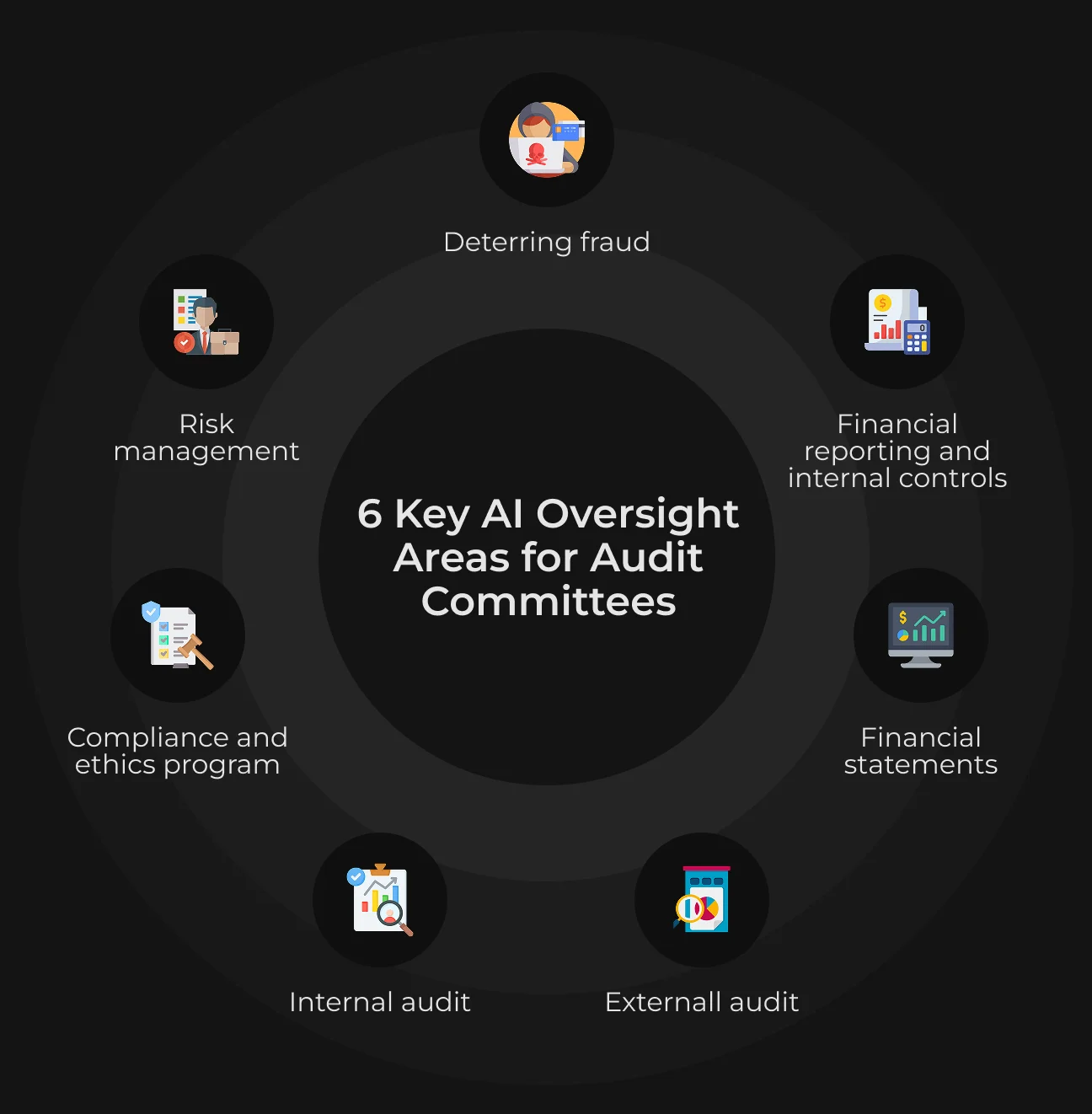
Instead of just testing bits of data, AI can analyze massive datasets to spot patterns and avoid mistakes. By 2033, the AI audit business is expected to grow from $1.4 billion to $8.7 billion.
About 68% of financial firms are fully using AI to manage risks. Specifically, because AI cuts time spent on routine tasks and makes audits sharper and faster. Businesses can forget about guessing — AI searches through a myriad of data to catch issues early.
Besides, AI looks through past data and predicts future mishaps, giving auditors a chance to stop issues before they actually occur. All this makes audits not just a routine exercise but a strategic and practical tool that improves governance and operations.
See more
Curious about vibe coding and if it's worth a try? This guide explains what vibe coding is, its pros and cons, and tips for using it effectively.
Read moreBenefits of AI in Risk and Compliance Audits
AI makes life way easier for internal auditors by spotting risks, speeding up the process of finding them, and helping with smarter decisions. It takes the repetitive stuff and boosts accuracy, letting auditors manage and focus on more important duties.
Look at these five key benefits of adding AI to internal audit risk and compliance.
1. Advanced Risk Detection
AI takes internal audits to the next level since it analyzes all the data (not just samples). AI systems can catch unseeable patterns and other odd stuff that humans might miss, identifying risks without delay.
As artificial intelligence constantly learns from data, it gets only better with time at detecting new risks. This allows auditors to manage issues before they arise, seriously boosting their risk management skills.
2. Better Accuracy and Fewer Mistakes
Automated systems make audits extremely accurate, which cuts out human mistakes. AI can process a huge amount of data effortlessly, checking every transaction for meticulous results. It makes audit reports more reliable.
3. Boosted Automation
By automating boring tasks like pulling data, checking compliance, or analyzing transactions, auditors can focus on the important work. This speeds up audits and makes auditors more productive.
Plus, real-time monitoring keeps auditors alert, allowing them to solve new issues quickly.
4. Efficient Detection of Fraud
AI helps catch fraud fast by spotting weird transactions or patterns immediately. It alerts auditors before anything goes seriously wrong, which saves their money and reputation. And it keeps learning new tricks to provide lasting security.
5. Enhanced Audit Skills
AI takes care of all the paperwork in internal audits, while auditors work on strategy and deep analysis. Running these tasks, AI helps them spot high-risk areas, prioritize urgent audits, and better allocate resources.
Auditors can do what they do best — make decisions where a human touch is needed. Meanwhile, audits get better and become more valuable
Challenges in Adopting AI Internal Audit Software
Like with any technology adoption, there are certain risks involved.
It's crucial to know and overcome these challenges to successfully use AI tools in internal compliance.
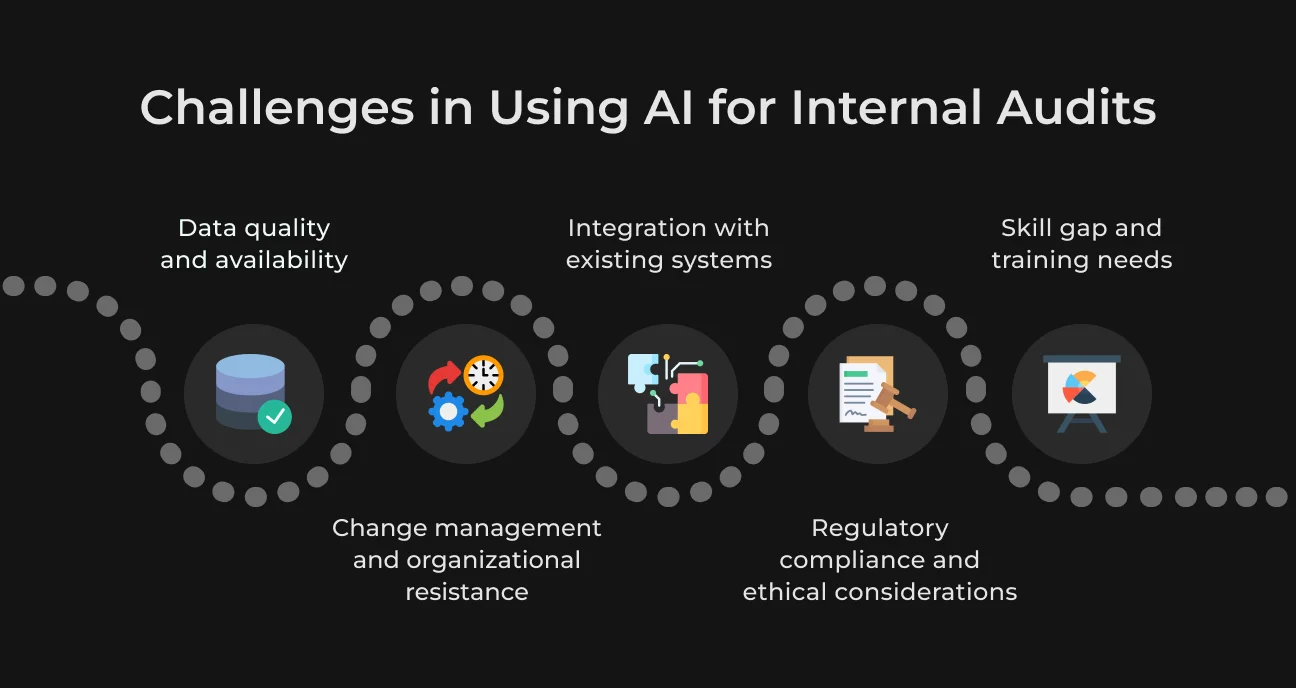
Data Quality and Availability
One challenge with using AI for internal audits is collecting quality data. If the data is lousy, AI can make wrong choices.
Auditing requires gathering data from different sources and departments. This can be messy because the data might be inconsistent or incomplete. To get accurate results, businesses need to clean and integrate their data, ensuring it's consistent and complete.
Such data cleanup also takes a lot of resources and teamwork across departments.
Integration with Existing Systems
Organizations often struggle to integrate AI internal audit solutions into their current IT setups. This is because older systems don't operate well with new technology, causing issues in data sharing.
Smooth integration is vital for effective AI audits. If systems don't connect, data gets stuck in silos, making the analysis less accurate and thorough.
Fixing these integration issues usually requires substantial investments. Plus, businesses should have a solid plan to either upgrade what's already there or use middleware to help different systems align.
Skill Gaps and Training Needs
Switching to AI-driven auditing requires employees to learn new skills. Auditors need to know both classic auditing and the basics of data science and machine learning because of the complexity of AI systems.
Companies need to bridge this skill gap by investing in training programs. This means they have to spend time and money teaching their current employees new skills and maybe even hire some AI tech experts.
Change Management and Organizational Resistance
Bringing AI into audits might make employees used to traditional ways a bit tense. The goal here is to prepare everyone for these changes gradually.
People might fear that AI will replace their jobs or mess up complex audits. The right solution would be to explain AI's real capabilities and reassure them that it's a helper, not a threat.
Regulatory Compliance and Ethical Considerations
When you use AI for internal audits, be cautious while following laws and ethics. Rules like GDPR and CCPA limit how AI can process audit data.
Not following the rules can lead to issues, so organizations must ensure their AI solutions are designed with these legal frameworks. Plus, AI has some other issues, like bias or transparency, that also need attention.
To make AI ethical and trustworthy, it should be fair and able to explain its decisions, particularly in audits.
320+ hours automated each month
See how SapientPro implemented AI to process CVs at scale.

AI Agents’ Role in Internal Audit and Risk Management
Traditional auditing relies on manually checking samples and reviewing past data. In contrast, AI agents enable continuous monitoring and real-time assessments. This lets auditors address risks and compliance issues more proactively.
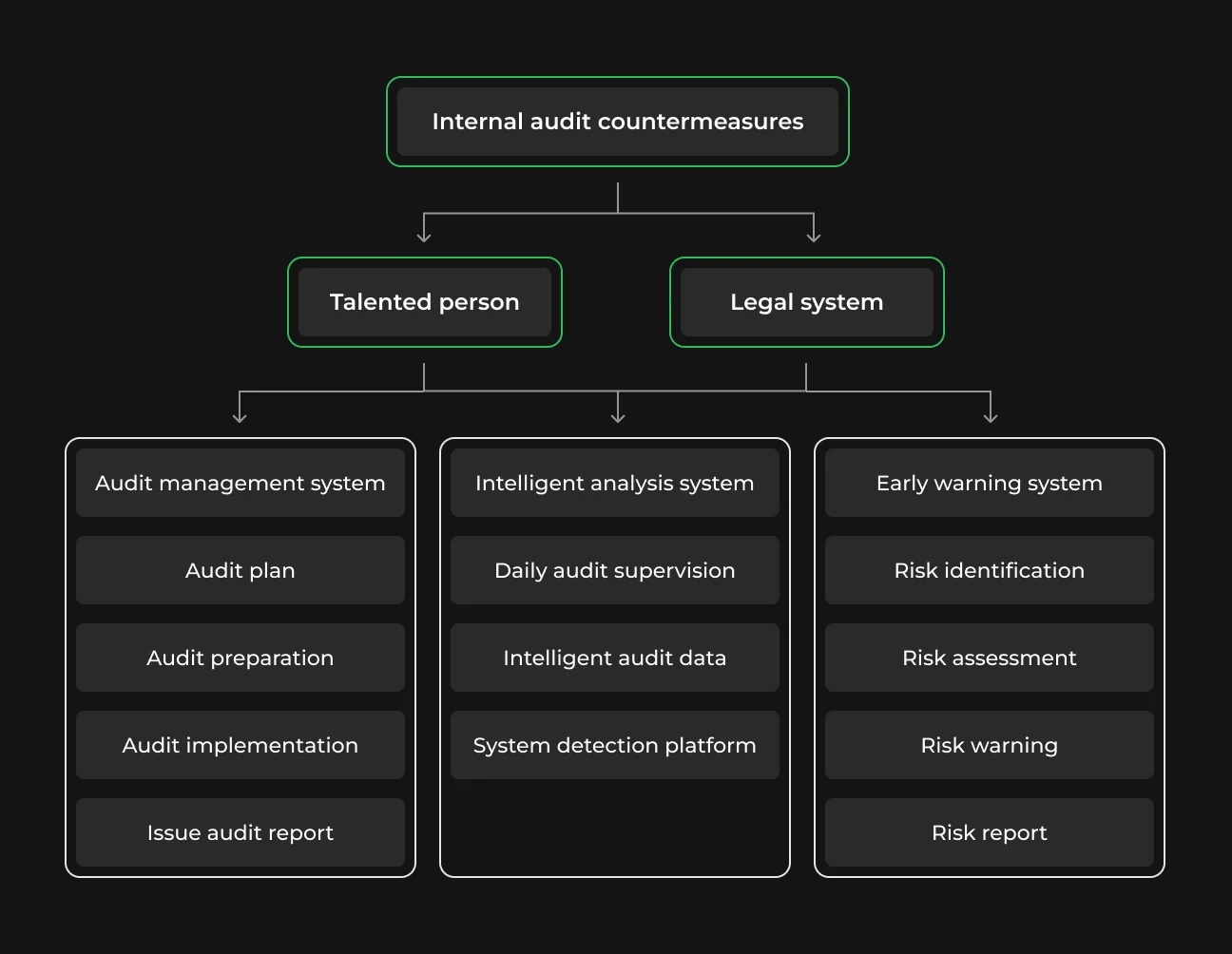
Here are some key ways AI agents are used in internal auditing. Let's check out some examples.
Collecting and Analysing Data Automatically
An AI agent takes the hassle out of gathering financial, operational, and compliance data by doing it all automatically. It pulls info from ERP systems, financial statements, and transaction logs.
Machine learning analyzes the data for anything suspicious, like mistakes or other peculiarities that could mean auditing trouble. This cuts down on manual labor, boosts efficiency, and improves accuracy in catching possible issues or rule violations.
Continuous Monitoring and Risk Assessment
An AI agent helps closely watch business activities in real time. It uses predictive analytics to spot risks in various departments and regions. For example, the AI can detect potential issues like rising vendor costs or odd employee expenses.
Reporting and Better Decision-Making
An AI agent uses NLP skills to make sense of data like emails and contracts. It creates detailed audit reports and visual dashboards that help leaders make decisions.
These reports highlight risks, recommend solutions, and prioritize tasks based on how serious the dangers are.
Creating Virtual Scenarios
An AI agent helps play out worst-case scenarios, like supply chain issues or new regulations, to see how they might affect business. This lets the risk team figure out and test ways to reduce any potential damage.
Assuring Compliance and Ethical Monitoring
An AI agent helps companies stick to rules like GDPR by reviewing their data and comparing it to the latest regulations. It identifies any rule-breaking and offers solutions.
AI agents can also evaluate ethical conduct, warning the company about any deceptive activities.
This shows how an AI agent can revamp internal audits and risk management, giving a strategic edge in today's ever-changing business world.
Use Cases of AI in Internal Audit & Risk Management
Check out how companies use AI in real life and the benefits it brings to their business and security.
1. Machine Learning to Detect Fraud
At PayPal, AI uses machine learning to monitor tons of transactions in real time, looking for anything suspicious. If it finds something odd, it raises a red flag, and human analysts proceed with investigation. With AI’s help, PayPal catches fraud quickly, saves money, and keeps customers satisfied.
2. Generative AI for Compliance Monitoring
Deloitte uses AI to ease following the rules, particularly for financial audits. These smart algorithms quickly check lots of transaction data against tricky rules like anti-money laundering and Know Your Customer requirements. This setup finds problems faster than people ever could, cutting down on fines and improving efficiency.
3. AI in Predictive Risk Assessment
Marriott International uses AI to spot risks before they actually occur. It analyzes data like finances, guest feedback, or market trends. This allows them to overcome problems like disruptions, market shifts, or reputation issues early, making their operations more strategic.
4. Predictive Analytics for Data Visualization
IBM’s Watson Analytics turns complicated data into easy-to-understand visuals, helping companies make smarter choices about audits and risks. It helps risk management highlight trends and patterns so teams can take action before things erupt.
How SapientPro Implemented AI into SDS Automation
SapientPro built a platform for managing chemical safety compliance. The mission was to create a multilingual system to make handling safety data sheets (SDS) something anyone could manage with ease.
The platform tackled some industry hurdles head-on — things like old documents, language confusion, and tracking SDS records in multiple places.
Key administrative features we included were:
- A multilingual interface;
- Role-based access;
- Activity logging;
- Ability to upload large amounts of data and organize it like an expert;
- A handy notification system.
SapientPro came up with a way to sort and neatly organize chemical safety data. We extract info on what chemicals do, their risks, and how to handle them safely, all presented in a tidy digital format.
We also added filters by ingredient, keyword, and regulatory details, making it much quicker for teams to find safety information
Since its launch, our SDS automation solution has been the backbone of a safety-data platform. We customize extraction, multilingual matching, and compliance tasks to fit our client's specific workflows, providing results in weeks instead of months.
Future Trends of AI in Internal Compliance Audits
AI is about to make big changes in corporate governance. The global AI governance market is predicted to move up from $309 million in 2025 to around $4.8 billion by 2034. That's actually a growth rate of 35.74% each year.
As more organizations dive into cloud solutions, AI is becoming super important in governance, with both areas seeing impressive growth together.
AI is also having a big impact on how productive companies are. It's estimated that AI could increase productivity by $4.4 trillion in workplaces. Interestingly, employees are using AI a lot more than leaders think, and they're three times more likely to expect AI to take over 30% of their work in the next year.
Deloitte's study shows that making adaptive changes to workflows can boost the success of AI projects by 36%. This is crucial for companies planning to incorporate generative AI into their compliance audits. By 2025, 42% of chief audit executives see integrating GenAI as a top priority for their teams.
Many organizations are just starting their journey with GenAI, for example, 28% of those firms are exploring its capabilities, and 21% testing specific use cases.
However, there is great potential for investing more in this area: 87% of organizations plan to increase their GenAI funding next year, with an average increase of 37.4%.
By the end of 2025, more than 70% of financial institutions are expected to extensively use AI. AI can greatly enhance decision-making, boost efficiency, and cut costs in many business areas.
It's particularly valuable in tasks like algorithmic trading, fraud detection, risk modeling, and automating compliance, where major improvements are expected.
Partner with SapientPro to Build Your AI Compliance Solution
SapientPro's AI services can streamline your internal processes and boost your workflow, especially if your operations rely on complex systems like CRMs, ERPs, or custom software. We work with AI platforms and APIs to create flexible solutions that fit your needs perfectly.
Our AI services meet high-quality standards and can help you stick to the rules in industries like finance or healthcare.
Get in touch with us to talk about an AI compliance solution that works for you.
Implement AI for Auditing with SapientPro