All Digital Transformation in Manufacturing: Automation Use Cases
September 26, 202610 min read


Unplanned downtime cuts into manufacturing margins. Plants also face operator shortages, changing raw material costs, and machines that drift out of specification. Digital transformation in manufacturing connects equipment data, production software, and automated controls so teams can detect problems and act sooner.
In SapientPro’s experience, digital transformation in smart manufacturing can cut unplanned equipment downtime by 30% to 50%. This article explains where manufacturing automation fits across a production line, what it can achieve, and which technical problems plants must solve first.
What Is Digital Transformation in Manufacturing?
Digital transformation in manufacturing means connecting physical shop floor equipment with software that collects, processes, and uses operational data. Sensors, controllers, manufacturing execution systems (MES), and enterprise platforms share information that would otherwise sit in separate machines or paper logs.
In digital manufacturing industry 4.0 environments, these connections let automated manufacturing systems monitor output and respond to defined conditions.
A system might adjust machine speed when a sensor reading changes, route materials to another work cell, or record a production count without manual entry. Automated manufacturing technology can also link tool paths, inventory records, and production data across plants.
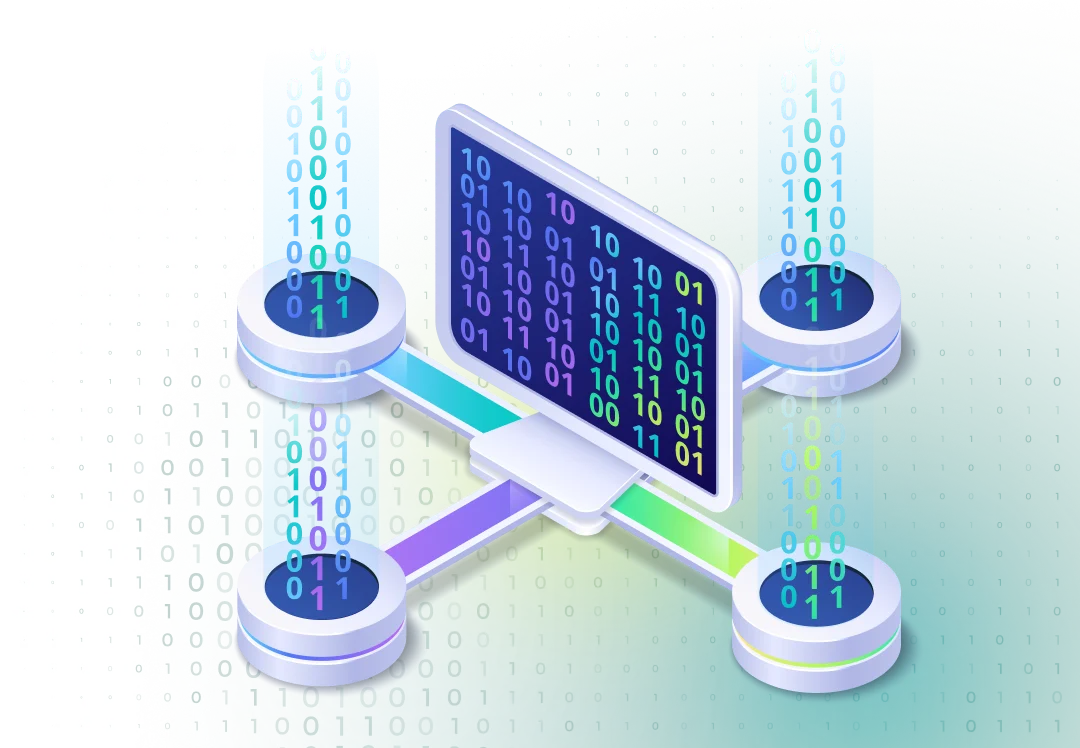
Industrial facilities generate operational telemetry from programmable logic controllers, temperature probes, and spatial encoders. Digital transformation manufacturing industry projects turn those signals into records software can use. For example, an edge gateway can read machine registers rather than requiring a technician to copy hourly pressure readings into a log. Common industrial protocols include:
- Modbus TCP;
- OPC Unified Architecture;
- PROFINET.
The resulting data flows into MES platforms. Automated production software can compare live readings with setpoints, trigger a control correction, or assign an operator a task.
Why Manufacturing Automation Is No Longer Optional
Plant managers must handle several pressures at once:
- Tight operating margins;
- Rising labor expenses and shortages of skilled tradespeople;
- Operator roles that remain vacant for months;
- Volatile raw material prices;
- Buyer demands for tight product tolerances and reliable delivery.
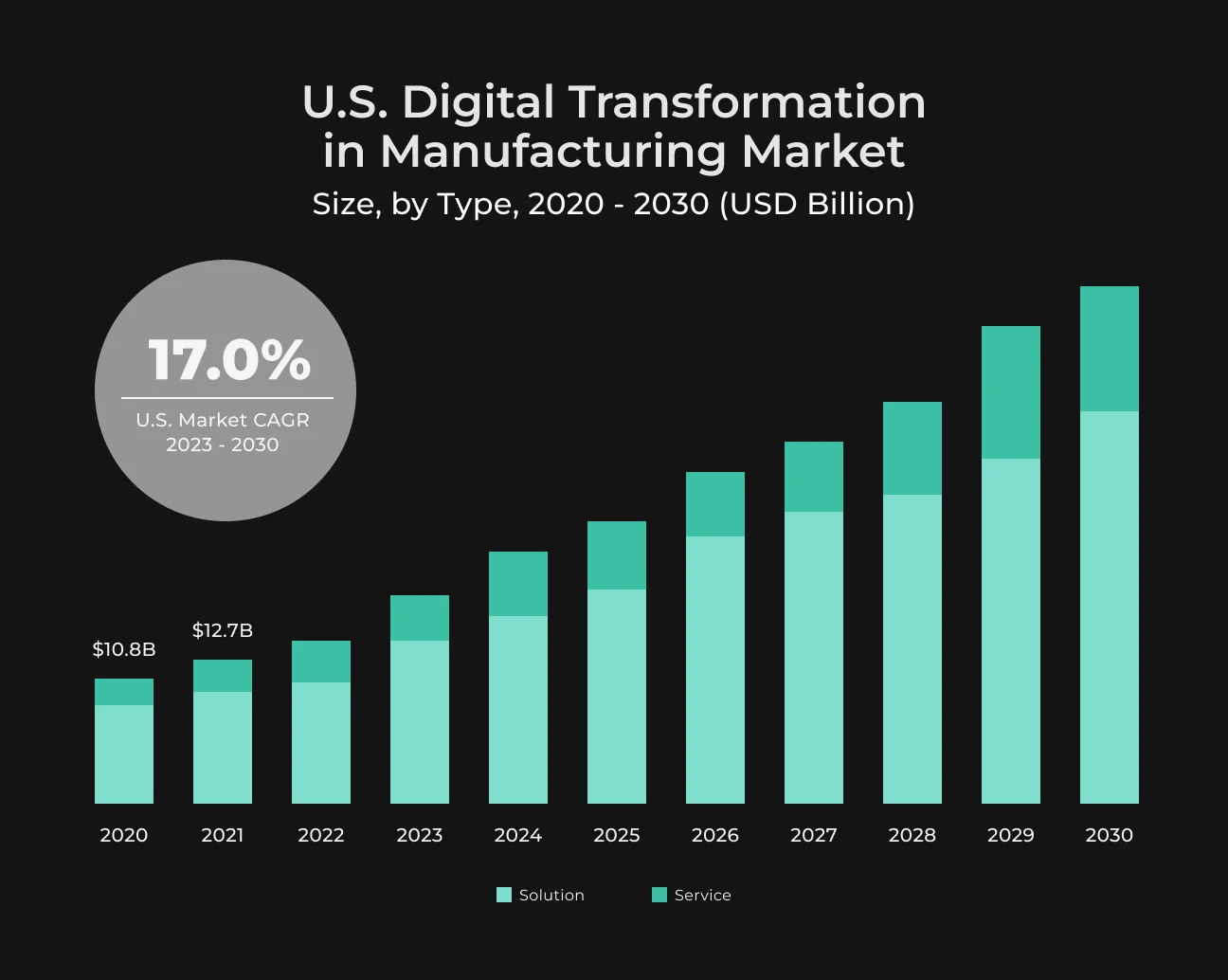
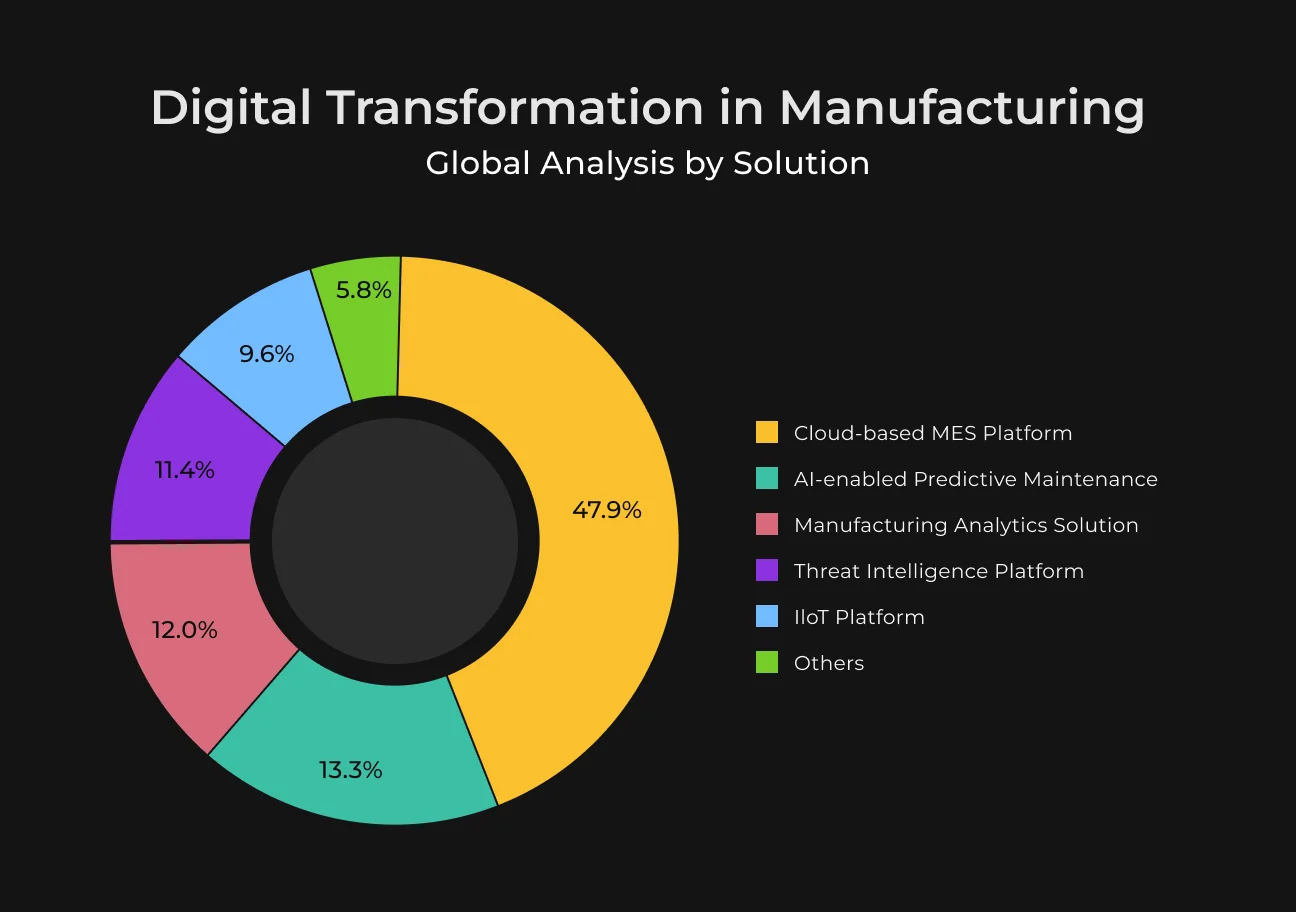
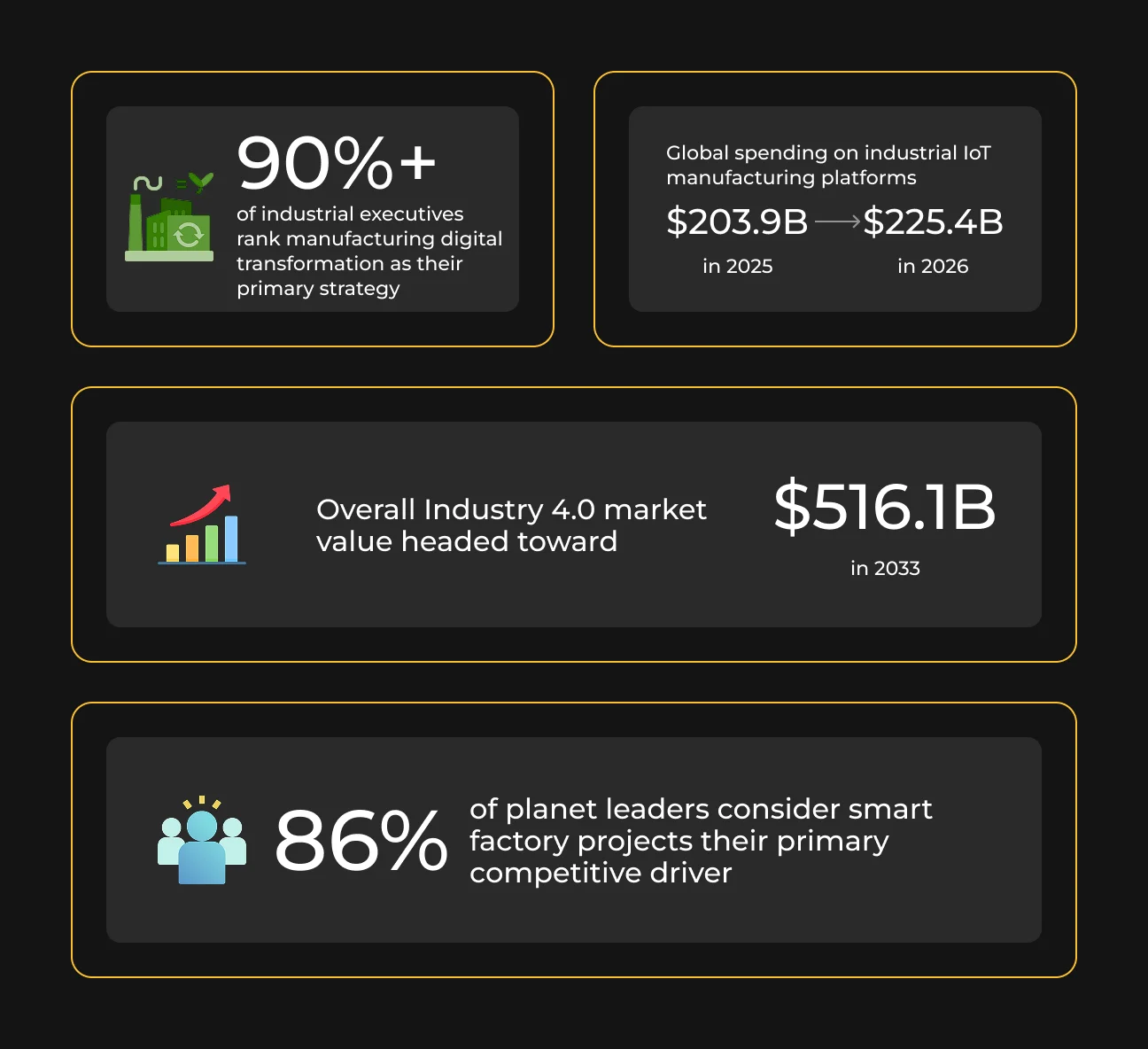
Manual checks and disconnected records make it harder to respond consistently when a line drifts out of specification. The investment trend reflects this pressure: more than 90% of industrial executives rank manufacturing digital transformation as their primary strategy. Global spending on industrial IoT manufacturing platforms is projected to rise from $203.9 billion in 2025 to $225.4 billion in 2026.
The Industry 4.0 market is projected to reach $516.1 billion by 2033.
Manufacturing process automation changes how lines respond to production conditions. For example, an automated manufacturing process can adjust a feed rate when material thickness changes or flag tool wear before it causes defective parts.
Deloitte reports that 86% of plant leaders consider smart factory projects a primary competitive driver. For plants facing costly outages or variable quality, these are practical reasons to evaluate automation manufacturing industry tools.
Key Automation Areas in Manufacturing
Manufacturing automation solutions cover physical handling, production controls, equipment monitoring, quality inspection, and the software that connects them.
Robotic Process Automation and Physical Robotics
Physical robots take on repetitive or strenuous work at production stations:
- Robotic arms perform welding, stamping, and assembly;
- Mobile robots move components between work cells without floor tracks;
- Collaborative robots work alongside operators on lifting and repetitive placement tasks.
Robotic process automation in manufacturing industry software addresses administrative tasks instead of physical movement. Software bots can read production counts, scrap logs, and shift records from existing systems, then:
- Issue purchase orders when inventory falls below a set level;
- Update work orders in ERP systems;
- Log safety records without repeated manual entry.
These workflows reduce transcription work and the opportunities for clerical errors. Staff can spend more time on exceptions and production decisions.
Automated Production and Process Control
Automated production connects SCADA systems, industrial controllers, and field instruments. Instead of relying on operators to adjust valves or speed dials, automated manufacturing process controls respond to live measurements:
- Variable frequency drives change motor speed using torque and pressure readings;
- Field controllers adjust settings within milliseconds when a process value moves outside its set range.
These corrections can limit off-spec output and raw material waste during batch changes.
Automated manufacturing systems also record parameter changes against batch numbers, making it easier to reproduce or investigate a run. Continuous feed controllers can coordinate chemical dosing, thermal profiles, and conveyor timing across multiple stages.
IoT-Enabled Smart Manufacturing and Predictive Maintenance
Smart manufacturing industry 4.0 systems monitor machine condition with industrial IoT sensors. Vibration sensors, thermal cameras, and acoustic monitors send readings to edge computers for analysis.
Condition-based maintenance uses those readings to schedule repairs based on equipment health rather than a fixed calendar or an emergency breakdown. Algorithms can flag bearing wear, electrical imbalances, or unusual pump noise before failure. Technicians can then order parts and schedule work during a planned break. This leads to a 20% to 40% increase in machinery operating lifespan.
Digital Twins, ERP, and the Connected Factory
A digital twin is a software representation of a machine, production cell, or facility that receives live operating data. Managers can use it to examine equipment status, heat zones, and bottlenecks. Research reports maintenance cost reductions of up to 10% and asset uptime gains of 10% to 20%.
In a connected factory, MES and ERP systems exchange production data. Digital transformation in industrial manufacturing can connect field devices with business workflows so that:
- Production updates reach planning teams without re-entry;
- Raw material usage can trigger vendor orders;
- Quality test records attach to item serial numbers.
Specialized facilities can also connect laboratory instruments to lab data management software. Native driver APIs can pull files from chromatography units, mass spectrometers, and precision balances, replacing loose spreadsheets and manually named versions such as _v2 or _final.
The described platform records database edits with user identifiers, supports double authentication and electronic signatures, and locks instrument interfaces when calibration dates expire. These connections give production and compliance teams a shared record of test results.
AI Quality Control and Supply Chain Automation
Computer vision can inspect products continuously at line speed. During repetitive shifts, human inspectors may miss 20% to 30% of defects. High-resolution cameras and convolutional neural networks can identify cracks, scratches, and color differences; the detection rates cited for these systems exceed 95% to 99%.
In the automotive industry, AI weld inspection reached a 99.8% detection rate. Inline systems can verify up to 963 items per minute and send reject signals to programmable controllers without stopping conveyors. Inspection results can also feed back into process controls.
Our guide to AI quality control automation use cases explains the technical setups in detail.
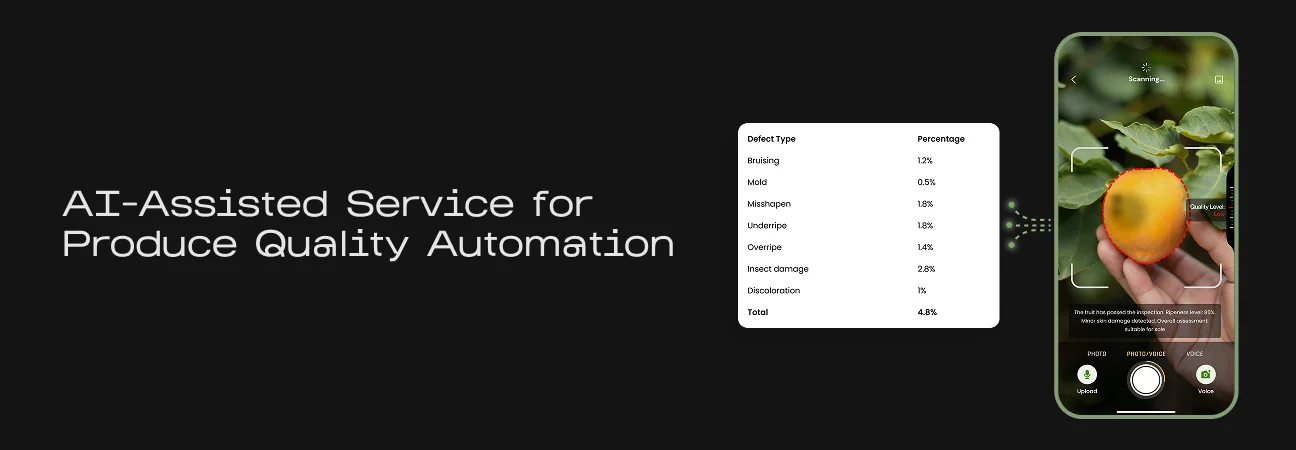
SapientPro built an AI-driven produce inspection app for an AgTech client. Computer vision classified defects, while voice recognition turned spoken comments into digital reports. The app pre-filled 80% of report details, reduced inspection time by 87.5%, and saved field teams more than 320 hours per month.
Supply chain automation also depends on reliable records. SapientPro worked with Steeltrace on steel supply chain certifications for chemical and petrochemical industries. The team built a blockchain platform to protect material chemistry and laboratory records with smart contracts.
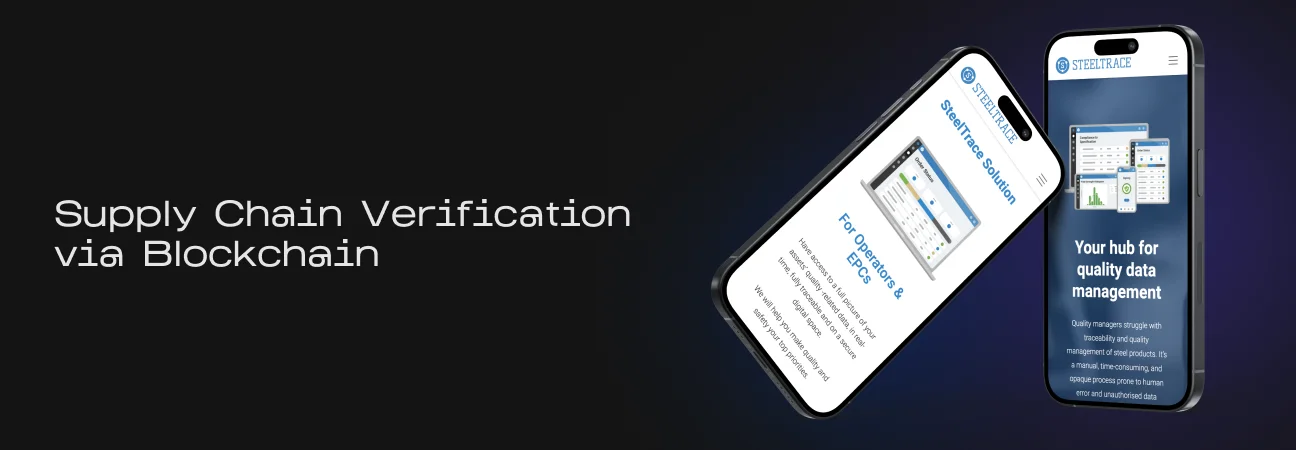
The earlier implementation used JavaScript libraries such as ethers.js and took up to 10 minutes to process smart contract encryption on mobile devices.
Moving the work to central servers would have exposed security keys to interception. SapientPro rewrote the encryption in Java for Android and Objective-C for iOS within the React Native application. Processing fell from 10 minutes to 20–25 seconds while keys stayed off external servers.
Connect Legacy Machines to Modern Software
Find out how to use gateways and custom integrations to capture data from existing equipment.

Business Benefits of Digital Transformation in Manufacturing
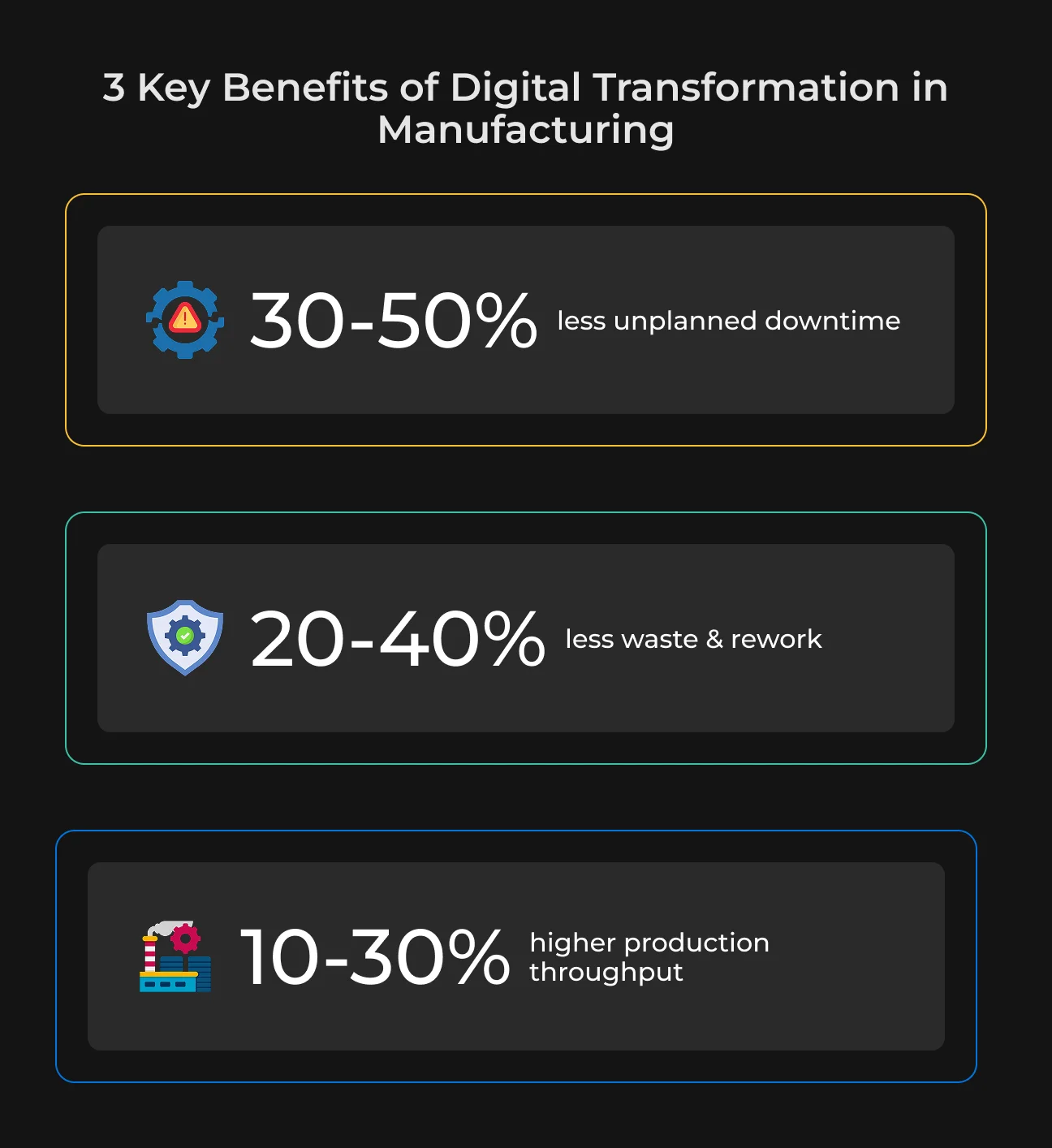
Automated manufacturing solutions can affect downtime, defects, maintenance spending, throughput, inventory, and energy use. The ranges below describe potential outcomes across different applications; a plant's results depend on its baseline and implementation.
Performance Indicator | Legacy Manufacturing Baseline | Smart Factory Automated State | Quantified Business Impact |
| Unplanned Equipment Downtime | Scheduled calendar servicing and reactive emergency repairs | IoT condition monitoring and predictive algorithms | 30% to 50% downtime reduction |
| Quality Defect Rate | Manual visual checks (70% to 80% detection rate) | Inline computer vision (>95% to 99% detection rate) | 20% to 40% reduction in waste and rework |
| Maintenance Expenditure | High cost of emergency repairs and manual overhauls | Automated alert triggers and targeted component repairs | 25% to 40% reduction in maintenance costs |
| Production Throughput | Fixed line speeds constrained by manual stations | Dynamic closed-loop controllers and real-time feed control | 10% to 30% increase in total line throughput |
| Working Capital Efficiency | High safety stock buffers based on manual forecasts | AI dynamic demand planning and automated replenishment | 15% to 30% reduction in working capital |
| Plant Energy Consumption | Static equipment power schedules and unmonitored HVAC | Automated power scheduling and IoT thermal management | 10% to 25% reduction in energy costs |
Defect Rate Reduction and Yield Maximization
Inline visual inspection checks each product against defined criteria.
The World Economic Forum report cites a 20% to 40% reduction in scrap and rework from AI quality tools. McKinsey estimates up to 20% lower total production costs from AI quality controls, while the global market forecast projects visual defect detection equipment to reach $315.2 billion by 2035.
Throughput Expansion and Labor Productivity
Manual assembly stations cause line bottlenecks. Physical robots and closed-loop process controls unlock faster line speeds. Overall automation boosts digital transformation manufacturing industry productivity by up to 30%, driving $200 billion in sector value creation.
Supply Chain Efficiency and Working Capital Optimization
Demand forecasting helps purchasing teams avoid excess safety stock and unexpected shortages.
Various reports state that AI forecasting brings a 15% to 30% reduction in working capital needs. Boston Consulting Group research specifies that supply chain simulations improve forecast accuracy by 30% and reduce delivery delays by 50% to 80%.
Industrial Energy Conservation and Operational Cost Control
Energy expenses form a substantial portion of overall factory overhead. Automated energy management platforms coordinate power distribution based on active production schedules.
Systems dynamically adjust industrial HVAC, heating jackets, and high-draw equipment during peak tariff windows. International Energy Agency benchmarks show automated energy controls trim manufacturing power expenses by 10% to 25%.
Common Challenges in Manufacturing Digital Transformation
Older machines may have no software API or network connection. Connecting them to enterprise systems can require sensors, edge gateways, and middleware that convert equipment signals into standard records.
AI inspection also needs representative defect data.
A line with few defects may not produce enough images of rare flaws for training. Teams can supplement real examples with synthetic defect images and few-shot learning. They must then monitor accuracy as material color or texture changes and retrain models when data drifts.
Finally, operational technology and IT teams need to agree on network access, bandwidth, and physical security rules. These decisions affect whether plant data can move safely and reliably between equipment and business software.
Top Digital Transformation Trends in Manufacturing
These digital transformation trends in manufacturing describe approaches to faster local processing, coordination, training data, and traceability:
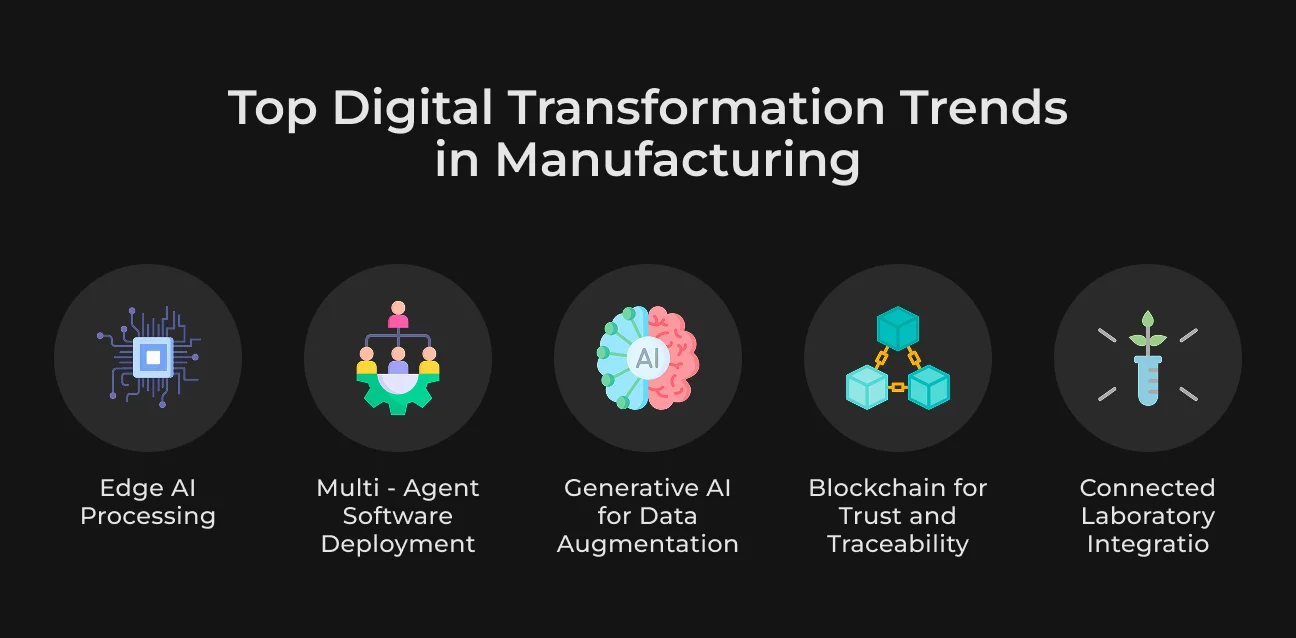
Edge AI Processing
Running models on local hardware reduces cloud network latency and bandwidth use. A camera system can inspect fast-moving products and trigger a reject mechanism even if the corporate internet connection fails.
Multi-Agent Software
Software agents assigned to machine tools, conveyors, or transport carts can exchange status and reroute work when a station stops. This approach requires plant-specific control rules and integration with existing equipment.
Synthetic Images for Inspection Models
Generated examples of rare cracks, scratches, or paint defects can supplement limited real defect photos. The cited deployment comparison reduces training schedules from several months to a few days.
Verified Supply Chain Records
Digital transformation in smart manufacturing can link supplier records and quality certificates through blockchain smart contracts to track material origins.
Connected Laboratory Software
Direct transfers from balances and spectrometers remove manual spreadsheet entry and keep audit records tied to the original instrument data.
Each trend depends on the plant's equipment, data quality, and integration requirements. Its value should be assessed against a specific production workflow.
How SapientPro Automates Manufacturing Processes
SapientPro builds custom software for industrial, laboratory, and supply chain operations. Founded in 2017, the team includes more than 70 developers, architects, and technical analysts and has completed more than 200 software deployments. Its manufacturing work includes:
- Computer vision platforms for visual quality inspection;
- Smart contracts and blockchain systems for supply chain traceability;
- Laboratory data management and compliance software;
- Middleware between operational and enterprise systems, including edge gateway integrations;
- Industrial web and mobile applications with real-time analytics.
SapientPro can assess a production workflow, identify where equipment and software need to exchange data, and build the application or integration. Contact the team to discuss your facility's requirements and technical options.
Talk to SapientPro About Factory Automation
Share your production bottlenecks and get a practical software development plan.