All How to Build a Digital Wallet App: Tech Guide
May 31, 202615 min read


Digital wallets now have an estimated 5 billion users worldwide.
Building one that holds up at that scale means getting several things right at once: users need to trust it from the first screen, transactions need real protection, and the revenue model needs to make sense from day one.
The underlying architecture has to handle growth without a rewrite every time a new payment method or regulatory requirement shows up.
This article by SapientPro’s fintech engineers covers what a digital wallet actually is, how its architecture works, what security looks like in practice, and how these apps make money.
What Is a Digital Wallet App?
A digital wallet app is a fintech product that allows users to keep their payment methods and use them via their phone, tablet, or web account. This eliminates the need to enter card details or carry physical cards, allowing everyone to pay, send, and receive money with just a few taps.
Digital wallet use represents nearly 83% of the global digital payments market. In leading international markets, 35% of online transactions are made through mobile wallets.
Modern digital wallets are not limited to basic payments. They can also support:
- Payment storage. Users may add their bank cards, accounts, prepaid balances, crypto assets, or other payment methods;
- Tokenized transactions. The app replaces sensitive card or account data with a token during payment. This helps reduce the chances of exposing actual financial details;
- Digital IDs, digital tickets, and loyalty cards. It is also used for boarding passes, event tickets, transport cards, coupons, membership cards, and identity-related documents;
- Multi-currency support. Some wallets let users hold or pay in another currency. This is useful for travelers, global marketplaces, remittances, and everyone who works across borders.
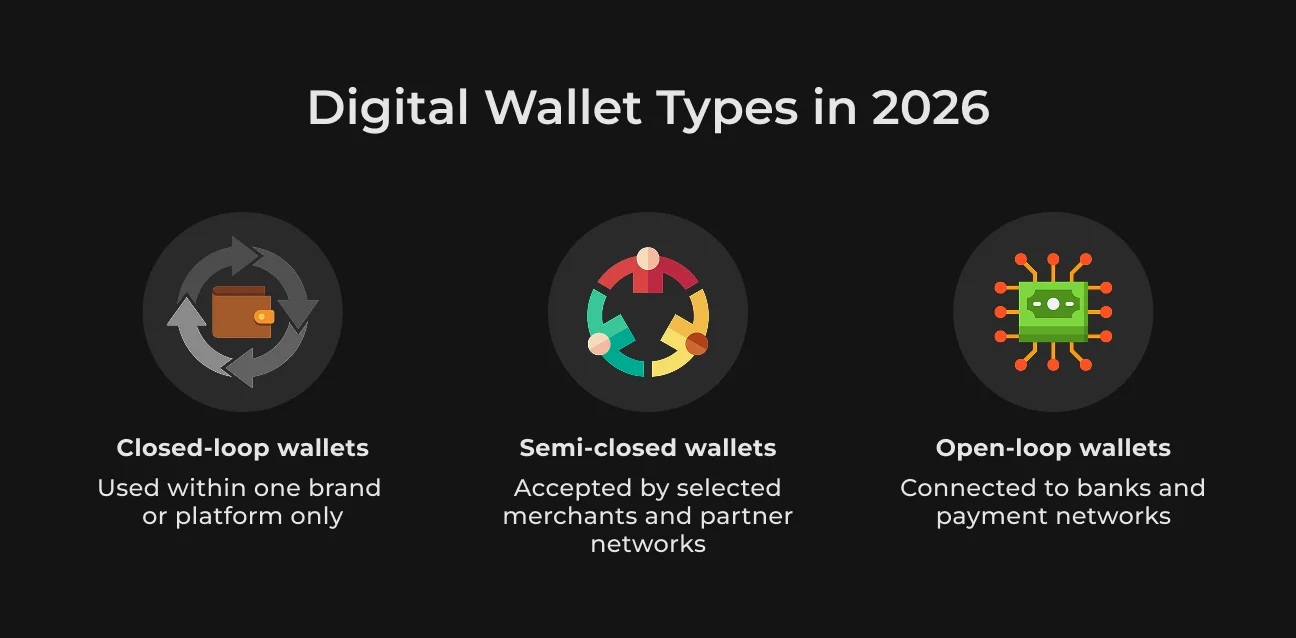
Digital wallets usually fall into three main types:
- Closed-loop wallets work only within one brand or platform. For example, a retailer may offer a wallet that customers can use only in its stores or app;
- Semi-closed wallets work within a selected network of approved merchants or partners. They allow higher flexibility compared to closed-loop wallets but remain a controlled ecosystem;
- Open-loop wallets use an open-ended payment infrastructure (e.g., banks, card networks, or payment processors). Such wallets can be accepted by certain merchants and support transfers, withdrawals, and in-workplace or online purchases.
The approach on how to use a digital wallet has changed a lot. They were focused on storing cards or making quick payments. These days, a lot of wallets are becoming super apps that combine payments with loyalty programs, bill payments, savings, lending, or insurance.
A digital wallet for business is not merely a payment tool. This is a product with stable integrations with banks and payment providers and enough flexibility to adapt to new financial services.
Why Digital Wallets Are Reshaping Fintech in 2026
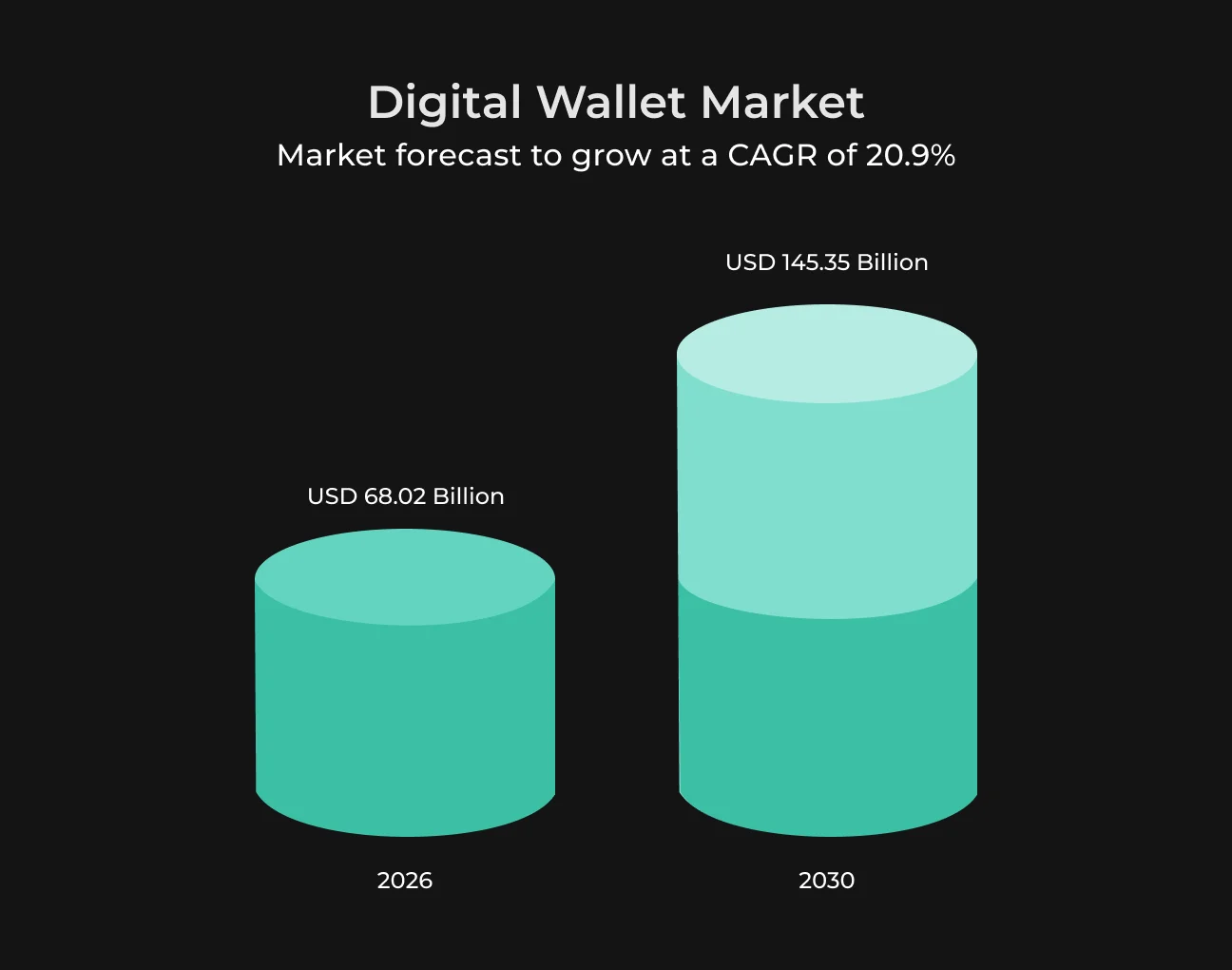
Nobody wants to open five different apps to pay for a bill, send money, or check a balance. Everyone wants everything to happen in one place, quickly, and with minimal hassle. This is the primary purpose of a digital wallet that could reach $145.35 billion by 2030.
Payments now sit inside retail apps, marketplaces, delivery platforms, travel services, and subscription products. Users may not even think about the payment system behind the action.
And multi-use data wallets are also a big change. People can save authenticated data, choose who can access it, and share it only through their own consent.
This transition is even faster among younger users. Gen Z users (being digital natives) are already comfortable and used to contactless payments, one-tap checkout experiences, or instant transfers.
Digital wallet solutions are also becoming popular offline, particularly in the US. Tap-to-pay transaction values are expected to rise more than 150% through the end of 2028.
Key Features Every Digital Wallet App Needs
The user should have a clear understanding of what a digital wallet is like, even if the tech behind it is complicated. People want to open the application, authenticate, perform a transaction, or check their balance.
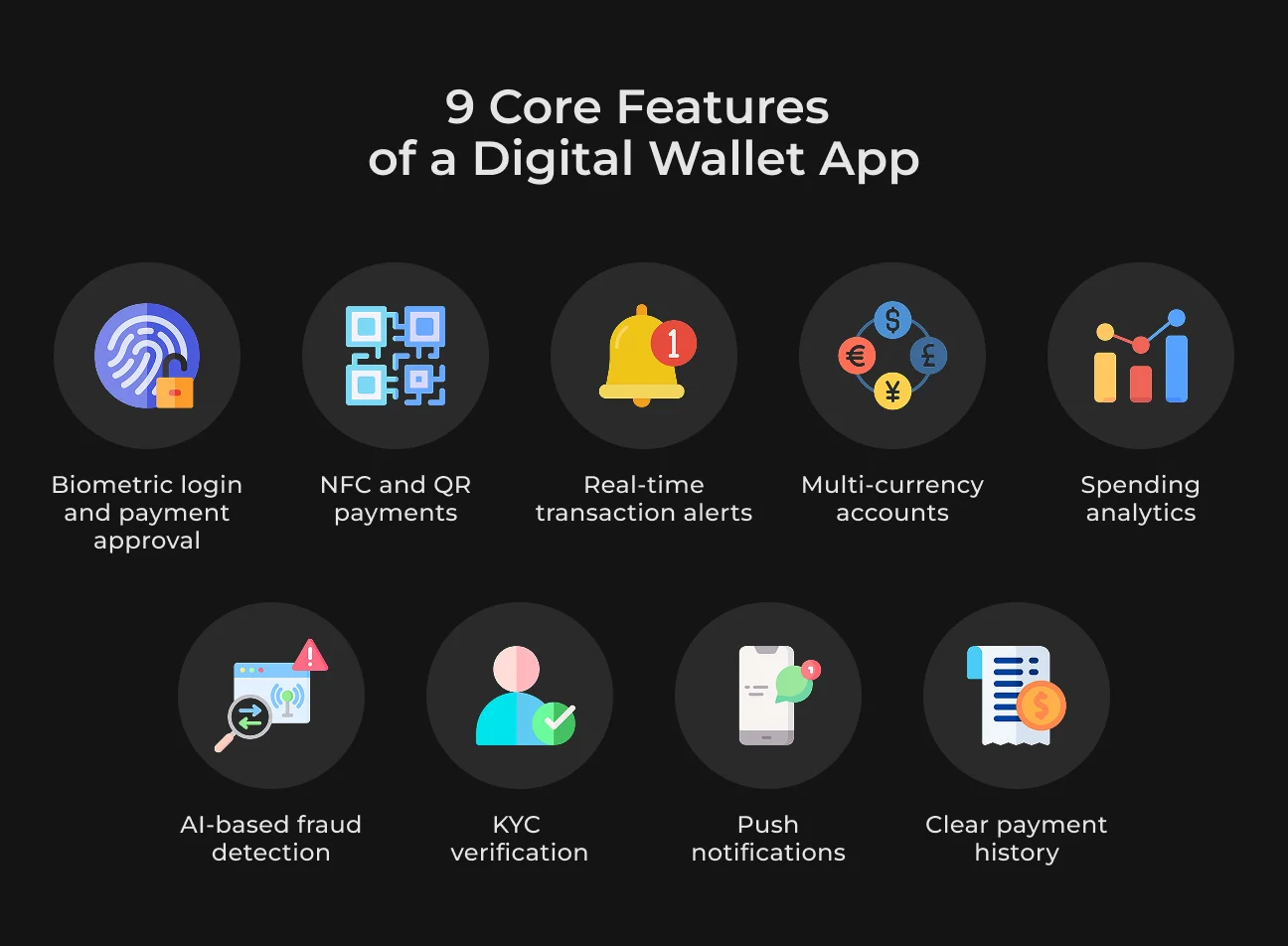
The following features make that experience secure, compliant, and prepared for longer-term growth.
Biometric Authentication
Biometric authentication allows users to log in or authorize a payment via fingerprint, face scan, or device-level passcode. This makes the wallet faster and less dependent on passwords.
And that matters because compromised credentials remain one of the most expensive and difficult security risks to detect.
Password reuse makes the problem even worse: an estimated 80–85% of people use the same passwords across multiple sites, and around half of employees admit to reusing credentials at work.
NFC and QR Payments
NFC and QR payments make a digital wallet useful in everyday situations. NFC is best for fast contactless payments in stores. And QR codes work well for small merchants, restaurants, peer-to-peer transfers, and places where card terminals are not always available.
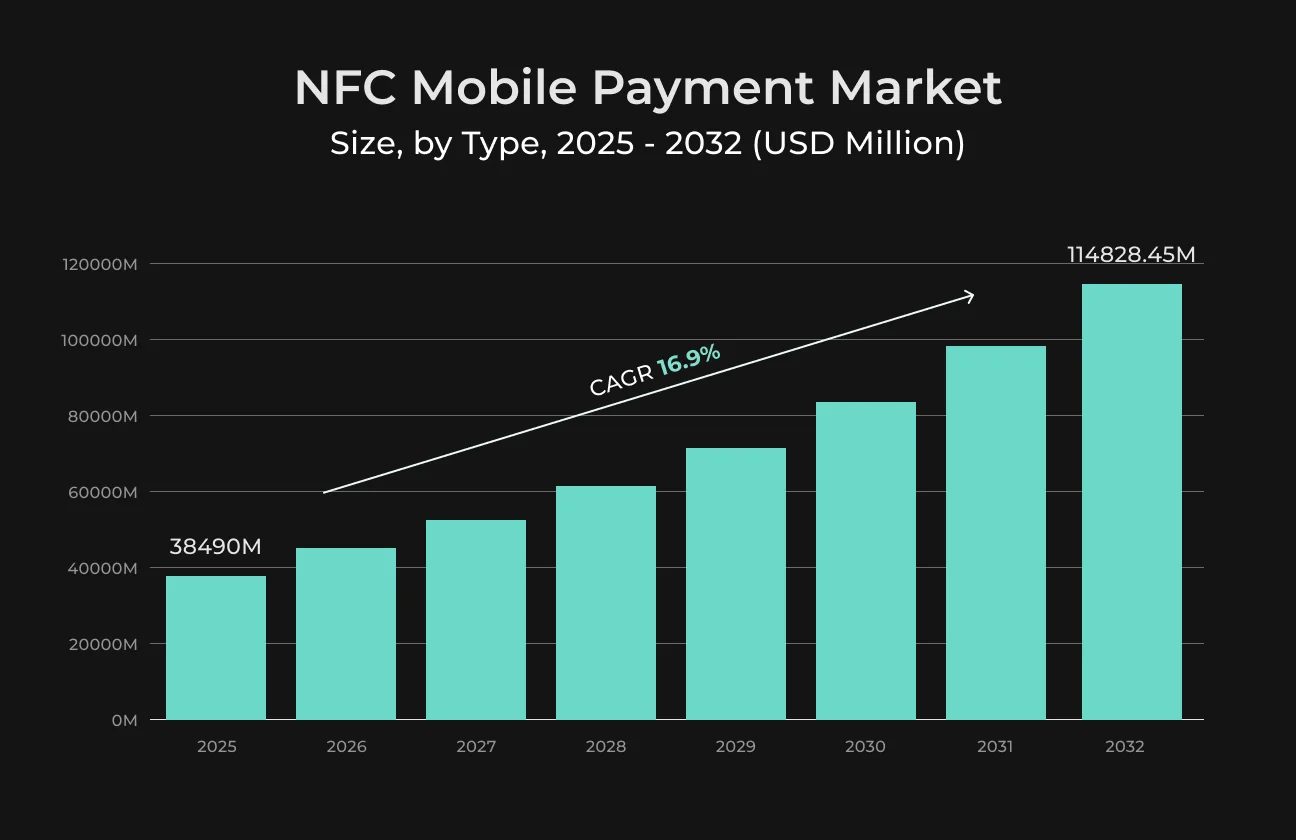
NFC also remains the leading technology behind contactless payments.
It powers more than 95% of contactless transactions worldwide.
Real-Time Transaction Notifications
Real-time notifications inform users what happened with their money as soon as a transaction occurs. This could be a confirmation of successful payment, a failed transfer, cancellation of transactions, or payments received from other sources.
It is a simple feature, but it affects trust. Users begin to feel more in control and do not typically ask for support once they make a payment.
Multi-Currency Accounts
Multi-currency accounts help users manage money across borders without switching between banks or exchange services. They can hold, receive, send, and convert funds in different currencies directly inside the wallet.
For the product owner, it can also support monetization through FX spreads, transfer fees, premium plans, or business accounts.
Spending Analytics
Spending analytics let users better understand how they spend their money. A wallet may group payments into categories, show how much a user has spent in the past months or years on something particular, remind users of regular expenses, or point out unusual activity.
AI-Driven Fraud Detection
Fraud detection should work quietly in the background. AI can help identify unusual behavior, like logins from new locations, sudden transaction spikes, repeated failed attempts, or payments that do not match a user’s normal activity.
This is actually one of the key layers of digital wallet security. A perfect example is Mastercard using AI-based systems that analyze transactions and give risk scores in milliseconds, even before the transaction happens.
KYC Verification
KYC verification confirms that the wallet user is a human and that the wallet complies with regulations. This can include document and selfie verification, proof of address, sanctions screening, or account limits.
Push Notifications
Push notifications are what help the wallet provide value after onboarding. They can be used to remind users about bills, confirmed transfers, low balance warnings, security alerts, or cashback notifications.
A good wallet should also let users choose which alerts they want to receive.
Payment History
Payment information should include date, amount, receiver, payment mode (credit/debit card), transaction status, fees, and refunds. It is an aspect that sounds pretty basic yet plays a significant role in user confidence.
How Does a Digital Wallet Work: Top Use Cases in 2026
The real value of a digital wallet is how it fits into the business model — like whether it removes payment friction or creates monetization opportunities. See the most common usages below.
Peer-to-Peer Transfers
Peer-to-peer transfers are useful when people need to send money often and without extra steps. It could be paying a local service provider, splitting a bill, or transferring funds between users within the same application.
Before confirming the transfer, users should check the receiver, fee, delivery time and whether the payment can be cancelled or disputed. When the details are not enough, even a quick transfer appears risky.
Contactless Payments
Contactless payments are most meaningful at checkout if they remove that final friction. For example, customers at a supermarket with a large traffic volume can pay via NFC in seconds. A small cafe can integrate QR payments without investing in expensive POS hardware.
The same wallet can also work in transport — for bus or metro rides, parking, bike sharing, and other local mobility services.
For product owners, the key question is simple: where will users actually be able to pay with this wallet? A clean interface is not enough if the wallet is accepted in just a few places.
That is why contactless payments should be planned together with merchant onboarding, POS compatibility, offline payment support, refunds, and digital receipts.
Cross-Border Transactions
Cross-border payments typically support niche use cases, let’s say:
- A freelancer receiving payment from an overseas client;
- A marketplace sending payouts to sellers in other countries;
- A migrant looking to send money back home, and others.
Users should also view information like recipient amount (final), FX rate or transfer fee, expected delivery time, and country-specific limits.
For enterprise users, the wallet can also include invoices, payment references, and downloadable accounting reports.
Loyalty Ecosystems
A digital wallet can improve the usefulness of loyalty programs. A restaurant chain may provide automatic cashback starting on the third visit, or a retail app could activate better deals for users who pay through the app.
This also gives better retention data for businesses, like which users return, how many offers convert, and what kind of customers are worth incentivizing.
Embedded Finance
Embedded finance wallets are integrated into the product. In the case of a marketplace, for example, the wallet can also store the seller balances, calculate commissions, and split up payments. And even manage refunds or freeze funds in case there is a dispute.
In a retail app, the wallet can bring store credit, refunds, gift cards, and buy-now-pay-later options into one place. This is useful because many companies already manage payments, balances, refunds, and payouts — but often through separate systems.
A wallet helps centralize these flows, reduce manual finance work, improve reporting, and make the experience smoother for customers and partners.
Crypto/Web3 Integrations
Basically, crypto or web3 digital wallet integrations only make sense if they solve a clear payment or ownership problem. An example of this is stablecoins that help cover international transfers, creator payouts, or payments to countries that work with volatile local currencies.
Tokenized rewards perform better in gaming, loyalty, or community-based products where users already have some digital asset literacy.
Digital Wallet Architecture and Tech Stack
A digital wallet system’s backend has to follow one rule: money cannot be almost correct. You need a predictable response to balances, fees, refunds, failed payments, and limits. That is why wallet architecture should be planned around real payment scenarios.
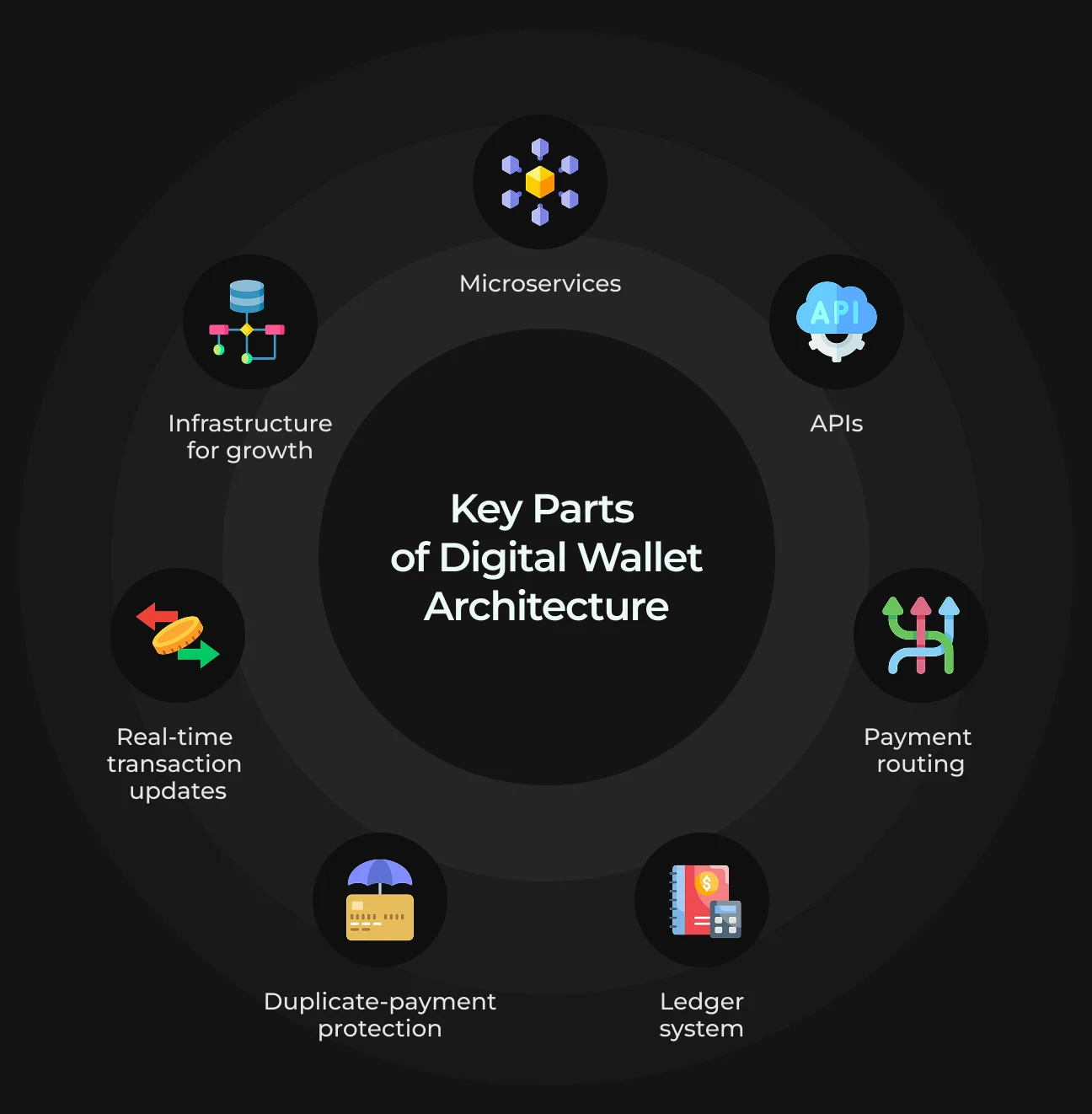
Microservices Architecture
Microservices are the key to isolating the most important pieces of a broad wallet portfolio: payments, user accounts, KYC, fraud checks, notifications, etc.
For example, if the company adds loyalty rewards or business wallets later, the team should not risk breaking the core payment flow.
API-First Approach
Wallets have to connect with banks, card issuers, payment gateways, KYC providers, and fraud measures. An API-first approach makes these integrations easier to manage.
Employing multiple vendors allows the business to shift payment processing to other providers if one is too expensive or does not support a necessary type of payment.
Payment Orchestration Layer
Payment orchestration defines the method of processing for each transaction. You can route payments by country, currency, payment method, fee, approval rate, or provider availability.
This means the wallet has the freedom to switch providers if one is down, pick a cheaper route, or trigger additional checks for risky transactions.
Double-Entry Ledger Systems
The ledger is the wallet’s source of truth. In a double-entry ledger, we always track both sides of any money movement: where the funds come from and where they go. There is no confusion around the balance. And it makes reconciliation, audits, refunds, chargebacks, and dispute checks more reliable.
Without a proper ledger, the product may work early on but become hard to manage as transaction volume grows.
Idempotent APIs
Idempotent APIs are a mechanism that protects users from being charged twice. Users may make mistakes and tap twice to request payment, the app might reload, or the connection might drop.
Having idempotency helps the system recognize duplicate requests and only process them once.
Real-Time Processing
Real-time processing does not mean every payment settles instantly. It means users should always understand what is happening.
The balance should update once a transfer is complete. If the payment is pending, the status is clear. For example, when a withdrawal requires additional checks, then the app won't show vague messages.
Scalability Considerations
Scalability is more than just adding more users. Wallets may see their traffic peaks on salary days, cashback campaigns, or holidays. Queue-based processing, monitoring, clear transaction limits, and backup flows (when a provider slows down) must be part of wallet architecture.
These choices are easier to design for in the first place than to correct once users start experiencing missed payments or incorrect balances.
Payment Technologies Powering Digital Wallets
Payment technology should start with one simple question: how will people actually pay in this market? A wallet built for supermarkets in the UK, street vendors in India, and international freelancers will need different payment options.
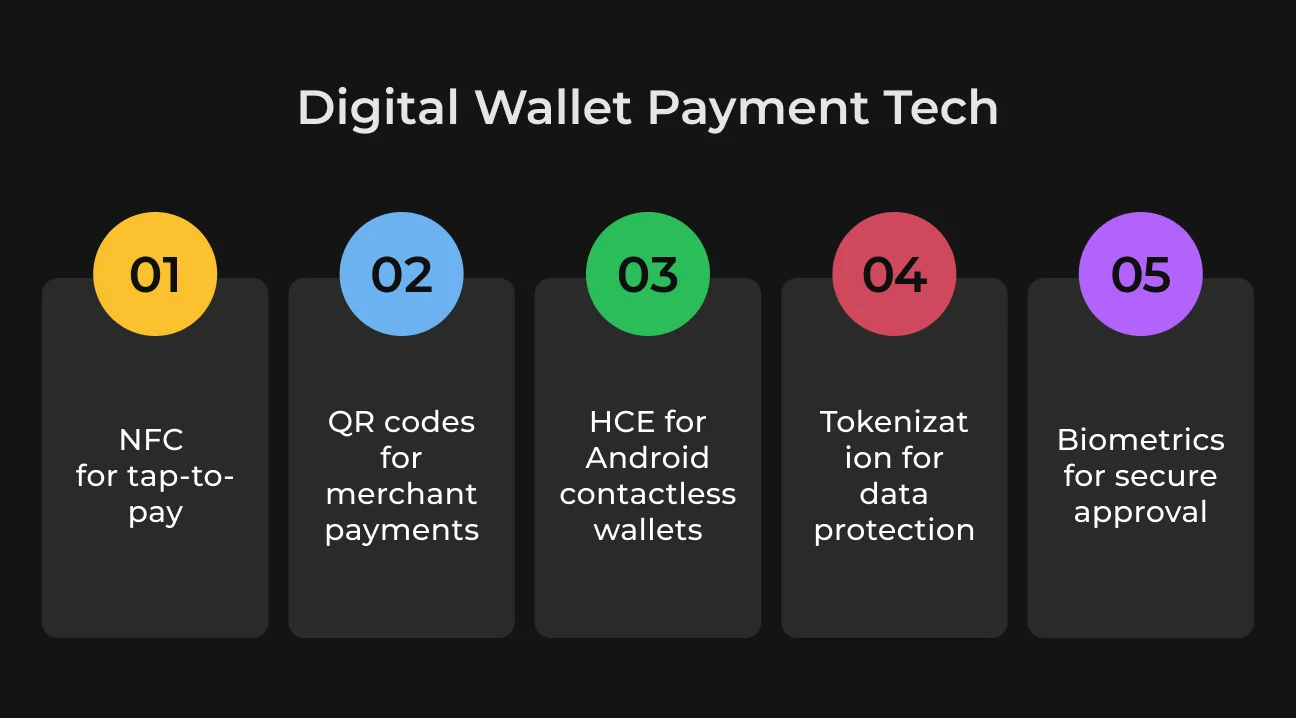
Let's see what technologies actually power digital wallets.
NFC
Near field communication (NFC) supports contactless payment between a phone and a payment terminal over short distances. It performs particularly well in markets where contactless POS terminals have already become the norm.
The main checks for product teams should be compatibility with POS, tokenization support, device coverage, and fallback scenarios when the connection quality is poor.
QR Codes
QR payments start or confirm a transaction through a scannable code. They are easier to launch than terminal-based payments because merchants do not always need special hardware.
An ideal QR payment process should provide immediate transaction confirmation, support for quick refunds, and identification of fraudulent or replaced codes.
Host Card Emulation
HCE, or Host Card Emulation, allows an Android app to emulate a contactless payment card entirely in digital wallet software. This, in turn, lets banks and fintechs issue virtual cards or tap-to-pay without relying on a physical secure element.
This also adds technical responsibility: secure key management, protected token storage, risk controls, and certification with payment networks.
Digital Wallet Tokenization
Tokenization replaces real card or account details with a digital token. During payment, the wallet sends the token instead of exposing sensitive data.
For digital wallets, this is a core security layer for NFC payments, in-app checkout, card storage, and recurring payments.
Biometric Authentication
Biometrics use fingerprints, face recognition, or device-level checks to approve sensitive actions. In wallet apps, they should protect login, card adding, large transfers, payout changes, or new-device access.
The best approach is risk-based: ask for biometrics when the action carries real financial risk.
Regional Differences
In Western markets, NFC often comes first because contactless terminals and card payments are already part of everyday checkout.
In many APAC markets, QR payments are stronger because they are cheaper for merchants and easier to scale across small businesses. The value of QR code payments in the Asia Pacific is expected to rise by 300% by 2029, increasing from $290 billion this year.
So the payment stack should always follow the market.
Security Requirements for Digital Wallet App Development
For a proper wallet, there is no single line of defense. There should be an in-depth defense that layers many controls. So if one security layer fails, the others can still protect the wallet, user data, and transactions.
AES-256 Encryption
AES-256 secures sensitive information stored in databases, backups, and internal systems. Within a digital wallet, these are KYC files, personal details, and payment history.
Encryption must be separated from storage and limited to access by a role.
TLS 1.3
TLS 1.3 secures data as it travels between the app's backend and banks, payment gateways, KYC providers, or fraud tools. It secures login, payment, and verification flows from any interception or tampering.
Multi-Factor Authentication
MFA is for high-risk actions. This could be anything from adding a card, changing the payout procedure, resetting your password, or sending out an unusually large transfer.
FIDO2/WebAuthn
Passkey-based authentication is only offered through sites running on FIDO2 and WebAuthn. That minimizes password dependency and protects against phishing, credential stuffing, and account takeover attacks.
Tokenization
Tokenization swaps all real card or account data with secure tokens. It is needed for card storage, NFC payments, recurring payments, and in-app checkout.
Fraud Monitoring
Fraud monitoring simply tracks abnormal behavior, incluidng new devices, questionable locations, or spikes in activity that do not match the typical user profile.
Effective digital wallet systems assess risk and request additional confirmation only when appropriate.
How Tokenization Protects Payment Data
Tokenization conceals payment data — the actual card number never touches the transaction flow. The wallet replaces your primary account number (PAN) with a digital token. A token, if exposed, cannot be used for the same purpose as the card details.
Tokenized payments also use one-time transaction cryptograms — unique security codes created for each payment. Tokenization is important for NFC payments, in-app checkout, recurring payments, and stored cards.
AI-Powered Fraud Detection in Fintech
AI can help improve fraud detection. So wallet apps are alerted about suspicious behavior before money leaves the account.
Rather than reviewing static rules, it analyzes trends: where the user usually logs in, their payment location, what device they typically use, and how their transaction habits change.
If one user receives a large sum suddenly or transfers money with an unusual payment frequency, we can detect such actions.
Risk scoring consolidates these signals into one place and assigns a risk level to every action.
Build Your Digital Wallet With SapientPro
Talk to our fintech engineers about your product.
Compliance and Regulatory Considerations for Digital Wallets
Compliance should be built into the product from day one. Regulations affect all areas of digital wallet app development, including personal data, payments, and identity checks.
PCI DSS 4.0
Any e-wallet that stores, processes, or transmits cardholder data must follow PCI DSS requirements. Its focus is on:
- Reducing card data exposure;
- Using tokenization;
- Controlling system access;
- Monitoring payment environments;
- And keeping payment-related systems separated where possible.
GDPR and CCPA
Data processing in digital wallets has to comply with GDPR and CCPA/CPRA rules. It is easier to build privacy settings and consent flows upfront than to fix them after user data has been spread within the system.
AML and KYC
AML and KYC help prevent fraud, fake accounts, sanctions evasion, and money laundering. FATF guidance also notes that digital ID can support customer checks when used with a risk-based approach.
Continuous Compliance Monitoring
Wallets often add new countries, payment providers, currencies, or transaction flows. Every change might affect requirements related to PCI, privacy, AML, or reporting. So the system must include monitoring, audit logs, access reviews, alerts, and compliance reporting.
In digital wallet design projects, compliance can’t be treated merely as a wrap-up checklist. It must be embedded into core e-wallet app development processes from the first day to avoid the risks of delays or high-cost rework.
Monetization Strategies for Digital Wallet Platforms
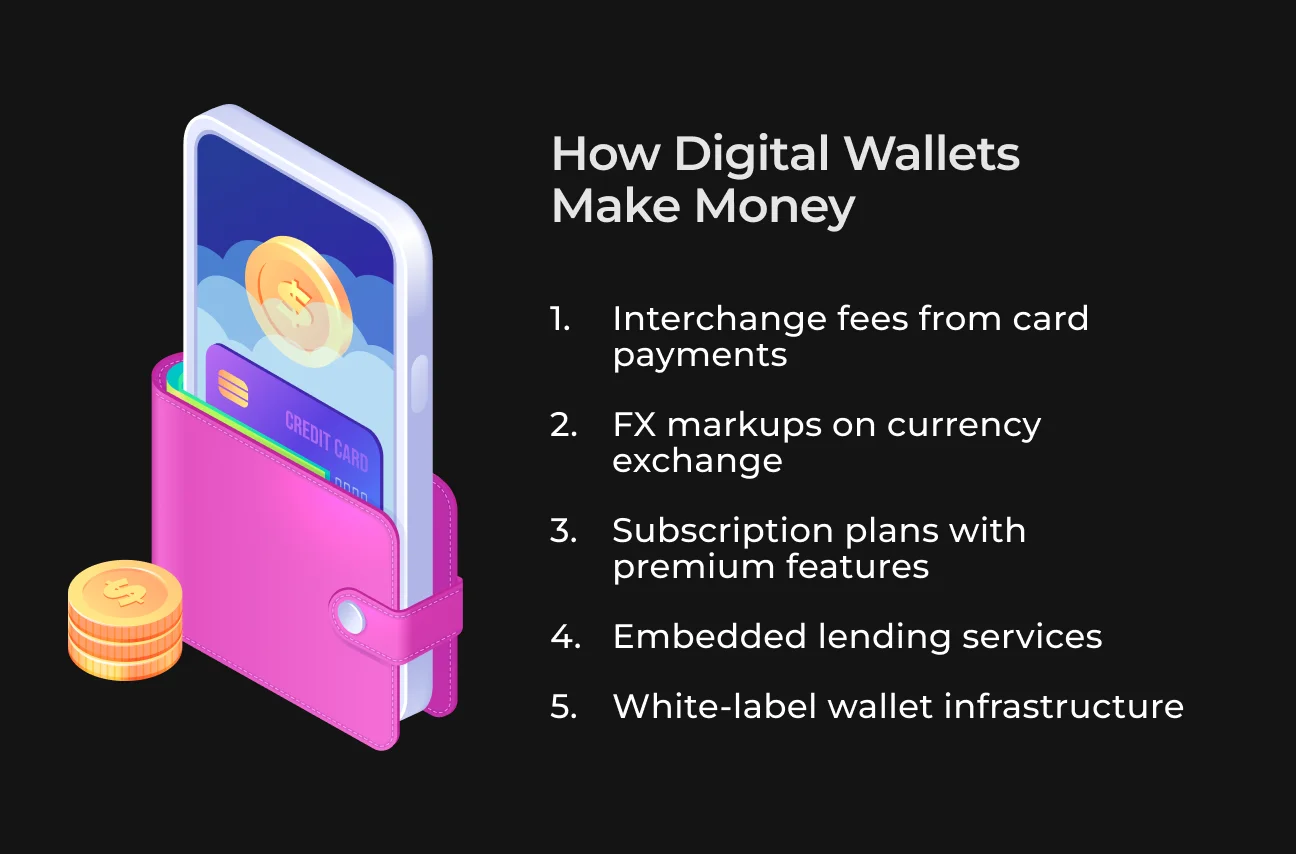
A digital wallet can generate revenue in different ways. Let’s look at the main monetization strategies and how each one works.
Interchange Fees
Wallets can earn a small share of card transaction fees when users pay through issued cards or virtual cards. This model works best at scale because the margin per transaction is usually low.
FX Markups
Digital wallets with multi-currency accounts or cross-border payments can earn revenue through FX markups. This means the wallet adds a small margin to currency exchange rates.
The core requirement for this practice is transaction transparency. Such e-wallets must display the exchange rate, applicable service fees, and the final credited amount to users before they confirm a transaction.
Subscription Plans
Premium plans actually work when they make the wallet more useful. For example, users may pay for higher limits, faster transfers, business accounts, spending analytics, cashback, or lower FX fees. Paid features should solve a real problem.
Embedded Lending and BNPL
E-wallet operators can embed lending, credit extension, and buy-now-pay-later services into their own in-house payment flows. This helps increase revenue, but they must carefully manage and control risks, like credit scoring and fraud control.
White-Label Wallet Infrastructure
Some companies monetize by offering wallet infrastructure to other businesses. This may include user accounts, payments, KYC, ledger systems, cards, or loyalty tools under another brand’s interface.
Key Challenges in Mobile Wallet App Development for 2026
Developing a digital wallet is a high-risk balancing task. Users only seek the speed and convenience of using the tool, while the digital wallet development team must manage a minefield of risks to protect funds.
1. Security Concerns
Data breaches caused by phishing and malware can lead to economic losses and destroy user trust. Password-only protection is insufficient. So wallet providers must deploy active fraud monitoring and strong encryption.
2. The Regulatory Maze
Cross-border payment businesses within the European Union must comply with the general regulatory frameworks of GDPR and PCI DSS.
They should also meet the local regulatory requirements of each EU country, and hire specialists to coordinate all compliance-related matters.
3. Integration Complexities
Your wallet has to connect to banks, card networks, and payment gateways flawlessly.
When APIs aren’t integrated properly, it can result in issues like payment failures or ghost transactions. This harms the user's payment experience.
4. Technical Stability
A wallet that crashes during checkout is a wallet people stop using. Your technology stack must handle massive burst traffic and be compatible with thousands of device types.
If the app isn't stable, the digital part of the wallet doesn't matter.
Emerging Trends Shaping Digital Wallets
The new generation of digital wallets has upgraded from passive fund storage tools to active financial co-pilots. And these five trends will reshape the entire digital wallet ecosystem.
1. Agentic Commerce
We’re moving toward a world where AI agents act like personal assistants. Agentic commerce is expected to grow into a $1.5 trillion global market by 2030.
Smart wallets can reduce the burden that traditional financial tools often place on users. Instead of making people manage every step manually, they can support safer daily spending, smoother cross-border payments, and more automated financial decisions.
2. AI Shopping Assistants
Unlike basic chatbots that provide generic answers, the AI built into digital wallets can identify users’ consumption patterns and preferences, detect duplicate subscriptions, and recommend the optimal cashback payment card.
Meta’s AI shopping assistant is a good example of how AI can support online shopping. It helps users find products, suggests relevant options, and has been deployed across major platforms, including Facebook and Instagram.
3. Autonomous Payments (Machine-to-Machine)
The market size of the autonomous Internet of Things (IoT) payment track is projected to reach $106.8 billion. This technology lets machines independently detect demand and complete automatic payments across interconnected systems.
Real examples include factories buying electricity when prices are lower, supply chains restocking materials on their own, and production lines making small adjustments with little human help.
4. Web3 Wallets
Wallets are slowly turning into all-in-one places where people can keep stablecoins, tokenized loyalty rewards, NFT event tickets, and regular money in one app.
Wallets that make using stablecoin payments as easy as using a standard payment app are already in competition with traditional fintech products.
5. Digital Identity Integration
Digital identity is most practical for travel and retail. On the travel side, various documents like identity cards and passports can be stored in mobile wallets, which speeds up check-in and boarding procedures.
In retail, digital identity supports real-time verification of consumers’ identity and age, simplifies the purchase process for restricted goods, and reduces fraud. It also creates a safe and convenient full-link transaction environment for consumers, retailers, and suppliers.
How SapientPro Built a Web3 Social Identity Platform
The team developed a Web3 social identity platform where users could mint NFT usernames, connect them to social profiles, and use those assets as portable digital identities.
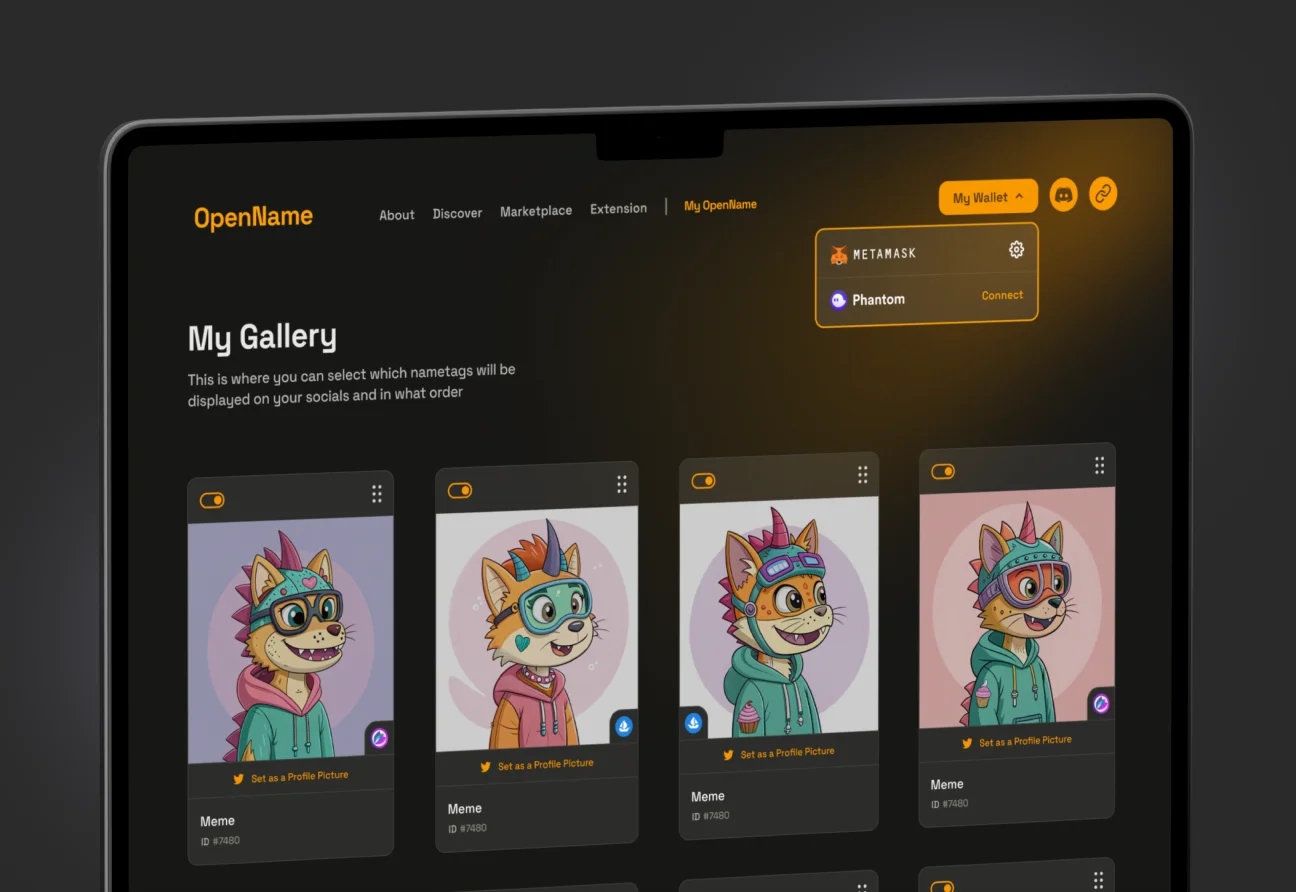
SapientPro covered smart contracts, marketplace logic, wallet integrations, social features, browser extension development, and community tools.
Key features:
- NFT username minting with wallet connectivity;
- Smart contracts with limited “waves” functionality;
- Internal NFT marketplace with ETH transactions via Metamask;
- Custom user profiles with NFT galleries, bios, avatars, and social links;
- Browser extension for displaying NFT usernames on Twitter/X;
- Discord bot with NFT-based role assignment;
- Admin dashboard for API requests, whitelists, stats, and badges;
- Cross-chain support across Ethereum, Solana, and Arbitrum.
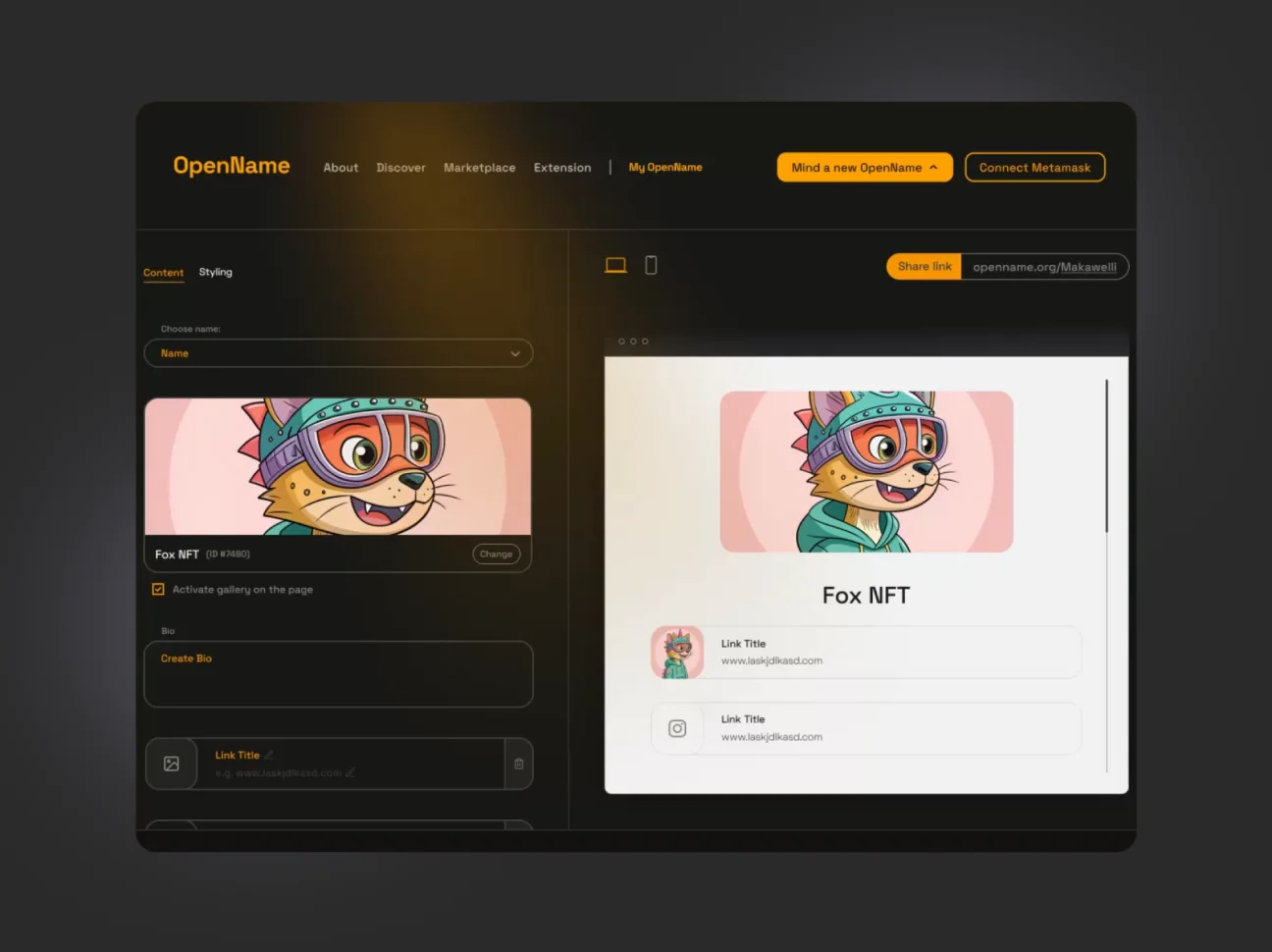
As a result, the platform supported two NFT token drops that generated $1.5 million, and the project was estimated at $30 million by Continue Capital.
Why Choose SapientPro to Build Your Digital Wallet
SapientPro builds secure digital wallets for fintech teams, payment providers, marketplaces, and Web3 products. We help turn wallet ideas into production-ready systems with the right architecture, payment logic, integrations, and security controls from day one.
We can help with:
Solution | What it covers |
| Mobile wallet apps | iOS and Android wallet development |
| Web wallets | Browser-based payment flows |
| Wallet architecture | System design, APIs, and backend logic |
| Payment integrations | Payment gateways, card processing, and transaction routing |
| KYC/AML flows | Identity checks, verification, and risk screening |
| Multi-currency wallets | Fiat and crypto wallet functionality |
| Payment features | P2P transfers, merchant payments, and transaction history |
| In-app payments | QR code, NFC, and embedded payment flows |
| Admin panels | User management, transactions, limits, and reports |
| Security controls | Fraud prevention, encryption, and access control |
| Compliance support | Technical documentation and audit-ready workflows |
| Product support | Maintenance, scaling, and new feature development |
Our team focuses on engineering choices that reduce product, security, and compliance risks early. Contact SapientPro today to discuss your digital wallet product, technical scope, and project estimate.
Ready to Ship a Wallet That Works?
Get a technical scope and project estimate today.