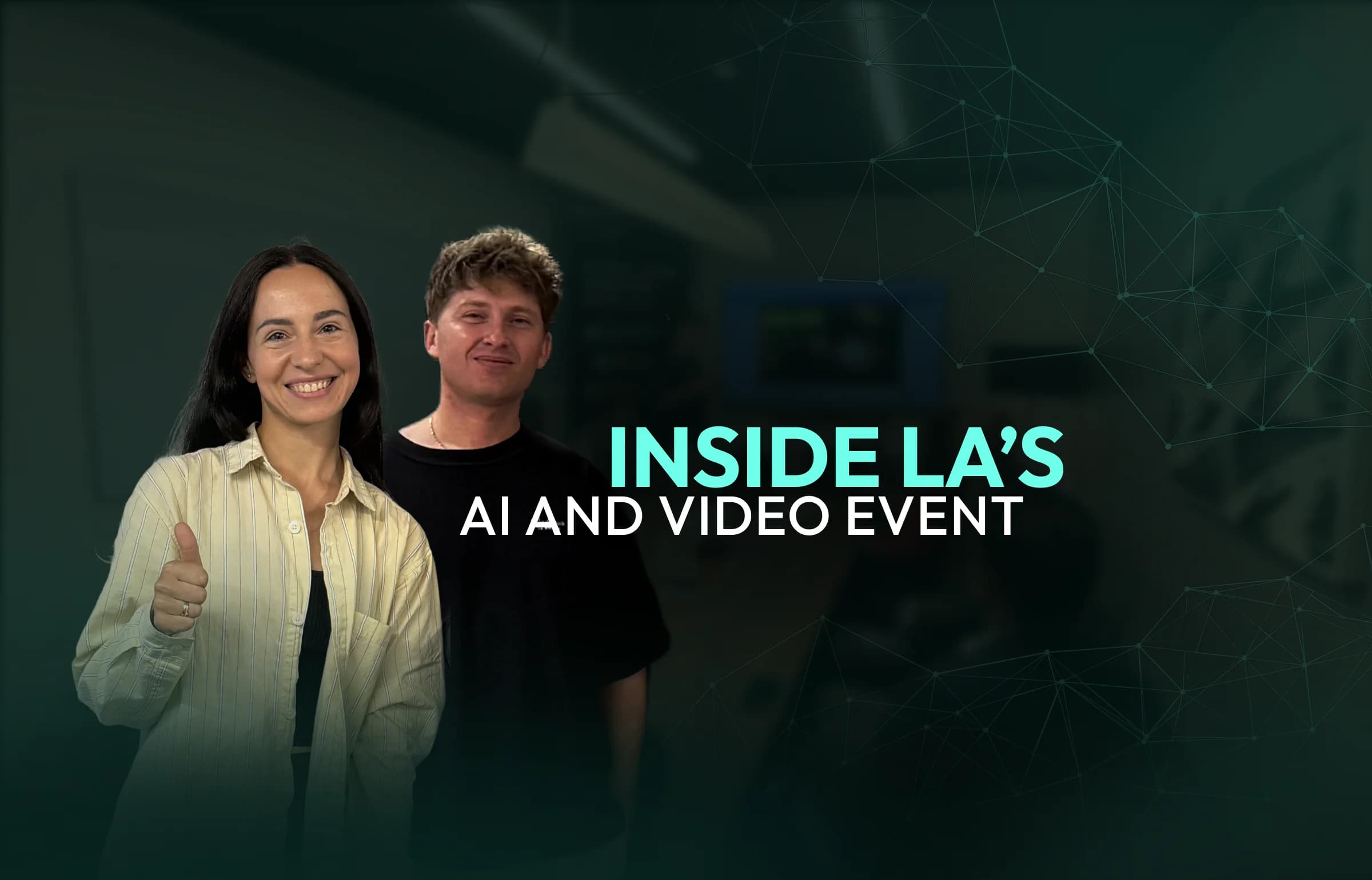
All SapientPro in Los Angeles: An Interview Through Maryna’s Lens
November 26, 20258 min read

With Maryna, we talked about curiosity that started in the classroom, her move from Chernivtsi to California, and what it takes to turn a first chat into a steady working relationship. Her story shows how careful listening and clear next steps can shape both careers and products.
Meet Maryna
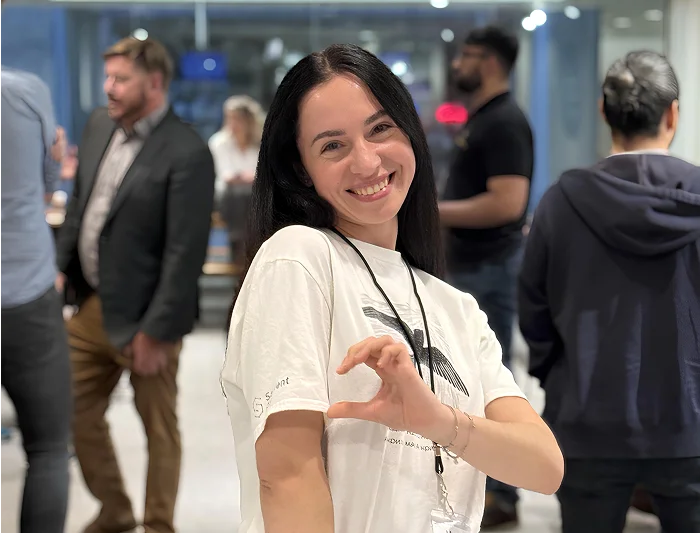
Maryna’s path runs through several worlds. She taught languages in Ukraine, joined SapientPro as a project manager, and now works as Regional Director in Los Angeles. You notice it quickly in how she handles questions. At events she notes what people ask, then follows up with specific answers instead of generic slides. That simple practice reflects how we work at SapientPro, with respect for people’s time and commitments that carry through into delivery.
Early Lessons That Still Guide Me
Q: You started out teaching languages and practicing conference interpreting in Ukraine. What did that time teach you that you now use in business development?
A: My students showed me how curiosity with persistence changes outcomes. I still remember one of them, Vasyl Kuftiak. In under a year he went from A1 to C1 in German. We opened each lesson by revisiting the previous one, then moved into grammar and new vocabulary, and finished by acting out the oral exam, so preparation started on day one. At the same time, I was practicing interpreting at conferences: listening to talks, doing short live runs, and learning to catch the main message instead of every single word. Watching that progress, in class and in the booth, taught me that steady habits and clear focus beat vague ambition.
I use the same approach in business development. I once met a client who had tons of ideas but no idea where to start. Together with the SapientPro team, we took his scattered thoughts and existing materials and turned them into a clear, step-by-step roadmap. After about three weeks, he went from feeling overwhelmed to having a clear plan – and he chose us as his long-term product partner.
Q: How did your first days at SapientPro shape your path and bring you to consulting and partnerships in California?
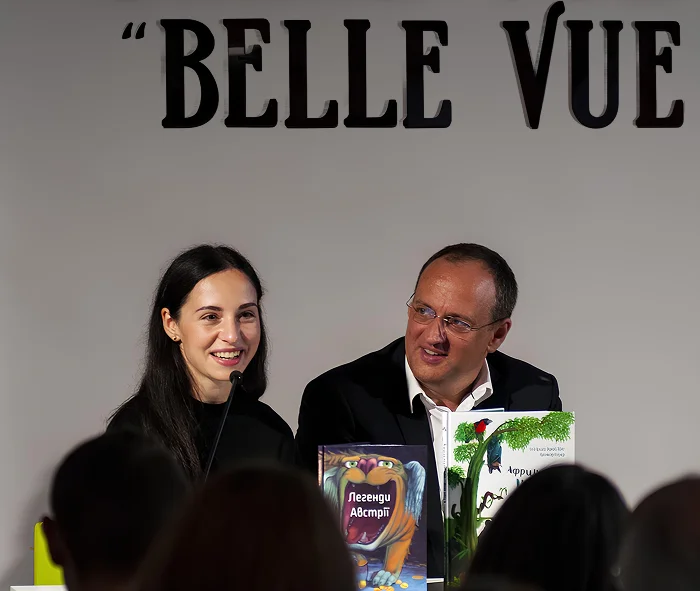
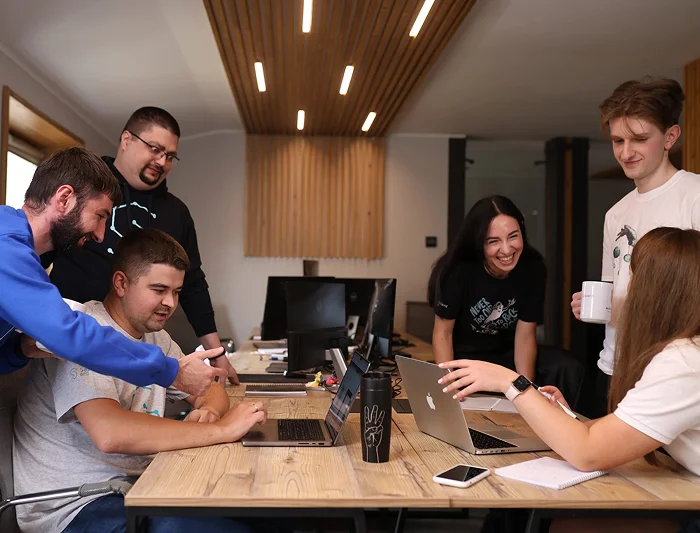
A: I think back to my first week at SapientPro. I was not looking for a new job when our HR, Kate Panchuk, met me on Philharmonic Square and invited me to an interview. I decided to try. In the room were our CEOs, Serge, Ihor, and Max, our head of project management, Illya, and Kate. It was the best interview I have had: no stress and no pressure. The office felt cozy, like a place where you can do your best work. We talked and laughed, and I felt this was the right team for me. I left my previous job soon after and started at SapientPro as a project manager.
That first week I worked on the SapientPro website. Illya taught me a lot and showed me the tools that keep projects on track. I sat on the second floor next to him and asked many questions. My first challenge was to align content with development so timelines would hold. We set short daily check-ins and a one-page plan. By Friday the priorities were clear, the first tasks were in motion, and I finished a client call with a short recap and next steps.
From there, more projects came in, and I learned how to juggle several at once. Over time, that rhythm of planning together with the team and staying close to clients shaped how I work. I still use it in California today: in how I structure projects and follow up with clients to grow long-term partnerships.
Q: When you first landed in the U.S., what felt hardest, and what helped you find your footing fastest?
A: At the beginning almost everything felt hard, from the new city and unfamiliar faces to the traffic and the feeling that I did not yet have a plan. What helped most was support: my husband and family kept me grounded, and friends and the SapientPro team reminded me that I was not starting from zero. In the first month I focused on driving, I missed my exit on the freeway so many times that it almost felt normal, but with practice the fear faded and driving became part of my everyday rhythm. To stay calm, I kept one simple habit, morning yoga every day, and it still gives me energy and sets a steady tone for everything that follows.
A real turning point came one rainy evening when I nearly skipped a networking event because it was dark and the weather was awful. I went anyway and met the CEO of a life insurance company in Sacramento, who later invited me to hold regular sessions in his office, and that single decision made every missed exit feel worth it.

Q: Your guiding question is “How can we use what we know to help others grow?” Tell us about a moment this year when you saw that happen in real time.
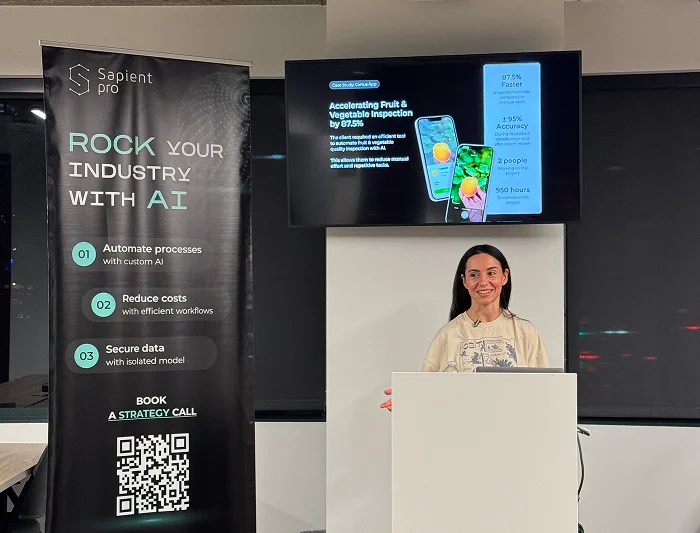
A: This year I focused on presenting SapientPro cases for document, voice, and image automation. When I share these examples, people are often surprised that such solutions already exist. You can feel the room shift. They start looking at their own processes, spotting the points where work gets stuck, and thinking through fixes they can try next week.
One demo has stayed in my mind. I was showing our SDS dashboard for Product Room to a small group. We ran a live search on a set of chemical records, opened a file with tricky formatting, and pulled the right fields into a clean view. Someone in the front row laughed and said this would save their staff hours. The questions kept coming, and by the end they had outlined a short pilot they wanted to run.
A similar thing happens with the app we built for food inspectors. I show how voice notes become structured reports and how photos land in the right place. People relax because they can see their day reflected on the screen. That is usually the moment when ideas turn into a first step.
These talks work both ways. People leave with specific ideas they can try, and their questions show me where our solutions matter most. That’s why I keep meeting with teams and walking through real cases.
Hosting Sessions That Connect
Q: You organize community events on practical AI. What topics pull people in right now, and what myths do you like to clear up?
A: Right now people are most curious about how AI can simplify daily work and support real business growth. We talk about automating routine tasks with documents, voice, and images, and about building workflows that feel natural to teams. The energy in the room is high, yet the same myths keep showing up.
One myth is that AI will replace people. In practice it works best as a tool that supports human creativity and speed, not as a replacement.

Maryna
New roles appear around it, for example, prompt work and AI operations, and teams learn how to use these tools well. Another myth is that AI is only for big companies or for technical people. I show that anyone can start with a few early changes and see practical benefits.
At meetups the first questions are quite consistent. People ask if AI will replace a person. They want to know whether AI can sell and what that would look like day to day. They also ask which tools help with repetitive tasks in real work, not only in demos.
When someone asks for one simple use case to try, I share a favorite tip I learned from our CEO, Ihor Hamal. NotebookLM from Google can turn your source files into a short podcast. If you have a long document you need to review and no time to read it, you upload the file, and two AI hosts talk through it and summarize the key points. They keep it light, sometimes with small jokes, so it is easy to follow in the car. It is a friendly way to start, and it often opens the door to more thoughtful questions about how AI can support real work.
Q: Share a story where an event you ran led to a real partnership or a concrete next step for a company.
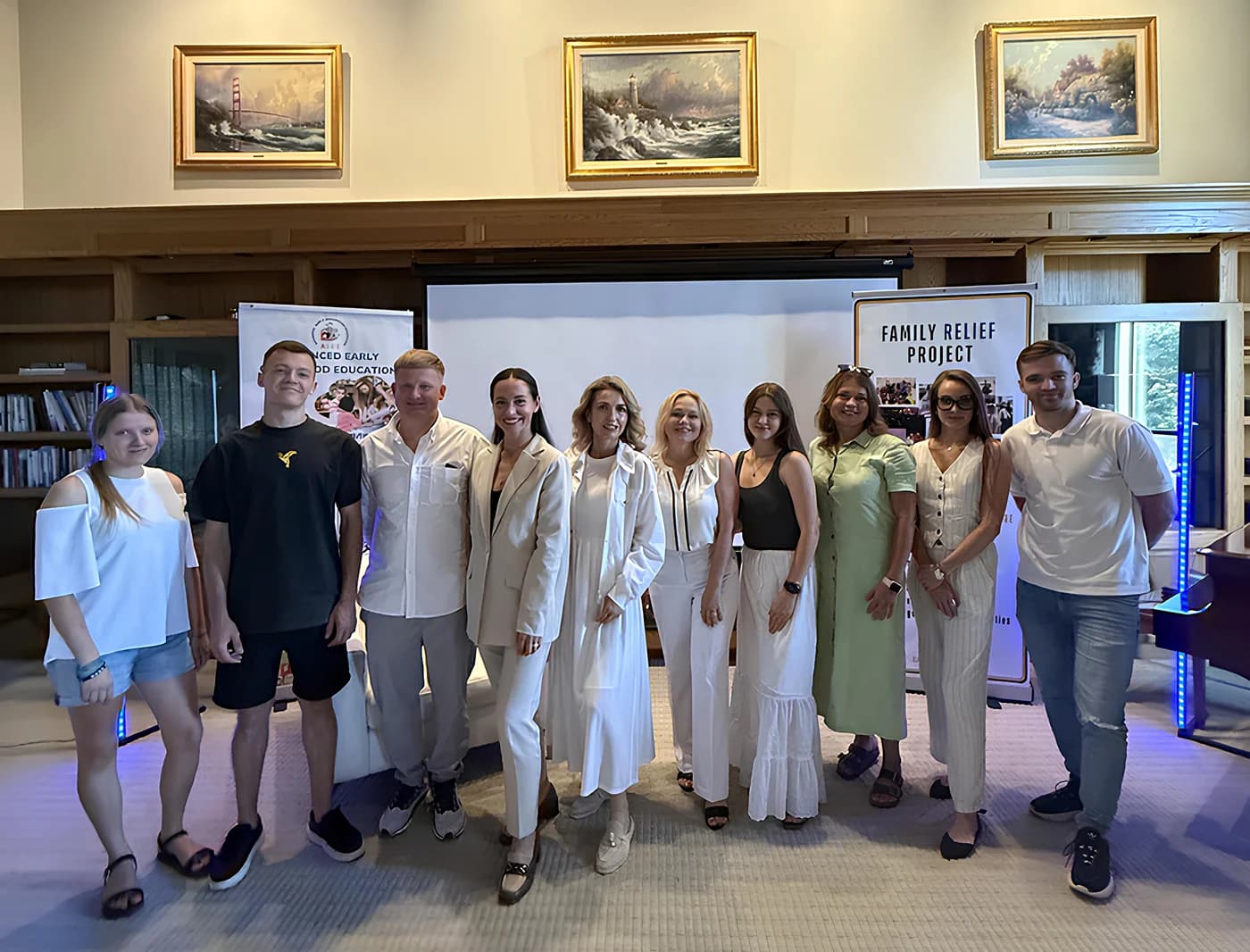
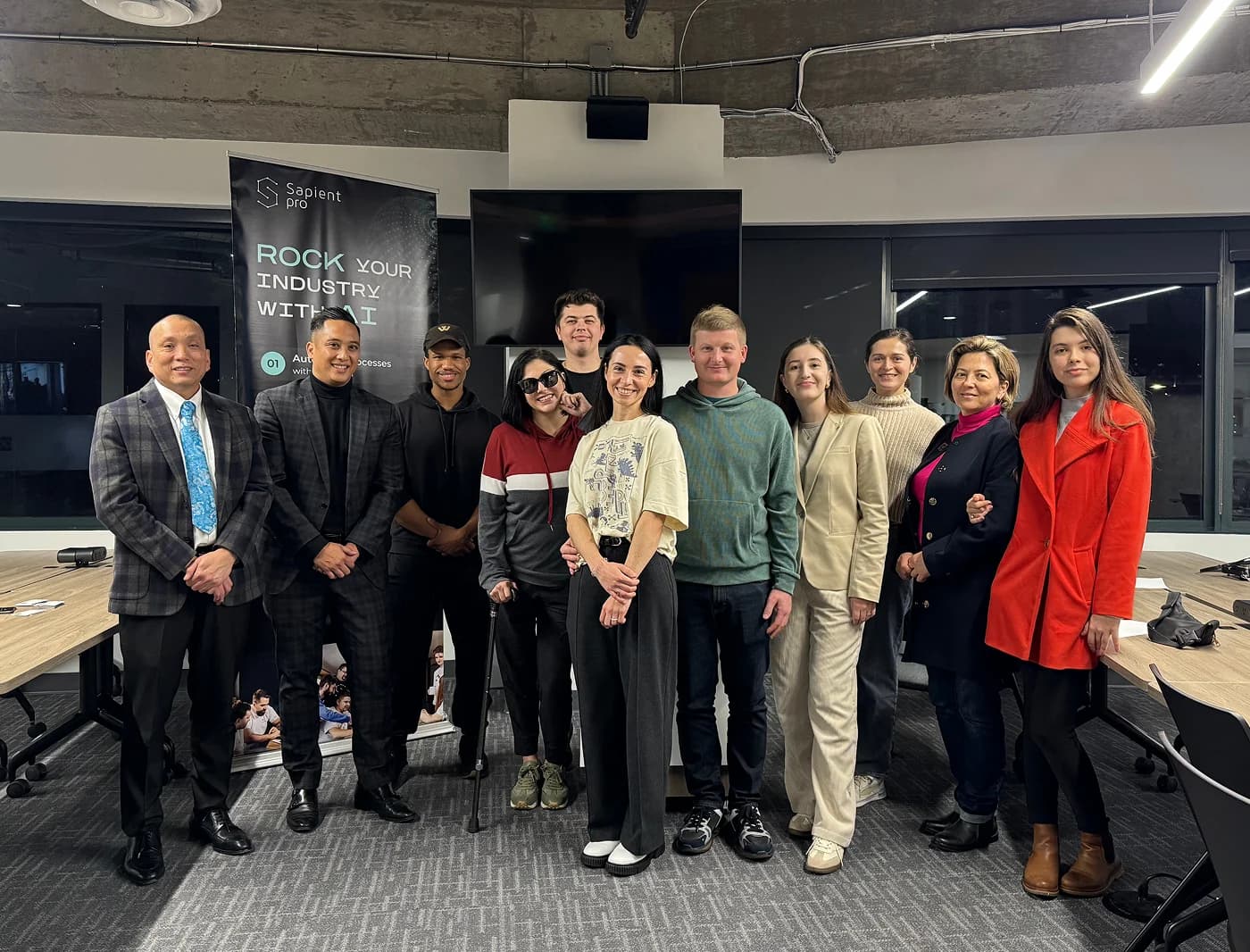
A: At one of the events I organized, I met a group of attendees who were immediately interested in how our solutions could improve their workflows. We continued the conversation after the event, and over time, these connections turned into partnership. Today, we’re collaborating on new project implementations together, and they’ve even visited our office in Chernivtsi to see our team and processes firsthand. The takeaway is simple: share useful details, and you create room for partnership and progress.
Q: Events can be chaotic. What is your checklist before the doors open, and what is your reset when something goes off script?
A: Before people walk in, I make sure my laptop is charged and the presentation is ready. I check the room so everyone feels comfortable, with enough chairs, water, paper and pencils, and a few snacks. Those small things calm the space and help the room settle.
If something slips, I try to stay calm and keep a warm, open tone. A positive mood helps people feel safe and involved, even when plans change.
One glitch I will not forget. Heavy rain started just before we began, and my phone kept buzzing with notes from attendees who were running late. At the same time, a full room was looking at me, ready to start. I could wait and let the energy fade, or I could adapt. I chose to turn the delay into a start. We switched to casual networking. People introduced themselves, shared why they came, and I asked a few warm-up questions about their work and what they hoped to learn. The mood changed fast, from waiting to learning. When the rest arrived, the group already felt connected, the energy was high, and the shift into the presentation felt natural. In the end, the rain helped. People left with insights and with new contacts, and the room felt like a real community.
Q: Where do you publish event details and recaps so people can find them easily: LinkedIn, community sites, event pages, or newsletters?
A: I usually post the details about the events on LinkedIn, Eventbrite, and Meetup. You can often find my updates in community groups on LinkedIn and Facebook, where I share upcoming sessions. Afterward, I post recaps on my LinkedIn page and mention the attendees there.
Showing Up and Learning at Events
Q: Walk us through the meetings and meetups you’ve attended recently. Where did you go, who did you talk to, and what stuck with you?
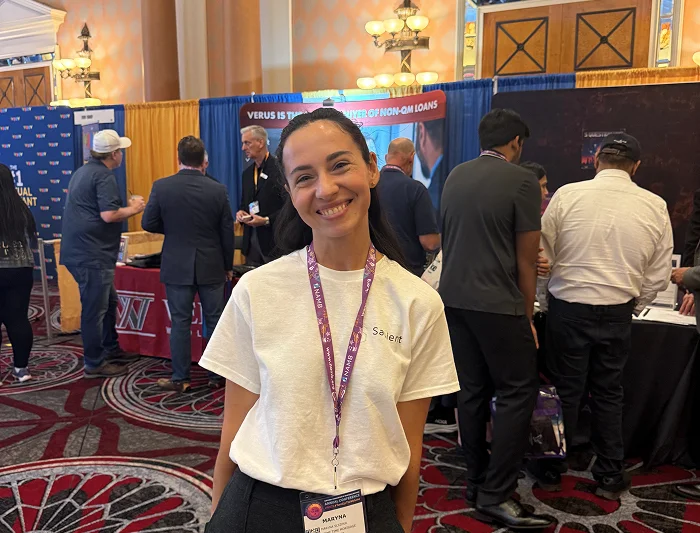
A: Last month we were in the middle of a move, so I made it to only one event in Las Vegas, NAMB National, a conference for mortgage specialists. It was eye-opening because the field is new to me, and hearing how their day runs, directly from people who do the work, was invaluable.
I hesitated at first. I thought, I am not in real estate; I know only the basics. What value could I bring? I almost declined. Then I reminded myself that we learn by stepping into unfamiliar rooms and listening to people with years of experience that no book can capture. So I went.
Those two days were full of learning and good conversations. I presented SapientPro and our case studies, took pages of notes, met new contacts, and left with a clearer sense of an industry that shapes the economy more than many realize.
It made me reflect on something simple and true. As kids, we joined clubs and classes even when we were beginners. Starting felt natural. As adults, we hold back because we worry we are not good enough or about how we will be perceived, and that is how comfort zones quietly limit growth.
This trip reminded me that fear often comes first and growth follows. When you feel uncertain, say yes. Many of the best opportunities begin with, I am not sure that I belong there.
Q: In plain words, how do you explain SapientPro’s value to someone you meet at an event for the first time?
A: At events I keep it simple and concrete. When someone asks what we do, I say SapientPro studies how a company actually works, then builds software and AI that remove routine steps and keep information consistent. I usually ask how a common task moves from start to finish, because that answer points to where time and accuracy slip. From there I describe how we translate that path into a plan with clear ownership and dates. People appreciate that we begin with what already runs, not with a wish list. We connect tools that should talk to each other and replace only what blocks progress. The result is less copy and paste and fewer status chases. Teams open their screens and see the same truth. That is the value I share in a hallway, a short line that fits a busy day and still shows how work moves more cleanly.
Q: When AI comes up in networking conversations, how do you explain it in a way that feels accessible and easy to understand for the other person?
A: At conferences and meetups, I start by asking about the day they just had. I want to hear what takes time, what repeats, and where stress shows up. Once that picture is clear, I share one small, practical example they can imagine using next week. The point is not a show; it is to make one task lighter and to demonstrate how the change would look in practice. I remind people that AI is a tool that supports human judgment, not a replacement. We agree on a pace that feels comfortable, and we test one thing at a time.
Q: When a manager asks for a single line to repeat to the team, I offer this – AI helps with routine tasks so people can focus on work that needs judgment.
A: I hear a common worry in hallways and after panels. People expect AI to sell like a person, yet that is not where it does best. Models can hallucinate in noisy setups, and they do not read the room.
Where AI helps most is behind the scenes. It takes over repetitive workflows and turns large, unstructured inputs into clear, usable information.
Maryna
When we use it that way, to support the team rather than to replace the team, the results are stronger and the risk is lower.
Q: At meetups and conferences, when a founder walks you through their product, what do you listen for?
A: I listen for the challenge under the surface. It is not only what the product does. I want to hear where the process or the plan makes progress hard. As we talk by a booth or over coffee, one question often reveals the real block: do you still process most of your documents by hand? Many teams use modern tools, yet people still download files, rename them, copy and paste details, request approvals by email, and file records later. That pattern brings delays and mistakes, and every status check starts to feel like a weekly puzzle.
When I hear that, I usually show a simpler way that fits how they already work. Maybe we start with one small change, like letting documents come in automatically and running the first checks for them. Results show up in the right place; they can find what they need faster. In the end, they spend less time chasing files and more time on the work that really moves things forward.
Building the Next Chapter in Los Angeles
Q: Outside work what keeps you curious, and how does that energy show up in your role at SapientPro?
A: I stay curious through reading, travel, and real conversations. Books often set the tone for a season. The Power of Now by Eckhart Tolle keeps me present. Atomic Habits by James Clear helps me build small routines that stick. Never Eat Alone by Keith Ferrazzi changed how I view networking. I also follow the Ukrainian YouTube channel Bunt u Biblioteci, which inspires my next reads.
One idea from Never Eat Alone guides my work. Lead with generosity, do not keep score. In practice I share practical use cases and tools, introduce people who might help each other, and send follow-up notes with practical tips. That simple shift invites trust.
Maryna
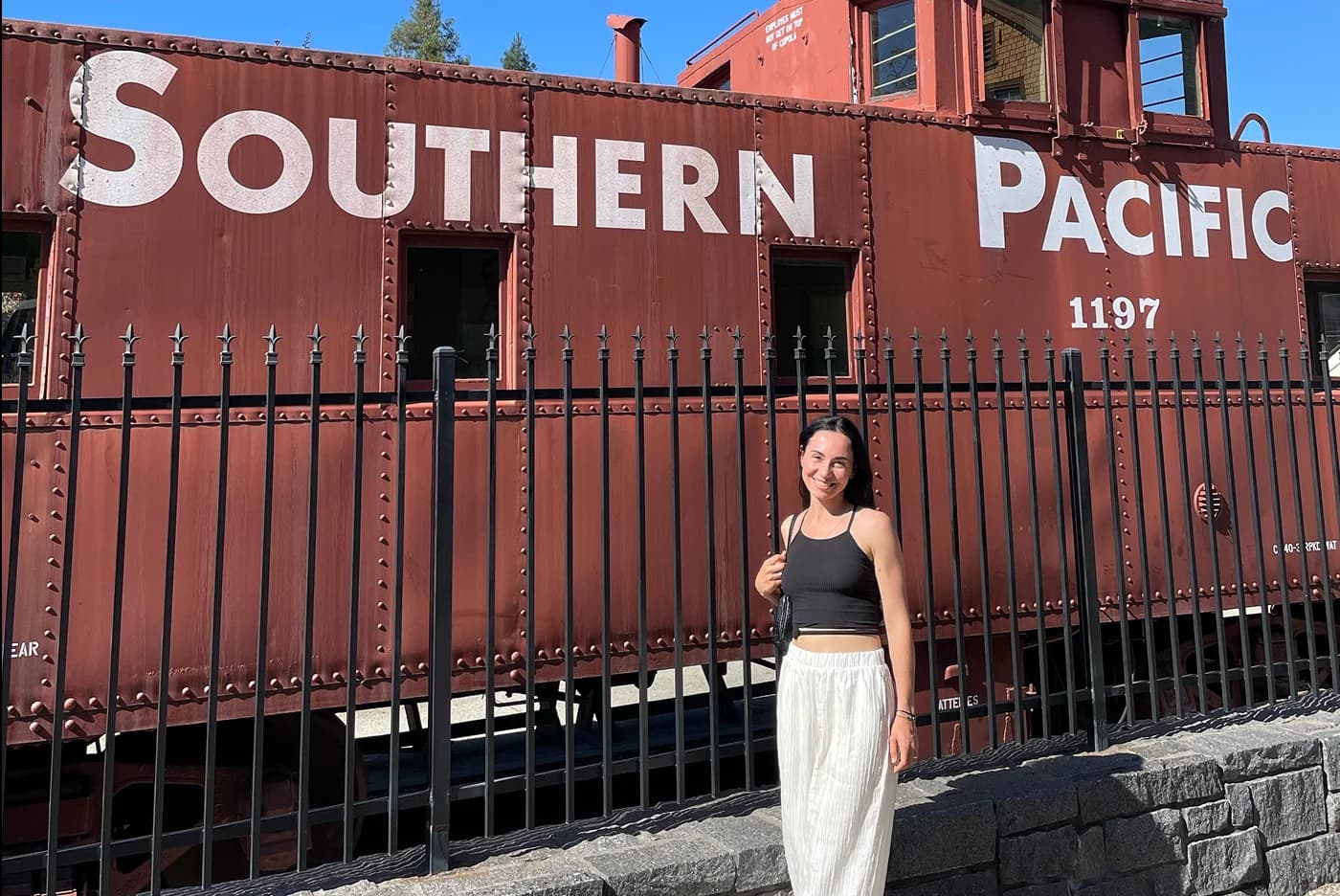
Travel feeds the same mindset. After moving to California, I visited the California State Railroad Museum in Sacramento. The curation impressed me, with clear paths and short explanations, plus space to pause. Since then I've run meetings the same way. A clear structure, a few essential points, context where it is needed, and room for questions.
Real conversations and new hobbies also feed my curiosity. Right now I am about to try surfing, and this Sunday I have my first class. It feels exciting and a little scary, which for me is usually a good sign. New experiences refill my energy, and that mood returns to my work with clients and communities.
Q: You recently started working from a coworking space in Los Angeles. How are you turning that routine into something bigger for local founders?
A: Most days I now work from Industrious in Los Angeles, and it already feels like a small community. Spending time there showed me that this setting can grow into a place for practical workshops for founders.
I am preparing sessions that share SapientPro experience with early-stage products and give guests room to ask questions that come from their own projects. I also plan to invite people I have met at Industrious so they can share what has worked for them.
In the near future I see a couple of these meetings taking place at the coworking space. Guests will be able to meet each other and learn in a practical format, and those who wish can share their own stories, so the room becomes a mix of SapientPro cases and local experience.
Q: What are you focusing on in the coming months, both at local events and online?
A: In the coming weeks I plan to attend more gatherings around the city, including LA Tech Mixer. Each visit helps me understand how local founders think about their products and where they feel stuck. These conversations show me which topics would be most useful for the next workshops.
Online I recently created a permanent event on Eventbrite where people can book short calls with me through the calendar. When someone brings a real challenge they want to discuss, I invite that person to a WhatsApp networking group. In that chat we choose themes for upcoming sessions, and on my side I look for guests who can join and share practical advice.
Over time I would like to grow a group of people who are genuinely interested in building products and learning together. I hope these workshops and calls grow into real partnerships where we help each other move ideas along. Informal conversations at events work the same way, because a quick hallway question is often the first step toward a new relationship.