All SapientPro Brought AI and Video Strategy Into One Los Angeles Room
April 10, 20267 min read

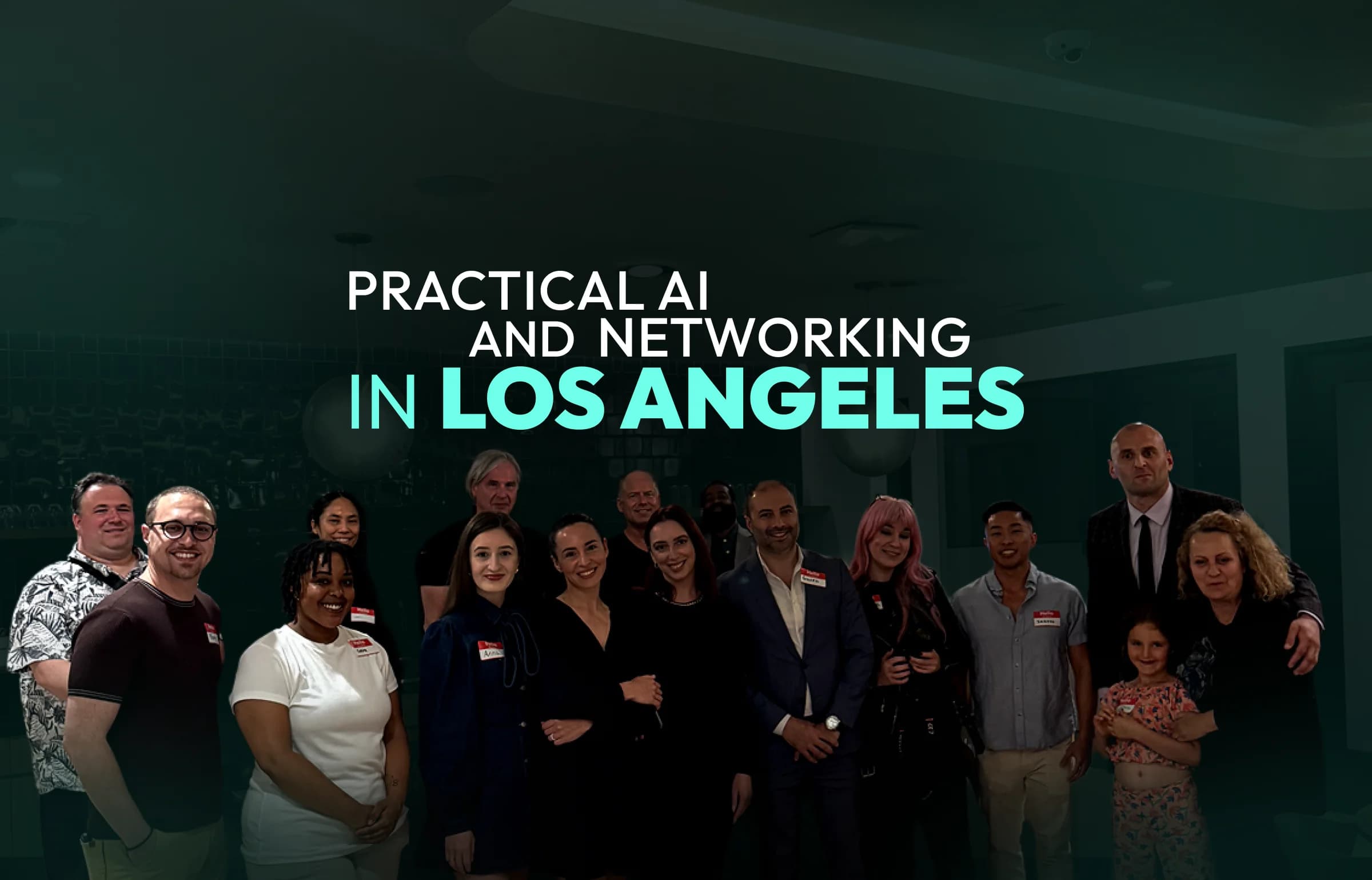
SapientPro hosted another Los Angeles event on April 1 together with our Regional Director Maryna Slyzhuk and co-organizer Roman Vashkevych, a video producer specializing in short-form content and audience engagement. The discussion centered on a tension many companies now face every day. They want to move faster with AI, yet they also need to protect human expertise, originality, and the quality of their communication. What unfolded that evening was a grounded conversation about automation, public presence, and the choices businesses can no longer postpone.
The Discussion Centered on More Than Automation
People came to the April 1 event from different parts of business and creative work, but the questions in the room were much the same. Some wanted to understand where AI could take over routine tasks without lowering the quality of the result. Others were rethinking video at a moment when public presence carries more weight than ever. Many also wanted to meet others facing similar choices in their own work.
That common interest brought the conversation to a larger business question, how to use AI in ways that save time, support stronger output, and sharpen market presence without losing originality, context, or quality. Maryna Slyzhuk brought that point into focus by stressing that AI can speed up much of the process, but people still have to make the final call.
There are no magical tools that can do everything for us. The real question is not how much you can automate, but what should be automated and what still needs human judgment and creativity. AI is especially powerful when it turns unstructured information into something teams can actually work with, but in practice, real value usually comes from several tools working together, not from one tool alone.

Maryna Slyzhuk
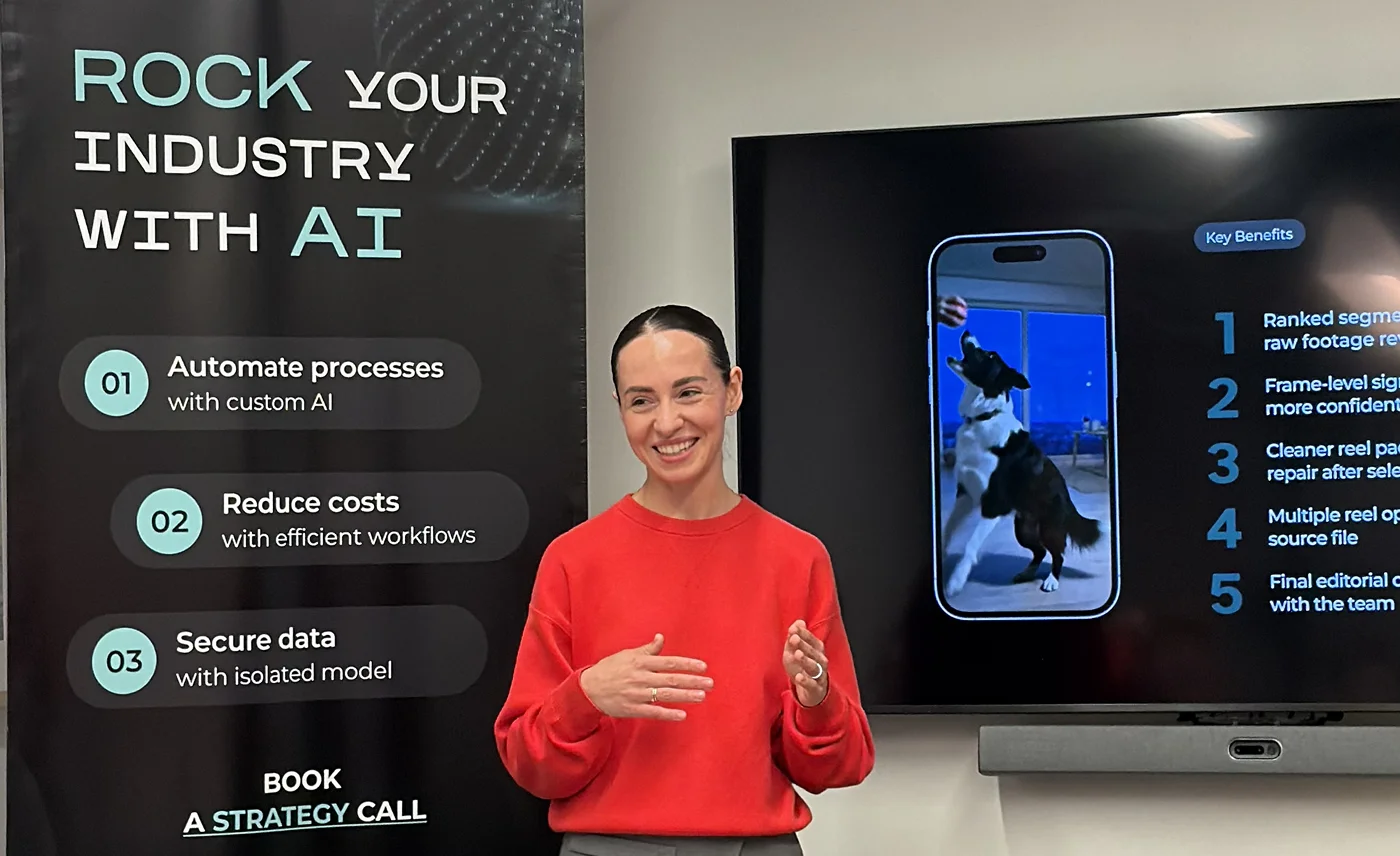
Maryna brought the conversation closer to lived business reality by turning to one of SapientPro’s AI solutions for social video selection and reel creation across TikTok, Instagram, and Facebook. In that moment, the discussion moved from broad ideas to the kind of task teams face in real workflows. What appears simple at first becomes far more exacting once there is raw footage in front of you. A system may process the material, yet that alone does not tell you which moments carry real value, which ones serve the purpose of the reel, or which choice is most likely to hold attention. SapientPro’s response was to build a solution in which several layers of analysis work together to narrow the footage into stronger options for review. For the audience, that example gave the evening a sharper sense of substance. It showed, in practical terms, that AI can move the process forward, and that the final editorial choice still rests with people.
How SapientPro Approached AI-assisted Reel Selection
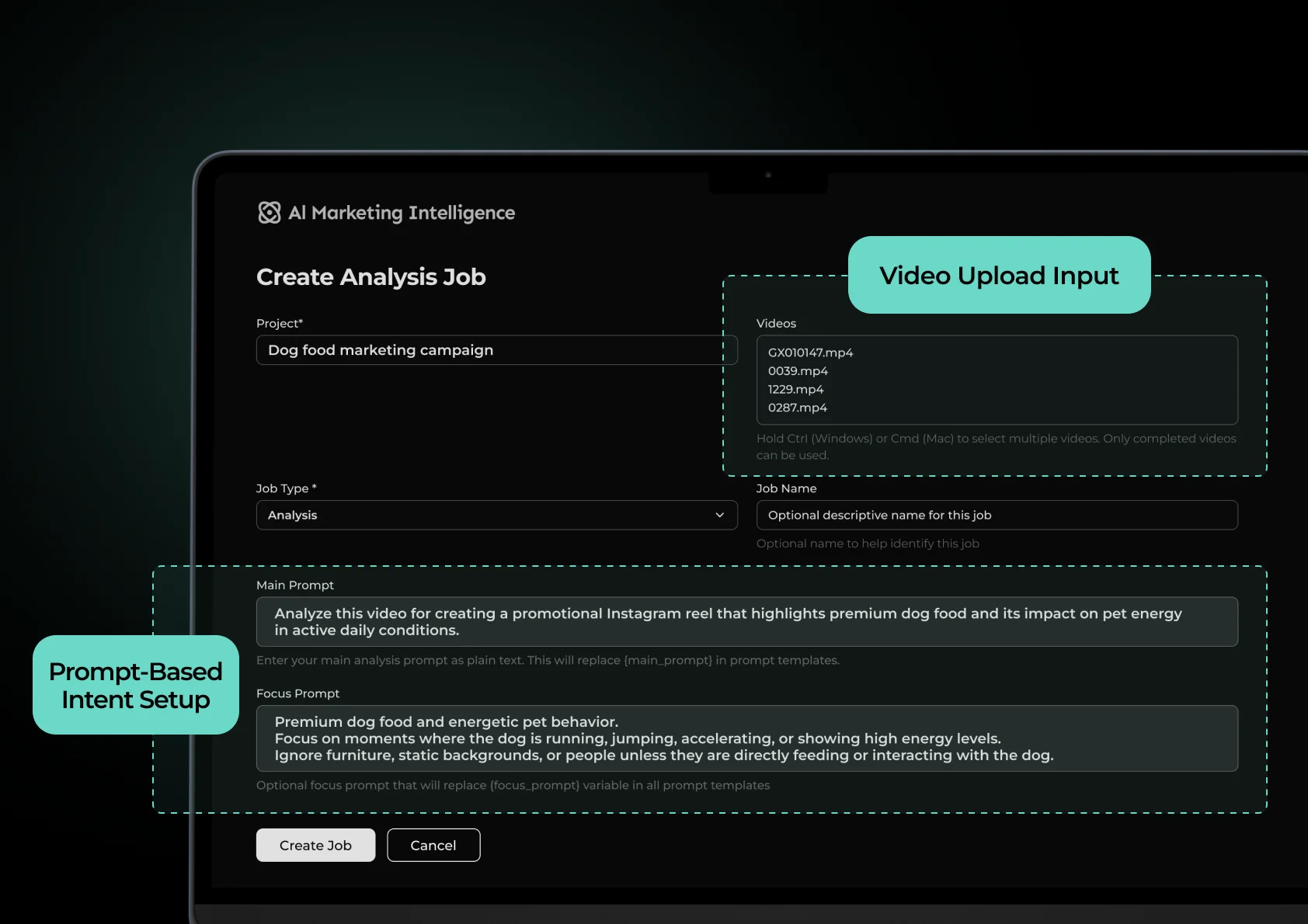
This case offered a closer look at how SapientPro handles short-form video production when the hardest part is choosing the moments worth carrying forward into review-ready reel options. With source videos often running 20 to 40 minutes, the issue is rarely cutting the final asset itself. The harder task is narrowing long footage into a few strong candidates for a 20 to 30 second reel. Pressure around this is growing across the market. Short-form video now holds a leading place in marketers’ content mix, 83 percent of consumers want brands to use more video, and 71 percent of TikTok users decide within the first three seconds whether to keep watching. In that environment, segment choice affects far more than editing convenience. It shapes attention, relevance, and the quality people associate with the brand.
SapientPro responded by building a multi-layered selection pipeline that combined semantic video understanding, frame-level analysis, internal scoring logic, and prompt-based relevance checks. In internal testing, it reduced the path to a shortlist from about 2 hours to 15 minutes, produced 5 reel variants per run, and saved about 1 hour per published video. The logic behind the solution also mattered. Instead of handing over the full decision to one model, the system was built to prepare stronger options for review while keeping the final editorial call with people. In doing so, it brought one of the evening’s central ideas into sharper focus. AI can accelerate the process, yet the final quality of the output still depends on judgment.
Where Roman’s Perspective Took the Conversation Further
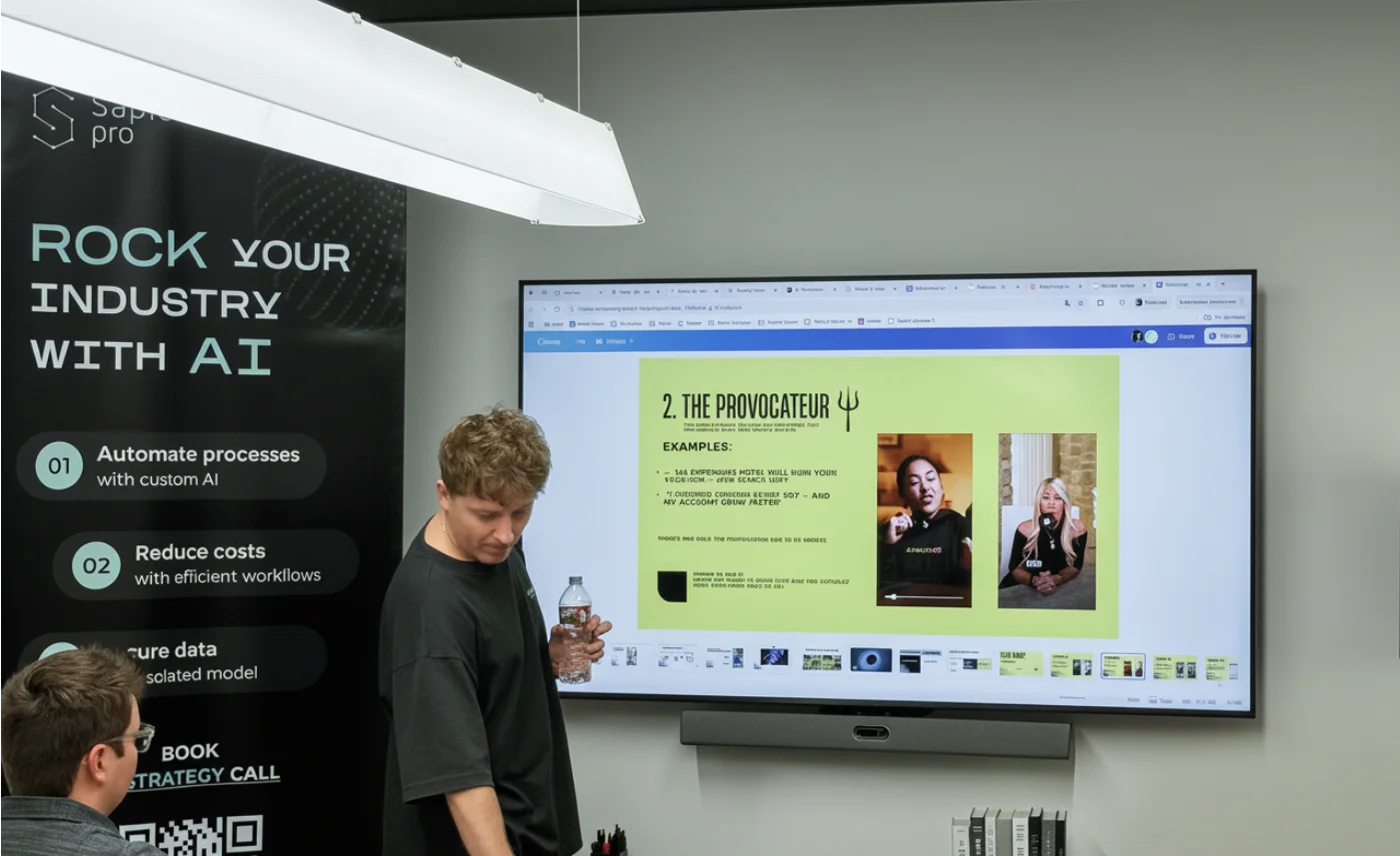
Roman’s contribution carried the discussion into the creative side of the same broader issue. He focused on the structure of short-form video, especially the hook, the opening decisions that make someone stop, watch, and stay with the story. Through examples from his own work, he showed how attention is earned, how pacing changes perception, and why strong content depends on far more than a trend or a tool. That part of the evening drew a strong response from the room, especially from people trying to understand how a stronger public presence takes shape in practice, whether for a founder, a brand, or a growing business.
What made Roman’s perspective especially valuable was how naturally it met Maryna’s. Their talks came from different sides of the same discussion, yet they arrived at one shared conclusion. AI can support the process, widen the options, and save time. Taste, timing, and judgment still shape the result people remember.
In Conversation With Roman Vashkevych
Q: How did video first become part of your life?
A: I remember video feeling like magic when I was a kid. Even shooting on a phone felt unreal to me back then. I dreamed of having a camera phone, and I still remember the day my parents bought me a Sony Ericsson K750. After that, I filmed everything, school life, time with friends, my parents at home, even when they were not thrilled about it. The phone became an extension of my hand. At that stage, I never thought video would become part of my adult life. It was just something I loved doing.
Q: How did you build your skills and move from interest to professional work?
A: A friend of mine, who worked as a wedding musician, once told me he had found the perfect job for me and that I should shoot wedding videos. I thought he was joking because I had never even held a camera. Still, he introduced me to someone who had been running a wedding video production company for years, and that person agreed to mentor me. About a month later, I was already shooting weddings on my own. Within six months, I had become one of the most requested videographers on the team.
I worked in that space for about a year, then realized all the wedding videos were starting to feel the same. I wanted to make something different. That was when I got interested in commercial work. I watched a lot, went to workshops and conferences, and eventually started my own production company with a friend.
Q: You work across different kinds of video. What keeps it interesting for you?
A: Freedom. One day I am filming a fast-moving car in the mountains, the next I am shooting a funny ad with a full cast. It never feels repetitive. What excites me most is the result. I love seeing a video really change something for a brand. We had one restaurant video reach 1.7 million views, and it completely changed their traffic.
As a business owner, I learned that every piece of content has to do something real. It has to build recognition, bring sales, or communicate a message clearly. In this field, it is not enough to make something that looks good. The video has to speak to the right audience and land the idea it was built to deliver.

Roman Vashkevych
Q: You share a lot of tutorials online. What made you start teaching through your content?
A: I like sharing what I know and encouraging creators and business owners to make better content. I also like showing that strong video does not always have to feel out of reach. What really keeps me going is the response. People write to me, send me what they made, ask more questions. That means a lot. At the same time, this kind of content also shows potential clients what we can do.
Q: What role does AI play in your workflow today?
A: AI now handles a big part of our routine work. We have already automated script writing, storyboard creation, and comment replies under my videos. I also use AI when working on short-form content. Right now, the tools are changing the content world very fast, and I do not want to sit that out.
Q: Where does AI really help, and where does the human side still matter most?
A: AI can help a lot, but it still cannot replace a person completely. We still shape the storytelling ourselves so each story comes through properly and each frame has character. For me, AI is a very advanced assistant. It can help with a lot, but it still works best when a creator is setting the direction.
Q: A lot of people talk about viral video like it is random. What do they usually get wrong?
A: A lot of people misunderstand the hook. They think it is just a phrase or a line of text. It is not. The hook is really the first three seconds of the video. That is the moment when there has to be a gap between what the viewer expects and what they actually see. The stronger that gap is, the stronger the curiosity becomes. That opening moment matters more than people think.
Q: Do you see yourself going further with workshops or educational formats?
A: Honestly, I had not thought much about it before. But more and more followers started asking for workshops and deeper training. That is why I have already begun holding master classes on viral video, and I am starting to grow that direction.
Q: What matters more to you now, how a video looks or how it performs?
A: The result, without question. I do not care whether a video was shot on a RED or an old iPhone. We are not chasing a perfect image for ego. What matters is the performance after publication.
Q: What kind of project would you most love to do next?
A: I would love to create a commercial that airs during the Super Bowl. It does not matter what brand it is. That is the biggest advertising stage in the United States, and I would be proud to help make something the whole country sees.
Q: At the April 1 event in Los Angeles, what felt most relevant to people in the room?
A: I was impressed by how informed the audience already was. A lot of people understood what a hook is and had a general sense of how it works. But the AI tools I showed got the strongest reaction. One of them was Higgsfield AI, which helps generate strong viral hooks with AI tools. When I showed how it worked, people immediately saw how relevant it was and how quickly they could start using it.

Voices
I had a great time at the event. I was impressed by how much we can already do with AI. It is incredible. I also appreciated the practical side of the session. I use AI resources every day and I am always looking for new tools and new information. Roman’s advice was especially useful, and I already started putting some of it into practice.

Carlos Portillo
The event was very interesting and informative. I learned more about AI, new tools, and hook techniques that can be very useful for content creation and filmmaking. What also stood out was the discussion around where AI can open new creative possibilities, especially in film work that used to be hard to produce on a limited budget.

Elisabet Borés
The event gave me a new way to think about AI, especially as a tool for business optimization. Roman explained it in a way that made the ideas feel much more practical. I also really appreciated the discussion in the room and the chance to keep talking after the event.

Stephany Gonzalez
The Next Events Were Already Taking Shape
The conversation did not end with the presentations. Although the formal part lasted about an hour, people stayed until 10 p.m., which said a great deal about the relevance of the topics and the strength of the format itself. That response reinforced SapientPro’s approach in Los Angeles, small-scale events shaped around practical discussion, strong speakers, and enough room for meaningful exchange. The next steps are already clear, another event featuring Roman, focused on tutorials, online presence, and more deliberate use of AI, a networking event on April 22 with Galit Fuller of The Connection Company, and ongoing discussions with founders exploring customer support automation and other early-stage AI use cases.
MAKE AUTOMATION A BUSINESS STEP
Talk to SapientPro about where AI can take hold in your process.