All At SapientPro's Founder's Edge, Every Hand in the Room Went Up
July 3, 20265 min read

During the introduction, Maryna asked a room full of founders and business owners how often they have to contact three colleagues just to find a client's name or a basic number. Every hand went up.
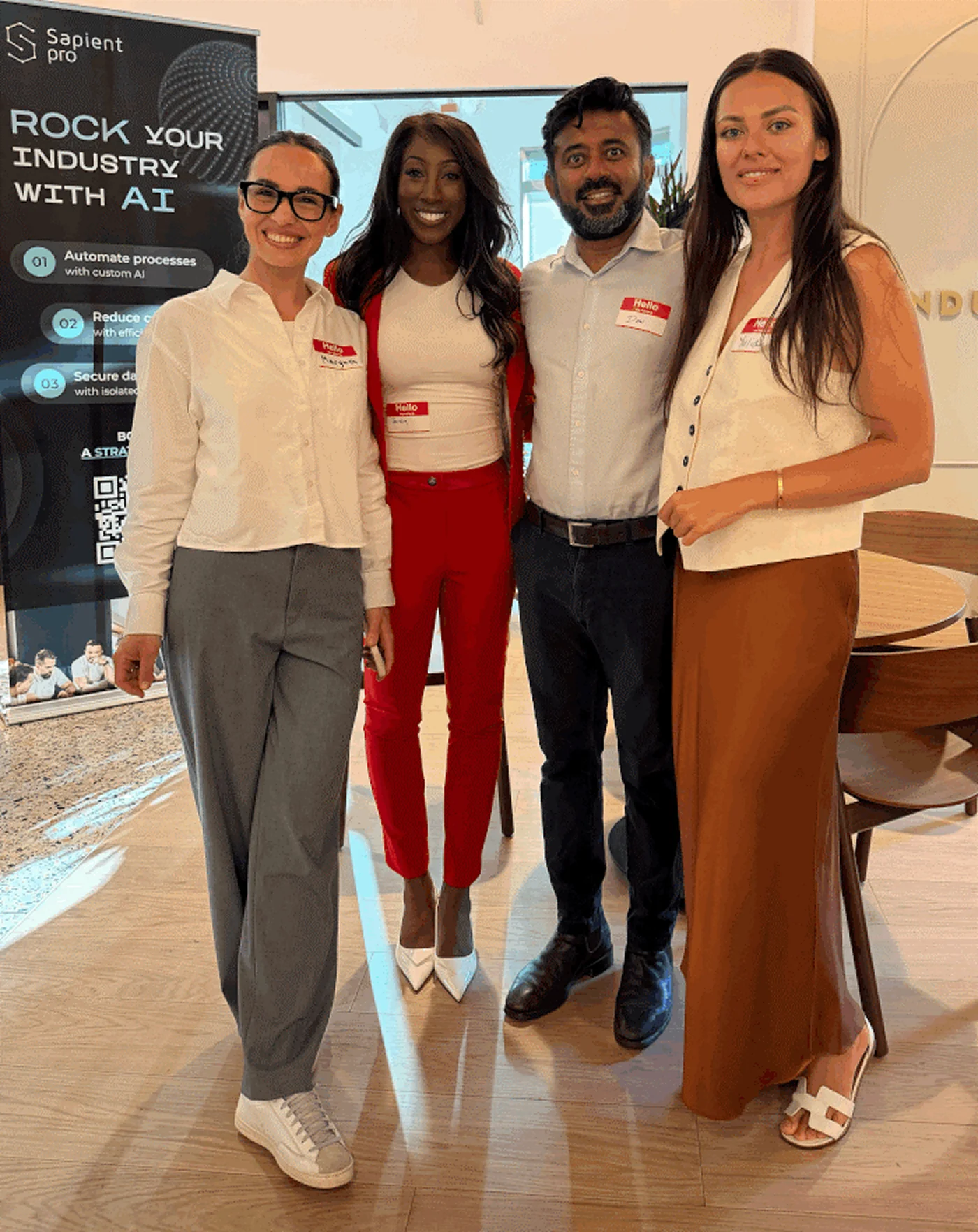
That moment set the tone for Founder's Edge: Smart Tech, Smart Finance, our latest community event in the Los Angeles area, hosted by Regional Director Maryna Slyzhuk together with guest speaker Gio Tsagara, who works with founders on asset protection and capital management. The event took place June 24 in Beverly Hills.
Where the Data Goes Missing
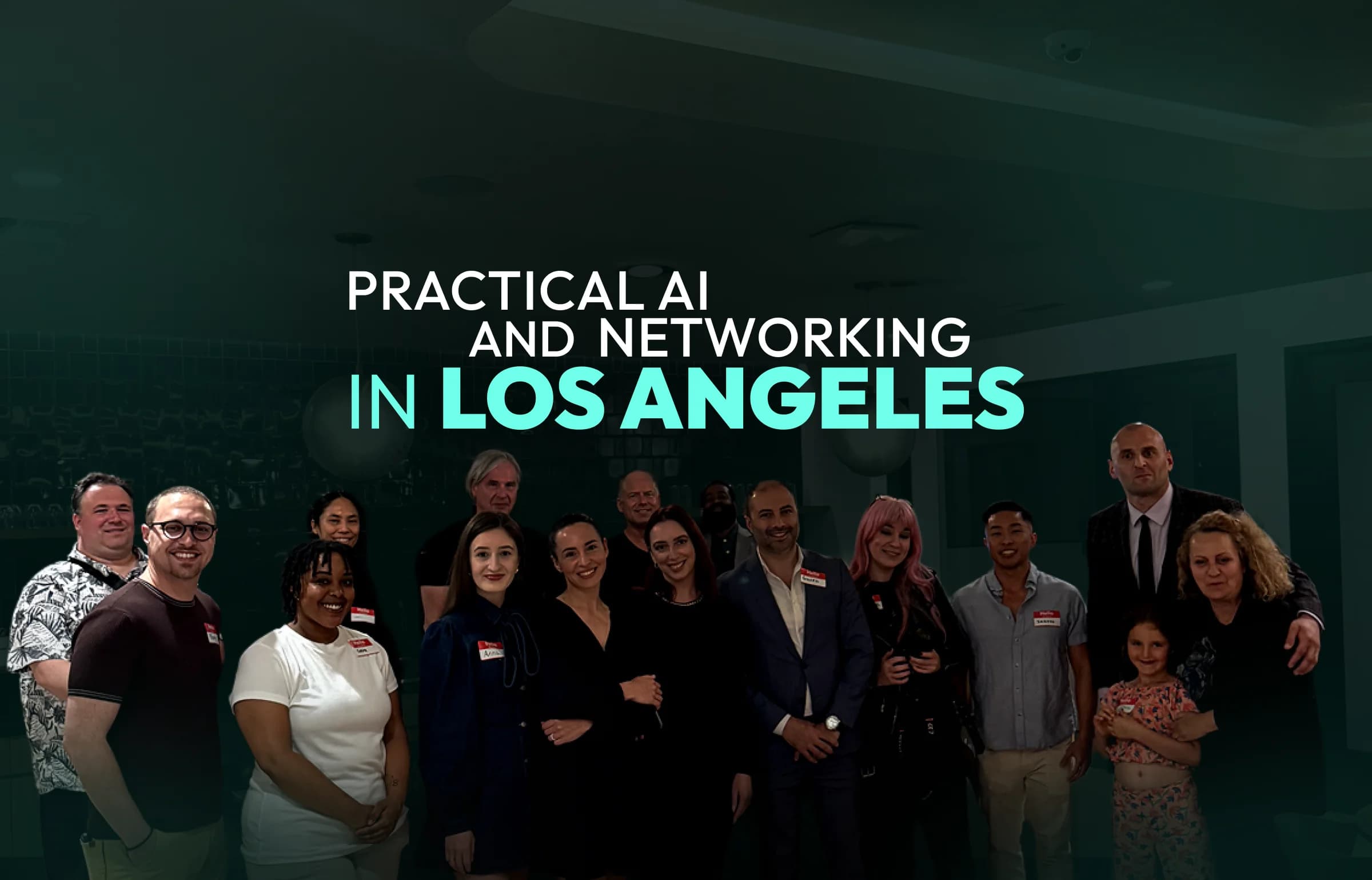
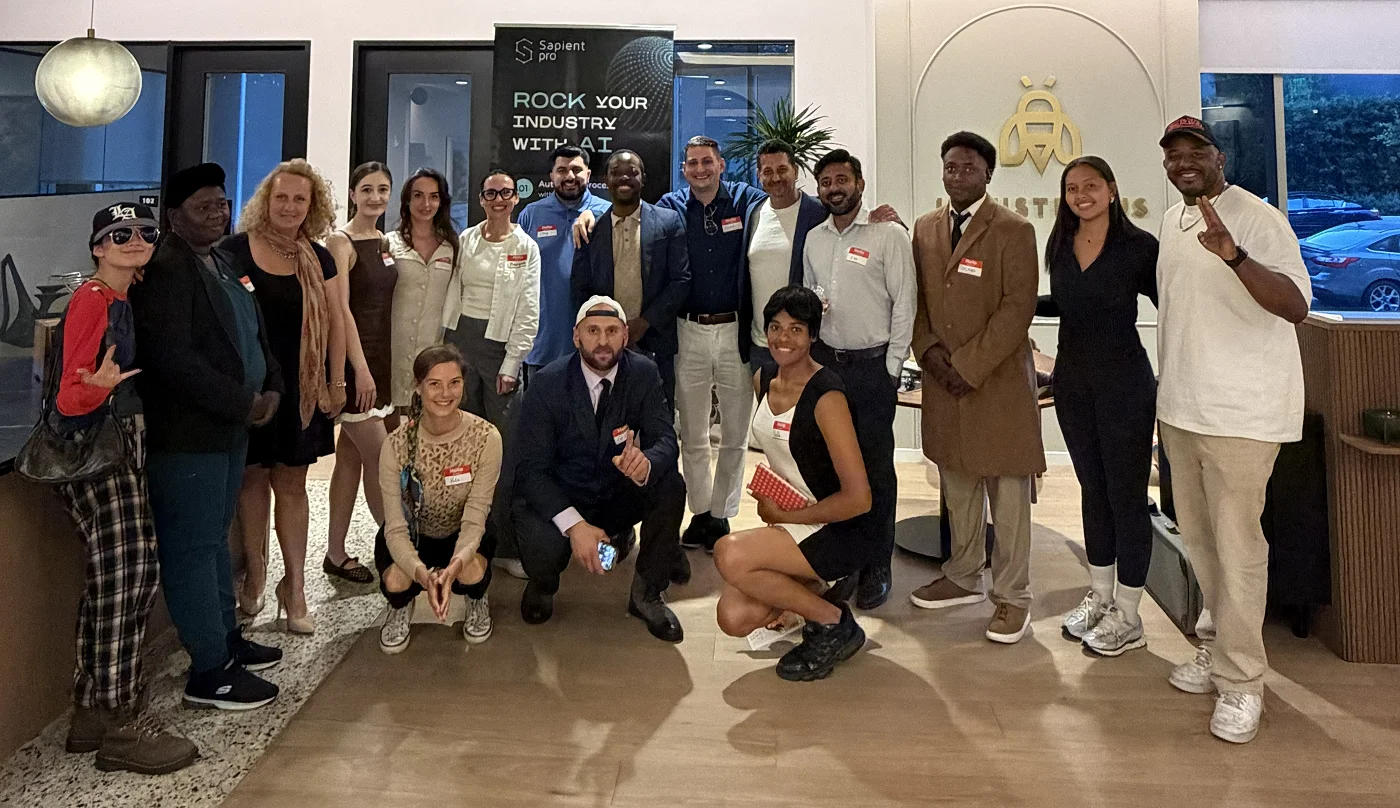
The room held financial services specialists, loan brokers, business consultants, real estate agents, AI engineers, marketing specialists, construction company founders, business developers, attorneys, and actors. The evening paired two presentations, one on AI automation inside daily operations and one on financial protection for founders, on the idea that the two questions belong in the same conversation.
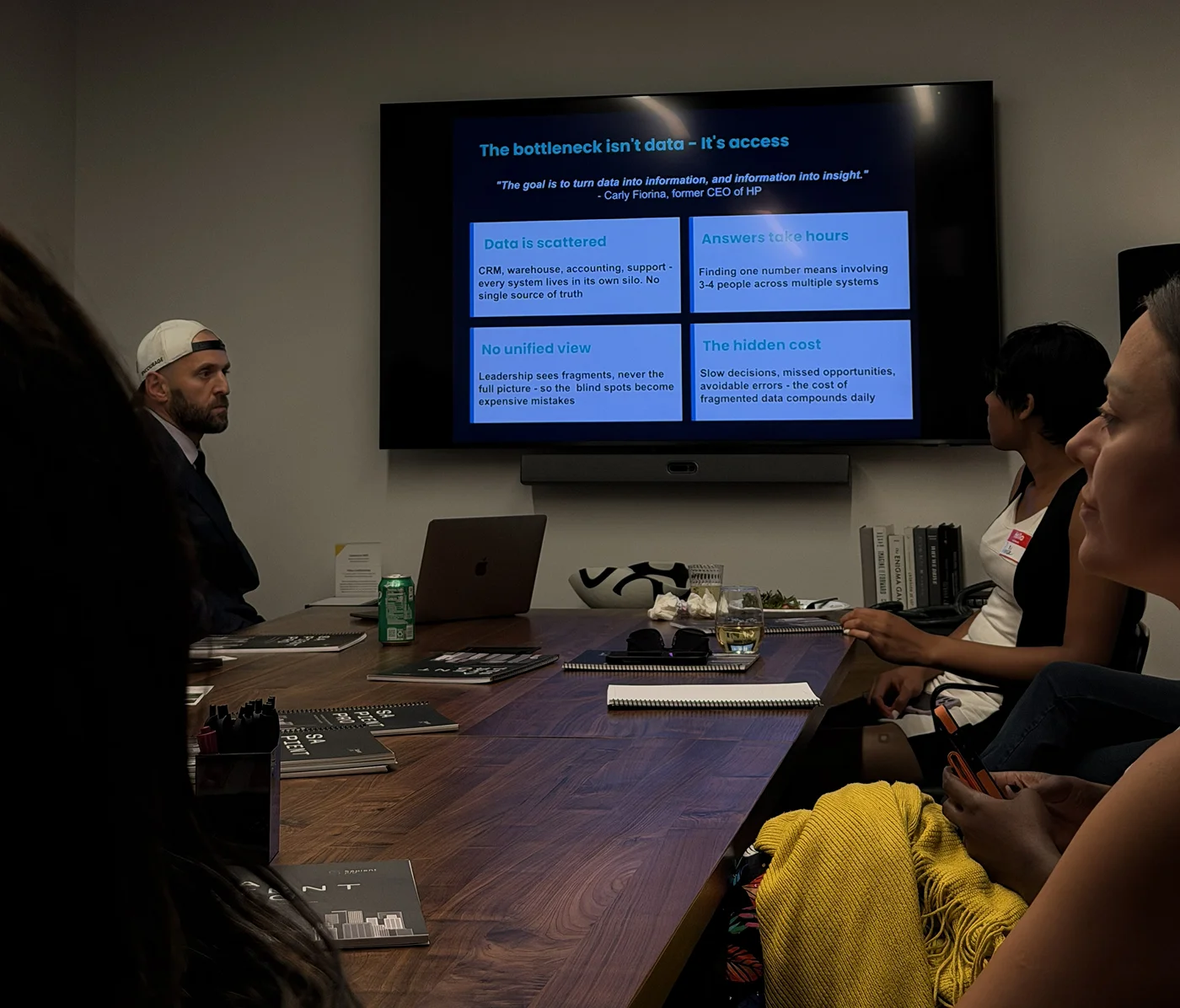
Her slides opened with a line from Carly Fiorina, the former CEO of HP: "The goal is to turn data into information, and information into insight."
It set up a problem most of the room already knew from the inside. Data is rarely hard to collect. It gets hard to find once it spreads across CRM systems, warehouses, accounting platforms, and support tickets, each living in its own silo with no single source of truth.
The numbers back that up. Eighty-three percent of Chief Data Officers say data silos hinder innovation and slow real-time decisions, according to a 2025 IBM Institute for Business Value study. Gartner Research puts the average annual cost of poor data quality at 12.9 million dollars per organization.
CRM automation drew the most questions from the room. Attendees asked directly whether tools like Monday CRM and Follow Up Boss support AI integrations, since most small and midsize businesses run on subscription platforms that were not built around their specific workflow.
During the session, Maryna ran a live query against a construction company's CRM, asking which vendor issues were currently blocking project progress. The Delay Prevention Copilot pointed to one vendor dispute behind the holdup. It gave a resolution deadline and named the next steps. The answer linked back to the live project and ticket records it was built from.
A dashboard only flags what's already labeled a risk. The useful moment is when the system surfaces something that doesn't fit any of your filters yet, because that's usually the thing nobody on the team was tracking.

Maryna Slyzhuk
For founders unsure where to start, Maryna said the real obstacle is usually cost rather than capability. Most projects begin with a minimum viable version of the tool, tested with real use before any further build-out.
Maryna's part of the evening looked at how a business runs day to day. Gio's part looked at what a founder does with the money that business makes.
A Conversation With Gio Tsagara
Q: Founder's Edge brought founders and operators into the room on June 24. How did that shape what you chose to cover?
A: A lot of common investment advice, like putting most of your money into real estate or the S&P 500, doesn't account for what founders specifically need. They need vehicles that protect them if they get sick or pass away, and that grow their money without putting it at risk. They can use that money later to fund their next venture. LIMRA research shows 71 percent of Americans cannot even look up their own credit score. I spend a lot of time introducing founders to vehicles like infinite banking, IUL, and FIA, which reduce how dependent they are on venture capital or bank loans.
Q: What's one thing you'd want a founder who attended on June 24 to do differently with their money in the next 90 days?
A: Define your financial goals first. After that, move funds into vehicles that match those goals, and keep an emergency reserve in place. For some founders that means setting up an IUL with a minimum death benefit and maximum cash value, a 0 percent floor, and a cap between 9 and 11 percent, though the right structure always depends on individual goals.
Q: AI tools are changing how people research financial decisions before they talk to a professional. Does that change how you approach a new client?
A: I use AI daily myself. Before I meet with someone new, I check what AI tells the average person about financial literacy and planning, and I factor that into the conversation. Client interactions have already changed because of this, and the people who adapt to the tools will be the ones who stay ahead.
Q: You've pointed to founders like Walt Disney and Ray Kroc as examples. What's the connection to what you're recommending?
A: Disney, Kroc, and JC Penney all used their own life insurance policies to fund major ventures after banks and other investors turned them down, which gave them independence from outside investors. About 65 percent of companies don't survive their first 10 years, and I read that as a sign that most aren't financially prepared. I tell founders to keep part of their money somewhere it's protected and still growing, alongside whatever they choose to put into the market or real estate.
Voices
Technology is no longer a competitive advantage for businesses. It's the baseline. CRM automation, AI assistants, and smarter financial decision-making aren't innovations anymore. They're the operating standard for any business that wants to scale in 2026.

Yulia Leshchenko
Having dedicated networking time both before and after the presentations made it easy to connect with professionals from a wide variety of industries. Both presentations were insightful and provided practical takeaways, especially the examples shared during the AI and workflow automation session.

Omid Mandani
Had a great time at the Sapient Pro event. It was well organized from start to finish, with a nice mix of insightful talks and networking. Big thanks to Maryna for putting it all together; her energy and attention to detail really made the event flow smoothly. Looking forward to the next one!

Olena Kuts
I really enjoyed how friendly and inviting the event was. Many similar events fail to create a captivating and welcoming atmosphere, there was a lot of positive engagement and interest from everyone attending.

Elliot Sobel
What I enjoyed most was simple: the room actually talked. You brought together people who don’t usually end up at the same events, and it showed in the quality of conversation. Practical tech and AI themes that cut across industries seem to be what this community responds to.

Dan Perera
One More Question for the Room
If your hand would have gone up at that same question, the fix usually starts with one short look at where your information actually lives and what it would take to connect it. That's where a conversation with SapientPro helps.