All RWA Tokenization: How Real-World Assets Move On-Chain
August 15, 202615 min read


RWA tokenization is where blockchain starts solving real problems for traditional finance.
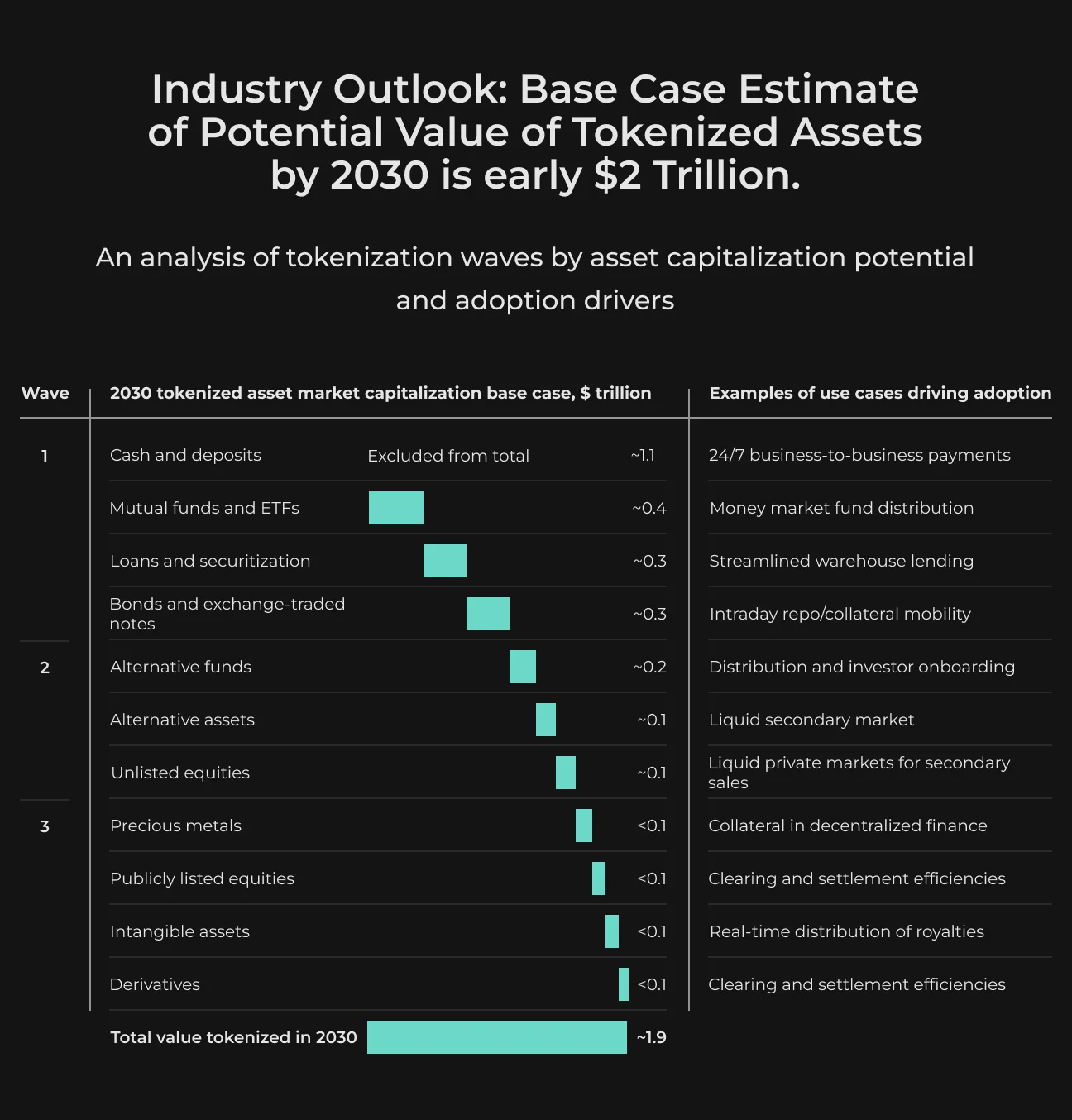
It does not create value out of thin air. It takes assets that already exist in financial markets and gives them a format that is easier to issue, transfer, and settle digitally. McKinsey estimates that tokenized financial assets could reach about $2 trillion by 2030, excluding cryptocurrencies and stablecoins.
Still, the token is only the visible part of the product. A tokenized Treasury product or property share needs a structure that covers investor rights, pricing, and redemption rules.
Read SapientPro’s guide to learn how real-world asset tokenization works in practice and what to know before building or investing in tokenized asset infrastructure.
What Is RWA Tokenization in Crypto?
Real-world asset tokenization keeps the asset in the real world but moves the ownership claim into a digital format that is easier to issue, track, and transfer.
An RWA product that works in practice has two connected layers. The off-chain layer comes first. The issuer sets up the legal wrapper, arranges custody, defines investor rights, and verifies who can take part.
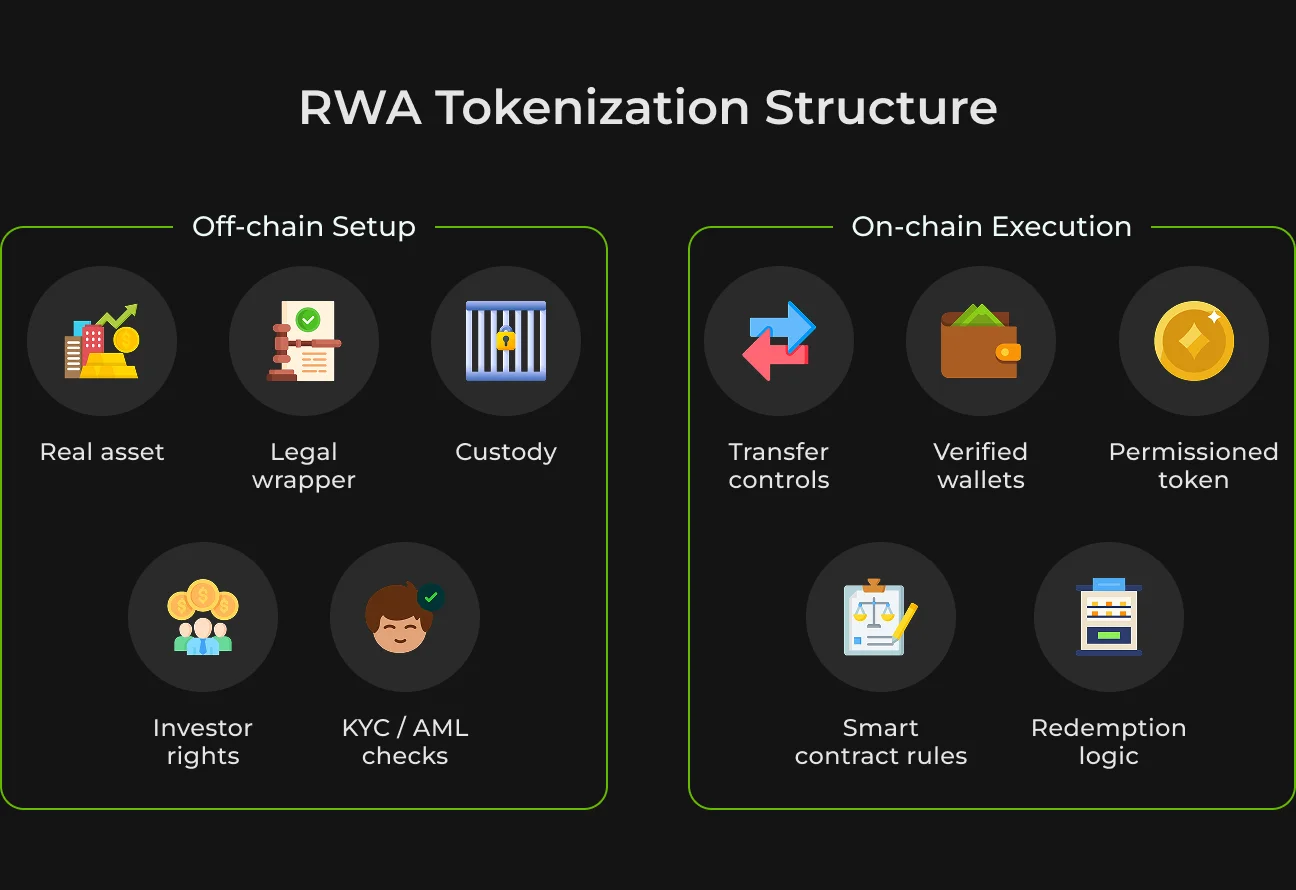
For a bond product, this means someone holds or administers the bond, tracks income, and pays eligible token holders. For real estate or private credit, the same logic depends on ownership documents, loan agreements, valuations, and servicing.
The on-chain layer is where the token records who holds the claim and applies the rules from the off-chain setup. A basic free-transfer token model rarely works for regulated assets, so RWA projects often use permissioned standards.
ERC-3643 connects token transfers with identity and compliance checks. ERC-1400-style architecture is used as a reference for security-token features, including transfer restrictions, document references, and redemption.
This two-layer setup is what separates real RWA infrastructure from a simple token launch.
The asset has to be legally sound off-chain, and the token logic has to reflect those rules on-chain. When both parts match, the token can support a real investment product with clear rights and controlled transfers.
What’s Already Being Tokenized and Why?
RWA tokenization is developing unevenly across asset classes. Early adoption is happening where the asset already has a clear issuer, pricing model, custody setup, or payment flow. That is why Treasuries, selected bond products, private credit, gold, and real estate structures are moving first.
US Treasuries and Bonds
US Treasuries have become the most active RWA crypto category. The reason is simple. They are liquid, familiar to institutions, and easier to price than many private-market assets.
Tokenization gives Treasury products a digital format that can move across blockchain infrastructure, while the yield still comes from government debt or Treasury-focused funds.
RWA.xyz lists tokenized US Treasuries at more than $10 billion in total value. The category includes products from BlackRock, Franklin Templeton, Ondo, WisdomTree, Janus Henderson, and other asset managers.
Investors get faster access to yield-bearing instruments with digital ownership records. And issuers gain another distribution channel for traditional fixed-income products.
Real Estate
Real estate is attractive for tokenization, but adoption is slower. Each deal depends on local law, title records, valuation, and an approved ownership structure. Once that structure is settled, the token works like a deal-level cap table. It shows each investor’s share, ties payouts to that record, and keeps transfers within the rules of the offering.
RWA.xyz currently shows tokenized real estate at just over $200 million in distributed value across more than 100 tracked assets. That is still small compared with Treasuries, but the use case is clear.
A tokenized real estate product can lower the entry barrier, give investors a clearer digital record of their share, and make secondary transfers easier where regulation and platform liquidity allow it.
Commodities
For commodities, tokenization works best when the asset already has a clear market price and reliable custody. Gold fits this model better than most commodities. It has transparent pricing and a familiar process for checking reserves.
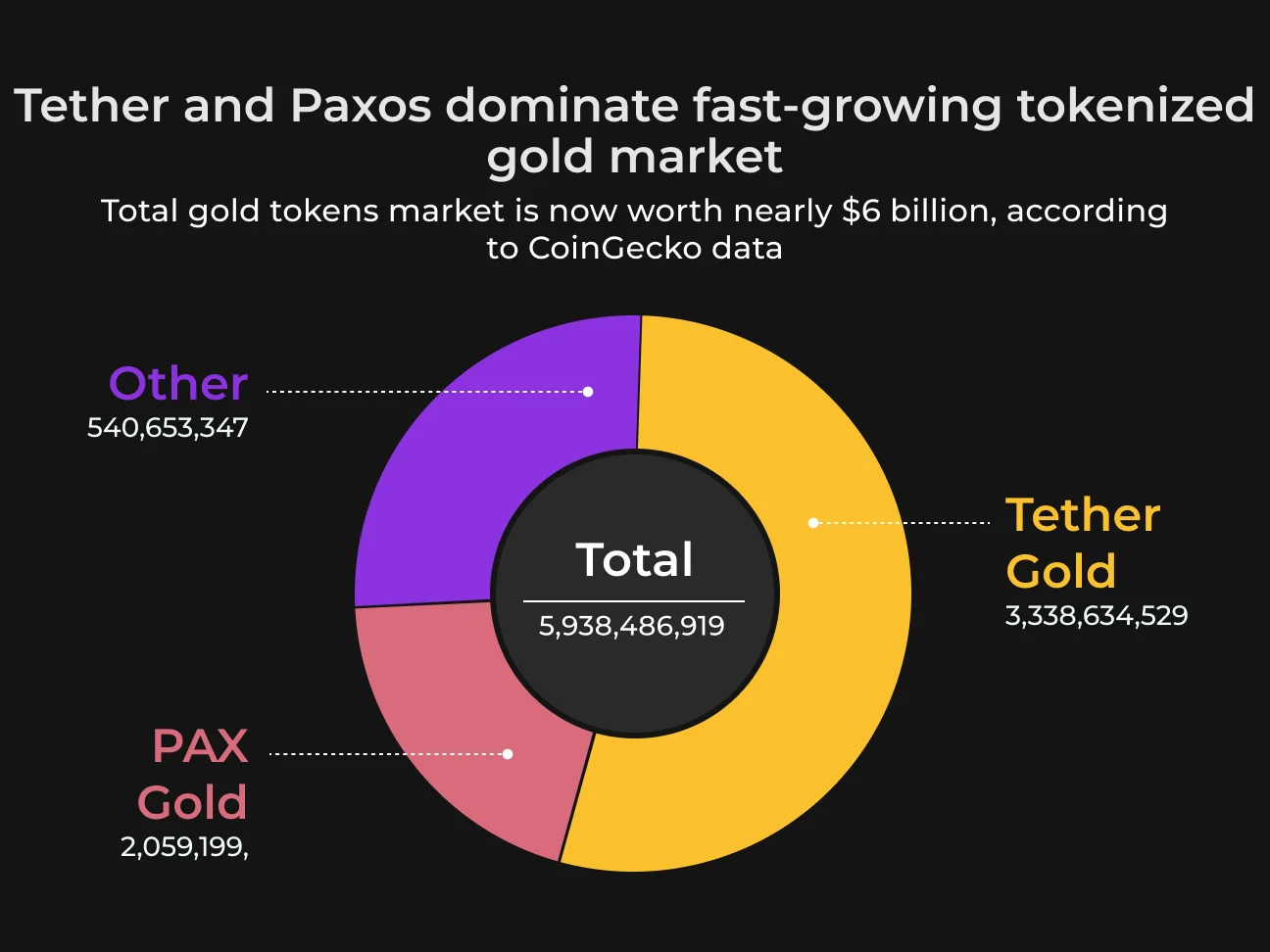
Reuters put the gold-backed token market near $6 billion in early 2026, with Tether Gold and Paxos Gold leading the category. That growth makes sense. A token gives investors digital access to vaulted bullion and removes part of the storage and settlement friction that comes with physical metal.
For gold-backed tokens, trust comes from a boring detail. Every token has to point to metal that can be accounted for outside the chain. Clean custody records and a realistic redemption process matter more than the token ticker.
Private Credit
Private credit is harder to tokenize than Treasuries because the asset depends on borrower quality, loan terms, collateral, and servicing. The token can reduce administrative work, but it cannot improve the loan itself.
The main gain is investor administration. Tokenization can keep ownership records updated, connect payouts to verified holders, and make transfers easier within approved rules. Funds spend less time on manual subscription and payout records, and investors get a more accurate view of their position.
How RWA Tokenization Works on the Blockchain
In RWA tokenization, the blockchain part begins when the product is ready for issuance.
By then, the issuer already has the asset vehicle, custodian or servicer, investor rules, payout method, and exit process. After issuance, the smart contract handles part of the product admin.
It records each position, blocks transfers outside the approved investor file, and gives the platform the holder list used for payouts or redemption. The asset remains under the agreed custody or servicing setup, and the token keeps the investor position visible on-chain.
Step | What happens in practice | Blockchain role |
| Product setup | The issuer turns asset terms into operating rules for investor access, payouts, transfer limits, and exits. | The contract is configured around those rules before issuance. |
| Investor wallet setup | A verified investor profile is linked to a wallet address before tokens are issued. | The contract can recognize that wallet during minting, transfers, and redemption. |
| Token issuance | Tokens are minted when the subscription is accepted, and the wallet is ready. | The token balance becomes the investor’s digital position in the product. |
| Transfer check | A sale or transfer is checked against wallet status, jurisdiction, investor type, and holding limits. | The transaction goes through only when it fits the product rules. |
| Payout or update | Interest, rent share, fund income, or another product event is matched with the current holder list. | The platform can calculate payments from the latest token balances. |
| Exit or redemption | The investor sells through an approved route or redeems under the product terms. | Tokens are transferred or burned, and the holder record changes together with the claim behind it. |
Build a Compliant RWA Tokenization Platform
Turn your asset model into secure, audit-ready infrastructure built for real investors.
Real Benefits of Asset Tokenization
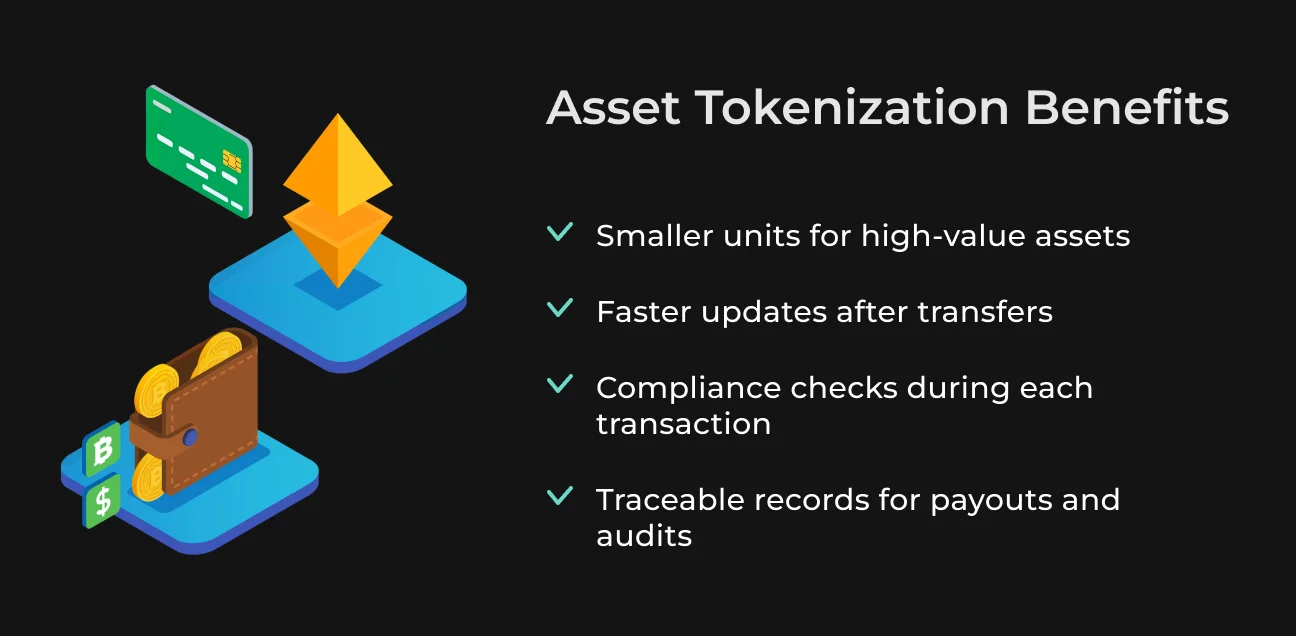
Asset tokenization becomes most useful when a product is already live and ownership starts changing. It helps teams keep investor records accurate, process transfers faster, and connect payouts with the right holders. This is what tokenization can improve for real assets in practice.
Fractional Ownership
Fractional ownership usually gets described as a lower entry ticket. That is true, but the better point is control. The issuer can split exposure into smaller units without losing track of who owns what, which is difficult to manage with manual registers and private spreadsheets.
In real estate tokenization development, the token can show each investor’s share of the property vehicle. In a private credit product, it can show who holds part of the loan exposure and who receives the next payment. The product stays under one legal structure, while the investor record becomes easier to update as positions change.
Settlement Speed
In tokenized real-world assets, the transfer can update the holder record at the same time the transaction is approved. There is less waiting for separate registry edits, back-office reconciliation, and manual confirmation between parties.
The biggest difference appears in secondary transfers. A buyer’s wallet can be checked before the token moves. Once the transfer is approved, the new holder record is ready for the next payout or report. That makes the process easier for platforms that work with many smaller investors or frequent ownership changes.
Programmable Compliance
Permissioned tokens make compliance part of the transfer flow. After verification, the platform links an investor profile to a wallet address. During a sale, the contract checks that wallet against the approved investor record before the token moves.
This helps prevent transfers to wallets that do not match the product terms. It also lets the platform update access quickly when an investor’s status changes, so routine transfers rely on the same rules every time.
Transparency and Auditability
In tokenized assets, transparency helps teams stop chasing the same record across spreadsheets, registry files, custody reports, and payment records. The token record can show who held the position on a payout date, which transfers happened, and which balance was used for redemption.
The ownership trail depends on reliable off-chain data.
Asset value, custody evidence, and investor records still come from the real-world structure. Real-world asset tokenization blockchain gives teams a more precise ownership trail, but the quality of that trail depends on the data linked to it.
Risks of Tokenized Real-World Assets
RWA projects usually run into trouble where the token depends on the real-world process. This section shows where risks usually appear and how teams can reduce them before launch.
Legal Claim That Is Hard to Enforce
A wallet balance has value only when the holder can enforce the right attached to it. In RWA products, that right may come through fund shares, an SPV, a loan participation agreement, or an issuer obligation.
Problems occur when token terms and offering documents describe the claim in different ways. Redemption can look simple in the interface, yet remain vague in the legal documents.
Good legal drafting makes the token lifecycle readable. The subscription agreement sets the issuance point, transfer terms explain how a new holder is admitted, and redemption terms close the investor’s claim. Lost-wallet recovery, disputes, and issuer insolvency also need clear wording because these cases test the structure first.
Custody and Servicing Breakdowns
A tokenized asset still depends on the quality of the asset record. For a gold product, for example, investors need proof that the metal exists. For private credit, the key issue is whether borrower payments are tracked correctly and reflected in reports. The risk grows when custody, reporting, and platform operations are split between different parties.
Each handoff needs an owner and evidence investors can review on a regular basis.
Liquidity That Depends on the Asset
Transfer logic gives the token a technical route to move between investors. Liquidity depends on something more practical like price, buyer demand, or the rules of the product. Treasury-linked tokens usually have an easier exit path because the asset is publicly priced and traded in a deep market.
Property shares and private credit positions take more time because the platform may need to approve the buyer and wait for the next transfer or redemption window.
The exit terms belong in the product before investors commit capital. They need to explain how pricing works, which buyers can participate, and how often redemption opens.
Data That Falls Out of Sync
A token balance can look correct even when the product data is outdated. This can distort exit pricing, payout calculations, or transfer approval, depending on which record has fallen behind.
The team needs clear ownership for every data update. Valuations, payment confirmations, custody checks, and investor status changes have to reach the platform on time and in a format the system can use.
Smart Contract and Access Control Errors
Permissioned RWA tokens rely on access logic that reads wallet status before a transfer closes. That logic needs testing with real support cases, from wallet replacement to transfer pauses, so admin changes remain traceable after investor balances go live.
What It Takes to Build a Real-World Asset Tokenization Platform
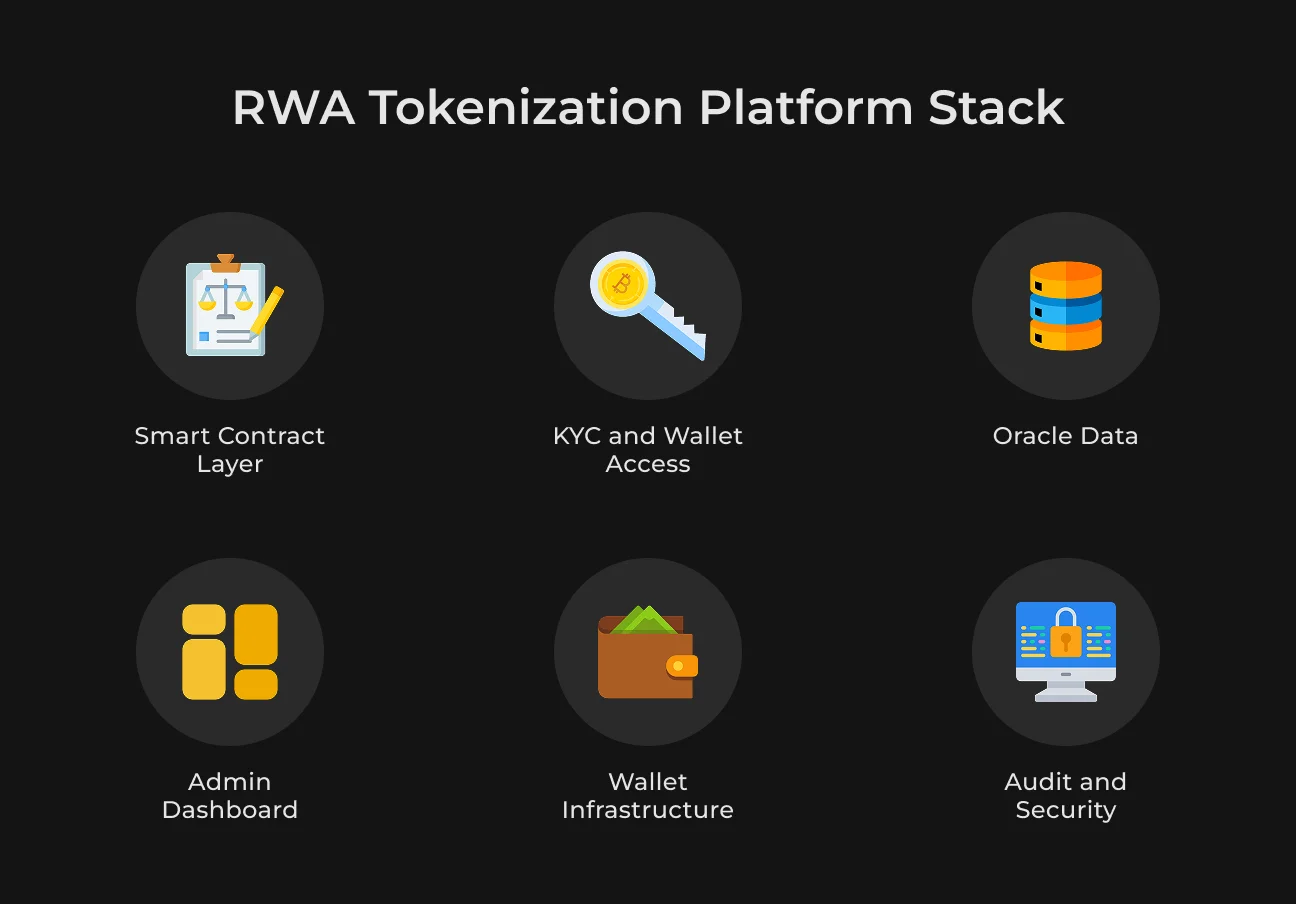
A digital asset tokenization platform has to support the real operating flow of an asset product. It needs to handle investor approval, ownership changes, asset data, payouts, and exceptions. Without this structure, the platform may look ready on-chain but fail during real use.
Smart Contract Layer
The smart contract controls the token after issuance. It creates the investor’s position, checks wallet permissions during transfer, and closes the position through redemption or burn logic.
For regulated assets, the contract usually uses permissioned token logic. Whitelisting, transfer limits, and redemption rules are built into the way the token moves.
Oracle Integration
The blockchain needs asset data from trusted external systems. Oracle integration brings NAV changes, asset prices, and corporate actions into the platform when those updates affect token records.
Source quality is vital here. The platform records where the data came from, when it changed, and which value was used for reporting.
KYC/AML Module
The KYC/AML module connects investor approval with wallet access. After verification, the platform links an investor profile to a wallet address that the smart contract can recognize during issuance and transfer checks.
When investor eligibility changes, wallet permissions can change before the next transaction. This keeps issuance and secondary transfers tied to the approved investor record.
Admin Dashboard
The admin dashboard gives the operations team a practical way to manage the token lifecycle. It shows token supply, investor positions, redemption requests, and cap table changes in one place.
This layer matters most during exceptions. A failed transfer or wallet recovery request needs one clear workflow for legal, operations, and support teams.
Wallet Infrastructure
Wallet infrastructure defines how investors hold tokenized positions. Custodial wallets make onboarding and recovery easier through the platform or custodian. MPC-based wallets give investors more direct control without relying on one private key.
The choice affects support, security, and incident handling, so it belongs in the architecture before launch.
Audit and Security
Contract audits are non-negotiable before any mainnet deployment. A contract flaw can block redemption, distort balances, or send tokens to the wrong wallet.
Security review also covers admin actions. Permission changes, wallet recovery, transfer pauses, and upgrades need a review trail before they touch live investor positions. After deployment, the team still requires monitoring for contract activity and admin changes.
Build Your Tokenization Platform with SapientPro
SapientPro is a professional team with 9+ years of experience in building custom fintech and Web3 platforms for companies that require reliable software beyond a prototype.
For real-world asset tokenization services, we start with the asset model and the way the product will operate after launch, then translate that into a system built for real market use.
For your tokenization platform, SapientPro can:
- Design the asset model and tokenization structure tailored to your business logic;
- Build secure token issuance and smart contract infrastructure;
- Implement controlled, compliant investor onboarding and access;
- Develop tools for day-to-day platform management and reporting;
- Ensure the platform is production-ready, not just a prototype.
Contact SapientPro to discuss how your real-world asset tokenization platform can be built for real market use.
Start Building Your RWA Platform Today
Contact SapientPro to scope your tokenization project and get a clear path to launch.