All The Hidden Costs of Using Generic POS Systems in a Multi-Channel E-Commerce
December 20, 202515 min read


Most e-commerce businesses focus just on price when choosing a POS system to buy. Many analyze the initial cost only or subscription fees, and believe they have made the right decision. Yet, this is just the beginning.
Businesses might not think about extra, smaller fees that appear later in the process. These costs appear minor at first, but they can create substantial financial issues in the future. Businesses lose thousands of dollars annually without understanding the source of their losses.
This article reveals essential information about the POS system's hidden costs, which will help you make an informed decision when choosing one.
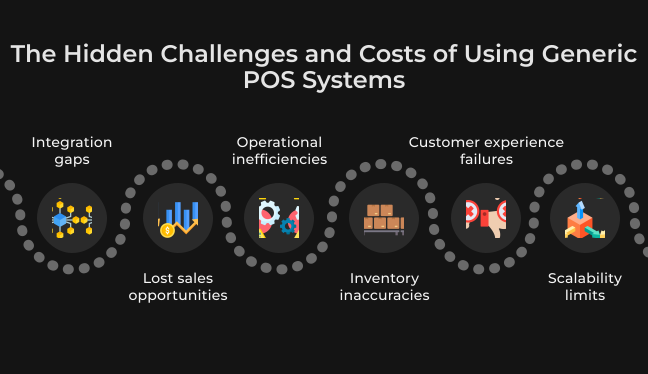
The Hidden Challenges and Costs
Let’s take a look at the most common mistakes e-commerce businesses make when choosing a POS system, so you can avoid them and save costs.
Integration Gaps
Selecting a system that operates well with your current software becomes difficult when you aim to prevent operational interruptions. More than half of retailers identify system integration across different channels as their main priority.
The integration of generic POS systems with e-commerce platforms, CRM, or ERP systems proves challenging for most systems.
This lack of integration between systems creates isolated data “islands” — they prevent easy access to information and slow down operations and decision-making.
The majority of POS providers now provide native integration capabilities with popular software systems, which simplifies the integration process. Businesses with more advanced needs should choose POS systems that include APIs for integration purposes. The API feature enables your new system to link with existing software applications without developer involvement.
Inventory Inaccuracies
Inventory errors are another major concern, which could lead to a loss of 10-30% in profits due to discrepancies, stock outs, and overstocking issues. These inaccuracies can cause missed sales opportunities or lead to unnecessary holding costs.
Businesses can reduce their inventory costs by at least 10% when they address both overstocking and understocking issues.
However, businesses that operate in multiple locations can find it difficult to introduce new POS systems. To ensure a consistent experience everywhere, they need to centrally manage and synchronize their inventory systems.
A cloud-based POS system is the best option for such businesses. The system enables complete visibility through real-time data management of all locations under one centralized platform. Plus, it simplifies adding new locations as the business grows.
Lost Sales Opportunities
If businesses don't sync their POS systems in real time, they might miss sales like reservations or upsells. Also, their sales conversion rates usually drop below 3% if their ecommerce platform isn't properly designed.
Businesses need real-time data to make correct decisions. The right sales optimization strategy can be achieved through this approach, which works best in competitive market conditions.
Customer Experience Failures
A slow POS system creates negative customer experiences because it leads to delayed checkout processes. This may cause customers to leave their purchases behind. Retailers who use quality POS data can develop personalized customer experiences and offers, increasing customer loyalty.
Companies using POS data for personalization see a 27% increase in customer retention rates. For example, a major department store chain used POS data for a personalization program and saw repeat purchases rise by 23% in the first six months. Also, returning customers spent 31% more on average.
Operational Inefficiencies
The use of generic POS systems often results in manual data duplication, which means extra work and a higher risk of mistakes. These systems also need more than 40 hours of staff training, increasing operational costs and decreasing efficiency.
A successful transition to a new POS system requires complete training for all employees. The training program must explain the necessity of that change and its benefits for job responsibilities or customer experience improvement.
During the training, staff can learn the new processes and get their questions answered before the system goes live.
Also, most POS providers offer training materials like videos, user guides, and online sessions.
Scalability Limits
To grow a business, it's necessary to set up new sales channels, loyalty programs, and expand into more marketplaces. The inability of generic POS systems to scale up creates difficulties for businesses to expand their operations and adapt to market changes.
Retailers who integrate POS data across all their in-store, online, and mobile channels achieve a 38% increase in average transaction values compared to those using separate systems.
How a Custom POS Eliminates These Costs: Cases
The implementation of custom POS systems brings major transformations to all business operations. These tailored systems improve inventory control, increase sales performance, and deliver advanced security capabilities. Custom POS systems adapt as businesses grow, offering long-term value.
SapientPro's Case
An ecommerce B2B site asked SapientPro’s team to integrate a ready-made solution into their Magento system. However, they later ran into issues as their business expanded with new stores, payment options, and loyalty programs.
The team spent their shifts observing checkout processes, timing scanning activities, and speaking with cashiers to note any practical issues not covered in technical documents.
So, we decided to develop a custom POS system specifically to meet their business's needs. We rebuilt the terminal using a Magento-native plug-in core. Developers can add new modules or make brand adjustments without altering the main structure.
This decision kept the project on track, removed licensing restrictions, and provided opportunities for future development.
The custom POS terminal operates independently with unlimited cashier lanes. It stores transactions locally until it reconnects to Magento for stock and order synchronization.
The system's features ensure a smooth and reliable experience for both customers and staff, without any delays or uncertainty.
Jack in the Box’s Case
Jack in the Box's case perfectly demonstrates how fast updates to a POS system create better customer experiences and provide franchise owners with immediate data access.
Before Updating the POS System
Jack in the Box fell behind competitors because their “Jack Stack” technology couldn't keep up. This made it difficult for the company to grow and gain market advantages, since their digital systems weren’t providing smooth experiences for customers and employees. The franchisees also faced challenges when trying to access vital data.
The main issue stemmed from an outdated POS system, which was essential for order taking, payment processing, sales tracking, inventory management, customer data collection, and business operations.
The company's old POS system, developed decades ago, was quite hard for restaurant staff to use. This led to longer training times, slower service, and order errors that caused food waste. It also resulted in confusing reports for IT teams and franchisees.
Besides, the system failed to establish important connections between different systems, like mobile apps, loyalty programs, third-party ordering platforms, and workforce management platforms. This resulted in data silos that blocked informed decision-making.
After Updating the POS System
Jack in the Box now offers quick and personalized service through various ordering methods, including drive-thru, in-store kiosks, mobile app, online, and even via third-party delivery services. This improvement follows the upgrade of their POS system and network.
Leaders and franchisees can use the modernized POS system to connect to important business platforms, which helps them manage staff and inventory. This reduces food waste and improves profit margins.
POS System Future Trends
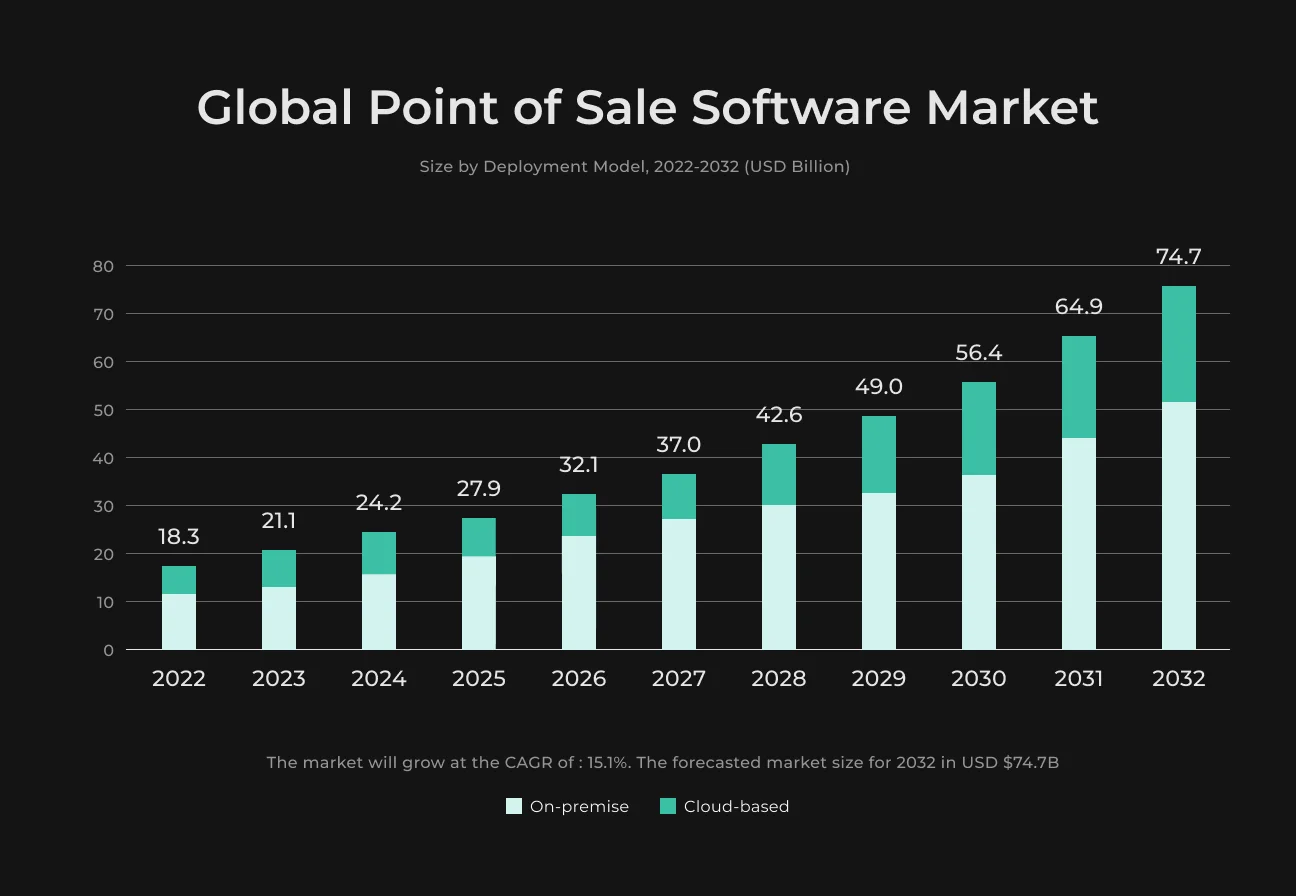
The POS software market worldwide is undergoing rapid transformation, as businesses need innovative payment solutions that deliver speed and security. POS systems are also becoming more advanced with the help of artificial intelligence, cloud computing, and mobile connectivity.
For example, the mobile POS terminal market could reach $49.01 billion this year, and more than 69% of vendors prioritize mobile-first development. Let's check out some of the latest POS trends in numbers.
- 58% of businesses are moving toward AI-integrated solutions;
- 72% of small and medium businesses have already adopted cloud-based POS systems because they value cost efficiency, real-time data access, and scalability;
- For 60% of businesses, the POS system is an essential tool for engaging with customers. It offers real-time data and the ability to integrate across multiple channels;
- Digital wallets and tap-to-pay features now appeal to more than 65% of consumers in modern POS systems;
- The integration of inventory management within POS systems has become more popular — over 64% of retail businesses depend on them for real-time stock updates;
- The adoption rate of omnichannel POS systems (which unite in-store and online transactions) has risen by 60% among e-commerce retail outlets;
- Businesses now use more than 50% of their POS systems to integrate CRM features, which improves loyalty programs and customer engagement.
Partner with SapientPro to Integrate Your POS Solution
SapientPro’s POS for Magento 2 is the perfect solution for your e-commerce and physical business. Our solution combines online and offline modes, helps you track inventory, manage cashiers, and get detailed analytics.
Contact us today to get a free demo!
Try SapientPro's POS for Magento 2