
All Stanislav’s UI Rules for Complex Web Products
January 21, 20268 min read

Stanislav is a UI/UX designer at SapientPro who thinks in systems and builds interfaces that stay consistent under real product growth. In this interview, he shares how early art training shaped his discipline, why clear structure helps teams move faster, and what he watches for when a UI starts to scale. Expect practical lessons from client work, plus the decisions behind them.
A UI and UX Designer’s Work at SapientPro
Q: How long have you been with SapientPro, and what is your current role?
A: I am a UI/UX designer at SapientPro and have been here for three years. My role sits at the intersection of design and communication. I talk with clients, present our design decisions, and help connect their product goals with the interface we build.
Q: What does your day-to-day work usually include?
A: On projects I build and maintain design systems, add new components, and keep them consistent. I work with design tokens, refine patterns, and look for interface solutions that stay clear when the product grows. A big part of my work is making sure that the system is easy to support for both designers and developers.
Q: What does a good design system mean to you in everyday work?
A: For me, a good design system starts with shared language. Components and styles use consistent naming, supported by rules for typography, spacing, iconography, and color that keep the system predictable over time. When those rules are documented and easy to find, everyday decisions get faster and handoff gets easier because designers and developers follow the same logic. A strong system also prevents rework. It gives the team reliable building blocks for new screens and a clear approach for adding new components without turning the system into a patchwork.

Q: Which tools do you rely on now for UI and UX, and why?
A: Figma is my main workspace because it handles the whole loop in one place. I can explore concepts, build components, document rules, and share clickable prototypes for feedback. It is also great for collaboration because teammates and clients can comment right inside the file, and nothing gets lost in long message threads. I also keep close to the big platform guidelines. Google Material Design is a strong reference when I want patterns that users already understand.
Early Proof That Design Serves a Purpose
Q: Looking back, what did your early art education teach you about structure, constraints, and iteration in design?
A: My parents enrolled me in art school when I was in second grade, and I studied there for four years. It was a rigorous program with constant practice, sketches, still life, portraits, and graphic work across different techniques. That training taught me discipline, attention to detail, and the habit of improving work through iteration. I also finished with honors, and some pieces were shown at exhibitions and contests.
One childhood memory still connects directly to how I think about systems. I built a small house in our yard with my grandfather, using simple materials we had on hand. I did not call it design back then, but it was my first real lesson in structure, constraints, and how small decisions shape the final result.
Q: When did design stop being a hobby and start feeling like real work you could build a career around?
A: It shifted when esports started to grow and my friends and I played in local tournaments. We needed a team name, a logo, and flags, so I created them in basic graphic editors and later in Illustrator. When my friends started using what I made, design stopped feeling like practice and started feeling useful. In school, we also studied Hryhorii Skovoroda and his idea of “related work,” choosing a path that fits your nature. That pushed me to think about design as a long-term direction, not just a side interest.
A Turning Point Year
Q: How did the Ukrainian Leadership Academy appear in your story?
A: A friend told me about it back in school, but at that time it sounded too good to be real, so I did not take it seriously. I enrolled in the Kamianets-Podilskyi Ivan Ohiienko National University tourism program, but after the first year I realized it was not my direction. That is when I checked the Academy again. They already had a strong website with stories from the first groups of students, and the more I read, the more I felt that I wanted to try.
Q: Which projects at the Academy helped you discover design?
A: Every student had to take part in several projects, from the first idea to actual execution. One of mine was a conference similar in tone to TED. I handled tasks with speakers, schedules, and coordination. We needed visual materials, so I redesigned the logo and created posters and previews for social media. When I saw the result and the reaction, I realized how much I liked this type of work.

The second project was a one-day music festival for the local community. I created the logo, designed posters for the streets and for social media, and helped with the lineup. I also spoke with local bands, invited them, and coordinated their sets. The festival went very well and confirmed that design plus organization was something I wanted more of in my life.

Q: Was there a specific visit or experience during that year that made you commit to a future in tech?
A: One visit that changed everything was to UNIT.City in Kyiv. It is an innovation park with tech companies and the ucode IT Academy, which uses a self-study model on a gamified platform. I liked both the architecture and the learning approach. That visit helped me decide that I wanted to build my future in tech.
Stepping Into UX Design
Q: When did you realize that UI and UX design fit you better than pure coding?
A: While I was learning front end, I noticed that I was more excited about layout, hierarchy, and interactions than about the code itself. I had some local clients for logos and printed materials, but graphic design on its own felt too narrow. I began to work with tools like Adobe XD and later Figma, and I realized that interface structure and user flows mattered to me more than anything else in the process.
As part of my final thesis project at university, I and designed an automated platform that moved day-to-day communication into a single digital system. I described the core modules, including room booking and occupancy tracking, and built wireframes plus a main screen UI concept. The thesis received high praise and confirmed that my future work should connect design, systems, and real business use.
Q: How did you build your skills before entering the industry?
A: I completed my degree with honors and kept studying UX and UI. I took courses on Coursera, created user personas and user stories, and built customer journey maps. I practiced research, wireframing, and simple testing, then turned those exercises into early portfolio pieces. At the same time, I started to treat social media as a professional channel and shared my work. After about a year of focused study, I felt ready to call myself a trainee level junior designer and to test myself in real interviews.
Joining SapientPro And Growing Through Projects
Q: What did you work on first when you joined SapientPro?
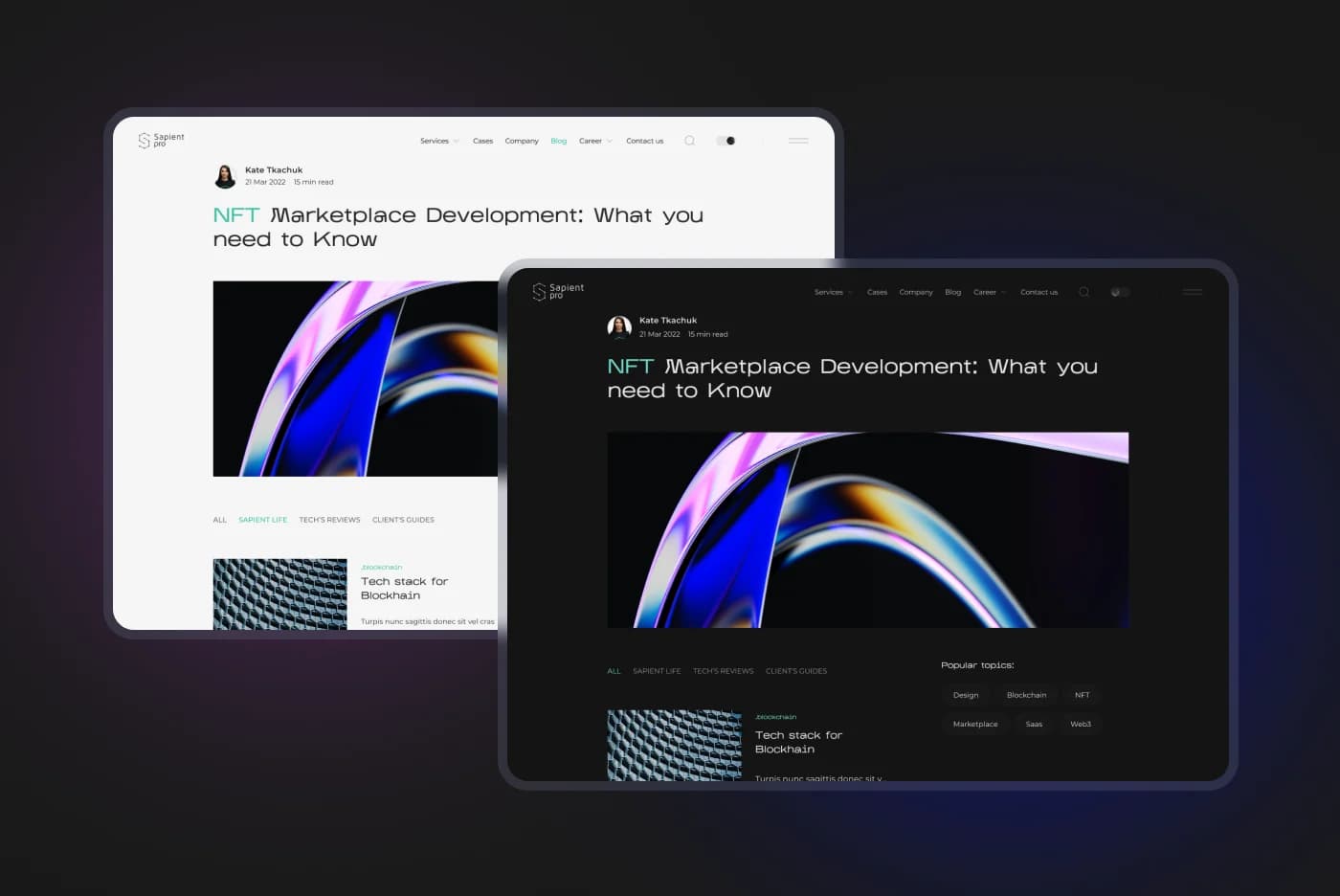
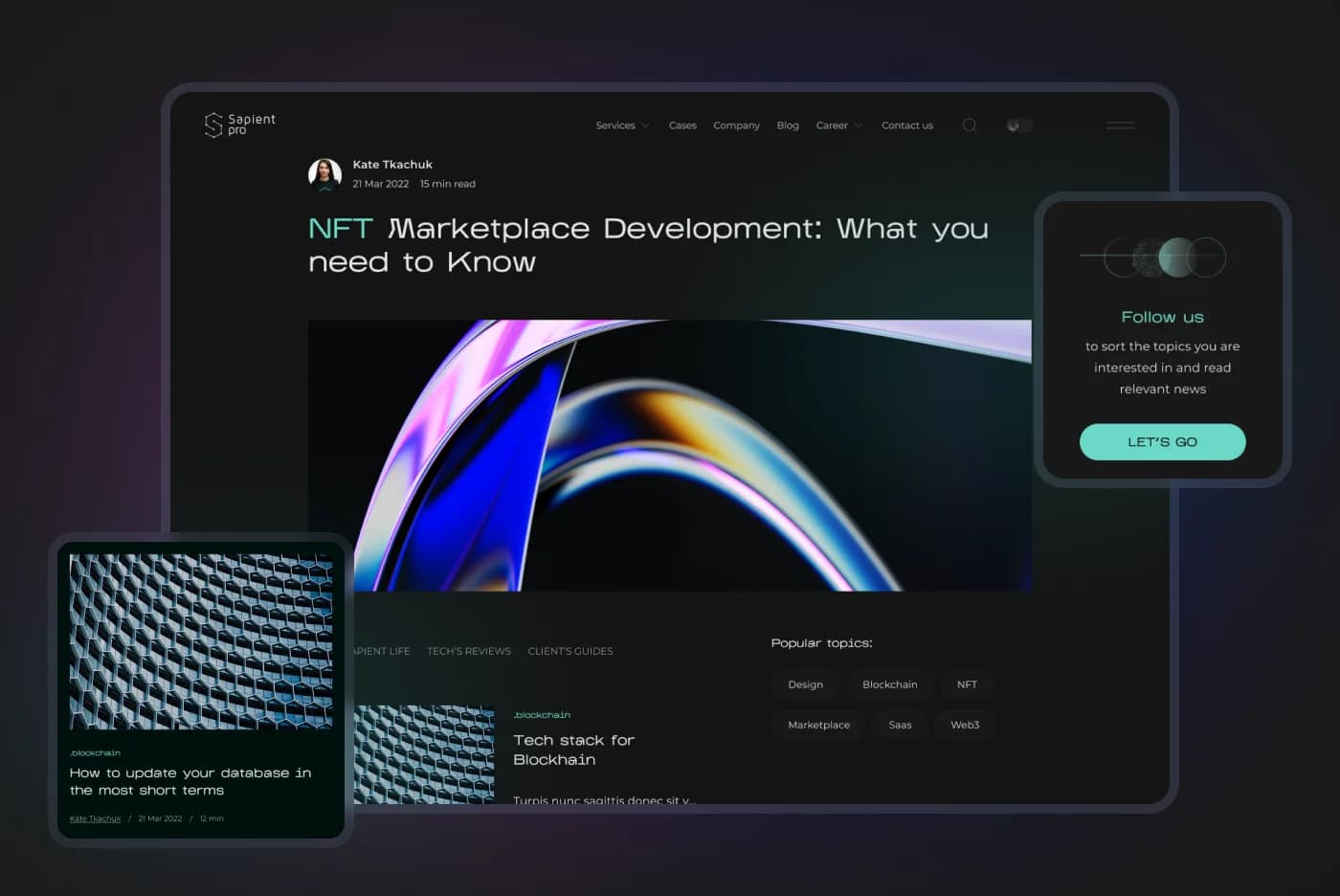
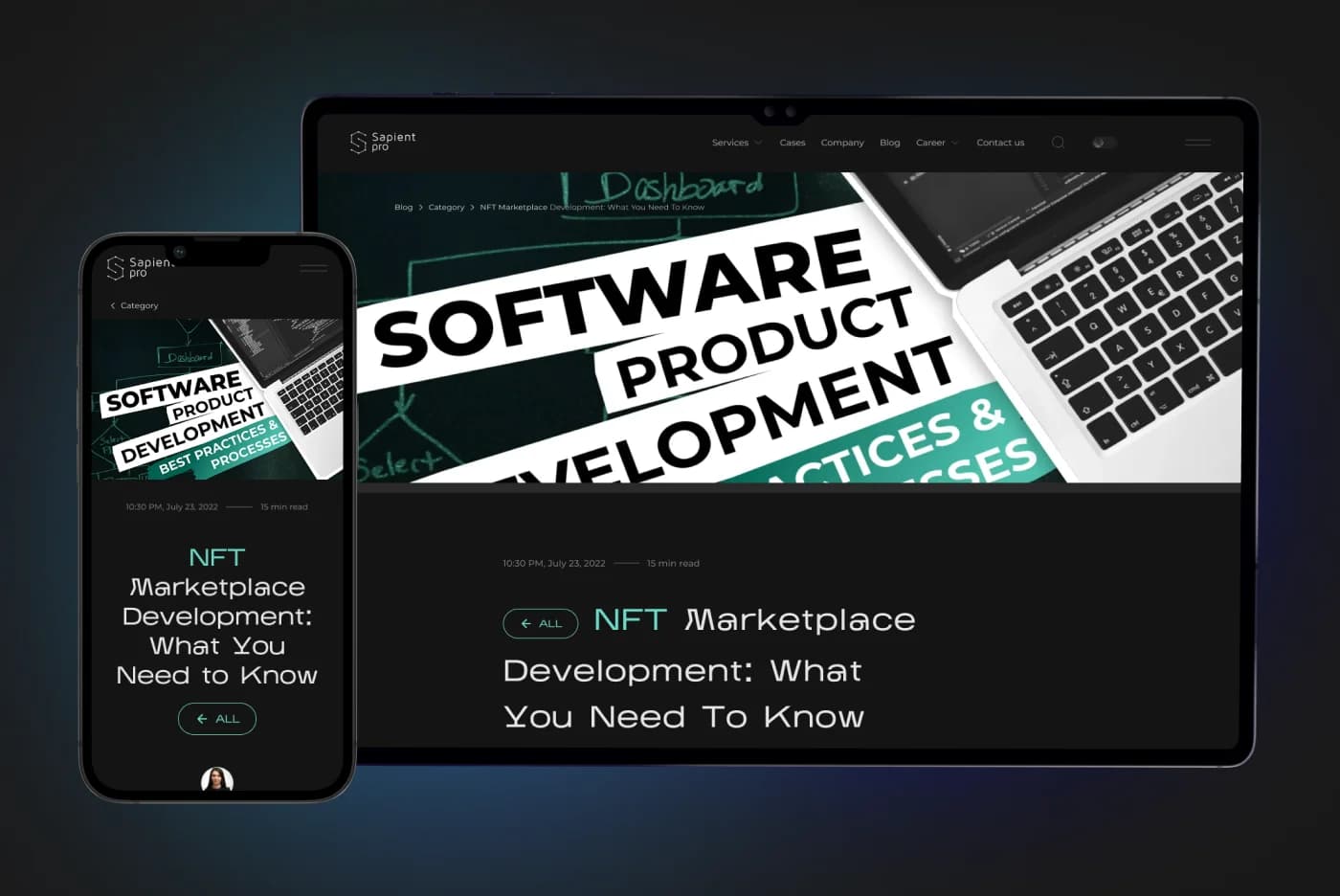
A: I started with internal work on the company website. I designed the blog section and templates for publication pages. Then I worked on service pages and subservice pages. Our design lead gave me the task of creating a flexible system of reusable blocks that we could use across case studies and service descriptions. It took several iterations, but we reached a strong, repeatable pattern. I learned a lot through that process.
Q: How did your role change over time?
A: Step by step, I began to join client projects and talk directly with customers. I learned how to address situations where the client’s idea of the product did not match what we, as designers, saw as workable. I now see communication as part of design, not as something separate.
In my current work, there are a few projects that reflect what I do day to day. One is an AI-based product for marketers and content managers that includes text, video, and image generation. It is still in progress, and we will share more details soon. Another example is our work with bbg bitbase group GmbH, where I help maintain their design system and contribute new UI components for their internal business platforms.
Since 2019, SapientPro has impressed us with its flexibility and strong people. They help us move fast, bring in excellent specialists when needed, and provide outstanding UI and UX consulting. They are a reliable partner for long-term work.

Peter Burger
Q: How do you work through feedback with clients and reach a shared direction on design decisions?
A: I start by clarifying what is behind the feedback, a business constraint, a missing requirement, or a personal preference. If I still believe another option will perform better, I explain the tradeoffs in plain language and tie them to user impact. When a request risks usability, I show where it may fail and suggest an alternative that supports the goal without weakening the experience. My aim is a clear, shared decision, not a debate.
Q: What was your first client project at SapientPro, and what did you work on?
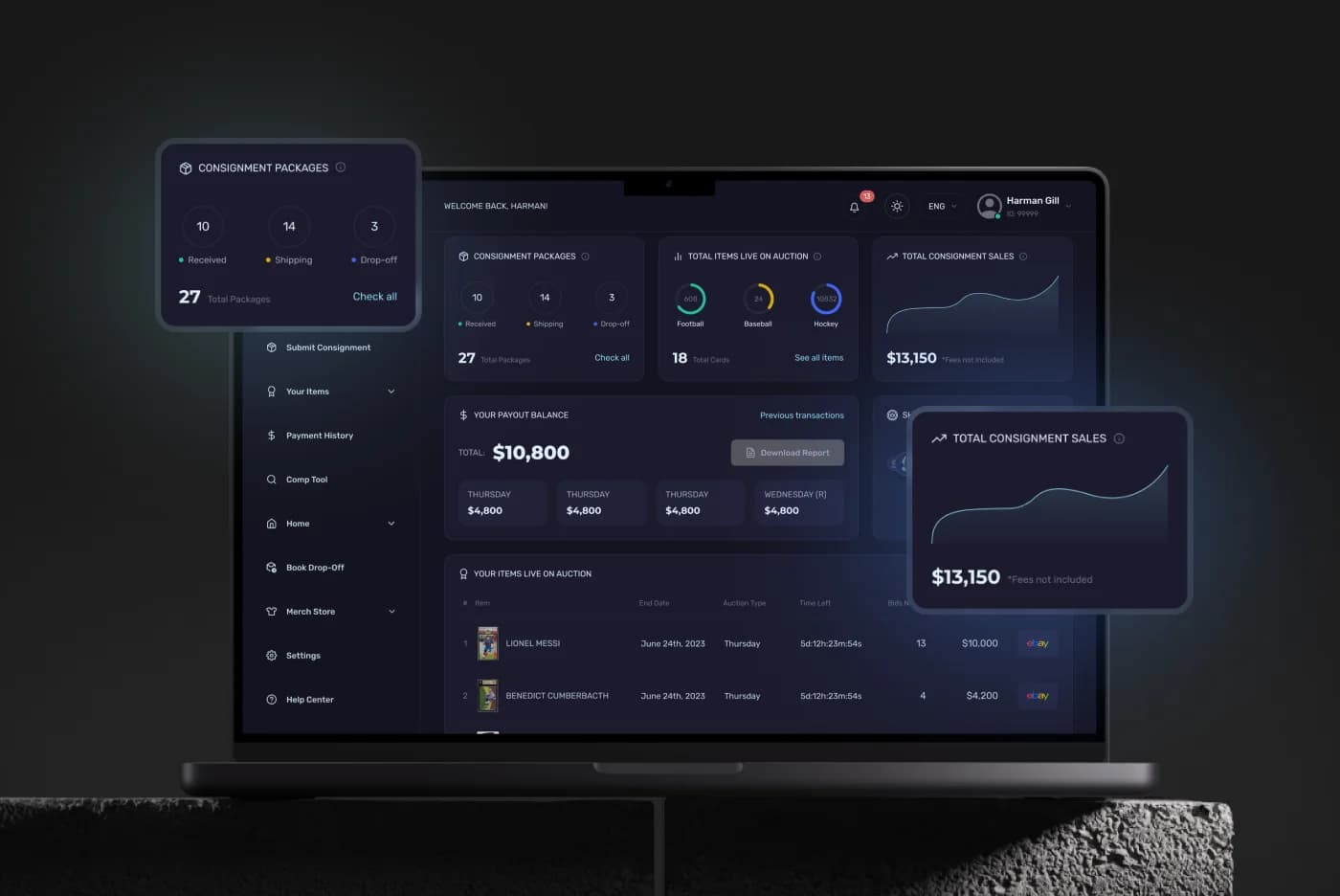
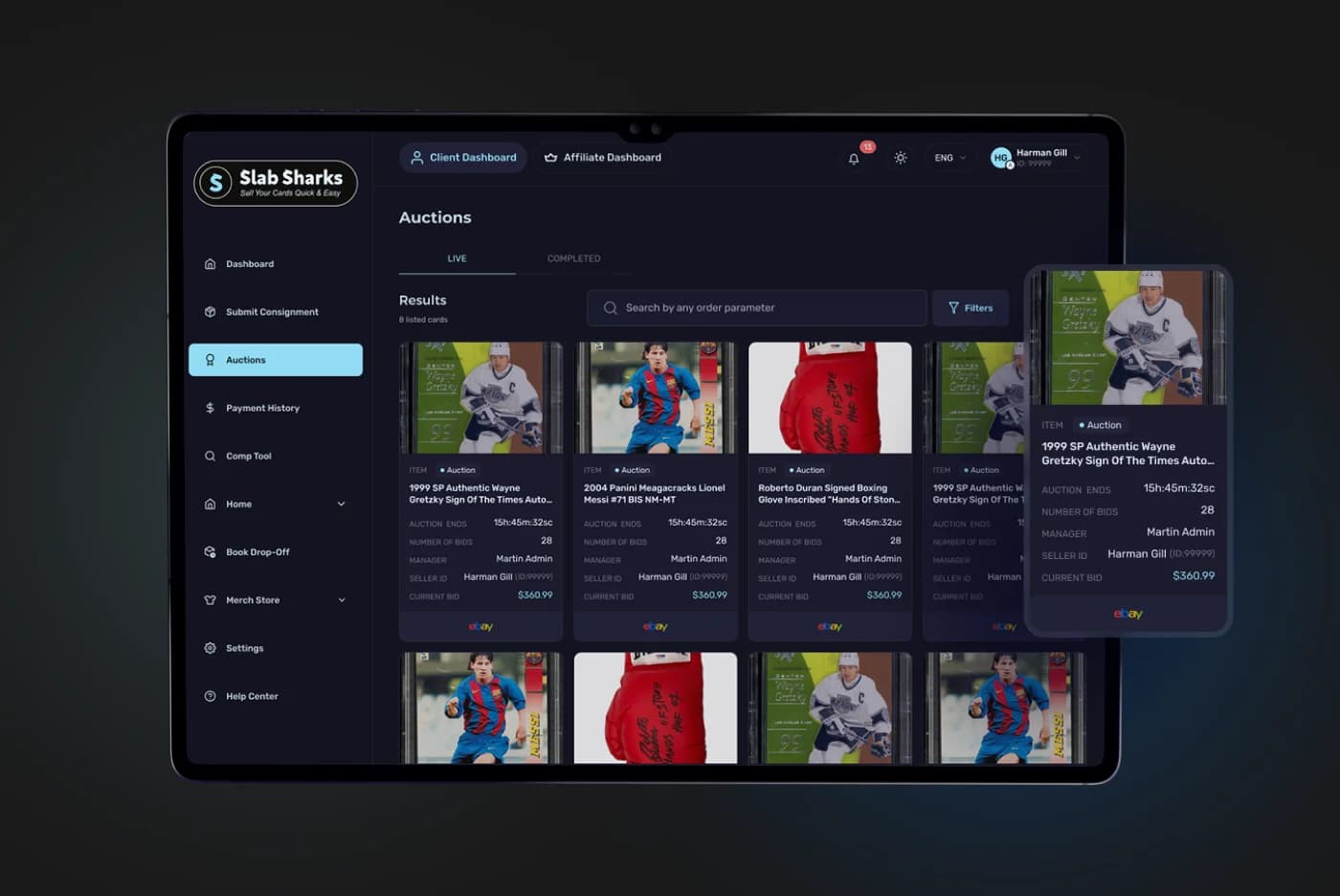
A: Slab Sharks was my initial client project at SapientPro, and it remains one of the projects I am most proud of. I joined early as one of the first designers on the team. We took the client’s and project manager’s vision and turned it into wireframes, then into a full UI for the public website and the web platform. We designed flows that simplify auction tracking and card sales, and then carried the same logic into a mobile app. Today, the platform holds a leading position among eBay sellers in Canada, and it feels good to know that our design work supports that result.
What Holds Up in Production
Q: How do you measure whether a design decision works for the business, not just for usability?
A: I start with the business goal and the user action we need to change. We validate early with prototypes and structured feedback, then recheck after release against the baseline. Depending on the product, we look at conversion and retention, and we use heatmaps to spot friction. For mobile apps, store reviews and download trends often reveal issues analytics does not.
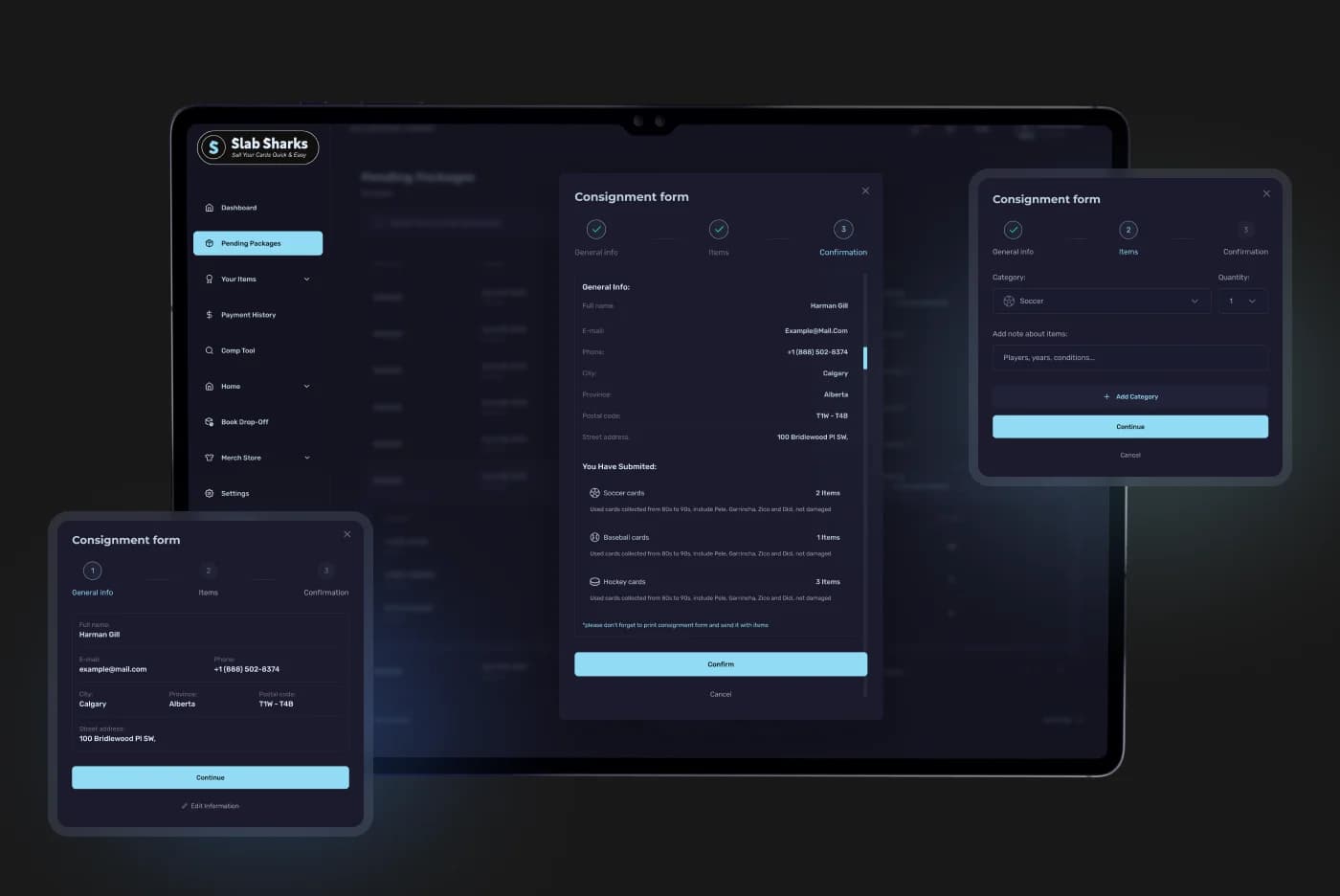
Slab Sharks is a good example. The goal was to replace a paper consignment form with a digital flow. Users used to download a PDF, fill it out by hand, and include it in the parcel. We moved that process into the platform, then refined the first version based on feedback until the flow worked well for customers.
Q: What usually breaks first in a product’s UI when it starts to scale, and how do you prevent that early on?
A: Navigation and information architecture break first. A simple header works at the start, but once the product grows, you need hierarchy, roles, and clearer grouping. I ask about the roadmap early and design navigation with room to expand, for example, a second level or a future side panel.
Q: How do you make sure design decisions stay intact once development starts?
A: I use specific Figma notes for edge cases, then run a short walkthrough with developers to confirm intent and constraints. As features ship, I review the built UI against the design and fix mismatches early, before they spread across the product.
Q: Have you ever had to rethink your design workflow mid-project, and what triggered the change?
A: On SalesLogs, the team kept everything in one large Figma file, product modules, design system work, early concepts, and drafts. As it grew, it became slow and hard to navigate, which started to affect feedback cycles. We split the work into separate files, introduced consistent naming and covers, and made it easier to find assets and track their status. That change improved collaboration and kept reviews with the client on schedule.
Q: What should founders and product owners realistically expect from a UI/UX designer on their team?
They should expect more than UI production. A strong designer helps clarify the problem, validate direction with prototypes, and reduce rework before development commits. They should also expect system thinking that keeps patterns consistent as features and teams expand, with decisions tied to business outcomes and observable user behavior.

Stanislav Makhun
Q: What are the most common constraints you face in real projects, and how do they shape your design decisions?
A: The hardest start is when the vision is clear, but the inputs are not, no brand system, limited data, and no style direction. I focus on fundamentals first, product goals, audience, and constraints, then use references, competitor review, and, if needed, a short workshop or lightweight research step. When a design system is required, constraints often come from system structure, naming, and required variations. I rely on Material Design and Apple Human Interface Guidelines as practical references.
Sources of Inspiration
Q: What do you pay attention to when you learn from other designers and strong product interfaces?
A: I learn in two ways. The first is through direct collaboration. Inside the SapientPro design team, I am surrounded by designers with different strengths, and I learn a lot by watching how they frame a problem, challenge assumptions, and choose a direction based on clear principles. When I am unsure, I bring the doubt to the team, because an outside view often surfaces a better option or a risk I missed.

The second is following designers whose work is explained, not just shown. I read case studies where the reasoning is clear, then trace the steps that led to a decision, what tradeoffs were made, and how the system holds together. Even choices like a color palette become more useful when the designer explains how it connects to the product content and audience. Two Ukrainian designers I often return to are Mykhailo Samovarov and Anatolii Popel. Samovarov, a co-founder and design director at League Design Agency, is strong at breaking down early concept work and showing how decisions are made with intention. Popel, the founder of CASES and Creative Practice, is interesting to me because he grew from hands-on design into building a community and an education platform that connects the creative and tech worlds.
Q: What advice would you give to a student who wants to move from traditional art to digital product design?
A: Try a few directions early, so you can feel what holds your attention. Classic graphic design is one path, web design is another, and product work goes deeper into user flows and behavior. Once something clicks, commit to it for a while instead of bouncing every week.
If you are leaning toward product design, spend time with design systems, and study how components are built and named. Google Material Design and Apple Human Interface Guidelines are great references because they show patterns that users already know. Practice research basics, then wireframes, then prototypes. Get comfortable in Figma, including Auto Layout and component logic. Also, look at real products with an honest eye. Read user reviews, notice what people praise and what makes them mad, and ask yourself what you would change and why. You will make mistakes, everyone does, that is how you get your taste and your judgment.
Q: Outside of work, what helps you recharge and keep your creativity alive?
A: Time with my family, my girlfriend, and my friends is the quickest reset for me. They are supportive, and being around them puts things back in perspective. I also have a pug, and she is a tiny comedian who meets me at the door like I have been gone for a month. After a rough day, that kind of welcome does wonders.
Nature also helps a lot. One place I return to is Bakota, in Khmelnytskyi Oblast. The area is now known for its dramatic shores and the nearby cave monastery. I love kayaking, and I even own a kayak. When I am out on the water near the Dniester canyon, I slow down, I notice things, and ideas show up without me forcing them. That is usually when my brain finally says, okay, we are good now.