All How to Create a DeFi Aggregator Platform: Step-by-Step Guide for 2025
Updated:April 30, 202615 min read


The global DeFi market is expected to reach $14.6 billion by 2026, experiencing significant growth due to its decentralized nature. DeFi aggregators are quite popular due to easy access to liquidity, trading opportunities, and yield optimization across multiple protocols.
In this article, you’ll learn about the key steps to create a DeFi aggregation platform and why it is beneficial for your business. The guide is prepared based on SapientPro’s experience in Web3 development since its initial launch online. Read on for more!
What is a DeFi Aggregator?
A DeFi aggregator collects the best prices from decentralized exchanges and lending pools, helping users optimize their transactions. Without one, a trader would need to log into multiple platforms, compare prices manually, and execute each transaction separately using smart contracts.
Since rates and prices in DeFi change every second, manual tracking is time-consuming and inefficient. Aggregators simplify this process and provide easier access to complex financial tools.
How it works:
- Data collection: the aggregator gathers information from different protocols like lending rates, pool liquidity, and token prices;
- Profit analysis: it processes this data to identify the most profitable opportunities, like showing which protocol offers the best interest rates;
- Seamless interaction: once a user chooses a protocol, they can interact with it directly through the aggregator’s interface without leaving the website;
- Blockchain scope: most aggregators work within a single blockchain, but some are multichain, pulling offers from several networks at once.
Some DeFi aggregators also provide automatic optimization. This means they can reallocate assets between different protocols in real time to maximize user profits.
Types of DeFi Aggregators
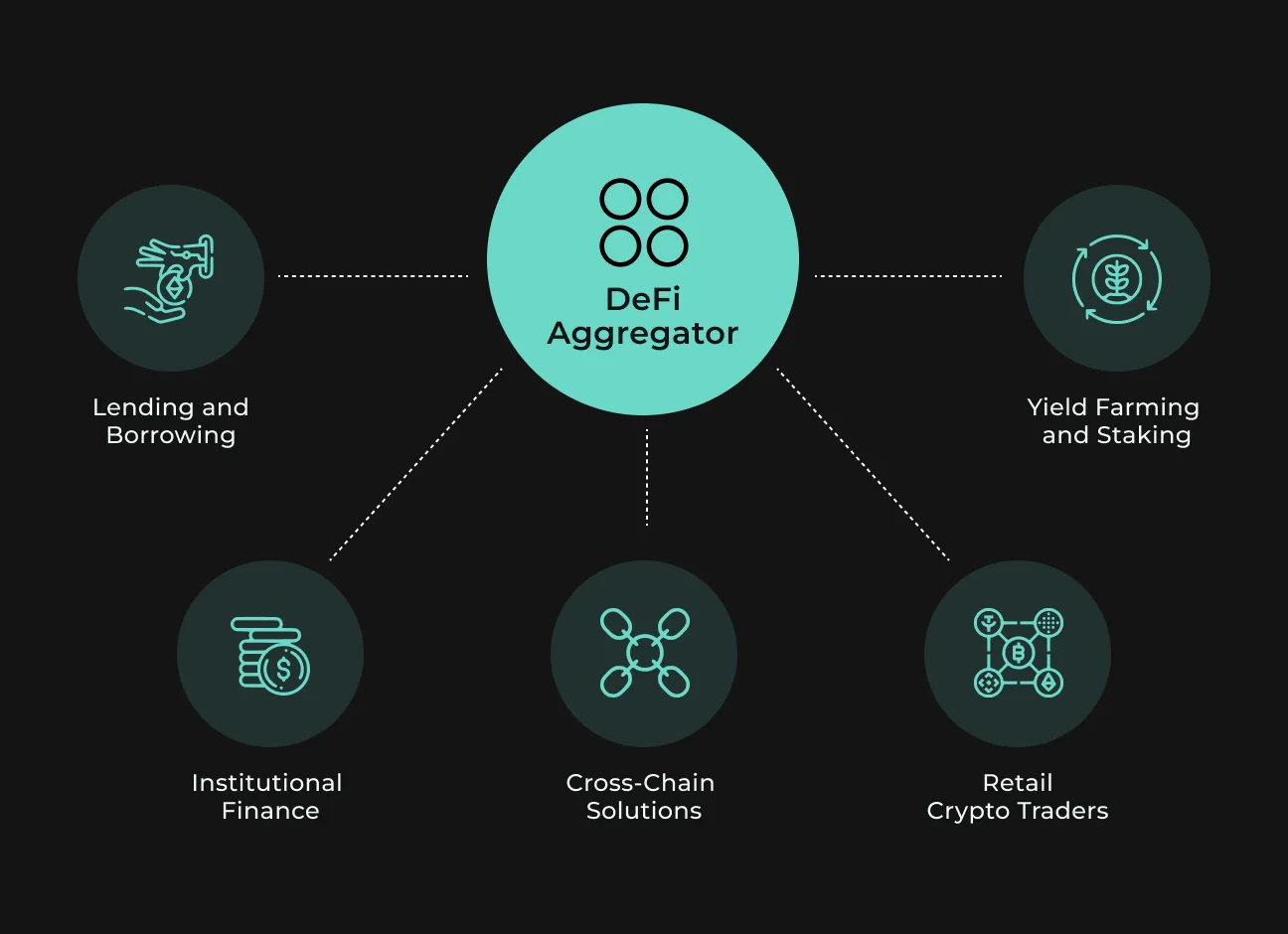
Let’s take a look at the 4 main types of DeFi aggregators.
DEX Aggregators
DEX aggregators collect liquidity from a range of decentralized exchanges to execute a user's trade at the best price available. These platforms split and analyze trades across different DEXs for minimum slippage, with the intention of reducing transaction costs.
They are perfect for traders looking for efficiency, especially for large-volume transactions.
Examples include DeFiLlama and Matcha.
Lending and Borrowing Aggregators
These crypto aggregators optimize lending and borrowing activities across DeFi protocols. They help users find the highest interest rates for lending assets or the lowest rates for borrowing.
By pooling data from platforms like Aave, Compound, and Maker, lending aggregators make it easier to earn passive income or get loans. Some of these crypto aggregators even offer collateral management tools and liquidation risk alerts.
Yield Aggregators
Yield aggregators focus on the optimization of returns for users through yield farming and staking. They handle the automation of tasks such as compounding rewards and redeploying funds into the highest-APY pools across different DeFi protocols.
Well-known platforms like Yearn Finance employ complex algorithms to manage user funds efficiently, save time and effort, and increase profits.
Cross-Chain Aggregators
Cross-chain aggregators enable frictionless transactions and swapping of assets across different blockchain networks. They connect the ecosystems of Ethereum, Binance Smart Chain, and Solana, and let users tap into liquidity and services from other chains.
They are essential to DeFi for interoperability, saving time and hassle when dealing with multiple wallet setups and manually bridging assets. Examples include Li.Fi.
Benefits of DeFi Aggregators
Let’s take a look at the main DeFi aggregator benefits.
Simplifying the investment and trading process
Aggregators bring together multiple protocols in one place. Instead of logging into several platforms, users can compare rates, execute trades, and manage assets through a single interface. This saves effort and reduces the chances of human error.
Optimization of profitability
By scanning different protocols, aggregators highlight the most profitable opportunities.
For example:
- Highest lending or staking rates;
- Lowest swap fees;
- Liquidity pools with the best yield.
This helps both beginners and professionals maximize returns without constant manual research.
Time-saving
Prices and rates in DeFi shift every second. Aggregators handle this tracking automatically, removing the need for users to monitor dozens of platforms in real time.
Full transparency
All transactions are executed on blockchain using open smart contracts. This ensures verifiable records, reduces the risk of fraud, and builds trust between users and platforms.
Variety of supported protocols and networks
Most aggregators connect with multiple protocols across DeFi. Some even support multi-chain setups, meaning users can find the best offers not only within one blockchain but across several ecosystems.
Built-in risk control mechanisms
Advanced aggregators often include tools to protect users, such as:
- Automatic rebalancing of assets;
- Slippage protection during trades;
- Alerts for sudden market changes.
These features reduce exposure to risks while improving overall efficiency.
In short, DeFi aggregators simplify and optimize the entire decentralized finance experience. They help maximize returns, reduce costs, save time, and make access to the ecosystem more secure and transparent.
Cryptocurrency aggregators simplify and optimize the DeFi experience, helping users maximize returns, reduce costs, and access opportunities across the decentralized ecosystem efficiently.
6 Steps of the DeFi Aggregator Custom Development Process
So, to develop a DeFi aggregator, you must pass through 6 steps. Here they are:
1. Initial consultation and requirements gathering
The process begins with understanding your objectives, target audience, and must-have features. This stage defines the project’s scope and functionality, ensuring our development team and your company share a common vision.
2. Project planning and selection of technology stack
A detailed roadmap is created, highlighting milestones, resources, and timelines.
Choosing the right technologies is crucial for:
- Scalability and performance;
- High-level security;
- Seamless integration with blockchain networks, smart contracts, APIs, and DeFi protocols.
3. UI/UX design with mockups
Our designers create intuitive, visually-appealing interfaces and mockups that simplify user interaction. The goal is to make your DeFi aggregator equally accessible to:
- Beginner users entering DeFi for the first time;
- Experienced traders managing complex portfolios.
At the same time, the design reflects your brand identity and enhances user trust.
4. Development process
SapientPro’s engineers begin building the platform by integrating smart contracts, APIs, and cross-chain features. Both back-end and front-end components are developed in parallel to support:
- Real-time data aggregation;
- High system performance;
- Secure transaction execution across multiple protocols.
5. Quality assurance
Before launch, the platform undergoes rigorous full-cycle testing. This includes:
- Smart contract audits;
- Stress and load testing;
- User experience testing for accessibility and smooth operation.
These tests guarantee security, reliability, and compliance with DeFi standards.
6. Deployment and maintenance
Once tested, the aggregator is deployed to the chosen blockchain. After launch, ongoing support ensures continuous improvement. This involves:
- Monitoring performance and stability;
- Updating protocols to match market changes;
- Adding new features and integrations to remain competitive in the evolving DeFi landscape.
If you’re looking for a trusted partner to develop a DeFi aggregator, SapientPro can help.
With over 8 years of experience in blockchain, cryptocurrency, and fintech development, our team delivers secure, scalable, and future-proof solutions. We provide ongoing support to help you adapt to market shifts, integrate new features, and stay ahead in the DeFi market.
Build Your Project with SapientPro
Our engineers will help you leverage modern technologies and practices.
Features of a DeFi Aggregator
Let's take a look at the must-have features of a DeFi aggregator.
Liquidity Aggregation
A DeFi aggregator combines liquidity from multiple decentralized exchanges and pools, ensuring users always get the most competitive trading prices. By aggregating order books across platforms, it reduces slippage even on large transactions, meaning trades execute closer to the expected price. This feature allows investors to save money, avoid hidden costs, and trade with greater confidence.
Optimal Route Planning
Instead of routing a transaction through a single exchange, DeFi aggregators analyze liquidity pools across multiple platforms to find the most cost-effective path. They can split trades strategically, routing portions through different pools to minimize fees and improve returns. This optimization ensures every transaction extracts maximum value, especially for high-volume traders looking to enhance overall profitability.
Yield Optimization
Yield optimization tools automatically locate the most profitable staking, farming, and compounding opportunities across DeFi protocols. By reinvesting rewards and reallocating funds to higher-yield liquidity pools, they maximize returns without requiring constant manual management.
These smart strategies help users diversify their portfolios, reduce idle funds, and consistently achieve higher APYs, making the aggregator an essential tool for wealth growth.
Cross-Chain Capabilities
Cross-chain support allows users to move assets seamlessly between ecosystems like Ethereum, Binance Smart Chain, Polygon, and Solana. This unlocks a wider range of opportunities in trading, lending, and yield farming without the hassle of switching platforms manually.
It ensures flexibility, liquidity access, and diversification, helping investors expand their reach across multiple blockchain environments from a single platform.
Other Features
DeFi aggregators also include nice-to-have features like:
- Customizable dashboards for portfolio insights;
- Real-time tracking of assets and returns;
- Multi-wallet integration for easier management;
- Advanced analytics and risk metrics;
- Flash loan support for arbitrage opportunities;
- Security features like multi-signature wallets and encryption.
These features collectively improve user experience, optimize returns, and guarantee secure participation in DeFi ecosystems.
3 Best DeFi Aggregators in 2025 to Look at
Let’s check out 3 examples of the best DeFi aggregators in 2025.
1. 1inch
1inch is a protocol that uses a huge number of liquidity sources to provide the best rates (at the time of writing, 177 liquidity sources in the Ethereum network, 75 in BNB Chain, 64 in Polygon, etc.). It is based on the 1inch v5 smart contract, verifying the execution of transactions in real time.
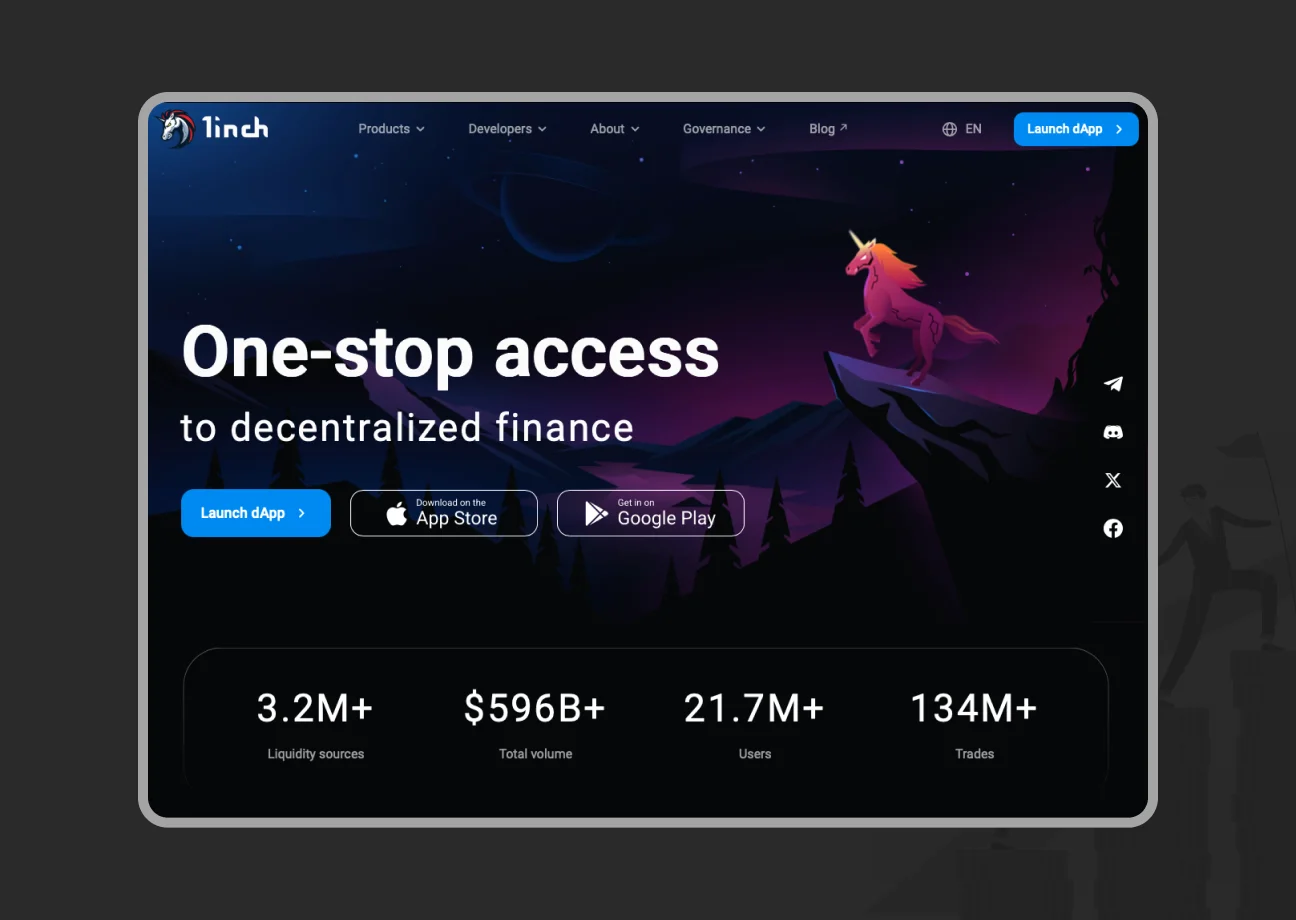
1inch characteristics:
- Blockchains: Ethereum (+ L2 networks like Arbitrum, Optimism, Base, ZKSync Era), BNB Chain, Polygon, Gnosis, Avalanche, Fantom, Klaytn, Aurora;
- Own token: 1INCH;
- Main functions: liquidity aggregator, limit orders protocol.
The 1inch platform supports cross-chain swaps and provides features like limit orders, staking, and governance tools.
2. OpenOcean
OpenOcean is a universal decentralized solution for crypto trading and investing. It is possible to buy cryptocurrency with a card (via Banxa). A vast number of networks and more than a thousand integrated protocols are supported.
On OpenOcean you can create limit orders and trade without paying blockchain commissions. Futures trading with leverage up to 50x is available.
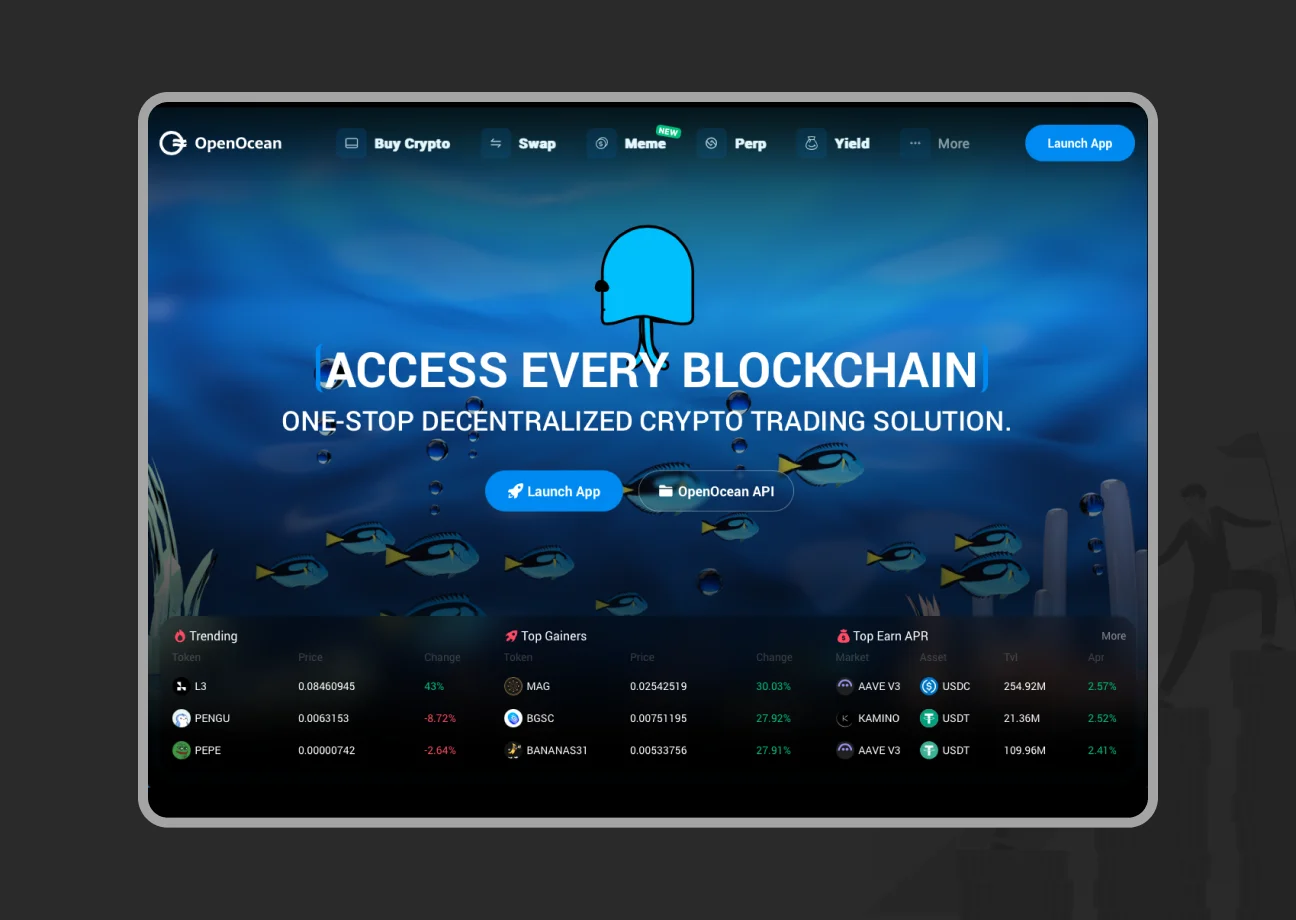
OpenOcean characteristics:
- Blockchains: Ethereum, Binance, and 32+ other networks;
- Own token: OOE;
- Main features: DEX trading, cross-chain swaps, perpetual contracts, staking, liquidity mining.
The user-friendly interface also supports yield farming and portfolio tracking.
3. Zapper
Zapper is a service that easily tracks and manages assets in one interface. It allows you to quickly enter and exit liquidity pools, and it also uses a convenient portfolio analytics tool.
In a separate section, you can get detailed and up-to-date information about NFTs, which has been collected from different marketplaces and organized conveniently.
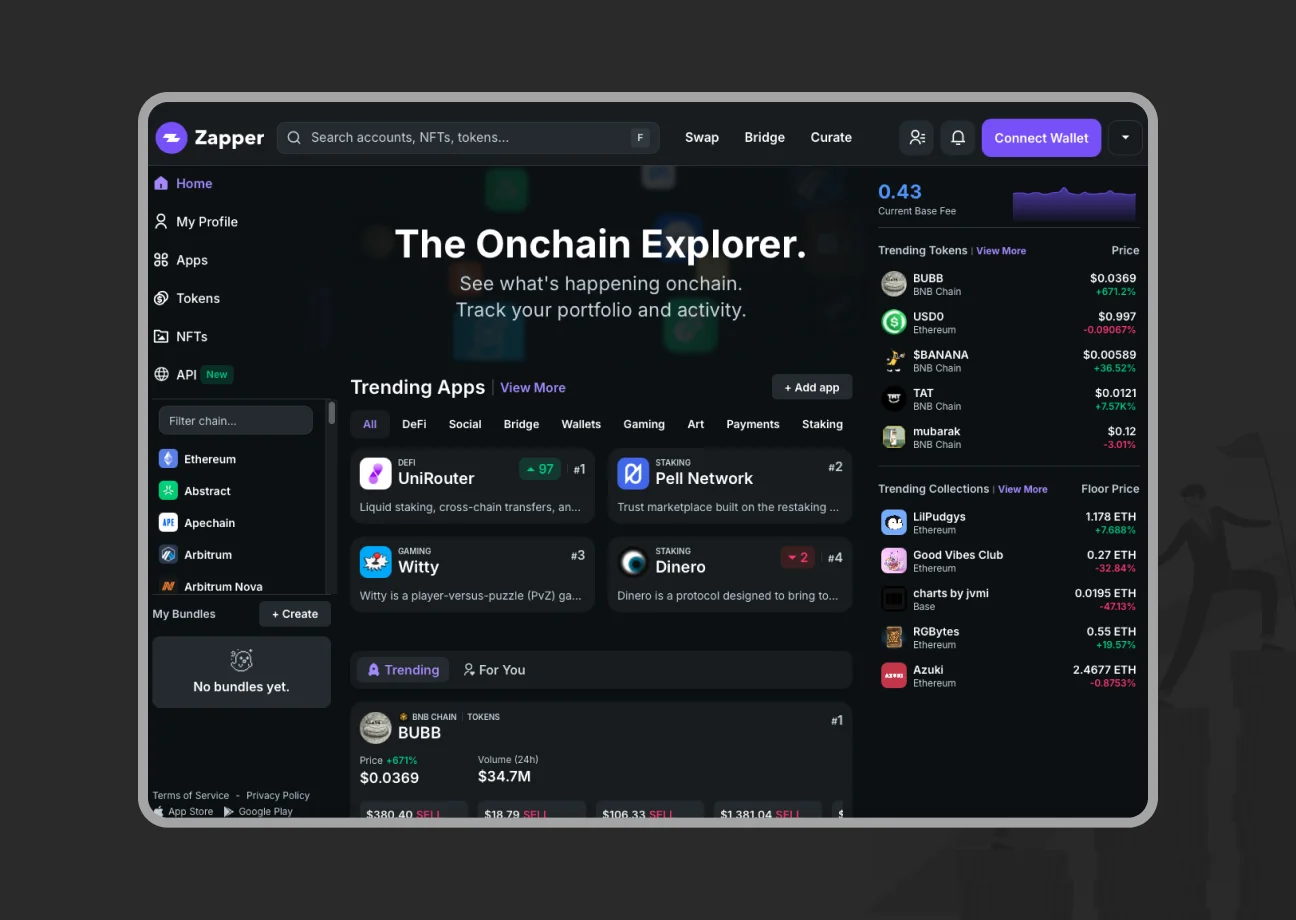
OpenOcean characteristics:
- Blockchains: Ethereum, Arbitrum, Base, Polygon, Optimism, BNB Chain, Avalanche;
- Own token: N/A;
- Main functions: exchange, cross-chain bridge, social networking.
Its integration with leading chains and protocols ensures wide accessibility, while beginner-friendly tools lower the barrier to entry for DeFi newcomers.
How Much Does it Cost to Develop a DeFi Aggregator Platform?
The cost of developing a DeFi aggregator platform can vary widely based on several factors:
- Features;
- Platform complexity;
- Development team rates;
- Time required.
Let’s check out an average estimate for DeFi aggregator development by feature and development phase. Note that these are only approximate costs. You can get a detailed estimate for your project by contacting our team.
Development Phase | Description | Total Cost ($) |
Requirement Analysis | Understanding client needs, market research, and project planning. | 2,000–6,000 |
UI/UX Design | Creating wireframes, user interfaces, and user experience designs. | 3,200–9,600 |
Blockchain Development | Smart contract development for aggregation and transaction processing. | 9,600–27,000 |
Frontend Development | Building a responsive user interface for the platform. | 4,000–12,000 |
Backend Development | Setting up APIs, database management, and server integration. | 6,000–16,000 |
Integration with Protocols | Connecting with multiple DeFi protocols like Uniswap, Aave, Curve, etc. | 8,000–22,500 |
Testing and QA | Ensuring security, functionality, and performance across devices and protocols. | 3,200–9,600 |
Deployment and Maintenance | Launching the platform and ongoing updates or support. | 2,000–8,000 |
Partner with SapientPro to Create Your DeFi Solution
SapientPro is your reliable team for building a DeFi aggregator platform.
We’ll support your project with:
- Deep industry expertise;
- Innovative UI/UX design;
- Suitable business features;
- …and all your ideas brought to life.
Interested in developing a DeFi project? Contact us today to discuss your project!
Discuss Your Project Today
SapientPro's team will provide a detailed estimate and expert recommendations.