All Beyond Trends in LA, Real AI for Commerce
February 5, 20264 min read

Los Angeles is full of AI talk, yet many teams still ask a practical question: how do you make progress with fewer distractions, while your brand voice stays human? On January 28, SapientPro brought together founders and business teams in Los Angeles to discuss where AI pays off in e-commerce and physical products, and where decisions should remain with people.
How This Los Angeles Session Came Together
Across client calls and industry chats, we keep hearing two needs. Teams want more output and more clients, yet they do not want tools that add work. They want AI where it saves time and helps teams choose well, with final calls staying in human hands. This meetup measured those needs against real constraints. Maryna Slyzhuk, our Regional Director for the US market, hosted the evening, and Ram Sareen, CEO and founder of TUKAgroup, joined as guest speaker, adding an apparel production lens to the discussion.
A Cross-Industry Crowd With One Topic
The room reflected how products get built and sold in Los Angeles. Creative leaders sat next to operators, and everyone spoke the same language when the topic shifted to time, cost, and customer trust. Attendees included fashion designers, with Barbara Kramer among them, artists such as Cameon Cohen and Tia Mikadze, musicians, stylists, marketing directors, founders of a marketing agency, and founders of retail brands, including Anna Nikita, who runs a hair accessories store. Leaders from the Tukatech team also joined.
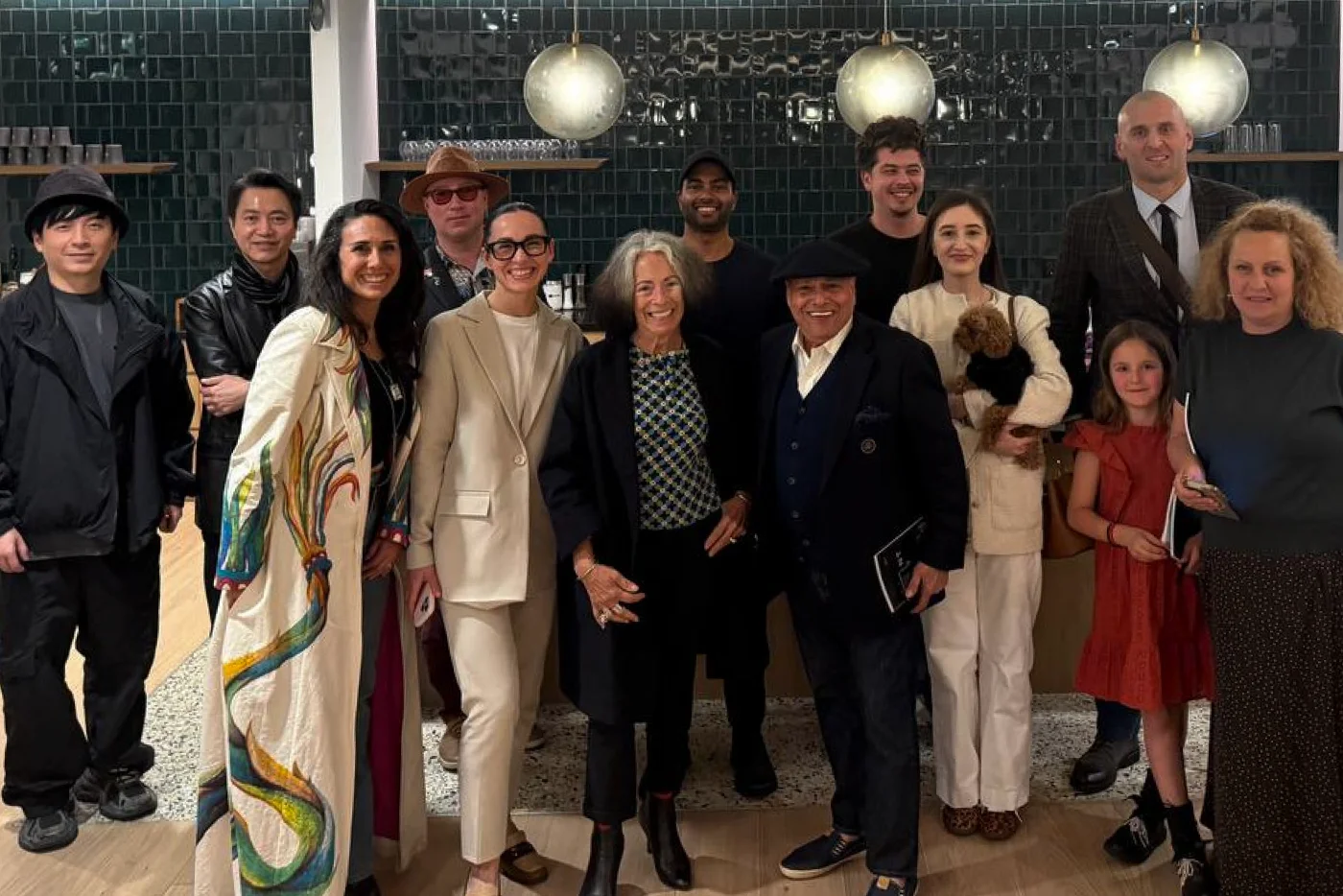
To put faces to the names, pictured below, left to right, are Kit Kwok, Alex, Rustam Sokolov, Cameron Cohen, Maryna Slyzhuk, Barbara Kramer, Mukund Komanduri, Roman Nikita, Anna Nikita, Ram Sareen, Love the dog, Teia Tsagara, Gio Tsagara, and Elisabeth Tsagara.
As the conversation warmed up, one theme kept resurfacing, even when people described very different businesses. Everyone wanted real advantage from AI, rather than adoption for adoption’s sake. That is why the room moved past tool lists quickly. The useful part was a shared framework, a way to separate ideas that deserve action now from those that can sit until later, and to spot the ones better stopped before they start costing credibility. You could hear that urgency in how people framed their next steps, whether they were weighing a pilot, considering an investment, or sensing a shift in direction. In this market, speed matters, but a wrong turn rarely costs only time.
The Non-Negotiables Around AI
The room agreed on one thing early: AI belongs in the work, but it needs clear boundaries. People welcomed it when it gives time back and supports better decisions, especially in tasks that rarely win attention but carry real risk.
- Documentation that must stay current;
- Compliance checks where rules and risk matter;
- Workflow automation that reduces repetitive steps;
- Internal search that helps teams find what they already know.
The resistance was just as specific. Attendees did not want AI making aesthetic, tonal, or cultural calls, and they were cautious about anything customer-facing without human sign-off. Accountability was the non-negotiable point. If something goes wrong in public, “the model did it” is not an acceptable answer, responsibility stays with the company and a named accountable lead.
Commerce AI in Real Work, With Metrics
Concrete examples gave the room something to test and moved the room toward practical next steps. Maryna shared an AI automation case from a regulated setting, where the goal was to reduce manual effort and keep decision ownership with people. We also discussed the AI Language Learning App case, which sparked interest because the value is easy to recognize in day-to-day use, fast feedback, consistent practice, and measurable progress.
Maryna captured one of the most common commerce questions in the room.
Several attendees asked why an AI shopping assistant is needed when filters exist. In large catalogs, even after filtering, customers can still face long lists of near-identical options. A guided assistant can cut through option overload and bring customers to a confident choice sooner, under clear business rules and human sign-off.

Maryna Slyzhuk
As the discussion shifted into operations, people pointed to the work that quietly eats budgets. In production workflows, the first automation target was status updates, high-volume work that rarely needs judgment. For documentation pain, compliance documents stood out. They are market-specific, constantly evolving, and high risk if something is missed. Integration questions came up repeatedly: teams want a connected layer on top of the stack they already use, such as PLM, ERP, spreadsheets, and email threads, to keep data in sync and reduce manual copying. On the customer side, sizing support and product discovery felt urgent, because fit uncertainty blocks purchases and often leads to returns.
Attendees steered the conversation toward numbers that show up in calendars and cost reports. They talked most about cutting revision loops and shortening sampling cycles, since repeated factory back-and-forth and small documentation gaps can easily add weeks. Another priority was spotting production issues earlier, before manufacturing begins. For measurement, they pointed to time-to-market, cost per sample, and error rates in specs, materials, and sizing, with return rates treated as a later indicator.
Ram Sareen on 3D and Decision Confidence
Ram grounded the conversation in decisions that too often get made late, after time and money are already spent. He explained how 3D models let brands review garments on different body types, ages, and sizes before committing to physical samples. He also showed how photorealistic virtual garments can replace samples and photography cycle, cutting spend and reducing inventory waste.
That led naturally to a broader-systems question the room recognized. Many teams rely on PLM, ERP, and spreadsheets, yet these tools rarely share data in real time, which makes ownership unclear and slows decisions. Attendees asked practical questions about adoption and training, especially how to bring production teams onboard without interrupting active work.
Voices
Thank you for inviting me to the event. I had a great time and learned a lot from your presentation. I’d love to connect with the other attendees as well.

Cyrus Ahanin
I really enjoyed the event, inspiring, well organized, and genuinely useful. I loved the atmosphere and the practical insights I took away.

Anna Nikita
Great event last night, thanks for inviting me, I’m glad I got to meet new people and hear practical perspectives.

Mukund Komanduri
Next Up
Maryna is preparing a Beverly Hills event for small and mid-sized businesses. It will begin with an open mic, then move into pain points and possible solutions. Galit Fuller, a networking and connection coach, is expected to join as a guest.
Continue the Conversation
Working on a catalog, workflow, or AI pilot and want a clear outside view before you spend time on the wrong thing? Send SapientPro a short note with what you sell, where the process drags, and what you hope the AI will handle. We will suggest a sensible starting point, and set up a call.